When does the purple-rooted lily bloom, and how to grow the purple-rooted lily so it flowers / blooms in February, flowers for 2 months
As a beautiful flowering plant, the beauty of the purple-rooted lily is mostly shown in its flowers, so gardeners who grow the purple-rooted lily all look forward to it blooming. So when does the purple-rooted lily bloom? Flowering is a natural process for plants, but if care is not proper, there are also cases where it does not bloom. So how should the purple-rooted lily be grown so it flowers? Here, the editor will answer your questions.
I. When does the purple-rooted lily bloom? February
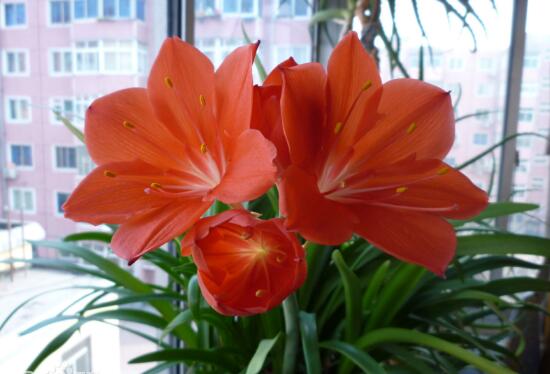
On this question, gardeners who have grown it should have an impression: the purple-rooted lily generally blooms in winter and can bloom into spring. As for the specific time, according to the editor's research, the purple-rooted lily blooms from February to April each year, and if it is grown well, it will bloom once more around August to September in summer.
II. How many years until the purple-rooted lily blooms? 2-3 years
The purple-rooted lily is very beautiful. A single plant has 2-4 small flowers at the top, and its flower shape is very similar to that of a lily, with the flower color mostly red. As for how many years until the purple-rooted lily blooms, because the purple-rooted lily grows slowly, generally only large bulbs grown for two or three years can bloom.
III. How long is the purple-rooted lily's flowering period? 10-20 days / 2 months
On the whole, the purple-rooted lily blooms from February and keeps blooming until April, so the purple-rooted lily's flowering period is 2 months. However, counting a single flower, each purple-rooted lily flower takes 10-20 days from blooming to fading.
III. How to grow the purple-rooted lily so it flowers? 5 key points
For an expert, making the purple-rooted lily bloom can be said to be easy; when the time comes, it will bloom. But for beginners, the purple-rooted lily's cultivation methods must be followed strictly, otherwise the purple-rooted lily will not bloom. For this, the editor has summarized 5 key care points; everyone just needs to remember and do them, as follows:
1. Soil: Following the growth habits of the purple-rooted lily, it is best to use a loose, humus-rich, well-drained sandy loam.
2. Environment: The purple-rooted lily cannot bloom without light, which must be sufficient, but it must not be exposed to scorching sun; in addition, place the plant in a ventilated, shaded spot.
3. Temperature: The purple-rooted lily's flowering period is in winter, but the purple-rooted lily is not cold-tolerant, so the room temperature should be controlled at 10-25°C.
4. Watering: Water a little less, keep the soil mainly semi-dry; too much water easily causes root rot.
5. Fertilizing: Nutrients are the key to the purple-rooted lily blooming, but fertilizer should be applied lightly, not too heavily, for fear of damaging the roots.
Overall, the purple-rooted lily is not difficult to grow, but among the many flowers it is a rather delicate one, so if you want the purple-rooted lily to bloom, you had best pay attention to the 5 care points above. That is all from the editor on the purple-rooted lily's flowering period and flowering conditions. Finally, may everyone's purple-rooted lily bloom into beautiful flowers.
Purple-rooted lily Purple-rooted lily illustrated guide: how to grow the purple-rooted lily / how to propagate the purple-rooted lily
Purple-rooted lily profilePurple-rooted lily
Alias: George lily
Classification: perennial herbaceous flowering plant
Family and genus: Plantae, Angiosperms, Dicotyledoneae, Amaryllidaceae
Full bloom period: spring, winter
The purple-rooted lily, of the Amaryllidaceae family and the genus Cyrtanthus, is a perennial bulbous herb. Alias: George lily. It likes a warm, humid climate, with an optimal growth temperature of 18-25°C; it dislikes extreme heat, and sunlight should not be too intense, so it should be kept under a shade shed. It fears waterlogging. During the winter dormant period, it requires a cool climate, preferably 10-12°C, and must not go below 5°C. It likes humus-rich, well-drained sandy loam. The purple-rooted lily's flowering period runs from winter to spring, or even later. In the middle and lower reaches of the Yangtze River, it can overwinter safely in the open ground.
Cultivation methods and precautions for the purple-rooted lily, an introduction to the purple-rooted lily
The purple-rooted lily, of the Amaryllidaceae family and the genus Cyrtanthus, is a perennial bulbous herb. Alias: George lily. It likes a warm, humid climate, with an optimal growth temperature of 18-25°C; it dislikes extreme heat, and sunlight should not be too intense, so it should be kept under a shade shed. It fears waterlogging. During the winter dormant period, it requires a cool climate, preferably 10-12°C, and must not go below 5°C. It likes humus-rich, well-drained sandy loam.
The purple-rooted lily's flowering period runs from winter to spring, or even later. In the middle and lower reaches of the Yangtze River, it can overwinter safely in the open ground.
Morphological characteristics of the purple-rooted lily
The purple-rooted lily has a plump bulb, nearly spherical, 5-7 cm in diameter, with an outer skin that is light green or yellow-brown, or purple. The leaves are opposite on both sides, strap-shaped, with tapering tips, 6-8 in number, and some leaves emerge after flowering. The scape is hollow, covered with white powder, and bears 2-4 flowers at the top; the flowers are trumpet-shaped and mostly red.
The purple-rooted lily's flowering period runs from winter to spring, or even later. In the middle and lower reaches of the Yangtze River, it can overwinter safely in the open ground.
Ecological habits of the purple-rooted lily
The purple-rooted lily likes a warm, humid climate, with an optimal growth temperature of 18-25°C; it dislikes extreme heat, and sunlight should not be too intense, so it should be kept under a shade shed. It fears waterlogging. During the winter dormant period, it requires a cool climate, preferably 10-12°C, and must not go below 5°C. It likes humus-rich, well-drained sandy loam.
The purple-rooted lily's growing environment requires cool summers and warm winters. The soil needs to be organic-rich sandy loam. It likes sunlight, but the light should not be too strong. It likes moisture, but fears waterlogging.
Cultivation techniques for the purple-rooted lily: growing environment
The soil needs to be humus-rich, well-drained sandy loam. It likes sunlight, but the light should not be too strong. It likes moisture, but fears waterlogging. The optimal growth temperature is 18-25°C. In summer it should be kept under a shade shed. During the winter dormant period, it requires a cool climate, preferably around 10°C, and must not go below 5°C. In the middle and lower reaches of the Yangtze River, it can overwinter safely in the open ground.
Propagation
Division and sowing are commonly used. For division propagation, carry it out when repotting in February-March, and when planting, let the top of the bulb protrude slightly above the soil surface. For sowing propagation, use indoor pot sowing in June-July; germination occurs 20 days after sowing, and it takes 3-4 years from sowing to flowering.
Cultivation key points
Relatively speaking, it is very delicate and a great challenge for growers. Otherwise, it will only grow without flowering, year after year.
First, the soil quality matters; sandy soil suits this flower. Second, fertilizer must be balanced; it cannot be grown like a foliage plant. Third, this flower likes moisture but cannot be waterlogged. Fourth, it cannot withstand strong light exposure.
Propagation methods of the purple-rooted lily
The purple-rooted lily is commonly propagated by division and sowing.
Division propagation
For the purple-rooted lily, carry it out when repotting in February-March, and when planting, let the top of the bulb protrude slightly above the soil surface.
Sowing propagation
For the purple-rooted lily, use indoor pot sowing in June-July; germination occurs 20 days after sowing, and it takes 3-4 years from sowing to flowering.
Variety classification of the purple-rooted lily: the difference between the purple-rooted lily and the clivia
The purple-rooted lily has narrow leaves, while the clivia has wide leaves with clear veins. The purple-rooted lily's root is a purple bulb, while the clivia has fleshy, club-shaped gray-white roots. The purple-rooted lily's flowers are mostly Chinese red, while the clivia's are mostly orange-red or orange-yellow.
If the bedroom has sufficient sunlight, the purple-rooted lily can be placed in the bedroom. As for placing the eight-treasure flower in the bedroom, it is better for human health than the purple-rooted lily, but it also needs high light. The most suitable for the bedroom is the clivia, which has low light requirements and also releases oxygen for a relatively long time.
Uses of the purple-rooted lily: ornamental value
The purple-rooted lily is of the Amaryllidaceae family and the genus Cyrtanthus, alias George lily. It can be planted indoors in pots, and is mainly an ornamental plant; people who are very sensitive to smells should smell it less.
Cultural background of the purple-rooted lily: prose - The Purple-rooted Lily
The Spring Festival comes with warm steps, swaying gracefully. Every household begins to tidy up the house; for the New Year there should always be a bit of new atmosphere. I also gave up my midday rest and began to busy myself. Today I cleaned up the junk that had piled up on the balcony on ordinary days. Under a shabby flowerpot in the corner where cardboard boxes were stacked, a scene stunned me: among a few dry leaves there was unexpectedly a flower bud about to bloom. On closer look, it was a pot of purple-rooted lily that had been placed there for a long time.
In my spare time I very much like tending flowers and plants. When I first moved into this current house, I bought many green-leaf plants from the market, but the indoor temperature and humidity could not meet the needs of these delicate plants, and within a few days they wilted. Watching those dark green, glossy leaves turn yellow one by one and fall off, until in the end only a bare twig remained in the pot, I felt very bad. From then on I no longer bought from the market. At the work unit two years ago, several older colleagues also quite liked growing flowers. Seeing the pots on their office windowsills full of luxuriant branches and blooming flowers, I was very envious. In my spare time I would go to learn from them in the name of work. The older colleagues were very warm; besides passing on experience, they always remembered to give me some flower seeds, and for root-grown plants they would break off a side branch to give me (later, when we were familiar and they were unwilling to give, I would thicken my skin and ask for them, haha). Buying soil, buying pots, watering, fertilizing... through day after day of longing, through the joy of seedlings breaking through the soil again and again, after a summer of fussing, my office at most had more than a dozen pots, growing luxuriantly and blooming merrily. Spider plant, eight-treasure flower, begonia, water plum, epiphyllum, snake plant, pothos, bougainvillea, rubber tree... though not any rare varieties, I still treasured them greatly. Later, because of a change in my work, these flowers and plants also had to be dealt with or given away; I just picked a few of them and moved them home. Space at home was limited, and I had to reluctantly part with them one after another, throwing those that had just finished flowering into the corner.
Thinking carefully, this pot of orchid should have been banished to the "cold palace" in April or May of this year. When I had just asked someone for it, based on its characteristics I had also looked up some related information: because its root is purple, it is called the purple-rooted lily. When first planted in the pot, it was about the size of the common northeastern shallot (Japanese bunching onion). After settling into my home it grew rapidly, and soon produced about seven or eight long, narrow leaves, like strips of jade belts. About two months later, around the main root it divided into many young seedlings, just as wheat tillers at a certain time. At this point it needed to be divided into separate pots, but because there was no place to put it at home, I let a whole pot of many plants, large and small, compete for nutrients. The result was predictable: the small ones grew up, but the large one stopped growing, and in two years at home it did not produce a single flower. Orchids do not like waterlogging, so on ordinary days I rarely watered it. My child thought it was my favoritism that caused the lack of flowering, so he often, while I was away, secretly gave it a lot of extra affection - watering. By the time I discovered it, the emerald green leaves had already begun to turn yellow, and that was when I casually threw it into the corner of the balcony.
Counting carefully, it had been nearly half a year of being ignored, never watered, never fertilized; even sunlight had never visited this dark corner, and yet now, relying on the nutrients stored in its bulbous root, it had put out a bud. The cracked soil was covered with a few withered yellow leaves, and among the leaves stood a single flower stalk, slightly bent from being squeezed by clutter, like a newborn baby, appearing tiny and weak, yet full of vitality. The top of the stalk was swollen like a flame, pale purple overall; from a distance it seemed like a beautiful rural young woman, plain yet still soft and lovely, elegant yet still bright, pure without being vulgar, pretty without being fawning. There was no joy of a hundred birds singing together, no gentle caress of morning wind and evening rain, no refreshing drenching of sweet dew, no attention full of tender love, not even space to display itself; it grew quietly, silently, never giving up, persistent and firm, revealing the true color of life.
A kind of emotion flows warmly through the heart like a trickling stream. In the face of life's setbacks, can a person bloom like this flower?
The flower language of the purple-rooted lily
Purple-rooted lily flower language: natural.
Purple-rooted lily pictures
How many times a year does the purple-rooted lily bloom, and why does the purple-rooted lily not bloom / blooms twice a year
The purple-rooted lily, a common indoor flower, has a flower shape like a lily and a red flower color, appearing especially beautiful against the surrounding green leaves. However, during cultivation, many gardeners' purple-rooted lilies do not bloom. So why does the purple-rooted lily not bloom? It is said that with proper care, the purple-rooted lily can bloom for a long time each year. So how many times a year does the purple-rooted lily bloom? Today the editor will solve this question for everyone.
I. How many times a year does the purple-rooted lily bloom? Twice
Generally speaking, the purple-rooted lily can only bloom once a year, but this is only for ordinary gardeners. It is understood that if you are an old hand and then strictly follow the purple-rooted lily's cultivation methods for care, the purple-rooted lily can bloom twice a year: the first bloom is in February-April, and the second bloom is in summer, in August-September.
II. Why does the purple-rooted lily not bloom? There are five reasons
The purple-rooted lily has good benefits; not only are its flowers beautiful, it can also beautify the home and purify the air. But this depends on the purple-rooted lily blooming; once it does not bloom, all of this is for nothing. So why does the purple-rooted lily not bloom? For this, the editor has summarized 5 reasons and attached solutions, as follows:
1. Unsuitable temperature
The purple-rooted lily likes a warm environment. It dislikes high temperatures and is not cold-tolerant, so once the temperature is too high or too low, it will cause the purple-rooted lily not to bloom.
Solution: If the purple-rooted lily's failure to bloom is caused by temperature, it is very simple; control the room temperature at 10-25°C, then care for it carefully for a period, and the flowers will slowly open.
2. Light too strong
Why does the purple-rooted lily not bloom? Besides temperature, the first thing everyone thinks of should be light. The purple-rooted lily needs sufficient light to bloom, but it dislikes strong light. In summer, if the purple-rooted lily is exposed to the midday sun, it will cause damage to the leaf surface. In severe cases, it will affect the purple-rooted lily's growth, and blooming is out of the question.
Solution: Move the plant to a ventilated, shaded place, water it appropriately, and care for it carefully for a period. As long as it is within the purple-rooted lily's flowering period, it will still bloom.
3. Overwatering
The purple-rooted lily likes a humid environment, so it has requirements for water. But because many gardeners growing the purple-rooted lily are beginners, they inevitably water too much. Once water accumulates in the pot, it will cause the purple-rooted lily's roots to rot; with the roots rotted, the flowers naturally cannot bloom.
Solution: Take the purple-rooted lily out of the pot, cut off the rotten roots, replace with fresh potting soil, and then replant. Afterward, just keep the purple-rooted lily's potting soil slightly on the dry side; after a period, the purple-rooted lily will bloom.
4. Unsuitable soil
If the purple-rooted lily's failure to bloom is not a care problem, then everyone should look for the cause at the root, for example, checking whether the soil is the problem. It is understood that when growing the purple-rooted lily, if gardeners directly use garden soil, the plant will fail to bloom because it cannot absorb enough nutrients.
Solution: When growing the purple-rooted lily, it is best to choose loose, fertile, well-drained, humus-rich soil for it. So, if the purple-rooted lily's failure to bloom is caused by unsuitable soil, everyone just needs to replace it with the soil it likes.
5. Poor ventilation
Why does the purple-rooted lily not bloom? Besides the above points, everyone should also consider environmental problems. In daily care, the purple-rooted lily likes a ventilated environment. If it is placed in a place without ventilation, over time it will attract many insects, causing the purple-rooted lily to suffer pest damage, and as a result it naturally will not bloom.
Solution: Very simple; move the purple-rooted lily to a ventilated place, then spray the relevant insecticide, and afterward care for it carefully for a period. If the flowering period has not yet passed, the purple-rooted lily will bloom.