Is Calathea toxic? Can Calathea be placed in the bedroom? / Non-toxic, many benefits to growing it indoors
As a foliage plant, Calathea should be familiar to flower lovers. It comes in many varieties and has beautiful, striking leaves, making it well loved by gardeners everywhere. In daily life, many people want to grow Calathea, but before growing it, everyone should first clear up two questions: Is Calathea toxic? Can Calathea be placed in the bedroom? So that everyone can grow it with peace of mind, today the editor will answer these questions for you.
1. Is Calathea toxic? Non-toxic
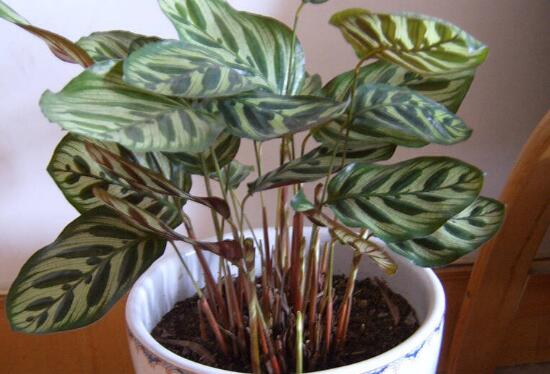
The reason this question comes up is actually very simple: people all care about their own safety, so while admiring beautiful things, they wonder whether those things are toxic. So is Calathea toxic? On this point, the editor can tell you clearly that Calathea is not toxic, and not only is it non-toxic, it also purifies the air and beautifies the home.
2. Can Calathea be placed in the bedroom? Not recommended
1. Large, well-ventilated bedroom: it can be placed there
The bedroom is where people sleep, and generally plants should not be placed there casually. However, if the bedroom is large enough or fairly well ventilated, keeping a pot of Calathea is clearly a good idea. It can purify the air and help with sleep.
2. Small, enclosed bedroom: it cannot be placed there
At night, Calathea performs respiration, taking in oxygen and releasing carbon dioxide. If the bedroom is small and very enclosed, this creates a situation where it competes with people for oxygen, thereby affecting sleep. So can Calathea be placed in the bedroom? This depends on the bedroom conditions, and generally speaking it is not recommended.
3. What are the benefits of growing Calathea indoors?
1. Ornamental value
When it comes to the benefits of growing Calathea indoors, the first thing that comes to mind is naturally its ornamental value. As shown in the picture above, Calathea's branches and leaves are very dense, and the plant form is very full, especially its deep green, glossy foliage, which looks extremely beautiful. Looking at Calathea when you get up in the morning, those lush green leaves instantly lift your mood.
2. Purifying the air
As a common and beautiful potted plant, Calathea also has the general properties of plants: it can absorb carbon dioxide and release fresh oxygen. Not only that, Calathea can also absorb harmful gases such as carbon monoxide and formaldehyde. Although its effect is not as strong as that of spider plant or pothos, it is still much higher than that of ordinary plants.
Moreover, growing a pot of Calathea indoors can also remove ammonia from the air. Scientific research shows that placing a pot of Calathea in a 10 sq m indoor space can remove 0.86 mg of formaldehyde and 2.19 mg of ammonia. When the indoor air is fresh, people's health will also be much better. So purifying the air is also one of Calathea's effects and functions.
3. Beautifying the home
Calathea's leaf surface is deep green and glossy, and the underside of the leaves is purplish red. It is not only attractive, but can also be used to decorate bedrooms, living rooms, offices and other places, appearing quiet and dignified, and can be enjoyed for a long time. In a noisy big city, after a tiring day, returning to a home with Calathea instantly eases the feeling of exhaustion.
Summary: If the bedroom is large or well ventilated, keeping a pot of Calathea is very good, but if the bedroom is not large and is enclosed, the editor suggests everyone not grow it. That is all the editor has to introduce about whether Calathea is toxic. Friends who are tempted might as well try growing a pot, and those who do not know how to grow it can also look at the cultivation methods for Calathea. I hope this can help everyone.
Is Calathea ornata toxic? Can Calathea ornata be placed in the bedroom? / Non-toxic, many benefits to growing it indoors
As a foliage plant, Calathea ornata has many uses. It is not only good-looking, but can also purify the air and beautify the home, and it also has good applications in medicinal use. With a plant like this, naturally many people want to grow it, but before growing it, everyone needs to clear up two questions: Is Calathea ornata toxic? Can Calathea ornata be placed in the bedroom? The editor will answer these questions for everyone.
1. Is Calathea ornata toxic? Non-toxic
On this question, from a subjective analysis: so many people are growing it, yet so far no one has been heard of being poisoned by it; from an objective check, the editor has learned that Calathea ornata itself contains no toxins or substances harmful to the human body; secondly, it does not release toxic gases. So is Calathea ornata toxic? Clearly it is non-toxic, and everyone can grow it with peace of mind.
2. Can Calathea ornata be placed in the bedroom? It can be placed there
After learning that Calathea ornata is non-toxic, many people want to grow it in the bedroom. So can Calathea ornata be placed in the bedroom? On this point, the editor's suggestion is not to grow it there. Because at night, Calathea ornata absorbs oxygen and releases carbon dioxide. Although its size is not large, if the bedroom is small and enclosed, it will undoubtedly create a situation where it competes with people for oxygen, thereby affecting sleep.
3. The benefits of growing Calathea ornata indoors
1. Highly ornamental and pleasing to the eye
When it comes to the benefits of growing Calathea indoors, the first thing that comes to mind is naturally its ornamental value. As shown in the picture above, Calathea ornata's leaves are large and thick, especially the leaf color, which is very charming; in particular, the different colors of the leaf surface and the leaf underside bring a distinctive beauty.
2. Absorbing dust and purifying the air
As a leafy plant, Calathea ornata has a very strong ability to purify the air. First, during photosynthesis it absorbs large amounts of harmful gases such as carbon dioxide and carbon monoxide, and releases fresh oxygen; second, Calathea ornata can also adsorb impurities and dust in the air, purifying particulate matter and making indoor air fresher.
3. Decorating the home and beautifying the environment
Calathea ornata's leaves are rich in color, with white, green and red all equally prominent, giving a unique visual enjoyment. In daily life, Calathea ornata is often kept as a potted plant in bedrooms, living rooms and other places, appearing quiet and dignified, and can be enjoyed for a long time. In an unchanging indoor space, adding a pot of Calathea ornata makes it more elegant and distinctive.
4. Cultivating character and increasing delight
Growing Calathea ornata indoors can also cultivate our character and elevate our temperament. Not only that, growing Calathea ornata for a long time can also regulate mood, relieve stress, and play a role in calming the mind and settling the spirit. It can be said that growing Calathea ornata can prevent the environment from being too dull, which helps prolong the life of the grower.
Summary: If the bedroom is large or well ventilated, keeping a pot of Calathea ornata is very good, but if the bedroom is not large and is enclosed, the editor suggests everyone not grow it. That is all the editor has to introduce about whether Calathea is toxic. Friends who are tempted might as well try growing a pot, and those who do not know how to grow it can also look at the cultivation methods for Calathea ornata. I hope this can help everyone.
Is Calathea makoyana toxic? Can Calathea makoyana be kept in the bedroom?
[Common questions] Is Calathea makoyana toxic? Can Calathea makoyana be kept in the bedroom?
Image: Calathea makoyana
[Expert answer]
Is Calathea makoyana toxic?
Calathea makoyana is non-toxic, has a beautiful shape, and is a variety that many people like among home decorative flowers. Its formaldehyde-removal effect is half that of spider plant, but it is still much higher than that of ordinary plants. In addition, it is also an expert at removing ammonia pollution from the air (within 10 sq m it can remove 0.86 mg of formaldehyde and 2.19 mg of ammonia). This plant is highly ornamental and can also purify the air.
Can Calathea makoyana be kept in the bedroom?
During the day, Calathea makoyana performs photosynthesis, provides oxygen, beautifies the room, cultivates character, and can increase indoor air humidity. But at night, Calathea makoyana absorbs oxygen and competes with people for carbon dioxide. Because Calathea makoyana's plant form is not large, its “harmfulness” is not high. Therefore, Calathea makoyana can be kept in the bedroom. If you feel it is not safe, you can place it in another area, or move it out of the bedroom at night.
How to properly handle toxic plants:
1. Do not casually pick the flowers, leaves or stems of plants, so as to avoid releasing the toxic substances within them;
2. After touching these plants, carefully wash the contacted areas to prevent toxic substances from remaining;
3. Never casually eat plant tissues, and also avoid contact between plant tissues and food.
4. If symptoms of poisoning appear, promptly send the person to a doctor for treatment.
[Editor's summary]
Calathea makoyana is a common indoor foliage plant. Because its leaves have feather-like markings resembling a peacock's tail feathers, it is named Calathea makoyana. Calathea makoyana is not toxic, its leaves have high ornamental value, and combined with its strong ability to adsorb formaldehyde, it is the first choice for most indoor cultivation. The above is the article "Is Calathea makoyana toxic? Can Calathea makoyana be kept in the bedroom?" compiled for you by the First Agricultural Economics editor. I hope it is helpful to you.