What to Do When White Magnolia Gets Chlorosis? Detailed Prevention and Control Methods
White magnolia prefers acidic soil. Its chlorosis is caused by soil that is too alkaline or irrigation water that is too alkaline. The symptoms are yellowing leaves and blackened, rotting roots. The prevention and control method is to spray the leaf surface with a 0.2% ferrous sulfate aqueous solution. Spray once every 5-7 days, and you can also regularly apply a 0.5% ferrous sulfate aqueous solution.
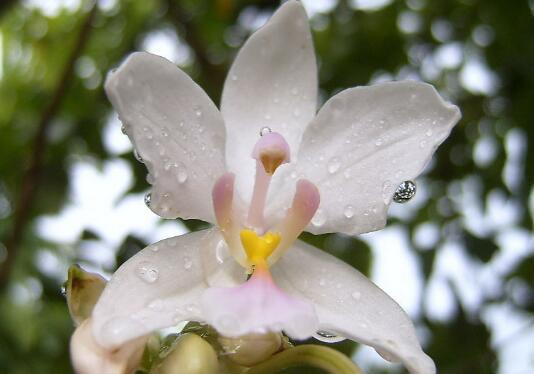
If you want to know what to do when white magnolia gets pests, first we need to understand what kind of pest it is, so we can deal with it accordingly, because the prevention and control methods for each pest and disease are different. Below are various pest and disease prevention and control methods for white magnolia. Anyone with similar troubles can take a look, since prevention is better than cure.
II. Pest and Disease Prevention and Control for White Magnolia
Pests
1. Red wax scale
Red wax scale is one of the more common pests among white magnolia pests and diseases. It mainly sucks the sap from the plant, and its excrement can also cause sooty mold, producing a layer of black mold on the leaves, causing the white magnolia to gradually weaken and, in severe cases, even fail to bloom.
Prevention and control method: When controlling this pest, we can use a 1000-fold dilution of 25% phosmet emulsifiable concentrate to spray the white magnolia. We can spray once every 4-6 days, and after three consecutive sprays, this pest can basically be eliminated.
2. Red spider mite
Among the pests and diseases of white magnolia, red spider mite is also quite common. Its peak period is around May each year, so everyone must pay extra attention at this time. If your white magnolia has this pest, its leaves will gradually wither, turn yellow and pale, and finally gradually fall off.
Prevention and control method: When controlling red spider mite, we can use a 2000-fold dilution of 15% pyridaben emulsifiable concentrate to spray and kill them. After spraying, we should also disinfect the white magnolia to prevent residual pathogens.
3. Cottony cushion scale
Cottony cushion scale is a pest of the order Homoptera. This pest is harmful to many plants, and white magnolia is one of them. Cottony cushion scale mainly harms the leaf buds and branch tips of white magnolia. It will gradually cause the leaves to turn yellow and the branch tips to fall off. In severe cases, the entire white magnolia will wither and die. This shows how great the harm of cottony cushion scale is among the pests and diseases of white magnolia.
Prevention and control method: When controlling this pest, if the infestation is not severe, we can cut off the branches and leaves carrying eggs. Of course, we can also use the most direct method, directly using a 1000-fold dilution of 40% omethoate to spray and kill them.
Diseases
1. Anthracnose
Among the pests and diseases of white magnolia, anthracnose is a relatively common one. When it occurs, many round brown spots appear on the leaves of the white magnolia, ranging in size from 2-8mm. Over time, they gradually spread and eventually cause the plant to rot.
Prevention and control method: When controlling this disease, we can use a 600-fold dilution of 70% thiophanate-methyl plus mancozeb to spray the affected plant, generally once every 10-15 days, and after 2-3 times it can be cured.
2. Chlorosis
Chlorosis does not occur as frequently as the above types among the pests and diseases of white magnolia, but there is still a certain chance of it appearing. When this disease occurs, the leaves of the white magnolia gradually lose their green color, and the leaf color gradually turns from green to yellow, and finally from yellow to white. In severe cases, the entire leaf dries up and falls off.
Prevention and control method: When controlling chlorosis, we can use a 500-fold dilution of Yellow Leaf Quick Green plant antiviral compound nutrient solution to spray the plant, once every 7-10 days, and after 2-3 consecutive sprays it can be cured.
Summary: After reading the above, I believe everyone now knows how to solve the problem of pests on white magnolia. In fact, the appearance of such problems is mainly caused by improper care. When you have time, you should still read the article on white magnolia cultivation methods, which contains detailed care instructions. That is all from the editor on the prevention and control of pests and diseases of white magnolia. I hope it can help everyone.
How to Grow White Magnolia? White Magnolia Cultivation Tips and Pest and Disease Prevention and Control Methods!
White magnolia has a long flowering period and deep green leaves. It is a garden ornamental and landscaping sapling deeply loved by people. So do you know how to grow white magnolia? Do you know how to prevent and control white magnolia pests and diseases? If not, hurry and take a look at what the Huinong Network editor has put together. The following are the white magnolia pest and disease prevention and control methods compiled by the Huinong Network editor!
Ecological habits of white magnolia:
White magnolia prefers warmth and is not cold-tolerant. In the north, potted plants should be moved indoors in winter and placed in a sunny spot, with the indoor temperature kept above 12°C, and 15°C being most suitable. Under such temperature conditions, it can remain evergreen. If it is damaged by frost and loses its leaves in winter, it will affect flowering the following year. White magnolia prefers sunlight and is not shade-tolerant. After the weather warms up in spring, it should be moved outdoors and placed in a sunny spot. In summer, when the climate is hot and the air is dry, it can be appropriately shaded, and watered and misted thoroughly.
White magnolia likes water, is not drought-tolerant, and fears waterlogging. If you find the leaves turning red, it means the root system has suffered water damage. Watering should be stopped or reduced, otherwise it will cause leaf drop. After the autumn cools, watering should be reduced. To prevent water accumulation, more broken bricks and tiles can be placed at the bottom of the pot to facilitate drainage and avoid root rot and yellow leaves.
White magnolia prefers acidity, and the soil should preferably be acidic or slightly acidic sandy loam. Because the soil or water in the north is mostly alkaline, it can easily cause poor plant growth and yellowing of leaf color. In this case, watering should be reduced, and at the same time black alum water can be used to water the flowers, which can gradually eliminate the yellowing phenomenon and slowly make the leaf color turn green again.
White magnolia likes fertilizer and water. During the growing season, it can be watered with alum fertilizer water once every 4-5 days. Generally, fertilize in the afternoon, then water with clear water in the evening to dilute the fertilizer water, so as to dissipate the heat at the roots and prevent root burning. Stop fertilizing from August. White magnolia sprouts twice a year. The first time is in spring, and the second time is in summer. Branches can grow more than 50 cm in a year. Before the second sprouting, the branches have a period of stopped growth. At this time, keep sufficient light and strengthen fertilizer and water management to promote the second sprouting. Generally, water with decomposed soybean cake fertilizer water once every 3-4 days, so as to achieve the goal of growing branches and blooming at the same time.
White magnolia cultivation and management tips:
White magnolia is not tolerant of pruning and should in principle be maintained in its natural state. In summer, pay attention to promptly cutting off leggy roots and dead branches to maintain a beautiful tree shape and reduce nutrient consumption.
Moving white magnolia outdoors is very important. When winter goes and spring comes and the weather gradually warms up, in northern regions, because the climate is dry, evaporation increases significantly. If the white magnolia has been poorly managed in winter and its root system is damaged, hastily moving it out in early spring will cause a large number of leaves to fall, branches to shrink, or even death. When this situation is found, do not rush to move it outdoors. First restore the root system indoors, and after the branches and leaves grow vigorously, gradually move it out. In summer, place it in a well-ventilated spot, because when the climate is dry and hot and ventilation is poor, it is very easy to cause red spider mite damage and diseases.
White magnolia should be repotted once every 1-2 years, mostly before moving outdoors in March-April. Use loose, fertile, well-drained acidic sandy loam soil.
White magnolia is mostly propagated by approach grafting. The time is from May to August. Use magnolia as the rootstock, and use one-year-old branches as scions. After about 40 days, they can be cut apart. It can also be propagated by layering. Propagation by cuttings is not easy to succeed, so it is mostly not used.
Prevention and control methods for pests and diseases:
The main pests and diseases of white magnolia are rhizopus rot, aphids and scale insects.
(1) Rhizopus rot: manifested as moldy and rotting roots with white fuzz. The main cause is that the potting soil is too wet. You can dig away the soil around the roots to expose the diseased roots, then sprinkle on gypsum powder to sterilize. You can also wait until the potting soil is slightly dry, then water with dilute lime water.
(2) Aphids: aphids often cause damage when sprouting in spring. Aphids are very small, and adults may or may not have wings. They reproduce very quickly and cause relatively serious damage. They have piercing-sucking mouthparts and usually gather on branches, leaves, buds or flower stalks, sucking the sap from tender tissues, causing branches and leaves to shrink and deform, and flowers to grow poorly or fail to open fully. The honeydew they secrete at the same time cultivates a sooty mold fungus, which has many harmful effects such as spreading viral diseases, and produces a layer of black covering on damaged branches and other parts, affecting normal photosynthesis and ornamental value. The prevention and control method is to ensure the plant has ventilation and light, and to frequently spray the leaf surface with clear water. After aphids appear, they can be sprayed and killed with an 800-fold dilution of fenitrothion or a 2000-fold dilution of omethoate.
(3) Scale insects: scale insects often reside on the underside of leaves and cause damage. The prevention and control methods are the same as for other flowers.
The above is the Huinong Network editor's summary of the growth habits and cultivation management techniques of white magnolia. I hope it is helpful to all growers!