How should I prevent and treat pests on fuchsia?
The main pest affecting fuchsia is the red spider mite. The best prevention and treatment method is to place the plant in a well-ventilated spot and spray-wash the entire plant with a strong jet of water, especially the undersides of the leaves. This is caused by dry indoor air; the eggs hatch into adults in a suitable environment and directly harm the plant, but mites are all afraid of moisture, so frequent water spraying can solve it.
If spray-washing is too slow, just spray pesticide directly on the leaf surface. You can choose acaricides such as dicofol and abamectin, diluted about 1000 times. When spraying, be thorough, careful and detailed, and if it rains within 12 hours after spraying, spray again.
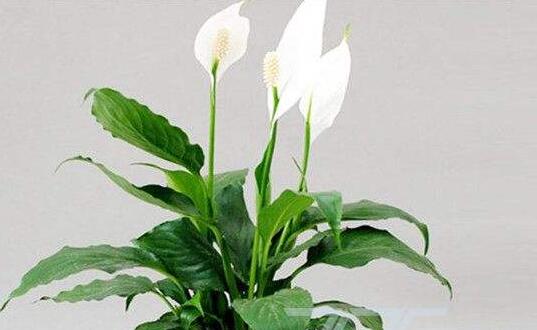
In the prevention and treatment of common pests and diseases of the peace lily (Spathiphyllum), the most common pests are aphids, whiteflies, thrips and so on. What should we do when the peace lily we grow gets pests? It is especially important to distinguish the type of pest, take effective pest control measures, and pay attention to later care.
1. Aphids
Symptoms: Aphids are also called greasy bugs or honey bugs, with a body length of about 1.5-4.9 mm, usually 2 mm. They suck sap through their needle-like mouthparts, causing the stems and leaves of the peace lily to curl and wither, and they often appear in spring and autumn.
Prevention and treatment measures: (1) You can use a brush to remove the aphids; if severe, you need to cut off the branches and leaves; (2) You can spray with a 50% malathion emulsion diluted to a 100-fold solution; (3) Carry out later care according to the peace lily cultivation methods and precautions.
2. Whiteflies
Symptoms: Whiteflies are pests with black, red or pale yellow wings, generally no more than 3 mm in body length. They are one of the most harmful pests in the prevention and treatment of common pests and diseases of the peace lily. Their body is oval or nearly round. After sucking the sap of the peace lily, they will cause it to weaken and even die.
Prevention and treatment measures: (1) Remove the whiteflies, using a brush or wooden stick; (2) You can use a high-temperature sealing method, for example, control the temperature at 45-48 degrees and the humidity above 90%, and after 2 hours the whiteflies will basically die; (3) Usually pay attention not to apply too much fertilizer, and the environment should be well ventilated.
3. Thrips
Symptoms: A pest that is yellow, brown or black, with a body length of about 2 mm. It sucks the sap of the plant's young tissues, especially tender leaves and new buds, which will cause the peace lily to curl and wither, causing serious harm.
Prevention and treatment measures: (1) Strengthen the management of fertilizer and water, which can promote the peace lily to grow more robustly and reduce the probability of thrips appearing; (2) Use 25% thiamethoxam water-dispersible granules diluted to a 5000-fold solution for root drenching; (3) Strengthen later care.
Common diseases of the peace lily
1. Leaf spot disease
Symptoms: Leaf spot disease is the most common in the prevention and treatment of common pests and diseases of the peace lily. Oval or elongated light reddish-brown spots appear on the leaves, surrounded by chlorotic rings, which later expand into irregular large patches, and black spots form on the diseased areas.
Prevention and treatment measures: (1) Cut off the diseased tissue and burn it in a centralized manner; (2) Spray with 38% oxadixyl and cymoxanil and copper fungicide diluted to a 1000-fold solution, or spray with 70% mancozeb diluted to a 500-fold solution.
2. Brown spot disease
Symptoms: The disease starts on the lower leaves and then spreads upward. At first it is round or oval, showing purple-brown spots, then turns black, and finally the leaves wither, yellow and fall off, and the peace lily will fail to bloom.
Prevention and treatment measures: (1) In hot and humid weather, apply less nitrogen fertilizer, maintain a certain amount of phosphorus and potassium fertilizer, and avoid watering in the evening; (2) In the early stage of the disease, spray with mancozeb diluted to an 800-fold solution, once every 5 days, 3-4 times is enough to prevent the disease from spreading.
3. Anthracnose
Symptoms: At first, water-soaked light green lesions appear at the leaf tips or leaf edges, then spread along the leaf veins into translucent irregular lesions, and finally change from brown to grayish blue-green.
Prevention and treatment measures: (1) Remove the diseased leaves; (2) Spray with 50% benomyl wettable powder diluted to a 1500-fold solution, or spray with 25% carbendazim wettable powder diluted to a 600-fold solution.
What to do when blue plumbago gets pests, pest and disease prevention and treatment for blue plumbago / 3 pests
Blue plumbago is a highly ornamental plant. Of course, no matter how beautiful the flower is, once it encounters pests and diseases it will gradually wither and no longer be beautiful. As for what to do when blue plumbago gets pests, when encountering such problems you must first understand which specific pest you are dealing with, so that you can handle it in a targeted way. As for how to carry out pest and disease prevention and treatment for blue plumbago, the editor below will take everyone through it.
I. What to do when blue plumbago gets pests / targeted treatment
Generally, when plants get pests, it is certainly because problems occurred during cultivation. For cultivation-related issues, you can refer to the article on blue plumbago cultivation methods for reference, and the editor will not introduce too much here. If blue plumbago gets pests, everyone need not panic; as long as you find the problem and know which pest it is, handling it is still quite simple. Regarding pest and disease prevention and treatment for blue plumbago, the targeted measures are mentioned below, and everyone can continue reading.
II. Pest and disease prevention and treatment for blue plumbago
1. Mite damage
Mites are one of the main pests harming blue plumbago. This is an extremely tiny animal, generally about 0.5 mm in size. Generally, when blue plumbago encounters this pest, its leaves will bend inward. Generally, when blue plumbago shows this symptom, it can basically be judged to be mite damage.
Prevention and treatment method: If this phenomenon occurs during the mature period, you can directly choose to use a miticide to spray and kill them. If this phenomenon occurs when blue plumbago is at the seedling stage, it is best to use 0.01% peptide nitrogen to spray the leaf surface.
2. Root-knot nematode damage
Root-knot nematodes are omnivorous pests. This pest generally harms the roots of plants, and many plants suffer greatly from it. The best method is still to water more and provide ventilation during the cultivation of blue plumbago, keeping the soil at a certain humidity for prevention. Of course, if it does suffer from this pest, it still has to be dealt with.
Prevention and treatment method: Root-knot nematode damage is a relatively common one among the pests and diseases of blue plumbago. The best way to solve this pest is to use 80% bromochloropropane emulsifiable concentrate diluted solution to spray on the soil surface.
3. Scale insect damage
Scale insect damage is a pest that many plants have. It is one of the main pest types harming garden plants in our country. It sucks the sap of blue plumbago leaves, causing the branches and leaves to wither. If not treated for a long time, it can directly cause the death of the entire plant, so when encountering this pest it must be treated promptly.
Prevention and treatment method: The most direct way to deal with scale insects is to use 25% phosmet emulsifiable concentrate and a 1000-fold solution spray to spray and kill them.
It is not scary when blue plumbago gets pests; what is scary is not knowing how to handle it and causing the blue plumbago to die. I believe that after reading this article, everyone will know how to handle such problems in the future. The editor has introduced pest and disease prevention and treatment for blue plumbago here, hoping it can help everyone.