What are the common diseases of petunias? A detailed explanation
1. Powdery mildew. After the disease occurs, promptly remove diseased leaves; in the early stage of the disease, spray 75% chlorothalonil 600-800 times dilution.
2. Leaf spot. Try to avoid bruising the leaves, and take care to prevent wind damage, sunscald and freezing injury; promptly remove diseased leaves and burn them, and be careful to clear away fallen leaves; spray 50% zineb 1000 times dilution for control.
3. Viral disease. Pull out diseased plants and bury them deep or burn them; spray 40% omethoate 1000 times dilution to control aphids; during cultivation work, tools and hands that have come into contact with diseased plants must be disinfected.
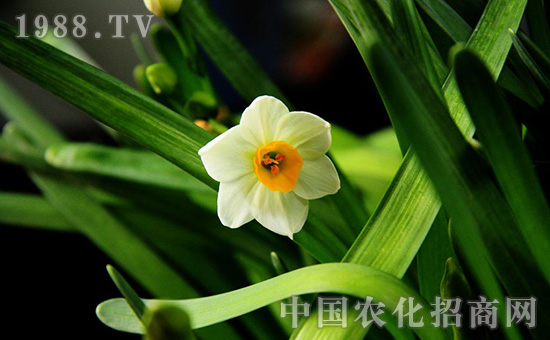
Narcissus mosaic virus disease:
Symptoms:
In the early stage of narcissus growth, no symptoms appear, or slight green mottling appears. As the disease develops, obvious mosaic symptoms only appear in the middle stage of growth; in severe cases, the leaves yellow and become distorted, and the plant is distinctly stunted and weak. Its pathogen is Narcissus mosaic virus. It is transmitted by leafhoppers, sap and contact, and virus-carrying bulbs and daughter bulbs are also an important route of transmission. This virus also infects ornamental plants such as Narcissus poeticus, Narcissus pseudonarcissus, hyacinth, Madagascar periwinkle, globe amaranth, petunia, Convolvulus tricolor and Centaurea cyanus. In addition, Cucumber mosaic virus can also cause narcissus mosaic disease.
Control methods:
1. Use a combination of shoot-tip tissue culture and heat treatment for virus elimination, cultivate virus-free seedlings, and establish a virus-free mother bulb base.
2. Pay attention to field sanitation; when diseased plants are found, immediately pull them out and destroy them to avoid spreading the virus.
3. Spray insecticides to control green peach aphids and other aphids as well as virus-transmitting insects such as leafhoppers. The above methods should be used in combination for integrated management, and all can achieve good control results.
Narcissus gray mold:
Symptoms:
After narcissus bulbs are affected, the basal plate rots and softens, and a gray mold layer forms on the surface.
Control methods:
1. Horticultural control: bulbs are best placed in a thin layer on bamboo blinds; the storage site should be dry, ventilated and exposed to light.
2. Chemical disinfection: treat bulbs with 0.5% formalin solution for half an hour, then wash with water and dry in the shade before storing.
3. Manual control: if diseased bulbs are found during storage, immediately pick them out and destroy them.
Narcissus yellow stripe disease:
Symptoms:
Its typical symptom is yellow stripes produced along the leaf veins, forming systemic mosaic. Diseased leaves begin to become rough, the flower stalk also shows obvious chlorotic spots, and the flowers are broken in color. Finally, the bulbs become smaller, the plant becomes dwarfed, and it withers prematurely. On some cultivars the chlorosis on the leaves is not obvious, while some cultivars show green stripes. Its pathogen is Narcissus yellow stripe virus. It is transmitted by green peach aphids and other aphids, and sap can also transmit the virus. Narcissus yellow stripe virus can also infect flowers such as Narcissus incomparabilis, Narcissus pseudonarcissus, Narcissus poeticus, Narcissus tazetta and kalanchoe. There are also latent disease and stripe disease, which are caused by Narcissus latent virus and Chinese narcissus stripe virus respectively. Under natural conditions, two or more viruses often cause complex infection, and the symptoms also become complicated.
Control methods:
1. Use a combination of shoot-tip tissue culture and heat treatment for virus elimination, cultivate virus-free seedlings, and establish a virus-free mother bulb base.
2. Pay attention to field sanitation; when diseased plants are found, immediately pull them out and destroy them to avoid spreading the virus.
3. Spray insecticides to control green peach aphids and other aphids as well as virus-transmitting insects such as leafhoppers. The above methods should be used in combination for integrated management, and all can achieve good control results.
Narcissus large brown spot:
Symptoms:
In the early stage of the disease, lesions appear at the leaf tips, are brown, and are clearly demarcated from the healthy part. Later, lesions also appear on the leaf edges and in the middle, and the flower stalk can also be infected. The lesions are initially brown spots, and after expansion become elliptical or irregular lesions; a single lesion can reach 1 cm x 4.5 cm. The lesions merge into slender streaks, and the upper and lower ends rapidly turn yellow. When lesions occur at the edges, leaf growth stagnates and the leaves become distorted. On Chinese narcissus the lesions are distinctly thickened, and the surrounding tissue turns yellow. On trumpet narcissus the lesions are brown, and the surrounding tissue does not turn yellow.
Pathogen and current disease situation:
The pathogen is Stagonospora curtisii. The mycelium or conidia overwinter or oversummer on the upper end of the bulb epidermis or on dead leaves. Conidia are spread by wind and rain. The pathogen can also oversummer on other hosts such as amaryllis and crinum. In southern regions, there is much rain from April to May, and the disease is more severe. Planting too densely, poor drainage, and continuous cropping all aggravate the disease. Disease resistance also differs among cultivars. Narcissus tazetta is severely affected, while Narcissus viridiflorus and trumpet narcissus are lightly affected.
Control methods:
1. Prune off diseased leaves and pull out diseased plants to reduce sources of infection.
2. Avoid continuous cropping or planting plants such as amaryllis, crinum and agapanthus near narcissus planting sites.
3. Avoid causing wounds when harvesting bulbs; before planting, peel off the membrane and soak in 1% formaldehyde solution for 0.5-1.0 hour, or 50% carbendazim 500 times dilution for 12 hours, or 0.1% mercuric chloride solution for 0.5-1.0 hour, to reduce primary infection.
4. During the disease period, spray with 1% Bordeaux mixture or 75% chlorothalonil 500 times dilution or 70% thiophanate-methyl 1000 times dilution.
Further reading:
How to fertilize narcissus, what fertilizer to apply, pest and disease control, flower language and flowering period, how to grow it, cultivation methods and cultivation techniques