What are the common pests and diseases of pitcher plants?
Pitcher plant seedlings grow slowly and are commonly affected by pests and diseases such as red spider mites, aphids, leaf spot, anthracnose and black spot. These occur more frequently under conditions of poor ventilation, excessive shade and too-low temperatures. In addition to promptly regulating the growing environment, pesticides should also be sprayed in good time for control.
Red spider mites, aphids and the like can be killed by spraying with a 200-fold dilution of 40% omethoate emulsifiable concentrate or a 1000-fold dilution of dicofol. Leaf spot, anthracnose and black spot can be controlled with an 800-fold dilution of 50% zineb wettable powder or a 800~1000-fold dilution of 75% thiophanate-methyl.
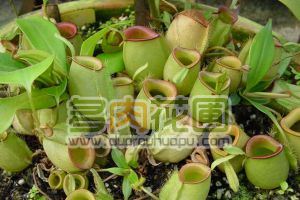
Control of the main pests and diseases of pitcher plants
Leaf spot
Symptoms and characteristics
Many small spots appear on the leaves and gradually expand to form large brown spots. A black mold layer develops locally and gradually ruptures. This affects the growth and ornamental value of the plant.
Control methods
Strengthen management, care for the plant properly, and enhance its disease resistance.
When the disease occurs, spray a fungicide to sterilize, applying a 1000-fold dilution of an antibacterial solution. Spray evenly and cover the whole plant, including the undersides of the leaves.
Root rot
Symptoms and characteristics
When the pitcher plant grows slowly and its disease resistance declines, various ailments appear. Root rot manifests as yellowing of the above-ground leaves, which gradually wilt. The underground roots turn brown and rot, and no new roots grow for a long time.
Root rot is caused by the invasion of Fusarium. Initially, rot begins gradually only at the wound, but as it worsens it attacks the entire plant. Low temperatures or overwatering can both trigger this disease.
Control methods
Pitcher plants like warm environments, and the growing temperature should not be below 24°C. A hot, misty environment is even more favorable for growth. To avoid root rot, use a mix of peat soil, dried cow dung, leaf mold and sandy soil, hang it in a greenhouse, and provide appropriate shading.
In summer, place it in a high-temperature environment with good ventilation, and make sure the water used for watering does not contain lime. Watering with some cow dung water during the growing season helps root growth.
In the early stage of the disease, spray pesticide promptly. You can choose lirukang, root rot remedy, or duo fu xin, dilute with clean water into a solution, and spray it.
Main damage caused by pests
Control methods
For scale insects, spray with a 2000-fold dilution of 40% dimethoate emulsifiable concentrate.
Cold and pest protection
Symptoms and characteristics
Pitcher plants are tropical plants and are prone to cold injury when temperatures are low. Many small patches appear on the leaves. Living long-term in a damp, dark environment makes them prone to sooty mold. In summer they can also be attacked by pests such as thrips and scale insects.
Control methods
When the temperature drops, insulate them promptly; placing them in an air-conditioned room is best.
To avoid pest damage, spray a dedicated insecticide promptly. Ventilate in time, provide sunlight, and remove any insects found promptly.
What to do when pitcher plants get bugs, and pest and disease control for pitcher plants / 1 pest, 2 diseases, spray with pesticide
When it comes to pitcher plants, everyone thinks of their ability to catch mosquitoes and flies. But did you know that even such a mosquito-repelling plant can get bugs? Because pitcher plants are tropical plants, growing them in our country can be affected, and they can be attacked by pests and diseases if you are not careful. So what do you do when pitcher plants get bugs? Below is the pest and disease control for pitcher plants; let's take a look.
1. What to do when pitcher plants get bugs: spray pesticide
It is understood that pitcher plants are tropical plants, and cultivating them in most parts of our country will have some effect on their growth. If you are not careful, pitcher plants will be attacked by pests and diseases. So what do you do when pitcher plants get bugs? Actually, it is very simple: just spray pesticide.
As for what pesticide to spray, this is described in detail in the pest and disease control for pitcher plants. Let's continue reading.
2. Pest and disease control for pitcher plants
According to the editor's research, if you do not strictly follow the cultivation methods for pitcher plants, they are prone to leaf spot, root rot and sunscald. Among these, leaf spot and root rot are more serious. In addition, they can also be attacked by scale insects. The specific symptoms and control methods are as follows:
1. Root mealybugs
A type of scale insect that mainly sucks the fresh sap of pitcher plants. Symptoms of infestation: pitcher plant leaves turn yellow, wither, and even fall off, seriously affecting the ornamental effect of the pitcher plant.
Control methods: if a small number of root mealybugs are found, they can be wiped off with a brush or coarse linen, then the diseased leaves should be cut off and burned in a centralized manner to reduce the source of infection; finally, spray with a 1000-1500-fold dilution of 40% profenofos emulsifiable concentrate or a 700-800-fold dilution of 25% ikar emulsifiable concentrate for control. Note that both sides of the branches should be covered to improve the insect-killing rate.
2. Leaf spot
One of the pests and diseases of pitcher plants, it mainly infects the leaves. Symptoms: water-soaked lesions and small spots appear on the leaves, gradually expanding to form oval brown spots. The diseased area produces a black mold layer and ruptures in the later stage. This seriously affects plant growth and ornamental effect.
Control methods: promptly remove diseased leaves and destroy them in a centralized manner to reduce the source of infection; when the disease occurs, spray a fungicide to sterilize or use a 1000-fold dilution of an antibacterial solution. Spray evenly and cover the whole plant, including the undersides of the leaves.
3. Root rot
In a high-temperature summer environment, if there is no ventilation and the water used for watering contains lime, the pitcher plant will suffer from root rot. Symptoms: the above-ground leaves turn yellow and gradually wilt. The underground roots turn brown and rot, and no new roots grow for a long time.
Control methods: in the early stage of the disease, spray pesticide promptly; you can choose lirukang, root rot remedy, etc., dilute with clean water into a solution and spray it. To avoid root rot, use a mix of peat soil, dried cow dung, leaf mold and sandy soil, hang it in a greenhouse, and provide appropriate shading.
4. Cold and pest protection
Pitcher plants are tropical plants and are prone to cold injury when temperatures are low, with many small patches appearing on the leaves. If they live long-term in a damp, dark environment, they are also prone to sooty mold. In summer they can also be attacked by pests such as thrips and scale insects.
Control methods: when the temperature drops, insulate them promptly; placing them in an air-conditioned room is best. To avoid pest damage, spray a dedicated insecticide promptly. Ventilate in time, provide sunlight, and remove any insects found promptly.
That is all the editor has to introduce about pest and disease control for pitcher plants. I believe everyone now knows what to do when pitcher plants get bugs or become sick! Overall, although pitcher plants can repel insects, they can also get bugs, so to avoid unnecessary trouble, everyone should care for them diligently.