What pests and diseases are potted pothos (Epipremnum aureum) prone to?
Common pests and diseases of indoor pothos are leaf spot and root rot.
Control methods: remove diseased leaves and ensure good ventilation; during the outbreak period, spray 50% carbendazim wettable powder at 500 times dilution, and it can also be used as a root drench. Root rot generally does not occur after soilless cutting seedlings are planted out.
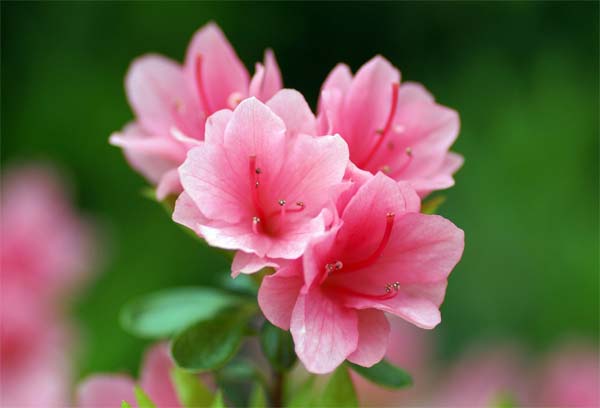
Cultivation methods:
1. Environmental conditions: It is best to have both indoor and outdoor environments for cultivating rhododendrons. The indoor environment is used in winter. The outdoor site is used in summer and autumn, and muddy ground is preferable; cement ground should be avoided. The site should be spacious, ventilated and shaded, with a shade shed built above, covered with reed screens or relying on natural tree shade, with a light transmission rate of about 30% being suitable, and direct afternoon sun must be avoided.
2. Potting soil requirements: Rhododendrons like loose, highly permeable, well-drained, humus-rich acidic soil with a pH value of 5.0-6.0. If clay or alkaline soil is used, hardly one in a hundred will survive. Especially for summer azaleas and foreign azaleas, mountain soil is indispensable. Mountain soil also needs to be improved; currently three kinds of prepared culture soil are usually used.
3. Flower pot selection: For cultivating rhododendrons, generally two kinds of pots are chosen: clay pots and purple clay pots. Clay pots have good air and water permeability, and production units all use these pots for cultivation. For finished rhododendrons, especially those already shaped, for indoor and outdoor display they are generally planted in beautiful and antique purple clay pots; purple clay pots are fine in texture, rich in color and beautiful in shape, and can double the ornamental value.
4. Improving water quality: For watering rhododendrons, rainwater is best, followed by river water and pond water. If tap water is used, it is best to store the water for 1-2 days to let the chlorine volatilize before use. When using it, add 0.2% ferrous sulfate, and water once every 7-10 days during the growing season; use it regularly to ensure the soil is acidic.
5. Fertilizer and water management: Rhododendrons like shade and moisture, and should not be too dry. More water is especially needed during the flowering period. In winter, rhododendrons have entered the dormant period and do not need much water; generally water once every 4-5 days, preferably around noon on a clear and warm day;
6. Outdoor shading: From before being moved out of the room until before flowering, they should be exposed to more sunlight; during the flowering period, short periods of shading are needed at noon, with a light transmission rate of 60%;
7. Shaping and pruning: Rhododendrons grow relatively slowly, and are generally allowed to grow naturally; shaping is only done after flowering, cutting off leggy branches, diseased and weak branches, deformed branches and damaged branches.
8. Disease and pest control: For the azalea lace bug (also known as the camellia net bug), spray 40% dimethoate at 1500 times dilution during the damage period, once every 7 days, for 3 consecutive times. Control of the bud leaf roller mainly relies on manual capture and killing; larvae or pupae can also be sprayed with 40% dimethoate emulsifiable concentrate at 2000 times dilution or dichlorvos at 1500 times dilution.
Precautions:
1. Rhododendron roots are as fine as hair strands, with few thick main roots; they fear both dryness and wetness, and especially fear heavy fertilizer. If watered too much, the roots soak in water; if too dry, the branches and leaves shrivel and the leaves fall off, posing a great threat to the plant. As for applying heavy fertilizer, it can endanger its life.
2. After the flowers fade, the spent flowers must be cut off to avoid seed production consuming nutrients. After new branches sprout, thin the branches appropriately, deciding what to keep or remove according to the plant's growth vigor.
3. Rhododendrons are most suitable for planting in clay pots, because clay pots absorb water and breathe, which is beneficial to root growth and development and makes the branches and leaves luxuriant.
4. The placement of potted rhododendrons is particular; generally they should be placed on a southeast-facing balcony, and it should be ventilated, with as little moving as possible. Without ventilation, they are prone to black spot disease and massive leaf drop.
5. Rhododendrons also have moderate light requirements, and direct sunlight should be avoided in summer.
6. Thin buds and leaves in time, removing part of the overly numerous and dense buds and leaves so that air circulates and nutrients are concentrated in the buds. After the buds form, nutrition should be increased, applying a moderate amount of extra phosphorus and potassium fertilizer; otherwise the buds will turn into leaf buds.
7. The main reasons for rhododendron leaf drop and failure to flower are: too strong direct sunlight in summer, freezing damage from severe cold, too much watering, too concentrated fertilizer, being kept indoors for too long, being placed in a place with no air circulation or in a dark and damp place, exposure to acid rain, etc. Therefore these situations should be avoided during care.
8. Repotting and changing soil does not need to be done every year; generally once every 2 to 3 years, damaging the roots as little as possible, and the time should be after the flowers fade or in autumn, while also spraying thiophanate to prevent diseases.
9. The main pests of rhododendrons are red spider mites, aphids, etc., which can be sprayed with fenvalerate, etc., with good results; if they are not dead after three days, spray once more.
10. The main propagation method for rhododendrons is cuttings. Around the time of Grain in Ear, select new branches 5 cm to 10 cm long, cut them off at the branching point, strip off the lower leaves, keep 3 to 4 top leaves, insert 1/3 of the branch into the soil, spray with enough water, and cover with plastic film. Strengthen management at ordinary times, and transplant after one year.
[Conclusion]Bai Juyi praised it: "Idly breaking off two branches to hold in hand, looking closely they seem not to exist in the human world; among flowers this thing is Xi Shi, while hibiscus and peony are all Mo Mu."
More plant information >>
|Cuban oregano|Marigold cultivation|Care methods for the happiness tree|Flower pictures and names|Effects of pothos flowers|Bowl lotus|
|Orange jasmine bonsai|How to grow Christmas cactus|How to grow cactus|How to care for gardenia|Effects of lavender|
| Foliage plants | Aquatic plants | Flowering plants | Carnivorous plants | Bryophytes |
|Whole wardrobes |Rural small villa renderings |Shelf decoration pictures |Ceiling keel pictures |Nanmu furniture pictures|
The Complete Guide to Caring for Potted Foliage Plants
Araceae foliage plants all have unique leaf shapes and colors, and are the most common indoor ornamental plants. The most representative are mainly five major categories:
(1) Spathiphyllum group: has large white spathe flower bracts; the main cultivated varieties include 'Sensation' (green giant) and peace lily.
(2) Dieffenbachia group: native to tropical America, plant height 30-90 cm, flowers upright, internodes short, leaves long elliptical, slightly wavy at the margins, leaf surface covered with various milky white or cream-yellow stripes or spots, shade-tolerant, with graceful green foliage. The main cultivated varieties include 'Marianne', 'KIKI', 'Golden Sun', 'White Jade', 'Duozai Zebra', 'Golden Treasure', 'Heaven Dieffenbachia', etc.
(3) Aglaonema group: native to tropical Asia, plant height about 30-50 cm, the most shade-tolerant, with highly varied leaf shapes; the main cultivated varieties include 'Silver Queen', 'Black Beauty', 'Galaxy', 'Silver King', etc.
(4) Philodendron group: native to tropical America, most are climbing or semi-climbing, their stems can grow aerial roots to attach to other objects for growth; leaf shapes vary by variety, including rounded heart-shaped, long heart-shaped, ovate-triangular, pinnately lobed, palmately lobed, etc.; leaf colors include green, brown, red, golden yellow, etc.; mature plants bloom with spadix inflorescences, lush in all four seasons, full of green, strongly shade-tolerant; potted plants are premium indoor plants, and stem cuttings in water can also root. The main cultivated varieties include 'Green Emperor', pothos, 'Syngonium auritum', 'Oredu', 'Green Dragon'; 'Sunshine Philodendron', golden pothos hanging baskets, etc.
(5) Syngonium: native to Central and South America, leaves are mostly arrow-shaped, stems are climbing and can attach to other objects for growth, and it is often cultivated as a climbing-pole potted plant. Besides the above categories, common cultivated varieties of Araceae foliage plants also include taro (Alocasia), calla lily (dripping guanyin), and Monstera deliciosa, etc.
Araceae foliage plants have fleshy, herbaceous stems and leaves with a milky sap containing a special calcium oxalate component, which is severely irritating to skin and stomach, so special care is needed during cutting propagation. At a production base in Hainan, there was once an incident where a local pig broke in, ate Marianne, and died suddenly. Their most obvious feature is that they have a spadix inflorescence and a modified bract or spathe; the spadix is a fleshy spike inflorescence filled with countless small flowers, and the flowers can be bisexual or unisexual. Female flowers are distributed in the lower half, and male flowers in the upper half. Generally, except for Spathiphyllum, when other foliage plants bloom we break off the inflorescences to avoid consuming nutrients and affecting leaf color. The root tissue of Araceae foliage plants can develop into three different forms: aerial roots, clinging roots and ground roots, to adapt to different growing environments.
1. Light
Green plants produce nutrients through photosynthesis to support plant growth and development. Within the allowable range of light intensity, the stronger the light intensity, the higher the photosynthetic efficiency and the faster the growth. In order to effectively absorb light, plants adapt to changes in light through changes in stem and leaf morphology, color, size and growth habit. When light is weak, leaves grow thinner, smaller, lighter in color, with fewer variegations, and stems and leaves become leggy. For example, philodendrons grown under 80% shade netting, compared with those grown under 40% shade netting, have larger and thinner leaves and more slender stems. Under strong light, the leaves of Aglaonema and Dieffenbachia grow upright. When the light intensity for golden pothos is less than 43000 Lux, its yellow variegation decreases and the green ratio increases. Therefore, under different light intensities, Araceae plants will show different appearances and quality. (See Table 1)
Light intensity required for potted production of Araceae plants:
Genus Aglaonema Dieffenbachia Spathiphyllum Philodendron Syngonium
Light intensity (lux) 15000-25000 25000-35000 15000-25000 25000-35000 25000-35000
Most Araceae plants originate from tropical rainforest regions and can adapt to changes in light. In Guangdong, horizontal shade frames are mostly set up with shade nets of different shading percentages. The shading percentage of the shade net only indicates the degree of light transmission; the light intensity inside the facility changes with changes in external light intensity, and the light intensity in each region often changes due to climate, geographical location and differences in the surrounding environment. Quantifying the shading rate as light intensity is already very impractical, so Lux is commonly used, which is more practical and convenient.
Light requirements need to be adjusted according to the plant's growth stage and changes in other environmental factors. Small seedlings or cuttings have poorer tolerance to the environment, so light intensity should be lower, and as the seedlings grow, the light intensity should gradually be adjusted to an appropriate range. For example, the mother plant area generally has stronger light, so that the mother plants accumulate more nutrients and produce strong, high-quality cuttings.
2. Temperature
Araceae foliage plants are native to the tropics and subtropics and prefer high temperatures. The day-night temperature conditions for growth are respectively: daytime temperature below 35C, with the optimal daytime temperature at 28-32C; nighttime above 18C, with the optimal nighttime temperature at 22-25C. However, temperatures differ throughout the four seasons, and combined with differences in the geographical environment and climate of each region, ideal temperature conditions can be achieved through improved facilities, so as to avoid damage caused by unsuitable temperatures:
(1) Low-temperature damage: Araceae foliage plants are low-temperature-sensitive plants. When low temperatures arrive, at best they cause slow or halted plant growth, and at worst leaf frostbite or even leaf drop and death. Different genera and species of foliage plants have different tolerances to low temperatures and the duration of low temperatures. The extreme low temperature for Aglaonema, Spathiphyllum, Philodendron and Dieffenbachia is above 10C. When a cold wave arrives, a brief low temperature (below 10C) is enough to cause cold damage to Aglaonema, golden pothos and Dieffenbachia, etc., and being below 15C for a long time will cause physiological disorders. Therefore, cold protection measures must be taken, especially for seedlings, which should be cultivated in closed large sheds.
(2) High-temperature disorders: Araceae foliage plants prefer high-temperature environments. Dieffenbachia and Spathiphyllum can achieve good quality under 32C conditions, and Aglaonema can endure high temperatures up to 42C. But overall, it should not exceed 35C, because with short-term high temperatures, in order to remove excess heat, plants will increase transpiration rates, and the plants will show symptoms of dehydration. If high temperatures persist, it will lead to disorders of slow or halted growth. Generally, high-temperature disorder problems can be improved by increasing the number of waterings to increase air humidity. But the most basic method is still to cool down through shading. Within the allowable range of light intensity, shade nets can effectively block most heat sources, while strengthening ventilation so that the air fully convects.
(3) Medium temperature: The level of soil temperature mainly affects the root absorption capacity of the plant. In late autumn or early spring, when the temperature difference between day and night is large, the daytime air temperature gradually rises, and the increase in leaf temperature leads to too strong transpiration. At this time, the soil temperature is still low, causing the roots to absorb water too slowly, unable to keep up with the demand of the aboveground parts, thus showing symptoms of dehydration, and over a long time causing nutritional imbalance. The temperature of the medium also affects the plant's rooting ability. Generally, the suitable temperature for cutting Araceae foliage plants is 24-30C.
3. Moisture
Araceae foliage plants are native to tropical rainforests and like high temperatures; a relative humidity of 70-90% is best. Increasing air humidity can increase the degree of stomatal opening, increase gas exchange rates, increase CO2 absorption, and increase photosynthetic efficiency. Especially at high temperatures, increasing air humidity can reduce the rate of water loss and reduce damage from high temperatures.
The medium should be kept moist at all times, but must not become waterlogged; waterlogging easily causes root rot. In summer, water thoroughly 1-2 times a day, and in winter water once every 2-3 days.
Water quality requirements: it must not contain too many mineral elements such as calcium and iron. When water seeps into the medium, it causes changes in the physical and chemical properties of the medium, and easily forms salt deposits on the leaf surface, reducing photosynthetic efficiency and harming appearance. In a short time it has little effect on plant growth, but with long-term accumulation it will cause physiological disorders. Therefore, water quality requires that the electrical conductivity must not exceed 0.75 mmho/cm.
4. Medium
The cultivation medium for Araceae foliage plants requires strong water retention, good air permeability and rich organic matter. Because the pot volume is small for potted Araceae foliage plants, the chemical and physical buffering capacity of the medium is not comparable to field soil, so there should be a medium that can meet their growth characteristics. When choosing a medium, comprehensive factors such as economy, chemical properties and physical properties of the substrate need to be considered. Generally it is required to be cheap, light in texture, non-toxic, highly usable, easy to obtain materials, uniform in properties, simple and convenient to operate, with strong cation exchange capacity, low nutrients, moderate pH, and an appropriate inert carbon-to-nitrogen ratio, etc. The standard for foliage plant medium is: pH value 5.5-6.5, water retention 20-60%, total porosity 5-30%, bulk density 0.6-1.2 g/cm2, cation exchange capacity 2-40 meq, soluble salts 400-1000 ppm. The pH value of the medium can be adjusted with magnesian lime and light calcium carbonate.
The raw materials often used in medium preparation include peat soil, coconut shell, coconut coir, pond mud, perlite, sand, bark, etc. Reference formulas include: A. Peat soil: perlite: coconut shell = 2:1:1; B. Peat soil: perlite: vermiculite = 1:1:1; C. Peat soil: coconut coir: sand = 2:1:1
When in use, the pH value will decrease, causing nutrients to be fixed and unable to be absorbed, as well as trace element toxicity. Always pay attention to changes in the pH value of the medium. When the pH is too low, it can also be adjusted by watering with light calcium carbonate water.
5. Fertilization
Foliage plants emphasize leaf performance and lean relatively more toward nitrogen and potassium fertilizers. It is generally recommended that an N-P-K ratio of 3:1:2 is more suitable, but fertilizers with a 1:1:1 ratio are also acceptable. At present, there are many long-acting solid fertilizers (such as Osmocote) and solid organic fertilizers (such as peanut bran) on the market to choose from, which can be mixed into the medium when potting or supplemented after planting.
Liquid fertilizers are more commonly used in potted foliage plants, usually applied together with watering. An N:P:K ratio of 3:1:2 is more suitable. Liquid fertilizers are usually prepared with calcium nitrate, potassium nitrate, monopotassium phosphate, ammonium nitrate, urea, etc. as materials.
The timing and amount of fertilizer application are best based on the results of medium or plant analysis. Due to environmental conditions and crop growth stages, nutrient demand is greater when light is stronger and temperatures are higher. In regions with frequent irrigation, more fertilizer is lost, and it must also be replenished at any time.
6. Propagation methods
The propagation methods of Araceae foliage plants include cuttings, division, tissue culture, etc., mostly based on cuttings. The propagation methods of each type of plant are listed in the table:
Genus Cuttings Division Tissue culture
Aglaonema O X
Spathiphyllum O O
Dieffenbachia O X O
Philodendron O O
Alocasia X O
Syngonium X O
Note: O indicates a commonly used method; X indicates less commonly used.
Araceae foliage plants root easily from cuttings, as long as there is intermittent misting equipment and a well-drained medium. The cutting medium generally uses coconut coir: perlite = 1:1 ratio. The cutting temperature requires a daytime temperature of 25-35C, with nighttime temperature not lower than 22C. Especially in the low-temperature period of winter, temperature control is even more important. In winter, golden pothos cuttings require a nighttime temperature above 18C to root. Tissue culture can mass-propagate virus-free seedlings. Except for Aglaonema, all can be propagated by tissue culture.
7. Pest and disease control
Araceae foliage plant diseases mainly include the following:
1. Phytophthora blight:
Phytophthora blight is a fungal disease that causes relatively more damage. It is a soil-borne disease caused by Phytophthora spp., with the optimal disease onset temperature at 20-25C, and it is especially severe in the rainy season. The affected parts initially appear water-soaked, and the tissue fades and turns brown. In the early stage of infection, the diseased tissue still maintains considerable toughness, and only later does the affected area rot, collapse and disintegrate. Invasion from the ground level mainly causes wilt-type symptoms, such as Phytophthora blight of Spathiphyllum, while damage from the leaves appears as leaf blight or stem blight. When humidity persists, white mycelium can be seen on the affected parts, which can distinguish it from bacterial soft rot, such as Phytophthora blight of golden pothos, philodendron and Aglaonema. Moisture is an important factor affecting disease occurrence. When the medium humidity is high, the Phytophthora mycelium or thick-walled oospores lurking in the roots or medium of foliage plants form sporangia within a few hours and release zoospores, which spread to nearby plants via flowing water, rainwater or splashing water droplets. A wound is not necessarily required for infection, but wounds help the pathogen invade plant tissues.
Control methods: The most effective and simplest measure is to strengthen field sanitation management, remove diseased plants, diseased leaves and weeds at any time, and take them away from the park to be burned. Plant residues must not be piled up in the park, so as to avoid pathogen breeding, and rain exposure, watering and splashing should be avoided as much as possible. Even after rain exposure, preventive spraying must be done in time. Strengthen ventilation and cooling in the park, and nitrogen fertilizer must not be excessive. For chemical control, 58% metalaxyl-mancozeb (Ridomil MZ) 400-600 times, 72.2% propamocarb aqueous solution 800-1000 times, 50% benomyl wettable powder 1000-1500 times, 64% oxadixyl-mancozeb wettable powder 400-500 times, and 80% zineb wettable powder 400 times can be used in rotation.
2. Root rot:
Root rot is a fungal disease, and the pathogen is Cylindrocladium spathiphylli. It mainly harms Spathiphyllum and Dieffenbachia, and the disease causes necrosis of leaves, stems and roots. When it harms leaves and stems, it first causes brown spots all over, with yellow halos around them, and finally the plant's leaves wither and fall off, causing plant death. When it harms the roots, it causes root rot, affecting the plant's water and nutrient absorption.
Control methods: In addition to strengthening field management, 1000-1500 times 50% benomyl powder or thiophanate-methyl can be used for spraying or irrigation treatment.
3. Bacterial soft rot:
The pathogens are Erwinia carotovora subsp. carotovora and E. chrysanthemi. The optimal disease onset temperature is 22-28C. They invade through water pores, stomata and wounds, and can spread via rainwater, irrigation water, medium, tools and people. Water-soaked appearance and soft rot progressing to wilting of the whole plant are its main symptoms, and in the late stage the affected parts emit a foul odor. Dieffenbachia and Philodendron are extremely prone to this disease.
Control methods: In the early stage of the disease, agricultural streptomycin, captan (Captan), copper hydroxide, Kocide 2000, copper oxychloride, etc. can be sprayed for control. Once it occurs, the diseased plants must be removed.
4. Bacterial leaf blight:
The pathogen is Xanthomonas campestris pv. dieffenbachiae, which harms almost all Araceae foliage plants, with 28-32C being the optimal temperature for disease onset. The symptoms are initially water-soaked, then form light yellowish-brown necrotic lesions, with obvious yellow halos around them; the leaves partially or completely yellow, later turning into dark brown lesions, gradually drying up. The disease spreads to the petioles, extends to the base and causes leaf drop, and finally the whole plant dies. The pathogen invades through water pores, stomata and wounds, and can spread via rainwater, irrigation water, medium, etc.
Control methods: same as for bacterial soft rot.
5. Viral disease DMV (Dasheen mosaic virus):
It is a virus belonging to the Potyviruses group that causes bushy growth, and is transmitted mechanically or by aphid vectors to foliage plants that mainly rely on asexual propagation as their production method, posing a potential threat. Mosaic, deformity, dwarfing and a few dotted spots are its main symptoms.
Control methods: (1) Control aphids and thrips well, and prevent snails and slugs from crawling or biting; (2) Select virus-free seedlings; (3) Use virus inhibitors such as Bingdu Caobike and Bingdu Sukeling for control
The main pest of Araceae foliage plants is aphids, which can be controlled with methidathion, cyhalothrin, omethoate, etc., spraying once every 4-5 days, repeated 2-3 times. Slugs and snails also harm foliage plants, and the commonly used control agent is Mida 8% metaldehyde.