How to grow Phlox? A detailed guide to cultivation and management methods
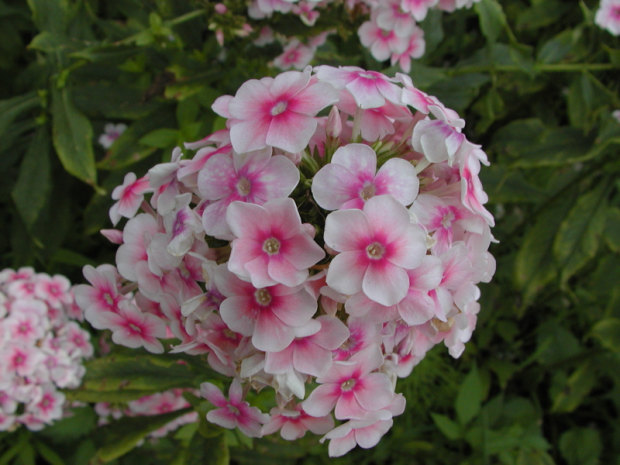
Hydrangea blooms in brilliant red, flourishing in midsummer and welcoming the crisp autumn days - this is the charm of the "peach-red" phlox at peak bloom currently cultivated in courtyards in our country. It is a perennial herbaceous flower, so it is also called perennial phlox. The plant height is about 50-80 cm, and the small flowers are about 2
Phlox belongs to the Polemoniaceae family, native to North America; it is cold-tolerant and prefers a mild and humid climate. In full sunlight and well-drained fertile soil, it blooms profusely and grows lush foliage.
Propagation can be done by root cuttings, bud cuttings or stem cuttings; it can also be propagated by division, but divided plants do not grow as vigorously as those propagated by cuttings. For root cuttings, select thick broken roots from division, cut them into 3 cm long root segments, place them flat in coarse sand, cover with about 1 cm of sand, maintain 22-25 degrees, water thoroughly, then cover with plastic film or glass, and new shoots can grow in about one month.
For bud cuttings, cut 6-8 cm long new shoots sprouting from the root crown of old plants from the base, insert them in plain sand, place them at 25 degrees, and they will root in 2-3 weeks. For stem cuttings, in mid-to-late October select sturdy branches after flowering, cut each branch into 6-8 cm long cuttings, remove the lower leaves, and insert them in a sunny open-ground soil bed; the cutting bed soil is best with 0.3-0.5 cm diameter peat granules, water thoroughly after inserting, then cover with plastic film; in severe winter, cover with straw curtains at night; they will root and sprout from March to April of the following year, growing into new plants.
Cultivation and management methods for growing phlox
"Hydrangea blooms in brilliant red, flourishing in midsummer and welcoming the crisp autumn days" - this is the charm of the "peach-red" phlox at peak bloom currently cultivated in courtyards in our country. It is a perennial herbaceous flower, so it is also called perennial phlox. The plant height is about 50-80 cm, and the small flowers are about 2.5 cm in diameter, but numerous flowers gather into large panicles, so it also has the name "panicled phlox." The main flowering period is from July to September; there are many cultivated varieties, in colors such as pink, pinkish purple, blue-purple, violet and white; some varieties have dark red or purple blotches at the base of the petals.Phlox belongs to the Polemoniaceae family, native to North America; it is cold-tolerant and prefers a mild and humid climate. In full sunlight and well-drained fertile soil, it blooms profusely and grows lush foliage.
Propagation can be done by root cuttings, bud cuttings or stem cuttings; it can also be propagated by division, but divided plants do not grow as vigorously as those propagated by cuttings. For root cuttings, select thick broken roots from division, cut them into 3 cm long root segments, place them flat in coarse sand, cover with about 1 cm of sand, maintain 22-25 degrees, water thoroughly, then cover with plastic film or glass, and new shoots can grow in about one month.
For bud cuttings, cut 6-8 cm long new shoots sprouting from the root crown of old plants from the base, insert them in plain sand, place them at 25 degrees, and they will root in 2-3 weeks. For stem cuttings, in mid-to-late October select sturdy branches after flowering, cut each branch into 6-8 cm long cuttings, remove the lower leaves, and insert them in a sunny open-ground soil bed; the cutting bed soil is best with 0.3-0.5 cm diameter peat granules, water thoroughly after inserting, then cover with plastic film; in severe winter, cover with straw curtains at night; they will root and sprout from March to April of the following year, growing into new plants.
For division propagation, it can be done after leaf fall in autumn or before and after sprouting in early spring. Some varieties may occasionally set seed; after collection, it is best to sow in autumn. If sowing in spring, the seeds should be stored in sand over winter. The suitable temperature for germination is 18-24 degrees, and they germinate in about 3-4 weeks.
During cultivation, divide the plants every other year for renewal, otherwise they very easily age; after division, they should be replanted in a different location. Potted plants should have their potting soil replaced with fresh fertile soil every spring, with an appropriate amount of decomposed base fertilizer placed at the bottom of the pot, and the original plant divided into 3-5 plants, each retaining 3 buds, and replanted. In summer, special attention must be paid to watering and ventilation, otherwise they are very prone to leaf spot disease, which in mild cases causes the lower leaves to fall off and lose the beauty of the plant's form, and in severe cases kills the entire plant; during the rainy season, even more attention must be paid to preventing waterlogging. During the growth period, apply a topdressing once every half month. After the peak flowering period, cut off the spent flower branches at the part of the stem that has not yet become woody, and with appropriate fertilizer and water, in about 20 days new shoots will sprout and continue to bloom until the first frost. With good cultivation and management, the flowering period of phlox can extend from late June to after October 1.
Phlox is most suitable for arranging courtyard flower beds and flower borders, and is also suitable for potting; at peak bloom, cut flower branches for use as cut flowers to decorate the interior, enjoying the pleasure of "a mass of blossoms, wealth and honor."
Similar to phlox and also commonly cultivated is another annual flower, Drummond phlox (Phlox drummondii). The plant height is 30-40 cm, with many color variations; native to North America; during the growth period it prefers a cool environment; in regions with a short spring and hot summer, it is best cultivated as a biennial flower. In the Beijing area, it is best sown in the open ground in early September in autumn, and moved into the warmer northern part of a cold frame in mid-October. In severe cold, two layers of mats should be placed over it at night, taking care to protect it from cold over winter; it grows and blooms better than spring sowing, but has poorer cold tolerance; the flowering period is from May to July. For spring sowing, sow in a warm place in February to March, and the flowering period is from June to July, later and shorter than autumn sowing, and in hot weather the entire plant dies. The most suitable temperature for seed germination is 18-19 degrees, germinating in about 10 days, and germinating better in darkness than in light.
How to grow and cultivate perennial phlox
Perennial phlox is a perennial plant of the Polemoniaceae family, with thick upright stems about 50 cm tall, leaves opposite or in whorls of 3, oblong, inflorescences dense, conical, terminal, small corollas salverform; flower colors are rich, including red, purple, white, orange, etc., opening from June to September; the plant is relatively robust, suitable for cut flowers, potted flowers, and also often used for arranging flower beds. Phlox is native to North America, highly adaptable, and prefers warmth; it loves a full-sun environment and can also grow in partial shade, is cold-tolerant and drought-tolerant, and has no strict soil requirements, growing and developing even better in fertile, moist calcareous soil.Cultivation of phlox. It can be done by division, cuttings, or sowing. Division is done when sprouting in spring, once every 2-3 years; for cuttings, stem cuttings and root cuttings can be used. Root cuttings are also best done during spring division; first dig up the underground roots and cut them into segments, scatter them, and cover lightly with soil to produce seedlings; for stem cuttings, during the growth period take 5-8 [cm] of stem, insert it into soil, taking care to keep it moist, and it will root in about 10 days and can bloom the same year; for sowing, sow the seeds as soon as they mature, transplant when there are 2-3 true leaves, and when the seedlings are more than 10 cm tall, pinch off the growing tips to encourage branching and shaping.
When potting, use a slightly larger flower pot; the potting soil should be a mix of 3 parts garden soil, 1 part compost, and 1 part rice husk ash. Small seedlings or divided seedlings can be potted directly; if transplanted during the growing season, they should be moved with a soil ball to ensure survival; during the peak growth season, keep the potting soil moist, but do not water unless dry, and do not overwater; for fertilizer, use manure or cake fertilizer water, applying once every 10-15 days; when the seedlings grow tall, pay attention to pinching the tips to control height and make them bloom on schedule; if 4000 PPM of 15% paclobutrazol is applied once, it can also inhibit excessive plant height growth; after the first batch of flowers, promptly remove the spent flowers and increase topdressing to encourage new shoots to sprout from the leaf axils and bloom again; in winter the aboveground parts wither, and it can overwinter simply by keeping the potting soil slightly moist.