Cultivation and Propagation Methods and Key Technical Points for Hydrangea
Among the varieties cultivated in gardens there is also 'Touqiu', also called shade hydrangea, whose inflorescence is entirely made up of sterile flowers and has an even better ornamental effect; 'Ziyanghua' (Hydrangea macrophylla 'Otaksa'), whose corymb inflorescence is the largest, reaching up to 20 cm, with almost all sterile flowers and all blue-purple in color, is the best variety of hydrangea; and silver-edged hydrangea, whose flowers are the same as those of hydrangea but whose leaf margins are white, grown mainly for its flowers during the flowering period and also for its foliage when not in flower.
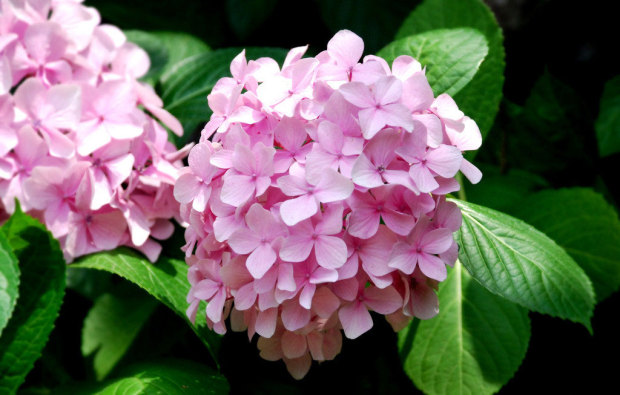
Hydrangea originates in China from the Yangtze River basin to Guangdong and Fujian. It likes warmth, shade and moisture; it requires fertile, humus-rich, well-drained moist soil. Slightly acidic, slightly alkaline and neutral soils all allow good growth, but on strongly alkaline land, so where the pH value is above 7.5, growth is poor. South of the Huaihe River basin it can be grown in the open ground. In the north it is grown in pots outdoors and overwintered indoors, and the minimum temperature should be above 10 degrees; if indoor temperature can be maintained, it can be enjoyed in flower all year round.
Propagation can be done by cuttings, layering and division, and cuttings are the simplest, with both hardwood and softwood cuttings usable; kept at a temperature of about 20 degrees and 80% relative humidity, roots form in about 1.5 months, and after 2 months they can be potted up. When taking cuttings, note that hydrangea is a shade-loving plant and must never be exposed to too much sun.
Cultivation Management and Propagation Precautions for Hydrangea
The correct name of hydrangea is wax plant (Hoya), also known as eight immortals flower, Ziyang flower, seven changes, foreign hydrangea and powder ball flower, and it originates from the area of Sichuan, China and Japan. It is a deciduous shrub of the genus Hydrangea in the family Hydrangeaceae, order Cornales, and its flowers are almost entirely sterile, the so-called "flowers" being merely sepals. China cultivated the eight immortals flower relatively early, and hydrangeas were planted in the Jiangnan gardens built during the Ming and Qing dynasties. Parks built in the early 20th century were also inseparable from plantings of hydrangea. Modern parks and scenic areas plant them in large masses to form landscapes. Artificially bred hydrangeas have large flowers and brilliant colors, with flower colors including blue, white, purplish red, pink and peach red, and it is a common ornamental flowering shrub.
Growth Habits of Hydrangea
We must first understand the growth habits of hydrangea in order to master the cultivation methods for hydrangea in a targeted way. Hydrangea originates in China's Yangtze River basin and likes warmth, moisture and a semi-shaded environment. It fears both drought and waterlogging, is not cold-tolerant, and in cold regions the aboveground parts die in winter and only sprout new shoots again the following spring. Hydrangea likes fertile, moist, well-drained light loam and has strong adaptability. The acidity and alkalinity of the soil have a relatively large effect on the flower color of hydrangea: in acidic soil it is mostly blue, and in alkaline soil it is mostly red.
Propagation Methods for Hydrangea
Cuttings, division, layering and grafting are commonly used for propagation, with cuttings being the main method. During the plum rain period, select robust young shoots from young mother trees as cuttings; the base of the cutting needs to have a node and be dipped in mud slurry, about 20 cm long, and the lower leaves should be removed. The suitable temperature for cuttings is 1 3-18°C; after cutting, shade is needed and moisture should be kept constant. Roots develop in about 15 days to 1 month, and after surviving they can be transplanted in the second year. Division propagation is best done in early spring before sprouting. Separate rooted branches from the mother plant and pot them directly; do not water too much, keep them in semi-shade, and after new buds sprout move them to normal care. Layering propagation can be done when the buds begin to swell; growth occurs after 30 days, and the following spring cut it from the mother plant, transplant it with soil, and it can flower that same year. Generally, air layering is done in spring from March to April, roots form in June to July, and it can be cut off and planted separately that same year. For grafting propagation, use seedlings of Viburnum macrocephalum as rootstock and do cleft grafting in spring, which is easy to succeed with. Transplanting is best done after leaf fall or before sprouting, and the root ball must be kept. The main branches tend to sprout water shoots, so after flowering they need proper pruning to shape the tree.
Cultivation Management of Hydrangea
The suitable growth temperature for hydrangea is 18-28°C, and the winter temperature should not be lower than 5°C. Flower bud differentiation requires 6-8 weeks at 5-7°C; a temperature of 20°C can promote flowering, and after flowers appear maintaining 16°C can prolong the viewing period. However, high temperatures make the flowers fade quickly. Hydrangea is a short-day plant; with more than 10 hours of darkness treatment per day, flower buds form in about 45-50 days. Potted hydrangeas commonly use 15-20 cm pots. For potted plants, after sprouting in spring pay attention to watering fully to ensure the leaves do not wilt. During the flowering period from June to July, fertilizer and water must be sufficient, fertilizing once every half month. In ordinary cultivation, avoid direct sunlight, and 60%-70% shade is most ideal. When sunlight is too strong in midsummer, proper shading can prolong the viewing period. After flowering, remove the flower stems to encourage new branches.
The soil should preferably be loose, fertile and well-drained sandy loam. However, flower color is affected by soil acidity and alkalinity: in acidic soil the flowers are blue, and in alkaline soil they are red. The potting soil should be kept moist, but watering should not be excessive; especially in the rainy season pay attention to drainage to prevent root rot caused by waterlogging. In winter, potted plants indoors are better kept slightly dry. If too moist, the leaves rot easily. Repot once every spring. Prune properly to keep the plant shape attractive.
Potting Up and Pruning of Hydrangea
Propagation of hydrangea is suitable in spring and autumn, but late spring to early summer (late April to July) is best. At this time the flowering period of hydrangea has basically ended in May, and after removing spent flowers and withered leaves and pruning, new branches and leaf buds have grown, so top branch buds can be cut as cuttings. Cuttings can also be taken from late September to October. In early spring, after hydrangea is pruned and top buds are taken as cuttings, many new branch and leaf buds sprout again; at this time, because the weather turns cooler, it is suitable for cutting propagation.
1. In addition to a seedling bed made of bricks, for easy movement and management a foam box can be used as a seedling bed. First cut several openings in the bottom of the box and cover the openings with tile pieces, fill in a layer of coarse sand and then put in the growing medium (3 parts sand, 2 parts sterile mountain soil, mixed well), and level it before inserting cuttings. Cut the cuttings into sections 10-15 cm long, remove the lower leaves of the terminal shoots, and keep only 2-3 leaves at the top. After cutting, tie the cuttings neatly and level them; in order to help the cutting wounds heal and root early, soak the leveled cuttings in a strong rooting agent (about 0.2 kg of water per packet) for 5-10 minutes, then they can be inserted. After inserting, press the soil around the stems firmly with your fingers so that the cuttings are closely combined with the soil. Then water thoroughly once with a watering can; afterward, as long as the bed soil is moist there is no need to water, but mist the cutting leaves frequently and keep the environment around the seedling bed moist. If the weather is hot and sunlight is strong, a shade shed must be built for shading. Under such careful management, in about 25 days the wounds begin to heal and new roots grow from the nodes.
2. Potting up for cultivation and care: after about 25 days of careful management, the hydrangea has survived and begun to grow new leaf buds upward from the top buds, and at this point it must be planted separately and managed in pots. The growing medium for cultivating hydrangea uses coniferous soil (relatively high in acid) plus chaff, and a compound fertilizer of nitrogen, phosphorus and potassium (according to the amount of coniferous soil) mixed with soil and piled for full fermentation for more than half a year; before use, turn it over and sun-dry it for several days and it is ready. After the seedlings survive and the top branches grow to about 10 cm, the first pinching can be done to encourage new leaf buds to sprout from below; when the several branch buds that later grow reach a certain length, do a second pinching, and let them grow evenly and luxuriantly. When the main stem and branches are thick, leave only 3-4 branches and let them grow. From surviving after potting up to the period when branches are fixed, fertilize 3-4 times, mainly with monopotassium phosphate.
Pest and Disease Control of Hydrangea
1. The main diseases and pests of hydrangea are wilt disease, powdery mildew and leaf spot disease, which are controlled by spraying 600 times dilution of 65% zineb wettable powder.
2. Pests include aphids and mirid bugs, which can be killed by spraying 1500 times dilution of 40% omethoate emulsifiable concentrate.
Propagation Precautions for Hydrangea
1. Hydrangea is toxic, and accidentally eating the stems and leaves of hydrangea can cause colic, abdominal pain, diarrhea, vomiting, rapid breathing and bloody stool. In people's imagination hydrangea seems as a matter of course edible, like cotton candy and large round bread, but in fact once hydrangea is eaten, abdominal pain appears within a few hours; other typical poisoning symptoms also include skin pain, vomiting, weakness and sweating, and there are reports that patients may even experience coma, convulsions and collapse of blood circulation in the body. Fortunately, an antidote for hydrangea poisoning has now been developed. In addition, it should be noted that hydrangea easily causes allergies and is generally not recommended to be placed in the bedroom. It is suggested that flower-loving friends, when growing flowers, had best choose according to the individual, selecting flowers they like that are harmless, and also not grow too many flowers indoors, and pay attention to maintaining air circulation.
2. In hydrangea cultivation, attention must be paid to appropriate watering. After the Beginning of Spring, hydrangea must be given rain, dew and sunlight, and watered morning and evening.
The Flower Language of Hydrangea
1. Hope: The hydrangea native to the Mediterranean has always been famous worldwide as an evergreen tree that blooms in the harsh winter. In cold winter, suddenly seeing pink flower buds and white flowers seems to tell people that spring is near. Therefore the flower language of hydrangea is -- hope. People born under the blessing of these full flowers are extremely patient and tolerant. They will bring hope to many people, and their own lives are also very rich.
2. Loyalty and eternity: referring to loyalty in love and the eternity of mutual affection, the flower language of blue hydrangea is romance and happiness.
3. Happiness and reunion: the round flowers and beautiful posture of hydrangea symbolize the inseparable bond with relatives; no matter how long they are apart, they will come together again.
How to Grow Hydrangea: Home Cultivation Methods for Hydrangea
Hydrangea gets its name because its appearance closely resembles the embroidered ball of ancient times. Hydrangea flowers are full in form, large and beautiful, and their color can be red or blue, making them pleasing to the eye and refreshing to the spirit; they are a common ornamental potted plant. So how do you grow potted hydrangea at home? Let's look together at the home cultivation methods for hydrangea.
I. How to Grow Hydrangea
Hydrangea likes warmth, moisture and a semi-shaded environment, fears both drought and waterlogging, is not cold-tolerant, and likes fertile, moist, well-drained light loam, but has strong adaptability. Therefore the soil should preferably be loose, fertile and well-drained sandy loam. The acidity and alkalinity of the soil have a relatively large effect on the flower color of hydrangea: in acidic soil it is mostly blue, and in alkaline soil it is mostly red. The potting soil should be kept moist, but watering should not be excessive; especially in the rainy season pay attention to drainage to prevent root rot caused by waterlogging. In winter, potted plants indoors are better kept slightly dry. Repot once every spring, and prune properly to keep the plant shape attractive.
If you want to grow hydrangea well, you must pay attention to the temperature and light of the surrounding environment. Hydrangea can grow normally only between 15 and 27 degrees, so in winter try to move it indoors to a bright sunny place for cultivation, and the minimum room temperature must not be lower than 5 degrees, otherwise the hydrangea will freeze to death or stop growing. In summer, focus on cooling and shading to prevent the leaves from being scorched; too strong sunlight will only cause the leaves to discolor or even drop.
II. Cultivation Methods for Hydrangea
1. Soil: For planting hydrangea, the soil should preferably be loose, fertile and well-drained sandy loam. However, flower color is affected by soil acidity and alkalinity: in acidic soil the flowers are blue, and in alkaline soil they are red.
2. Watering: The potting soil for growing hydrangea should be kept moist, but watering should not be excessive; especially in the rainy season pay attention to drainage to prevent root rot caused by waterlogging. In winter, potted plants indoors are better kept slightly dry. If too moist, the leaves rot easily.
3. Light: Hydrangea is a short-day plant. In ordinary cultivation, avoid direct sunlight, and 60%-70% shade is most ideal. When sunlight is too strong in midsummer, proper shading can prolong the viewing period.
4. Temperature: The suitable growth temperature for hydrangea is 18-28°C, and the winter temperature should not be lower than 5°C. Flower bud differentiation requires 6-8 weeks at 5-7°C; a temperature of 20°C can promote flowering, and after flowers appear maintaining 16°C can prolong the viewing period. Note that high temperatures make the flowers fade quickly.
5. Fertilizing: The flowering period of hydrangea is June to July. During the flowering period, fertilizer and water must be sufficient, fertilizing once every half month.
6. Pruning: After hydrangea flowers, pay attention to removing the flower stems to encourage new branches; proper pruning can keep the plant shape attractive.
7. Pests: Hydrangea mainly has wilt disease, powdery mildew and leaf spot disease. Control by spraying 600 times dilution of 65% zineb wettable powder. Pests include aphids and mirid bugs, which can be killed by spraying 1500 times dilution of 40% omethoate emulsifiable concentrate.
The above isthe cultivation methods for hydrangeashared, and I hope it is helpful to everyone. When growing it, it is best to place it somewhere children cannot reach.