What to Do When Freesia Won't Bloom? Adjust Temperature, Increase Light, Spray to Treat Mosaic Virus
Freesia, a flower with remarkably strong properties, not only blooms beautifully but can also be used medicinally to treat illness, making it especially endearing. However, although freesia's benefits are strong, those who grow it are basically all doing so to see its beautiful flowers. Yet during cultivation, many growers find their freesia won't bloom. Why is that? Today, the editor will explain it for everyone.
I. When Freesia Won't Bloom, Find the Cause
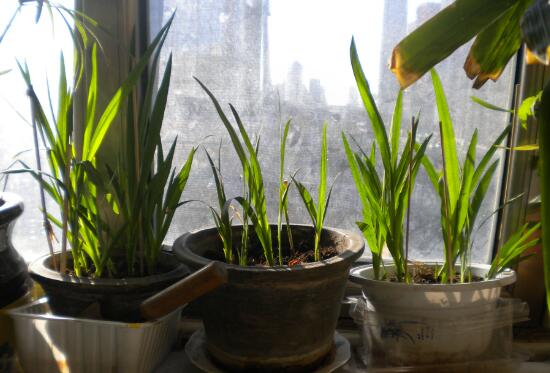
The beauty of freesia leaves a deep impression on anyone who has seen it; its flower shape is beautiful, its colors are rich, and its ornamental value is excellent. But if freesia won't bloom, growers must be very anxious! To solve everyone's problem, the editor searched everywhere and finally summed up 5 reasons why freesia won't bloom: blooming time not yet reached, insufficient light, unsuitable temperature, too few nutrients, and pests and diseases.
II. Solutions for the Reasons Freesia Won't Bloom
1. Blooming time not yet reached
If freesia won't bloom, everyone should first consider its planting time, because for freesia, it is not that it can bloom in the first year after planting; it needs three to four years.
Solution: If the blooming time has not yet arrived, it's simple; this is a normal phenomenon, and everyone just needs to continue caring for it according to freesia cultivation methods. After it has been planted for 3-4 years, it will naturally bloom.
2. Insufficient light
We all know that for freesia to bloom, light is certainly indispensable. So if freesia has not bloomed for a long time, you can observe its growth state to see whether it lacks light.
Solution: If the failure of freesia to bloom is caused by insufficient light, then everyone should move it to a place with ample light and let it bathe in the warm sun. Of course, the light must not be too strong, otherwise the flowers won't open and freesia leaves will also turn yellow.
3. Insufficient nutrients
Plants need to consume a large amount of nutrients to bloom. So when freesia won't bloom, everyone should check whether the plant has somewhat insufficient nutrient supply.
Solution: If it is caused by insufficient nutrients, everyone can apply some fertilizer, such as monopotassium phosphate and other nutrients, which can help freesia bloom.
4. Unsuitable temperature
Following freesia's growth habits, we know it likes warmth, and when it blooms, the temperature should be controlled at 15-25°C. If the temperature is unsuitable, freesia also will not bloom.
Solution: If it is a temperature issue, it's simple; just adjust the temperature to 15-25°C, and after caring for it for a period of time, freesia will bloom.
5. Mosaic virus
Besides the above points, the reason causing freesia not to bloom may also be that it has contracted mosaic virus. In freesia pest and disease control it is mentioned that when it contracts mosaic virus, the plant becomes shorter and smaller, the corm also degenerates, and the result is that it will not bloom.
Solution: Once diseased plants are found, pull them out promptly to avoid attracting insects that suck sap and spread it through friction. In addition, spray medication on the leaf surface, mainly using 40% omethoate 1500x solution or 2.5% cypermethrin 3000x solution for spraying control.
Overall, freesia is not difficult to grow, but no matter how easy a plant is to grow, it still must be "grown," so for freesia to bloom, everyone must care for it carefully. Of course, when freesia won't bloom, everyone need not be too anxious; just address it according to the methods above. Finally, may everyone's freesia bloom into beautiful flowers.
Freesia Cultivation Methods and Precautions, Freesia's Flower Language
Freesia is a very beautiful flowering plant; its flower color is pure white like snow, and its floral fragrance is delicate like an orchid, making it deeply loved by people. Today we will tell everyone about freesia cultivation methods and precautions as well as freesia's flower language.
Freesia cultivation methods:
1. Soil: Freesia likes sandy loam rich in organic matter, with strong water retention and good drainage, pH 6-7.2.
2. Watering: Before sprouting, the soil must be kept moist. After budding, gradually reduce the amount of watering appropriately, and try to keep the soil surface dry, in order to lower air humidity and prevent disease.
3. Light: Although freesia likes light, strong light exposure should also be avoided. Under conditions of excessively strong light and relatively high temperature, a shade net with 70% light transmittance can be used for shading.
4. Temperature: Temperature management is very important for freesia cut flower production. Its cold tolerance is relatively poor; the suitable growth temperature is 15-20°C, and the minimum overwintering temperature is 3-5°C.
5. Fertilizing: The organic fertilizer and compound fertilizer applied before planting can basically meet growth needs, but if the plant grows weakly, when it has 2-4 leaves, apply one additional topdressing of ammonium nitrate, urea, and potassium sulfate. At early flowering, use 0.2% monopotassium phosphate as foliar fertilizer, but before and after budding it is best to avoid topdressing.
6. Pests and diseases: Freesia is prone to mosaic virus, corm rot, and so on. When planting, the soil and corms must be thoroughly disinfected, and the potting soil must be completely replaced every year. At the same time, attention should be paid to controlling aphids; in the early stage of aphid occurrence, spray 40% omethoate 1500x solution or 90% trichlorfon solution for control.
Precautions for freesia cultivation:
During the growth period, sufficient fertilizer and water are required; apply organic liquid fertilizer once every two weeks, and a moderate amount of compound chemical fertilizer may also be applied. The potting soil should be kept alternating between dry and wet; it must not become waterlogged or too dry. Usually the corms are planted in September, flower bud differentiation begins in about early November, and differentiation is completed in late November. After the plants reach May of the following year, the leaves gradually wither, and the corms enter a natural dormant period.
During indoor cultivation of freesia, plants often become thin and weak and grow leggy. When the flower stalk is drawn, support sticks should be used to prop up the flower stem to prevent the flower stalk from bending and affecting ornamental value. To prevent its leggy growth, the method for promoting "dwarfing" is to treat the corms with "paclobutrazol" before planting, which can achieve excellent results. The method is: before potting freesia in autumn, soak the stored corms in an 80 ppm "paclobutrazol" solution for 15 hours to 20 hours, take them out and rinse with clean water, then pot them and carry out normal watering and other management. Freesia treated in this way emerges uniformly, has dark green leaf color, increased leaf width, reduced length, and a richer fragrance after blooming.
Freesia's flower language:
Freesia's flower language is: purity. Flower divination: Your innocent and sweet face is like a pure young girl in a painting, untouched by the mundane world, and at the same time unaware of the dangers of the human heart. Hearing sweet words, you seem unable to resist, indulging in a poetic and picturesque romance; this is very dangerous, and you should quickly learn to protect yourself and raise your vigilance. Flower motto: You should know that behind love are hidden happiness and pain, sorrow and regret.
Introduction to Growing Freesia, How to Care for Freesia
Freesia is also known as xiaocanglan, xiaochanglan, jiandaolan, and so on. It is a perennial bulbous herbaceous flower of the genus Freesia in the iris family, named because its flower color is pure white like snow and its floral fragrance is delicate like an orchid. It is mainly cultivated for ornamental purposes. In southern regions it is mostly grown outdoors, while in northern regions it is mostly potted. It is commonly used as a potted plant or its flowering branches are cut for vases to decorate interiors. Let's take a look together at freesia cultivation methods!
Freesia's growth habits
Freesia likes a cool, moist environment with sufficient light, and has relatively poor cold tolerance. The suitable growth temperature is 15-20°C, and the minimum overwintering temperature is 3-5°C. A large temperature difference between day and night is beneficial for growth and development; the nighttime temperature should preferably be 10-15°C, and the daytime temperature must not exceed 20°C, otherwise growth will be poor. It likes loose soil with good drainage and rich in humus. Under short-day conditions, freesia is favorably promoted to differentiate flower buds, and after flower bud differentiation, long days can bring flowering earlier. Usually the corms are planted in September, flower bud differentiation begins in about early November, differentiation is completed in late November, and after May of the following year the leaves gradually wither and the corms enter a natural dormant period.
Freesia propagation methods
1. Sowing: Freesia usually has its seeds collected promptly after they mature in May-June, otherwise the capsules split and the seeds are lost. The seeds have no dormancy habit and can be sown immediately after collection. The optimum temperature for seed germination is 15-20°C, and germination is uniform under dark conditions, taking about 21 days. When the seedlings have 5-7 leaves, the aboveground part turns yellow and withered, and the underground corms enter a high-temperature dormant period. After dormancy, planting and cultivating the daughter corms for another year makes them suitable as flowering mother corms.
2. Division of corms: Freesia generally can bear 4-6 daughter corms around the mother corm. They are dug up during the summer dormant period, and the daughter corms are separated from the mother corm and stored, then planted in autumn. For corms used in cut flower cultivation, corms with a stem circumference of 8 cm or more are required to ensure cut flower quality. The method of cultivating daughter corms is to dig up the daughter corms during the summer dormant period and store them, and by early August the daughter corms can be planted separately in flower pots.
Freesia cultivation methods
1. Soil: Freesia likes sandy loam or culture soil with good drainage, loose and fertile, plus 20%-50% humus soil. Before planting, the soil must be disinfected; methyl bromide 50-70 grams/sq m can be used for treatment. After applying the chemical, turn and rake it level, and after 5-7 days it can be planted. For potting culture soil, leaf mold, garden soil, fine river sand, and decomposed organic fertilizer can be mixed in equal parts.
2. Planting: The planting time of freesia varies with the type of production and the market requirements for fresh flowers. The ordinary planting period is September-October, with the main flowering period in March-April. For forced cultivation, it is mid-September to mid-to-late November, and for retarded cultivation, January-March. Generally, the plant and row spacing is 8*12 cm, and the planting density per square meter is 80-110 plants. The planting depth should preferably place the top of the bulb 1-2 cm from the soil surface, with 2-3 cm of soil covering it.
3. Fertilizing: Freesia bulbs are relatively small and their stored nutrients are limited, so phosphorus and potassium liquid fertilizer should be added when there are 2-4 leaves. Before planting, apply organic compost or coarse granular organic fertilizer early to improve soil fertility, soil looseness, and aeration. The base fertilizer is mainly organic fertilizer, and some chemical fertilizer may also be applied appropriately, but the amount should not be too much, to prevent an increase in salt concentration in the soil that causes physiological disorders. Topdressing is mainly liquid fertilizer.
4. Watering: At the initial potting stage, freesia does not need much water; the potting soil should alternate between dry and wet, and watering thoroughly once a week is enough. By early February, when buds appear and scapes are drawn, the plants grow rapidly and consume more water, so the pot should be kept constantly moist. One month after flowering, water supply should be gradually reduced; watering once every 2 days can prevent bulb rot, and by the end of February when the leaves turn yellow and withered, watering can be stopped.
5. Temperature: Both root system formation and flower bud differentiation of freesia require a relatively cool environment. The root system grows best at 15-18°C, flower bud differentiation is best at 12-15°C, and inflorescence growth is fastest at 18-20°C. Therefore, at the initial planting stage, maintain room temperature at 15-18°C; at the 5-7 leaf stage, induce flower primordia at 12-15°C, and maintain this temperature for 4-6 weeks so that inflorescence development will not reverse. Then raise the temperature to 16-17°C to make the inflorescence elongate rapidly and enter the flowering period.
6. Light: During freesia cultivation, appropriate shading is suitable during the seedling stage and flowering stage. During the first leaf growth period, appropriate shading can lower soil temperature and promote root development. Before flower bud differentiation, giving about 10 hours of short-day treatment is beneficial for promoting flower bud differentiation and increasing flower stem length as well as the number of flowers and secondary spikes on the inflorescence. After flower bud differentiation is completed, appropriately extending the photoperiod is beneficial for promoting good inflorescence development and earlier flowering.
7. Pests and diseases: Freesia is prone to mosaic virus, corm rot, and so on. When planting, the soil and corms must be thoroughly disinfected, and the potting soil must be completely replaced every year. At the same time, attention should be paid to controlling aphids; in the early stage of aphid occurrence, spray 40% omethoate 1500x solution or 90% trichlorfon solution for control.