What to Do When Tuberose Leaves Turn Yellow? Pay Attention to These 5 Points, Light, Water and Fertilizer Are Key
Tuberose (Polianthes tuberosa), a very beautiful flower, blooms at night and has a rich fragrance, so it is also often called night-blooming jasmine. Because of its beauty, many people keep a pot of it at home, but as they care for it, quite a few flower lovers run into the symptom of yellowing leaves. So what should you do when tuberose leaves turn yellow? Below are 5 causes of yellowing tuberose leaves; follow along with the editor to take a look.
I. When Tuberose Leaves Turn Yellow, Find the Cause
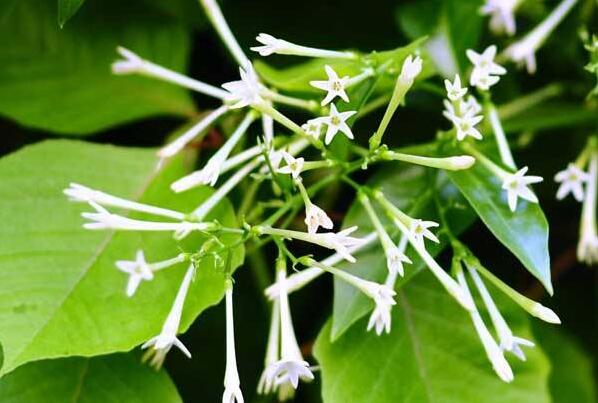
The techniques of growing flowers require time to accumulate experience, so the methods for growing tuberose are not something you learn in one go, and this is also a cause of yellowing tuberose leaves. As for what to do when tuberose leaves turn yellow, we first have to find the specific cause, and for this, flower lovers can start with 5 points: soil, light, watering, fertilizing and pests and diseases.
II. Causes of Yellowing Tuberose Leaves and Solutions
1. Unsuitable Potting Soil
There are many causes of yellowing tuberose leaves, but first we should consider the potting soil. If a purchased tuberose has not had its potting soil changed for a long time, the nutrients in it will be lost completely, and because its branches and leaves absorb insufficient nutrients they will grow thin and weak, and the leaves will also become thin and turn yellow.
Solution: Repot it, changing to fresh loose, fertile culture soil, then gradually apply more dilute decomposed liquid fertilizer or compound flower fertilizer, and after a period of time the tuberose leaves will regain their luster.
2. Light Too Strong or Insufficient
Light is essential for tuberose growth, but it is also one of the causes of yellow leaves. This can be divided into two situations: one is yellow leaves caused by too much light, and the other is yellow leaves caused by insufficient light.
① Too much light: Tuberose likes light, but if you place it directly under the blazing sun, it easily causes the leaf tips and leaf edges of the plant to dry out, and yellow spots appear on the sun-facing parts of the leaves. Solution: Move the flowerpot to a cool, ventilated place and water it with an appropriate amount of water, then resume normal care once the leaves recover.
② Insufficient light: If tuberose is placed indoors in a spot that does not see sunlight for a long time, it easily develops yellow leaves, because the leaves cannot get enough sunlight and cannot form chlorophyll, so the whole plant's leaves turn yellow and then fall off. Solution: Very simple, just supplement light; move the flowerpot to a place with light, and provide appropriate shade when the light is too strong.
3. Watering Too Much or Too Little
① Watering too much: For beginners, watering is simple, but they easily overwater. Once watered too much, it causes the pot to be too wet, the soil to lack oxygen, and the fibrous roots to rot, thus producing the symptom of yellow leaves. Solution: Take the plant out of the pot and place it in a ventilated, cool spot to air-dry the soil ball by itself, then put it back in the pot, or loosen the soil frequently and control watering.
② Watering too little: Tuberose likes a moist environment, and once watering is insufficient and the potting soil becomes too dry, the lower leaves will gradually dry, turn yellow and fall off from the bottom upward. Solution: Water an appropriate amount and just keep the soil moist, and it will recover after a period of time.
4. Too Much or Too Little Fertilizer
① Too much fertilizer: Tuberose likes fertilizer, but it must not be fertilized too much either, otherwise it easily causes fertilizer burn, thus producing the symptom of yellow leaves. Solution: Water more to dilute the fertilizer, and pause fertilizing; in severe cases, take it out of the pot and replace the potting soil.
② Too little fertilizer: During the growth process of tuberose, fertilizer is indispensable, and once too little is applied, its leaves will slowly turn yellow due to insufficient nutrients. Solution: Gradually increase fertilizer and water, but be careful not to make it too concentrated.
5. Pests and Diseases
Besides the several causes above, tuberose affected by pests and diseases can also develop yellow leaves and drop them. But if a small number of leaves at the lower part of the plant turn yellow and fall off in winter, that is normal metabolism.
Solution: Find out specifically which pest or disease is affecting it, then spray the corresponding pesticide to solve it. As for exactly what to spray, this is introduced in detail in the pest and disease control for tuberose, so it will not be discussed further here.
Overall, tuberose is still quite easy to grow, but beginners must be careful when cultivating it, because a slight oversight will produce the symptom of yellow leaves. But it does not matter if the leaves turn yellow; as long as everyone keeps the above points in mind, it can be easily solved. That is all the editor has to say about yellowing tuberose leaves, and I hope it can be of help to everyone.
How to Grow Gardenia: Yellowing Leaves and Failure to Bloom Explained
Among flowers, the gardenia is undoubtedly one of the more familiar ones, and people very much like to grow it at home, but many peoplehow to grow gardeniado not understand it very well, resulting in many problems during cultivation, such as yellowing leaves and failure to bloom. Today the editor will introduce to everyonehow to grow gardeniaandgardenia yellowing leaves and failure to bloomthe reasons.
(Gardeniaplanted in a courtyard, with strong ornamental effect)
The gardenia grows the same in all four seasons, with evergreen leaf color, and when it blooms it is fragrant and elegant, with white flowers appearing white, looking especially clear and beautiful, and very likable. It is often used by people for potted planting in courtyards, balconies and other places. It has strong environmental adaptability and can grow well in these places, and it has strong decorative and ornamental effect. Below the editor will discusshow to grow gardeniafrom the various characteristics of the gardenia.
First, grow it in acidic soil. Gardenia needs scattered light, so it likes acidic soil. If the soil is alkaline, it will make it impossible for the gardenia to absorb iron well, which will have a great impact on the formation of chlorophyll, further causing the flower branches to wither and even die; so its soil must be loose, fertile acidic soil, and some substances with this effect can also be added to it.
(Gardeniahas a very good decorative effect)
Second, place it in a cool place. The gardenia must never be placed under the blazing sun, otherwise it will cause the leaves to dry up and turn yellow, but this does not mean placing it in a fully shaded place, because it has a certain demand for light. It is best to place it where it maintains 60% light daily. In addition, after April begins, fertilize twice a month.
Third, air humidity. Gardenia likes moisture, so the air must not be too dry. According to expert statistics, if the air humidity is below 70%, it will affect the normal opening of the flowers, but if it is too wet, it will cause root and stem rot and yellowing leaves. So besides normal watering, clean water should also be sprayed nearby frequently. Another issue to pay great attention to is that water must not be poured too much, otherwise it will also affect growth. So how should the gardenia be watered?
a. When you see the soil is dry, tap the flowerpot with your hand; if there is a hollow sound, it needs watering, and stop when the bottom of the flowerpot begins to leak water. It is best if the water used for watering can have some egg or soy milk added to it, as this is more conducive to growth.
(In full bloomgardenia, a different kind of beauty)
Fourth, key points for fertilizing. Gardenia likes fertilizer, but too much fertilizer must not be added all at once; be sure to apply thin fertilizer frequently, and never be lazy for convenience, otherwise it will cause thick branches, large leaves and dense green, and it will lose its own ornamental effect.
Fifth, temperature requirements. The growing temperature for gardenia must not be too low, because it likes warmth. Generally speaking, the temperature during the growing period is best at 18 to 22 degrees, and in winter 5 to 10 degrees. If it is below minus 10 degrees it will freeze and be damaged, and the north must pay special attention to this.
Sixth, proper pruning. The gardenia grows very easily into flourishing branches and leaves and creates a feeling of being impenetrably dense and chaotic, which causes nutrients to be dispersed and ornamental value to worsen, so it needs to be pruned. When pruning, it is best to select and keep 3 main branches, and at any time cut off new branches sprouting from root suckers. After the flowers fade, the branches should be cut short in time, so that new branches will sprout below the cut. When the new branches grow three nodes, pinch them to avoid blind growth.
(Thegardeniashould be placed in sunlight)
Seventh, disease prevention. Usually the gardenia diseases we see are of four kinds:
a. Iron deficiency, this is the most common kind. Iron deficiency will affect the formation of chlorophyll and then make the leaves lose green. At this time, ferrous sulfate water and low-concentration black alum water can be used, three times a month.
b. Magnesium deficiency. Magnesium deficiency will cause the veins of the lower old leaves of the gardenia to turn yellow. At this time, a low-concentration magnesium sulfate solution needs to be sprayed.
c. Soil too wet or too dry, this can be seen in point three
d. Sun exposure, this can be seen in point two.
Eighth, propagation methods. Gardenia generally has two propagation methods: cuttings and layering
a. Cuttings, in the plum rain season use softwood branches 15 cm long and insert them in a seedbed, rooting in 10-12 days
b. In April select two-year-old branches, 20-25 cm long, and layer them in the soil, keeping them moist; they root in about 30 days. Separate them from the mother plant in summer and plant them separately the following spring.
Causes of Yellowing Gardenia Leaves
First, improper moisture
a. Overwatering. In this case the young leaves of the gardenia are dull yellow and lusterless, but the old leaves show no obvious change. At this time just take the plant out of the pot and place it in a ventilated, cool place, and put it back after the soil dries.
b. Lack of water. The leaf tips or edges dry out and become parched, and the old leaves dry up, turn yellow and fall off from the bottom upward, but in this case the new leaves grow relatively normally. At this time water thoroughly and sufficiently.
(Gardenialeaves turning yellow, there are many causes)
Second, improper light
a. Too much light. Yellow spots appear on the sun-facing parts of the leaves. At this time just move it to a shaded place for care and it can recover, and the newly grown leaves will no longer have yellow spots.
B. Insufficient sunlight. At this time the leaves will turn yellow and even fall off; just put it under the sun to supplement sunlight.
Third, improper fertilizing
a. Too much fertilizer. This mainly shows as brown at the tips of new leaves, thick and lusterless leaf surfaces, and old leaves burning yellow and falling off. At this time fertilizing must be stopped immediately, and in severe cases the soil should also be flushed to reduce the concentration. b. Insufficient fertilizer. Insufficient fertilizer also causes plants to turn yellow, for example iron deficiency, where the leaves are pale yellow or white and the veins remain green. At this time spray 0.2%-0.5% ferrous sulfate water for prevention and control; magnesium deficiency, where the old leaves turn yellow first, then the new leaves turn yellow, and the veins remain green. At this time spray 0.7%-0.8% boron-magnesium fertilizer for prevention and control.
Fourth, temperature too low. Too low a temperature will also cause leaf yellowing; just move it to a place with a higher temperature.
Causes of Gardenia Failure to Bloom
First, improper water and fertilizer. Once water and fertilizer are excessive, they will cause the plant to grow leggy, and without enough nutrients for reproductive growth it will affect flower bud formation, leading to no blooming or very few blooms, and some that do bloom may even drop immediately. During the flower bud differentiation stage, special attention must be paid to the combination of phosphorus and potassium fertilizers, such as a 0.2% potassium dihydrogen phosphate solution, which is beneficial to flower bud formation and budding; if fertilizing is too concentrated during the budding stage and watering is suddenly more and then less, it will also cause flowers and seedlings to drop.
(Gardenianever blooming, pay attention)
Second, unsuitable light. The gardenia likes shade, and special attention must be paid to overly strong light in summer and overly weak light in winter; light that is too strong or too weak will both affect gardenia blooming.
Third, soil with high alkalinity. The gardenia likes acidic soil. If the soil for cultivating gardenia has high salt and alkali content, it will cause the plant to become chlorotic and ultimately affect blooming.
Fourth, no pruning or shaping,The gardenia's branches are messy, and a large number of miscellaneous branches consume a large amount of nutrients as well as the branches being too dense, affecting photosynthesis; these are all important causes of failure to bloom.
Fifth, severe pests and diseases,this I believe everyone can understand; severe pests and diseases will inevitably cause flowers and buds to drop.
MethodsHow to Grow Narcissus Recommended Methods for Growing Narcissus
More plants:
[Peace Lily] [Dieffenbachia] [Lucky Bamboo] [Fatsia japonica] [Nandina] [Ivy] [Epiphyllum]
[Spider Plant] [Winter Jasmine] [Cymbidium] [Aglaia odorata] [Crinum asiaticum] [Magnolia] [Spathiphyllum] [Anthurium]
[Strelitzia] [Hydrangea] [Dahlia] [Cineraria] [Clematis] [Lantana] [Pansy] [Daphne]
[Tulip] [Night-blooming jasmine] [Tuberose] [Hibiscus] [Kalanchoe] [Gerbera] [Mimosa] [Campanula]
[Water Lily] [Casa Blanca Lily] [Hydrangea] [Red Maple] [Japanese Maple] [Salvia] [Iris]
Spider Plant Chlorophytum Spider Plant Illustrated Guide: How to Grow Spider Plant / How to Propagate Spider Plant
Spider Plant ProfileSpider Plant Chlorophytum
Aliases: Gui Lan, grape orchid, fishing orchid, tree banana gourd, Zhe He Lan, upside-down orchid, earth ginseng, eight-leaf orchid
Classification: perennial herbaceous flower
Family and genus: Plantae, Angiosperms, Monocots, Asparagales, Asparagaceae, Chlorophytum
Peak blooming period: spring, summer, winter
Spider plant, with clustered leaves like flowers and evergreen in all four seasons, is a famous foliage flower and is praised by people as an "aerial flower." According to research, spider plant has the function of absorbing toxic gases. Generally, if a pot of spider plant is grown in a room, the formaldehyde emitted by smoking and building materials in the air can be almost completely absorbed, playing a role in purifying the air and also protecting the human body. The roots and whole plant of spider plant can be used as medicine, with effects such as clearing the lungs, relieving cough, cooling the blood and stopping bleeding. Spider plant is a perennial herbaceous plant, with slender drooping branches, blooming small white flowers in summer with yellow stamens, and can be used for potted ornamental display. Spider plant is also called trailing pot grass, Gui Lan, hook orchid, folding crane...
How to Grow Spider Plant and Points to Note, Introduction to Spider Plant
Spider plant, with clustered leaves like flowers and evergreen in all four seasons, is a famous foliage flower and is praised by people as an "aerial flower." According to research, spider plant has the function of absorbing toxic gases. Generally, if a pot of spider plant is grown in a room, the formaldehyde emitted by smoking and building materials in the air can be almost completely absorbed, playing a role in purifying the air and also protecting the human body.
The roots and whole plant of spider plant can be used as medicine, with effects such as clearing the lungs, relieving cough, cooling the blood and stopping bleeding. Spider plant is a perennial herbaceous plant, with slender drooping branches, blooming small white flowers in summer with yellow stamens, and can be used for potted ornamental display.
Spider plant is also called trailing pot grass, Gui Lan, hook orchid, folding crane orchid; in Western Europe it is also called spider grass or airplane grass, and it originated in South Africa. It belongs to the Asparagaceae family as a perennial evergreen herbaceous plant. The roots are fleshy, and the leaves are slender, like orchid leaves. The stolons that grow out from the leaf axils of the spider plant can be about a chi long, both stiff and soft; the leaves clustered at the top of the stems droop outward from the edge of the pot, fluttering in the wind, shaped like a crane spreading its wings and leaping, so the spider plant was called folding crane orchid in ancient times.
Morphological Characteristics and Traits of Spider Plant
Trait identification: fibrous roots cylindrical and spindle-shaped, with short rhizomes on them. Complete leaves are strip-shaped to strip-lanceolate, 20-30 cm long, 1-2 cm in diameter and width, with acuminate tips and clasping bases; dark green in color, some with yellow longitudinal stripes or yellow edges; relatively hard in texture. Some still have scapes and inflorescences; its odor is faint and its taste is mild.
Original form
Spider plant, perennial herb. Rhizome short and thick, spindle-shaped; leaves clustered from the root crown, numerous; leaves slender and pointed, green or with yellow stripes, 10-30 cm long, 1-2 cm wide, slightly narrowing toward both ends. The scape is longer than the leaves, sometimes up to 50 cm, often becoming a stolon, with leaf clusters or small plantlets near the top; flowers small, white, often 2-4 clustered, arranged in a loose raceme or panicle, with the pedicel joint located from the middle to the upper part; perianth leaf-like, with 6 lobes; stamens 6; slightly shorter than the perianth segments, anthers often curling after dehiscence; ovary sessile, 3-loculed, style linear. Capsule triangular and flattened-globose, with 3-5 seeds per locule. Blooming period May, fruiting period August.
Spider plant is a perennial herb, with clustered cylindrical thickened fibrous roots and rhizomes. Leaves basal, strip-shaped to strip-lanceolate, narrow and long, flexible like orchid, 20-45 cm long and 1-2 cm wide, with long acuminate tips; bases clasping the stem, borne on short stems. The biggest characteristic of the spider plant is that mature plants will from time to time grow stolons, 30-60 cm long, and small plantlets will grow at the tips. The scape is slender, longer than the leaves, bending and drooping; the raceme is single or branched, and sometimes strip-shaped leaf clusters 2-8 cm long also cluster at the upper nodes of the inflorescence; flowers white, several per cluster, sparsely scattered on the inflorescence axis. The blooming period is between spring and summer, and indoors it can also bloom in winter.
Today's horticultural varieties of spider plant, besides the pure green-leaf type, also include three kinds: large-leaf spider plant, golden-centered spider plant and golden-edged spider plant. The first two have green leaf edges, while the middle of the leaf is yellow-white; the golden-edged spider plant is the opposite, with yellow-white stripes set on both sides of the green leaf edge. Among them, the large-leaf spider plant has a larger plant type, broader leaves and softer leaf color, and belongs to elegant indoor ornamental plants.
Trait identification
The fibrous roots are cylindrical and spindle-shaped, bearing short rhizomes. The complete leaves are linear to linear-lanceolate, 20-30 cm long and 1-2 cm wide, tapering to a pointed tip, with the base clasping the stem; dark green, some with yellow longitudinal stripes or yellow margins; rather firm in texture. Some still bear scapes and inflorescences; they have a faint odor and a bland taste.
Ecological Habits of Spider Plant
Spider plant prefers a warm, moist, semi-shaded environment. It is highly adaptable and relatively drought-tolerant, but not cold-tolerant, and has strict soil requirements; it generally grows best in well-drained, loose, fertile sandy soil.
Spider plant is not particular about light and generally grows well under moderate light conditions, and also tolerates weak light. The optimum growing temperature is 15-25°C, and the overwintering temperature is 10°C. Spider plant has a rather developed root system; after being grown for some time, it should be repotted promptly to prevent root crowding, which can cause yellowing leaves, wilting and similar problems.
Cultivation Techniques for Spider Plant
The optimum growing temperature for spider plant is 20-24°C, at which it grows fastest and readily produces stolons. Above 30°C it stops growing, and the leaves often turn yellow with dry tips. If the indoor temperature is kept above 12°C in winter, the plant can grow normally and produce leaves and flowers; if the temperature is too low, growth slows or the plant goes dormant; below 5°C, cold damage readily occurs.
Spider plant is best grown in a large pot with few plants; it prefers sandy loam with good drainage and aeration, and a medium-sized pot planted with 2-3 plants is suitable. Too many plants means a greater water requirement; if the pot is small and the soil cannot supply enough moisture, the leaves readily wilt. For container growing, a mixture of equal parts leaf mold or peat soil, garden soil and river sand with a small amount of base fertilizer is commonly used as the growing medium.
Spider plant prefers warm, humid climatic conditions, is not tolerant of cold or summer heat, and likes semi-shade while fearing strong light. It prefers well-drained, fertile sandy soil and is not cold-tolerant. In the north, by early October, spider plant should be brought indoors, hung by the window or placed on top of a bookshelf, and its leaves and stems sprayed and washed every five to seven days with water at a temperature close to room temperature.
Repot once every two years in March. When repotting, remove part of the old soil, trim the excess fibrous roots slightly, and cut off dead roots and withered yellow leaves, then prepare fresh potting soil. Replace with a potting soil made of three parts leaf mold and seven parts sandy soil. Place 2-3 pieces of crushed bone at the bottom of the pot. During the growing season, apply a dilute liquid fertilizer once every 10-14 days, mainly nitrogen-based. However, varieties with golden centers and golden margins should not be given excessive nitrogen fertilizer, otherwise the linear markings on the leaves will become less distinct. When fertilizing, lift up the leaves to avoid soiling them, which can easily damage tender leaves and leaf tips. After each fertilizing, it is best to spray and wash the leaf surfaces with clean water.
Spider plant prefers moisture; its fleshy roots have well-developed water-storing tissue and relatively strong drought resistance, but during the peak growing period from March to September it needs a large amount of water, so it should be watered frequently and the leaves sprayed to increase humidity; after autumn, gradually reduce watering to improve the plant's cold resistance. In summer, water once each morning and evening; in spring and autumn, water once a day; in winter, avoid excessive moisture and water once every 4-5 days, with no excessive amount each time. Spider plant grows well in humid air; if the air is dry, growth is poor, with small leaves and withered yellow tips. Therefore, during the vigorous growing period, spray water on the leaves 1-2 times a day to increase air humidity.
Spider plant can be propagated by cuttings, division, sowing and other methods. Cutting and division propagation of spider plant can be carried out at any time from spring to autumn. Spider plant is highly adaptable with a high survival rate and is generally very easy to propagate. For cuttings, simply take a 5-10 cm stolon bearing new buds and insert it into the soil; roots will form in about a week, and after about 20 days it can be transplanted into a pot, watered thoroughly and kept in a shaded place for care. For division, lift the spider plant out of the pot, remove the old soil and rotten roots, cut apart the old roots so that each divided plant retains three stems, then transplant and grow them separately. You can also cut off the clustered stems and leaves on the stolon (essentially a young new plant with leaves above and aerial roots below) and plant it directly into a flower pot to grow. Seed propagation of spider plant can be carried out each March. Because the seeds are small, the covering soil after sowing should not be thick, generally 0.5 cm is enough. At a temperature of 15°C, the seeds sprout in about 2 weeks, and once the seedlings take shape they can be transplanted for growing on.
Spider Plant Care Methods General Spider Plant Care Methods
Growing medium: Spider plant is highly adaptable to various soils and easy to cultivate. Fertile sandy loam, humus soil, peat soil, or fine sandy soil with a small amount of base fertilizer can be used as potting soil.
Propagation: Usually propagated by division, which can be done in any season except winter when the temperature is too low. Small plantlets with roots on the flower stems can also be cut off and potted. Watering: Spider plant prefers a moist environment, and the potting soil should be kept moist regularly. However, the fleshy roots of spider plant can store a large amount of water, so it has strong drought resistance and will not die of dryness even if not watered for several days. In winter, when the temperature is below 5°C, water less and do not let the potting soil become too wet, otherwise the leaves readily turn yellow.
Fertilizing: Apply liquid fertilizer once every two weeks during the growing season. Variegated varieties should be given less nitrogen fertilizer, otherwise the white or yellow markings on the leaves will become less distinct. Stop fertilizing when the ambient temperature is below 4°C.
Temperature: Spider plant tolerates high temperatures. The suitable temperature is above 15°C, and the winter overwintering temperature is above 4°C.
Humidity: It prefers a moist environment. To keep spider plant fresh and green, you can frequently spray water on the leaves to wash them.
Pruning: Remove yellow leaves at any time. Repot once a year in March, cutting off old roots, rotten roots and excess fibrous roots. In early to mid-May, cut off some of the old leaves of spider plant to encourage more new leaves and small plantlets to sprout.
Spider plant is not prone to pests and diseases, but if the potting soil becomes waterlogged and ventilation is poor, in addition to causing root rot, root rot disease may also occur, so attention should be paid to spraying chemicals for prevention and control.
Care Methods for All-Green Spider Plant
The same as the care methods for ordinary spider plant. Pay attention to moderate light and suitable soil moisture, and it will grow
lush and green.
Spider plant prefers a semi-shaded environment. If the light at its location is too strong or insufficient, the leaves readily turn pale green or yellow-green, lose their vitality, and lose their ornamental value, or even dry up and die; if exposed to direct sunlight and dry air, spider plant is most easily scorched, so it should be placed in a cool, ventilated spot with attention to maintaining environmental humidity. In addition, based on practical experience, the all-green spider plant grows faster than all other spider plants, and combined with spider plant's love of water, it is recommended to grow it hydroponically or water potted plants frequently in small amounts at a time, which greatly promotes the growth of the all-green spider plant.
For container growing, a mixture of equal parts leaf mold or peat soil, garden soil and river sand with a small amount of base fertilizer is commonly used as the growing medium. Repot once every 2-3 years and prepare fresh potting soil. Its fleshy roots have well-developed water-storing tissue and relatively strong drought resistance, but during the peak growing period from March to September it needs a large amount of water, so it should be watered and sprayed frequently to increase humidity; after autumn, gradually reduce watering to improve the plant's cold resistance. During the peak growing period, apply dilute liquid fertilizer twice a month, mainly nitrogen-based.
Pests are generally aphids or spider mites, and spraying chemicals will take care of them.
Spider Plant Growth Habits and Reasons for and Prevention of Yellowing and Scorched Leaf Tips:
1. Improve the growing environment
Spider plant prefers a semi-shaded environment. If exposed to direct sunlight and combined with dry air, it most easily causes scorched leaf tips and yellowing leaves. Therefore, spider plant must be placed in a relatively cool, ventilated spot, and particular attention should be paid to frequently spraying water on the leaves to increase environmental humidity.
2. Pay attention to fertilizer amount and application method
Improper fertilizing can also cause leaves to turn yellow and dry up. Apply thin fertilizer frequently, giving a dilute liquid fertilizer once every 10-15 days during the growing season. The fertilizer should be mainly nitrogen-based to keep the leaves emerald green.
3. Pay attention to choosing suitable growing soil
Spider plant is best grown in loose, fertile, well-drained soil. If the soil is compacted and drains poorly, it readily causes root rot and yellowing leaves.
4. Pay attention to the temperature of the growing environment
Spider plant originated in Africa and prefers a warm, humid environment. The overwintering temperature must not be below 5°C, and in winter attention must be paid to cold damage causing yellowing leaves. Just after spring arrives, it should not be taken outside to face the wind; early spring winds are cold, and once exposed to wind the leaves will also turn yellow and scorch.
5. Watering
Water frequently during the growing season to keep the potting soil moist; the potting soil must not be too dry. In particular, spray water on the leaves often, which both keeps the leaves fresh and prevents the leaves from scorching.
6. Placement
Spider plant can be hung up, which gives a distinctive look; the height should be level with the eyes or slightly higher, as too high makes watering inconvenient. When fertilizing, take it down from the hanging basket, and after fertilizing, spray and wash the leaves carefully. In addition, placing spider plant on a heated iron flower stand or close to a wall readily causes the leaf tips to turn yellow, so when hanging it, keep a certain distance from the wall.
Spider Plant Cultivation Guide
Growing medium: Spider plant is highly adaptable to various soils and easy to cultivate. Fertile sandy loam, humus soil, peat soil, or fine sandy soil with a small amount of base fertilizer can be used as potting soil.
Propagation: Usually propagated by division, which can be done in any season except winter when the temperature is too low. Small plantlets with roots on the flower stems can also be cut off and potted.
Watering: Spider plant prefers a moist environment, and the potting soil should be kept moist regularly. However, the fleshy roots of spider plant can store a large amount of water, so it has strong drought resistance and will not die of dryness even if not watered for several days. In winter, when the temperature is below 5°C, water less and do not let the potting soil become too wet, otherwise the leaves readily turn yellow.
Fertilizing: Apply liquid fertilizer once every two weeks during the growing season. Variegated varieties should be given less nitrogen fertilizer, otherwise the white or yellow markings on the leaves will become less distinct. Stop fertilizing when the ambient temperature is below 4°C.
Light: Spider plant prefers a semi-shaded environment and can be grown year-round in a bright indoor spot. Spider plant grown outdoors can also grow well under strong direct sunlight in summer. However, spider plant grown indoors for a long time should avoid strong direct sunlight and needs 50-70% shading.
Temperature: Spider plant tolerates high temperatures. The suitable temperature is above 15°C, and the winter overwintering temperature is above 4°C.
Humidity: It prefers a moist environment. To keep spider plant fresh and green, you can frequently spray water on the leaves to wash them.
Pruning: Remove yellow leaves at any time. Repot once a year in March, cutting off old roots, rotten roots and excess fibrous roots. In early to mid-May, cut off some of the old leaves of spider plant to encourage more new leaves and small plantlets to sprout.
Hydroponic Methods for Spider Plant
1. Container
Any water-holding container can be used to grow spider plant hydroponically; it is best to use a transparent vessel so you can admire the striking white roots in the water. Glass wine glasses, teacups, mineral water bottles and the like around you are all economical and attractive containers for hydroponic spider plant.
The container for hydroponic spider plant can be single-layered or double-layered. A single-layer container is a bottomless glass or plastic bottle in which the spider plant is planted directly. A double-layer container uses a plastic sieve (also called a planting basket) as the upper layer and a bottomless bottle as the lower layer; the spider plant is planted in the upper plastic sieve, with its roots extending down into the lower bottle.
2. Steps for Setting Up Hydroponic Spider Plant
(1) Take a potted spider plant with a nice shape out of its pot and wash off the soil.
(2) Cut off old roots and remove withered yellow leaves.
(3) Insert it into the plastic sieve and add orchid stone or maifan stone to increase aeration and hold the plant in place. Then place it in a wide-mouthed transparent glass bottle for hydroponic growing.
Precautions for Spider Plant
Pay attention to moderate light and suitable soil moisture, and it will grow lush and green.
Spider plant prefers a semi-shaded environment. If the light at its location is too strong or insufficient, the leaves readily turn pale green or yellow-green, lose their vitality, and lose their ornamental value, or even dry up and die; if exposed to direct sunlight and dry air, spider plant is most easily scorched, so it should be placed in a cool, ventilated spot with attention to maintaining environmental humidity. In addition, based on practical experience, the all-green spider plant grows faster than all other spider plants, and combined with spider plant's love of water, it is recommended to grow it hydroponically or water potted plants frequently in small amounts at a time, which greatly promotes the growth of the all-green spider plant.
For container growing, a mixture of equal parts leaf mold or peat soil, garden soil and river sand with a small amount of base fertilizer is commonly used as the growing medium. Repot once every 2-3 years and prepare fresh potting soil. Its fleshy roots have well-developed water-storing tissue and relatively strong drought resistance, but during the peak growing period from March to September it needs a large amount of water, so it should be watered and sprayed frequently to increase humidity; after autumn, gradually reduce watering to improve the plant's cold resistance. During the peak growing period, apply dilute liquid fertilizer twice a month, mainly nitrogen-based.
Pests are generally aphids or spider mites, and spraying chemicals will take care of them.
Reasons for Yellowing and Browning Leaves of Golden-Center Spider Plant After Frost
After Frost's Descent, the golden-center spider plant was brought indoors, and after about 20 days many leaves turned yellow, and some leaves turned light brown.
More than 20 days after the golden-center spider plant was brought indoors, an abnormal phenomenon of yellowing and browning leaves appeared, which may be a characteristic shown by cold damage to its leaves due to being brought indoors too late. The golden-center spider plant prefers a warm, humid and semi-shaded environment and is not cold-tolerant; it is somewhat less cold-tolerant than the ordinary green-leaf spider plant, fears high temperatures and strong direct sunlight, and is not tolerant of drought, saline-alkali soil or waterlogging. Its optimum growing temperature is 13°C to 28°C, and the winter ambient temperature should not be below 7°C. After Frost's Descent, the morning minimum temperature may already be close to 4°C; such temperature conditions will bring obvious cold damage to the golden-center spider plant. Although it may not show immediately at the time, after being moved indoors, due to insufficient light, dry air, relatively high room temperature, poor ventilation and other reasons, the already cold-damaged golden-center spider plant will inevitably show characteristics such as yellowing green stripes and browning leaf margins. However, as long as its fleshy root system has not rotted and died from cold damage, move it to a brightly lit place, control watering of the potting soil, increase spraying of the leaves, repot and replace the soil before taking it outside the following spring, and at the same time prune away the withered and dead leaves and strengthen water and fertilizer management; the plant can quickly recover vigorous growth.
How to Prevent Dry Leaf Tips in Spider Plant
Spider plant, with its fresh emerald leaf color and orchid-like leaf shape, is fresh and elegant, and is a common household foliage flower that people love. In addition, it has the unique effect of purifying indoor air, bringing people even greater benefits, which is one of the important reasons people like to grow it indoors.
Spider plant is called the "flower of the air," and it truly lives up to the name. The stolons extending from the leaf axils, both firm and supple, hang down and outward from the rim of the pot, reaching several feet in length, and at the end of each stem rise new plantlets large and small, washed in emerald color, swaying gently in the wind. If the flower pot is hung under a beam, under the eaves, in front of an indoor window, beside a door, or placed on a balcony or railing, it can create a delightful contrast with other potted flowers above and below. Viewed from a distance, those swaying clusters of new plantlets look very much like cranes spreading their wings, grandly giving the impression of riding the wind, all the more wonderful beyond words.
When spider plant is grown in pots at home, under ordinary circumstances it often tends to develop dry leaf tips and leaves gradually losing their luster. To care for and manage spider plant well, the following measures should be taken.
Changing Soil and Repotting: In managing potted spider plant, to achieve lush stems and leaves, the soil and pot should be changed once every March. If the pot is relatively deep and the base fertilizer is sufficient, repotting once every two years is acceptable. When repotting, knock the plant out of the pot, cut off dead and rotten roots and excess roots, replace with fresh humus-rich potting soil, and apply livestock hoof and horn pieces or decomposed cake fertilizer as base fertilizer. After planting, place it in a semi-shaded, warm spot to recover. The optimum growing temperature for spider plant is about 25°C. Once the plant has recovered vigorous growth, hang the pot under a corridor eave or in a suitable indoor position. Generally, the height should be such that it does not bump the head, and attention should be paid to ventilation.
Appropriate Light: Spider plant prefers a semi-shaded environment. In spring and autumn, avoid strong direct sunlight; in summer, when sunlight is especially strong, it can only receive some oblique light in the morning and evening, and needs 50%-70% shading during the day, otherwise the leaf tips will dry up, especially for variegated varieties, which fear strong sunlight even more. Golden-margin spider plant grows more beautifully in weak light, with the yellow margins more distinct and the leaves more glossy. But in winter it should receive more sunlight to keep the leaves tender and fresh green. Household potted spider plant should be placed in front of a south-facing window, otherwise the leaves will lose their luster or even wither.
Appropriate Fertilizing: Spider plant is a foliage plant that is relatively tolerant of fertilizer. If fertilizer and water are insufficient, it easily scorches and ages, with yellowing leaves, losing its ornamental value. From late spring to early autumn, apply organic fertilizer liquid once every 7-10 days, but for variegated varieties such as golden-margin and golden-center, apply less nitrogen fertilizer to avoid the variegation fading or even disappearing and affecting appearance. You may appropriately apply organic fertilizer fermented from bone meal, eggshells and the like; after full fermentation, take an appropriate amount of diluted liquid and apply it once every 10-15 days, which can make the variegation bright and vivid.
Appropriate Watering: Spider plant prefers a moist environment, and the potting soil should be kept moist regularly. In summer, watering should be sufficient, and around noon and in the evening water should also be sprayed on the branches and leaves to prevent the leaves from drying up. Indoors there is often a lot of dust; if a lot of dust accumulates on spider plant, it both affects its growth and harms the fresh, bright appearance of the branches and leaves, so the branches and leaves should be sprayed and washed frequently to keep them bright and attractive. Dead and yellow leaves at the bottom should be picked off at any time, and normal humidity should be maintained at ordinary times; it should not be too dry or too wet.
Propagation Methods for Spider Plant
Spider plant can be propagated by cuttings, division, sowing and other methods.
Cutting and division propagation of spider plant can be carried out at any time from spring to autumn. Spider plant is highly adaptable with a high survival rate and is generally very easy to propagate. For cuttings, simply take a 5-10 cm stolon bearing new buds and insert it into the soil; roots will form in about a week, and after about 20 days it can be transplanted into a pot, watered thoroughly and kept in a shaded place for care.
For division, lift the spider plant out of the pot, remove the old soil and rotten roots, cut apart the old roots so that each divided plant retains three stems, then transplant and grow them separately. You can also cut off the clustered stems and leaves on the stolon (essentially a young new plant with leaves above and aerial roots below) and plant it directly into a flower pot to grow.
Seed propagation of spider plant can be carried out each March. Because the seeds are small, the covering soil after sowing should not be thick, generally 0.5 cm is enough. At a temperature of 15°C, the seeds sprout in about 2 weeks, and once the seedlings take shape they can be transplanted for growing on. When seed propagation is used for varieties with leaf variegation, the offspring revert to the all-green variety.
Disease Prevention and Control of Spider Plant
Spider plant has few pests and diseases, mainly physiological disorders with yellowing leaf tips, for which fertilizer and water management should be strengthened. Check frequently and promptly remove scale insects, whiteflies and the like from the leaves; you can also drench the roots with a 500-800 times dilution of carbendazim wettable powder, once a week for 2-3 consecutive times.
Yellowing and Browning Leaves
More than 20 days after the golden-center spider plant was brought indoors, an abnormal phenomenon of yellowing and browning leaves appeared, which may be a characteristic shown by cold damage to its leaves due to being brought indoors too late. The golden-center spider plant prefers a warm, humid and semi-shaded environment and is not cold-tolerant; it is somewhat less cold-tolerant than the ordinary green-leaf spider plant, fears high temperatures and strong direct sunlight, and is not tolerant of drought, saline-alkali soil or waterlogging. Its optimum growing temperature is 13-28°C, and the winter ambient temperature should not be below 7°C. After Frost's Descent, the morning minimum temperature may already be close to 4°C; such temperature conditions will bring obvious cold damage to the golden-center spider plant. Although it may not show immediately at the time, after being moved indoors, due to insufficient light, dry air, relatively high room temperature, poor ventilation and other reasons, the already cold-damaged golden-center spider plant will inevitably show characteristics such as yellowing green stripes and browning leaf margins. However, as long as its fleshy root system has not rotted and died from cold damage, move it to a brightly lit place, control watering of the potting soil, increase spraying of the leaves, repot and replace the soil before taking it outside the following spring, and at the same time prune away the withered and dead leaves and strengthen water and fertilizer management; the plant can quickly recover vigorous growth.
Protection Against Dry Leaf Tips
Spider plant, with its fresh emerald leaf color and orchid-like leaf shape, is fresh and elegant, and is a common household foliage flower that people love. In addition, it has the unique effect of purifying indoor air, bringing people even greater benefits, which is one of the important reasons people like to grow it indoors.
Spider plant is called the "flower of the air," and it truly lives up to the name. The stolons extending from the leaf axils, both firm and supple, hang down and outward from the rim of the pot, reaching several feet in length, and at the end of each stem rise new plantlets large and small, washed in emerald color, swaying gently in the wind. If the flower pot is hung under a beam, under the eaves, in front of an indoor window, beside a door, or placed on a balcony or railing, it can create a delightful contrast with other potted flowers above and below. Viewed from a distance, those swaying clusters of new plantlets look very much like cranes spreading their wings, grandly giving the impression of riding the wind, all the more wonderful beyond words.
When spider plant is grown in pots at home, under ordinary circumstances it often tends to develop dry leaf tips and leaves gradually losing their luster. To care for and manage spider plant well, the following measures should be taken. Changing Soil and Repotting: In managing potted spider plant, to achieve lush stems and leaves, the soil and pot should be changed once every March. If the pot is relatively deep and the base fertilizer is sufficient, repotting once every two years is acceptable. When repotting, knock the plant out of the pot, cut off dead and rotten roots and excess roots, replace with fresh humus-rich potting soil, and apply livestock hoof and horn pieces or decomposed cake fertilizer as base fertilizer. After planting, place it in a semi-shaded, warm spot to recover. The optimum growing temperature for spider plant is about 25°C. Once the plant has recovered vigorous growth, hang the pot under a corridor eave or in a suitable indoor position. Generally, the height should be such that it does not bump the head, and attention should be paid to ventilation.
Appropriate Light: Spider plant prefers a semi-shaded environment. In spring and autumn, avoid strong direct sunlight; in summer, when sunlight is especially strong, it can only receive some oblique light in the morning and evening, and needs 50%-70% shading during the day, otherwise the leaf tips will dry up, especially for variegated varieties, which fear strong sunlight even more. Golden-margin spider plant grows more beautifully in weak light, with the yellow margins more distinct and the leaves more glossy. But in winter it should receive more sunlight to keep the leaves tender and fresh green.
Household potted spider plant should be placed in front of a south-facing window, otherwise the leaves will lose their luster or even wither. Indoors there is often a lot of dust; if a lot of dust accumulates on spider plant, it both affects its growth and harms the fresh, bright appearance of the branches and leaves, so the branches and leaves should be sprayed and washed frequently to keep them bright and attractive. Dead and yellow leaves at the bottom should be picked off at any time, and normal humidity should be maintained at ordinary times; it should not be too dry or too wet.
Winter Care for Spider Plant
Move it indoors and water once every four days, watering thoroughly; it is best to water at noon, and the water temperature should ideally match the air temperature. This can prevent the roots from freezing. When placed indoors, the leaf surfaces should be washed frequently. In winter, it is appropriate to keep the potting soil slightly moist. If the room temperature is kept at 15-20°C, it can grow normally.
Variety Classification of Spider Plant
Spider plant (C. comosum): leaves basal, slender, about 3 mm wide, 20-40 cm long; stolons emerge from between the leaves, 30-80 cm long. The flower stem bears 1-6 small flowers. A common variety is the golden-margin spider plant (var. marginatum): leaf margins golden yellow.
Silver-center spider plant (var. mediopictum): leaves have broad white longitudinal stripes along the main vein. Broadleaf spider plant (C. elatum): has rhizomes. Leaves broadly linear, 1-1.5 cm wide, about 30 cm long, entire or slightly wavy; runners 30-50 cm long. Flower stems slender, borne on the runners, extending beyond the leaves and sometimes becoming stolons after flowering.
Common Varieties
Golden-center broadleaf spider plant (var. medio-pictum): has broad yellowish-white longitudinal stripes along the main vein of the leaf.
Golden-margin broadleaf spider plant (var. variegata): leaf margins yellowish white.
Silver-margin broadleaf spider plant (var. marginata): leaf margins have greenish-white markings. It has clustered cylindrical fleshy fibrous roots and rhizomes. Leaves basal, linear to linear-lanceolate, narrow and long, supple like orchid leaves, 20-45 cm long and 1-2 cm wide, with a long, tapering tip; the base clasps the stem and is borne on a short stem.
The most distinctive feature of spider plant is that mature plants periodically produce stolons, 30-60 cm long, each with a small plantlet at the tip. The flower scape is slender, longer than the leaves, curved and drooping; the raceme is single or branched, and sometimes the upper nodes of the inflorescence also bear clustered linear leaf rosettes 2-8 cm long; the flowers are white, in clusters of several, scattered sparsely along the inflorescence axis. The flowering period is between spring and summer, and it can also bloom indoors in winter.
In addition to the pure green-leaf type, horticultural varieties of spider plant include the large-leaf spider plant, the golden-center spider plant and the golden-margin spider plant. The first two have green leaf margins with yellowish-white centers; the golden-margin spider plant is the opposite, with green leaves edged on both sides by yellowish-white stripes. Among them, the large-leaf spider plant has a larger plant form, broader leaves and softer leaf color, and is an elegant indoor foliage plant. The raceme bears small white flowers; the flowering period is spring and summer, and it can also bloom indoors in winter.
Golden-center spider plant: the center of the leaf has yellow longitudinal stripes.
Middle-stripe spider plant (C. c. 'Vittatum'): leaves narrow and long, lanceolate, creamy white with green stripes and margins.
Milky spider plant (C. c. 'Milky Way'): leaves have white longitudinal stripes along the main vein.
Distribution Range of Spider Plant
Ecological environment: widely cultivated everywhere for ornamental purposes.
Resource distribution: southern Africa.
Uses and Functions of Spider Plant
Spider plant is one of the most traditional hanging plants for the home. Its leaves are slender and soft, and the trailing stems extending from the leaf axils bear small plantlets, hanging down from the rim of the pot, spreading and draping like flowers, evergreen all year round; it is both firm and supple, shaped like a crane spreading its wings to leap, hence the ancient name "crane orchid." In short, its special appearance creates a unique hanging display and three-dimensional beauty, and can produce a distinctive decorative effect.
Spider plant is not only an excellent hanging foliage plant for the home, but also a good indoor air-purifying flower. Spider plant has a very strong ability to absorb toxic gases; generally, keeping 1-2 pots of spider plant in a room can absorb nearly all the toxic gases in the air, so spider plant also has the reputation of being a "green purifier."
Spider plant can be planted indoors for ornamental and decorative purposes, and can also be hung in front of windows and on walls.
The whole plant of spider plant can be used medicinally, with the effects of clearing heat and detoxifying, nourishing yin and moistening the lungs, and reducing swelling and dispersing blood stasis. It can be used to treat cough, hoarseness, bruises and toothache, etc.
Spider plant is often hung in the air by people and is called the "fairy of the air." Its leaves are slender, emerald as if washed, and from the rim of the pot hang stolons of varying lengths, each tip bearing new plantlets large and small, gracefully drifting in the air like butterflies dancing lightly or fireworks spilling over, giving endless aftertaste. Spider plant not only resembles an orchid in form and stays fresh green all year round, but also has a powerful ability to absorb pollutants. "Grow spider plant at home, and the pollution ghosts tremble with fear." People in southern Fujian, Taiwan, China and other places praise spider plant in this way. Spider plant is the best plant for purifying indoor air, and this has been affirmed by scientists. American environmental expert Bill Wolverton once conducted an experiment in which he placed spider plant in a specially made plexiglass container, gave it good light, then filled it with air from a polluted room, and after some time measured the composition of the air after being absorbed by the spider plant; the result showed that almost none of the harmful gases in the container remained, and its efficiency almost exceeded that of an air filter. The experiment proved that spider plant can absorb and purify all the harmful gases in the experimental container within 24 hours. As long as a pot of spider plant is placed in a bedroom, within a day it can absorb harmful gases such as carbon monoxide and nitrogen oxides released by indoor electrical appliances, stoves, plastic products and coatings and transport them to the roots, where microorganisms in the soil decompose them into harmless substances that are absorbed as nutrients. In its own metabolism, spider plant can also convert carcinogenic formaldehyde in the air into substances such as sugars and amino acids. It can also decompose benzene emitted by copiers and printers, and can even "devour" nicotine and so on. Therefore, in a room of about 10 square meters, as long as there is one pot of spider plant, it is equivalent to installing an air purifier, enough to offset the negative effects of harmful gases. Scientists also placed several pots of spider plant in a closed environment like the sealed cabin of a space shuttle, and after 12 hours measured that harmful gases such as carbon monoxide, nitrous oxide and formaldehyde in the cabin had decreased by 85%. Researchers at the Xi'an Botanical Garden say that in recent years, more and more people have chosen spider plant as a household potted plant, and its pollutant-absorbing ability has been recognized by most people.
Spider plant is easy to grow and highly adaptable, and is one of the most traditional hanging plants for the home. Its leaves are slender and soft, and it produces small plantlets from the leaf axils, hanging down from the rim of the pot, spreading and draping like flowers, evergreen all year round. Spider plant is the "king of formaldehyde removal" among plants.
Spider plant can absorb more than 80% of harmful gases indoors, and its ability to absorb formaldehyde is extremely strong. Generally, keeping 1-2 pots of spider plant in a room can absorb nearly all the toxic gases in the air; one pot of spider plant in a room of 8-10 sq m is equivalent to an air purifier, and within 24 hours it can kill 80% of the harmful substances in the room; absorb 86% of formaldehyde; and absorb nearly all the carbon monoxide and nitrogen oxides released by stoves, electrical appliances and plastic products. Therefore, spider plant also has the reputation of being a "green purifier."
Guidelines for Placing Spider Plant Indoors
The rate at which plants appear in kitchens is second only to living rooms, because some family members spend a lot of time in the kitchen every day, and the environmental humidity is also very suitable for most plants. In addition, ordinary household kitchens mostly use white or light-colored decor and stainless steel sinks; colorful plants can soften the hard lines and inject a breath of vitality into the kitchen.
Usually located in north-facing rooms with fewer windows, some potted plants can be used for decoration to eliminate the feeling of coldness. Because there is little sunlight, shade-loving plants should be chosen. The kitchen is a workspace with frequent activity and miscellaneous items, and both smoke and temperature are relatively high, so large potted plants are not suitable; hanging potted plants are more appropriate. Among them, spider plant is the best; placing a pot of spider plant in a room can absorb harmful gases such as carbon monoxide, carbon dioxide, sulfur dioxide and nitrogen oxides within 24 hours, acting as an air filter.
Feng Shui Effects
It can absorb 95% of carbon monoxide and 85% of formaldehyde in the air. Spider plant can carry out photosynthesis in weak light; spider plant can absorb toxic and harmful gases in the air; one pot of spider plant in a room of 8-10 sq m is equivalent to an air purifier. Generally, keeping 1-2 pots of spider plant in a room can release oxygen within 24 hours while absorbing carcinogens such as formaldehyde, styrene, carbon monoxide and carbon dioxide in the air. Spider plant has a particularly strong absorption capacity for certain harmful substances; for example, it can absorb 95% and 85% of the carbon monoxide and formaldehyde mixed in the air respectively. Spider plant can also decompose benzene and absorb relatively stable harmful substances such as nicotine in cigarette smoke. Therefore, spider plant is also called the green purifier of indoor air.
Placing Spider Plant in the Kitchen
The rate at which plants appear in kitchens is second only to living rooms, because some family members spend a lot of time in the kitchen every day, and the environmental humidity is also very suitable for most plants. In addition, ordinary household kitchens mostly use white or light-colored decor and stainless steel sinks; plants with rich colors can soften the hard lines and inject a breath of vitality into the kitchen.
Placing Spider Plant in the Bedroom
Bedrooms generally need to be quiet, serene and cozy. Spider plant, lily, tuberose, calla lily and the like can be used. They can make the relationship between husband and wife friendly, and both body and mind can rest in warmth and quiet.
Spider Plant Placed in the Living Room
Plants grown in the living room should be chosen according to the different orientations of the front door, so as to add positive energy to the living room, enhance the family's fortune and wealth, and benefit their health.
A living room with the front door facing west must be bright. West belongs to metal, so use potted plants that belong to metal and earth. The Golden Spider Plant (Chlorophytum comosum 'Vittatum') is this type of plant. It can add positive metal energy and benefits the family's respiratory tract, lungs and spleen.
Landscape Uses of the Spider Plant
The spider plant is one of the most traditional hanging plants for indoor rooms. Its leaves are slender and soft, and from the leaf axils grow trailing stems with small plantlets, hanging down from the edge of the pot and spreading out loosely like flowers, evergreen all year round; it is both firm and soft, shaped like a crane spreading its wings and leaping, hence the ancient name "crane-orchid". In short, its special appearance forms a unique hanging landscape and three-dimensional beauty, and can create a distinctive decorative effect. The spider plant is not only an excellent hanging foliage plant for indoor rooms, but also a good indoor air-purifying flower. The spider plant has a very strong ability to absorb toxic gases. Generally, keeping 1-2 pots of spider plants in a room can absorb almost all the toxic gases in the air, so the spider plant also has the laudatory name of "green purifier".
The spider plant can be planted indoors for ornamental and decorative purposes, and can also be hung in front of windows or on walls.
The spider plant is often hung in the air by people and is called the "fairy in the air". The leaves of the spider plant are slender and as green as if washed, and from the edge of the pot trail creeping stems of varying lengths, each stem tip bearing new plantlets of different sizes, gently swaying in the air like butterflies dancing lightly, and also like fireworks overflowing, leaving endless aftertaste. The spider plant not only resembles an orchid in form and stays fresh green all year round, but also has a strong ability to absorb pollutants. "Keep a spider plant at home, and the pollution ghosts tremble with fear." People in southern Fujian, Taiwan, China and other places praise the spider plant in this way.
The spider plant is the best plant for purifying indoor air, and this has been acknowledged by scientists. American environmental expert Bill Wolverton once conducted an experiment. He placed a spider plant in a specially made plexiglass container, gave it good light, and then filled it with air from a polluted room. After some time, he measured the composition of the air that had been absorbed by the spider plant, and found that almost none of the harmful gases in the container remained, and its efficiency almost exceeded that of an air filter. Experiments have proven that the spider plant can absorb and purify all harmful gases in an experimental container within 24 hours. As long as one pot of spider plant is placed in a bedroom, within a day it can absorb harmful gases such as carbon monoxide and nitrogen peroxide released by indoor appliances, stoves, plastic products, coatings and so on and transport them to the roots, where microorganisms in the soil decompose them into harmless substances that are then absorbed as nutrients.
In its own metabolism, the spider plant can also convert carcinogenic formaldehyde in the air into substances such as sugars and amino acids. It can also decompose benzene emitted by copiers and printers, and can even "devour" nicotine and so on.
In addition, the spider plant is also often used indoors, especially in newly renovated interiors, as a "negative ion" purifier, and is believed to have a clear effect on reducing the concentration of harmful substances such as formaldehyde and benzene.
Dietary or Medicinal Value of the Spider Plant
The medical information and health dietary information on Huahua.com is for reference only and cannot be used as a basis for diagnosis or medical treatment. For any health problem, consult professional medical personnel, and for the treatment of any disease, please follow the doctor's advice.
Ultimate flower-care mission: to love yourself, start from reality, and strictly follow the doctor's advice. Toward illness, do not be careless, do not delay, do not give up hope, face it bravely, warm the silent world with love, and care for the flower field in your heart with your heart.
Source
Medicinal material base source: the whole plant or root of the spider plant, a plant of the Liliaceae family.
Harvesting and storage: it can be harvested throughout the year, washed and used fresh.
Other Information
[Nature and Flavor] Sweet in taste; slightly bitter; cool in nature.
[Functions and Indications] Resolve phlegm and stop coughing; dissipate blood stasis and reduce swelling; clear heat and detoxify. Mainly for phlegm-heat cough; traumatic injuries; fractures; carbuncles and swelling; hemorrhoids; burns.
[Usage and Dosage] Internal use: decoct in water, 6-15 g, fresh product 15-30 g. External use: appropriate amount, pound and apply; or decoct in water and wash.
Cultural Background of the Spider Plant
The spider plant droops outward from the edge of the pot and sways with the wind, shaped like a crane spreading its wings and leaping, so the spider plant was called crane-orchid in ancient times.
This comes from a legend. It is said that a chief examiner who was jealous of talent, in order to let his godson come first in the imperial examination, was determined to suppress that talented scholar surnamed Lin. When he was grading Lin Dexiang's paper, it happened that the emperor came in disguise for a visit. In his panic, the chief examiner hid the paper among the lush orchids on the desk. The emperor, who had taken a fancy to this pot of beautifully blooming orchids, inadvertently saw it and learned the truth. Everyone can guess the ending: not only was he dismissed from office, but the pot of flowers was also "bestowed" on him. The chief examiner was both ashamed and furious, and died not long after. From then on, the stems and leaves of this kind of orchid never stood upright again, and gradually evolved into today's spider plant, and its flower meaning also comes from this story.
Flower Language of the Spider Plant
The flower language of the spider plant is "helpless yet giving people hope".
Spider Plant Pictures