How to water the maidenhair fern? Including watering times and water quality choices
Although the maidenhair fern is small, it grows quickly, and during the growing season it has a high demand for water because it likes moist environments, so you must pay attention to reasonable watering in daily care. So how do you water the maidenhair fern? Below we will introduce the maidenhair fern's watering method in detail from watering times, precautions and other aspects.
How to water the maidenhair fern
1. What kind of water to use for the maidenhair fern
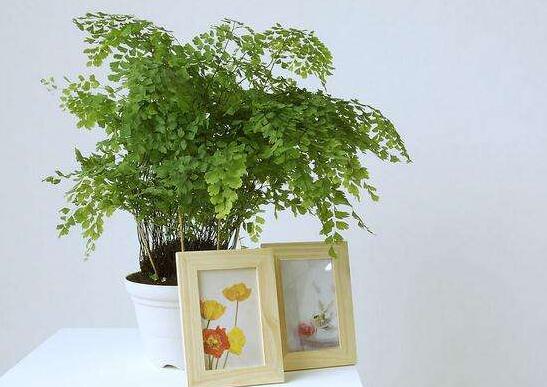
It does not have high requirements for water quality; as long as the water is not too alkaline, it can be used to water the maidenhair fern. But note that the water must be clean and healthy. The most suitable water is rainwater, followed by clear river or lake water, then well water or tap water. Of course, rice-washing water can also be used for watering.
2. How often to water the maidenhair fern
1. Growing season
Generally, March to November each year is the maidenhair fern's growing season. During this period, you can usually water the maidenhair fern once a day, and the amount each time does not need to be large. Pay attention to observing the soil moisture; it is enough if the soil is slightly moist.
2. Watering in summer
Although the maidenhair fern does not necessarily grow fastest in summer, because the temperature is higher, water evaporates fastest. So how do you water the maidenhair fern at this time? You need to water more often than usual, and you can water once in the morning and once in the evening. But if you find the soil is quite moist when watering in the evening, you can choose not to water.
3. Watering in autumn
Watering in autumn is similar to spring, but note that in late autumn the temperature begins to drop significantly. At this time you need to control the frequency of watering, only ensuring the soil does not dry out. The method is to check whether the soil surface turns white; if it turns white, it means watering is needed.
4. Watering in winter
Watering in winter must be done with caution, because the temperature at this time is relatively low, and the maidenhair fern often only needs a dormant period in winter. So water according to the principle of preventing the soil from drying and hardening. When you find the soil is quite dry, you can water appropriately along the edge of the flowerpot at noon, and note that the water temperature must not be too low.
Precautions for watering the maidenhair fern
1. Do not let water accumulate
Because every plant lover has a different pace of life, sometimes due to being busy with work and many chores they cannot water often, so some plant lovers choose to pour a large amount of water at once, causing deep water accumulation in the maidenhair fern's flowerpot. When they come back to check, they find the leaves withered and yellowed. This is caused by root rot due to water accumulation, so water must never be allowed to accumulate.
2. Avoid lack of water
When growing the maidenhair fern, what it fears most is long-term lack of water. That will cause new leaves to be unable to sprout and old leaves to fall early, affecting its ornamental value while also threatening the maidenhair fern's health. So usually develop the habit of watering promptly. If you are away for a long time, you need to water thoroughly and ensure the environment is well ventilated.
What to do when maidenhair fern leaves turn yellow, five techniques to improve yellowing/including solutions
The maidenhair fern is a common indoor foliage plant. Because it is easy to grow and highly adaptable, but during care and management, some plant lovers encounter leaf yellowing. It not only ruins the maidenhair fern's ornamental effect, but may also cause the whole plant to weaken, wither, and even die, troubling plant lovers greatly. So what to do when maidenhair fern leaves turn yellow? Based on plant lovers' experience, the editor has summarized five causes and solutions.
What to do when maidenhair fern leaves turn yellow
From plant lovers' growing experience, the main causes of maidenhair fern leaf yellowing are: overwatering, insufficient light, unsuitable soil, excessive fertilizing, and pest and disease damage. Below we will explain these five aspects in detail.
1. Overwatering
In the maidenhair fern's growing method, we know it is fairly tolerant of moist environments, but overwatering will cause the maidenhair fern's roots to be unable to contact outside air, limiting its respiration, thereby affecting root growth and development, causing tender leaves to turn pale yellow, and then old leaves also turn yellow and fall.
Solution: When watering, be sure not to let water accumulate. For specific methods, refer to the detailed introduction in how to water the maidenhair fern. In addition, each time you water, observe whether water flows out of the drainage holes at the bottom. If accumulated water cannot drain in time, it means there is a problem with soil drainage, and you need to loosen the soil or repot in time.
2. Insufficient light
The most suitable light condition for the maidenhair fern is bright light that is not intense, so some plant lovers grow it indoors. As a result, they do not pay attention to changes in light and place the maidenhair fern in bathrooms, storage rooms and other places with weak light, causing its leaves to turn yellow due to lack of light.
Solution: What to do when maidenhair fern leaves turn yellow due to insufficient light? The answer is to increase light. It is best not to place the maidenhair fern in an environment with very weak light. If light at home is truly insufficient, you can use lights for supplemental lighting, and be sure to ensure the maidenhair fern can enjoy about 6 hours of light each day.
3. Unsuitable soil
Most plants prefer neutral or slightly acidic soil, and the maidenhair fern is no exception. If the soil used for growing is too alkaline, or the water quality is alkaline when watering, over time the maidenhair fern's leaves will fade and leaf edges will turn yellow, because the soil will lack iron.
Solution: Acidic soil is best. You can mix loam, leaf mold, and river sand. The water quality must not be alkaline when watering. You can water with some alum fertilizer water to adjust the soil's pH.
4. Excessive fertilizing
The maidenhair fern's demand for fertilizer is relatively low. During the vigorous growth period, applying a dilute liquid fertilizer once a month is enough. If too much fertilizer is applied, the tips of old leaves will scorch yellow and new leaves will be thick and fleshy, making the originally elegant leaves less attractive.
Solution: If too much fertilizer has already been applied, increase the amount of watering so the excess fertilizer flows out of the drainage holes with the water. After that, pay attention to reasonable fertilizing, and the concentration each time should not be too high.
5. Pest and disease damage
Although the probability of pests and diseases occurring is not high, it is indeed one of the common causes of maidenhair fern leaf yellowing. Because many plant lovers do not know much about pests and diseases, they often think leaf yellowing is caused by improper growing methods. So when investigating the cause, be sure to observe whether there are disease spots or honeydew on the leaves.
Solution: Usually strengthen care and management to reduce the probability of pests and diseases. When planting, disinfect the soil and roots. If pests or diseases appear, spray chemicals for control. Commonly used chemicals include carbendazim, malathion and so on.
Common fern plant pictures, names and growing method introduction
█ Feng shui plants >> Choose the right feng shui plants and feel the comfort of nature
█ Mosquito-repelling plants >> What common mosquito-repelling plants are there, and are they really effective
█ Air-purifying plants >> 10 highly recommended indoor plants that can purify the air
Ferns are actually a very major category among plants. They belong to the lower division among higher-grade plants, and are also primitive vascular plants. Most ferns are herbaceous plants, though a few are woody plants. Ferns mainly reproduce by spores, so alternation of generations is obvious, with the asexual generation dominant. There are relatively many types of ferns, most distributed in areas south of the Yangtze River. Below we will help you understand some fern types and growing methods.
☼ Common fern - Boston fern
The Boston fern is a perennial evergreen herbaceous fern. This plant is a drooping-leaf foliage plant. Its place of origin is tropical and subtropical regions, and such plants are distributed in China's Hainan Province. We all know that most ferns are elegant and refined, and the Boston fern is no exception. This plant's leaves are bright in color, and the plant is light and graceful. If a breeze comes, the leaves sway gently, like a dancer dancing gracefully.
Growing method:
Environment: The Boston fern fairly likes diffused light, so in spring and summer it should be placed indoors in a spot with bright diffused light. If sunlight is intense, do not place it in direct sunlight, as the leaves easily turn yellow. But in winter we need to increase daily light, otherwise the leaf color still easily turns yellow, and some leaf edges even dry up.
Water and fertilizer: The Boston fern likes moist environments, and during the growing season water should be supplied abundantly. Although we need to keep the soil moist, do not water too often, and do not let water accumulate, otherwise the lower leaves will wither and fall.
☼ Common fern - maidenhair fern
The maidenhair fern is a perennial evergreen herbaceous plant. This plant's leaves are relatively pale green, and its thin-textured leaves paired with shiny black leaf stalks give people a particularly elegant feeling. Because its stems are slender, somewhat like iron wire, it is named maidenhair fern.
Growing method:
The maidenhair fern likes loose, permeable, and fertile soil. When potted, the growing medium can be made by mixing equal parts loam, leaf mold, and river sand. During the growing season, apply liquid fertilizer once a week, and pay attention to always keeping the potting soil moist and the air humidity relatively high. In dry seasons, you can often sprinkle water on the ground around the plant to increase air humidity.
☼ Common fern - Java fern
The Java fern's underwater leaves and above-water leaves are the same in appearance. It has strip-like rhizomes, with black or dark brown adventitious roots growing below, distributed in tropical regions from Java to the Philippines in Southeast Asia. The Java fern belongs to the phylum Angiosperms, order Alismatales. This aquatic plant has good adaptability, extremely low light requirements, and is easy to plant.
Growing method:
Light: The Amazon sword plant generally does not particularly need strong light, but still needs sufficient light.
Water quality: The requirements for water quality are not high. As long as it is water quality suitable for aquatic plants, most can adapt.
Carbon dioxide: Adding carbon dioxide is good for aquatic plants, but some varieties will still grow even without added carbon dioxide as long as the water quality is below pH 7.0.
Fertilizer: The substrate needs sufficient base fertilizer. If the color of new leaves during planting is too white, it indicates insufficient fertilizer, and liquid fertilizer can be added to make up for it.
☼ Common fern - fan fern
Fan fern is a species under the genus Neocheiropteris in the family Polypodiaceae. This plant is mainly distributed in the southwestern region, and it grows in shaded and humid evergreen areas or valley sections. Fan fern can be said to be a fern unique to China, and it has currently been listed as a national second-class protected vulnerable species.
Growing method:
For potted fan fern, it is suitable to use a shallow pot, and you can mix garden soil and leaf mold at 1:2. For daily watering, just keep the potting soil moist. In summer, when it is hot and dry, you can appropriately spray clean water to increase the growing humidity for the fern, and fertilize once every 2 months. Potted ferns need to be placed in a place with sufficient sunlight. In winter, the nighttime temperature should be controlled at 8-10°C, so as to ensure the leaves stay green through winter.
Summary:Above we briefly helped you understand the growing methods of some fern plant names, and also appreciated their pictures. I believe everyone now has a deeper understanding of ferns. There are many types of ferns, and basically all ferns are graceful in form and have high ornamental value.