How to grow Zephyranthes grandiflora? Growing methods and precautions, ensure plenty of light
Zephyranthes grandiflora, also known as rain lily, is a very beautiful plant. Its foliage is emerald green, paired with pink flowers, bright and eye-catching, beautiful and elegant, making people like it at first sight. In daily life, many people want to grow Zephyranthes grandiflora, so how do you grow it? Below are the growing methods and precautions for Zephyranthes grandiflora, carefully compiled by the editor. They are very comprehensive. Friends who want to grow it, come in and take a look!
1. How to grow Zephyranthes grandiflora: understand its habits
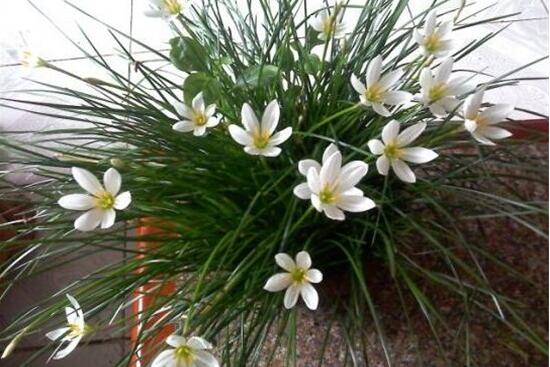
Zephyranthes grandiflora likes a warm, humid environment with plenty of light. When growing it indoors, we should water it frequently, keep the potting soil moist, and let it get some sun from time to time. In winter, when the temperature is low, everyone should also take good measures to keep it warm. As for the soil, it requires good drainage. Therefore, how to grow Zephyranthes grandiflora is simply a matter of meeting its growth needs. For specific requirements, let's continue reading below.
2. Growing methods and precautions for Zephyranthes grandiflora
1. Soil
How do you grow potted Zephyranthes grandiflora? First, of course, is choosing the soil. According to the growth habits of Zephyranthes grandiflora, we should choose a sandy soil with good drainage and rich in humus for it. As for the pH, everyone does not need to worry too much, because Zephyranthes grandiflora is very tough by nature and does not have high requirements for soil. It can adapt from slightly acidic to weakly alkaline soil, and from sandy soil to light clay.
Precautions: In order for Zephyranthes grandiflora to grow better, when planting, everyone should place a layer of broken hard plastic foam blocks or broken bricks and tiles at the bottom of the pot to allow air and drainage. Potting soil selection: half leaf mold and half garden soil, mixed with a small amount of sand, plus a little bone meal and nitrogen-phosphorus-potassium compound fertilizer to make the growing medium.
2. Light
Plant growth cannot be separated from light, and Zephyranthes grandiflora likes an environment with plenty of light, so for how to grow Zephyranthes grandiflora, we must give it plenty of light. Usually, when the outside light is not strong, it can be placed outside to receive full sun. When the light is very strong, it can also be placed outside, but it should be properly shaded.
Precautions: Zephyranthes grandiflora tolerates partial shade, but do not keep it in too dark a place for a long time, otherwise it may result in failure to bloom. In partial shade, although Zephyranthes grandiflora can still bloom, the number of flowers is small and the flowering period is short. Therefore, during the growth of Zephyranthes grandiflora, it must be given plenty of light outside.
3. Temperature
In the growing methods for Zephyranthes grandiflora, temperature is something everyone cannot ignore. It is understood that Zephyranthes grandiflora likes a warm environment and is not cold-tolerant. Its most suitable growth temperature is 16-28°C, so for it to grow well, everyone should maintain this temperature.
Precautions: Zephyranthes grandiflora is not cold-tolerant, and the overwintering temperature should not be lower than 5°C. It is worth mentioning that if the indoor temperature in winter can be kept above 15°C, Zephyranthes grandiflora can continue to grow healthily, and can even bloom.
4. Watering
Zephyranthes grandiflora likes a humid environment, so for how to grow Zephyranthes grandiflora, everyone should water it appropriately to ensure the soil is slightly moist and on the dry side. During the growing period, watering should follow the principle of “water when dry, stop when wet”, and it must not be allowed to have standing water. After September, reduce the amount of watering. From November to the following spring in February, just keep it slightly dry and slightly moist.
Precautions: Zephyranthes grandiflora is drought-tolerant and afraid of waterlogging, so just keep it slightly dry and slightly moist. Do not water too much. When the air is dry, everyone should also spray around the plant to maintain humidity at 30%-35%. In addition, after the first batch of Zephyranthes grandiflora flowers fade, everyone should withhold water for 50-60 days, then resume normal watering. This can make Zephyranthes grandiflora bloom more.
5. Fertilizing
After talking about watering, let's talk about fertilizing. It is also very important in the growing methods for Zephyranthes grandiflora. Flower lovers can apply it once every 2-3 months. Increasing phosphorus and potassium fertilizer proportionally can promote bulb enlargement and good flowering. Fertilizer selection: organic fertilizers such as oil cake, compost, or nitrogen, phosphorus, and potassium fertilizers.
6. Repotting
In order for Zephyranthes grandiflora to bloom more, everyone should repot it once every 1-2 years. Potting soil selection: half leaf mold and half garden soil, mixed with a small amount of sand, plus a little bone meal and nitrogen-phosphorus-potassium compound fertilizer to make the growing medium.
7. Pruning
During the growth of Zephyranthes grandiflora, proper pruning is also crucial. During the flowering period of Zephyranthes grandiflora, some of its stems and leaves will turn yellow. At this time, everyone should cut them off, because this affects its appearance, and it can also achieve appropriate thinning to ensure healthy growth of Zephyranthes grandiflora during the flowering period.
Is Zephyranthes grandiflora toxic? How to grow Zephyranthes grandiflora
Is Zephyranthes grandiflora toxic?
Zephyranthes grandiflora is also called rain lily. Its leaves somewhat resemble chives, and its flowers are rather beautiful. So, is Zephyranthes grandiflora toxic? Can it be grown indoors? Can Zephyranthes grandiflora be eaten?
Is Zephyranthes grandiflora toxic?
Is Zephyranthes grandiflora toxic? The answer is no. Zephyranthes grandiflora itself is not toxic and also has certain medicinal value. It can be used as medicine and has a detoxifying effect.
Can Zephyranthes grandiflora be grown indoors?
Actually, Zephyranthes grandiflora is not toxic, so growing it indoors is also fine and will not cause any major harm.
However, when growing Zephyranthes grandiflora indoors, you need to pay attention: Zephyranthes grandiflora itself prefers a growing environment with plenty of light and can tolerate partial shade. Indoor light is sometimes not sufficient. If the light is insufficient, it may cause poor growth.
So when growing Zephyranthes grandiflora indoors, you need to pay attention to proper care and management.
Can Zephyranthes grandiflora be eaten?
Zephyranthes grandiflora is not toxic, so some people will want to know whether Zephyranthes grandiflora can be eaten. So, can Zephyranthes grandiflora be eaten?
On this point, there is actually no relatively clear answer. Most people lean toward saying that Zephyranthes grandiflora can be eaten, but they think its taste is actually not very good, unlike chives, so it is recommended not to eat much of it.
Those who want to try Zephyranthes grandiflora should best ask a physician or experienced people first, to avoid adverse reactions.
What to do if Zephyranthes grandiflora leaves turn yellow and withered
"Editor, editor, what should we do if our Zephyranthes grandiflora leaves turn yellow and dry up?" Facing such an urgent question, the editor also quickly wrote this short article. Without further ado, let's take a look together.
Reasons for yellowing leaves of Zephyranthes grandiflora
Too much water
Zephyranthes grandiflora tolerates dryness but is afraid of waterlogging and forbids standing water. If watered too much, it will damage the root system of Zephyranthes grandiflora through waterlogging, causing the leaves to turn yellow and withered.
Poor ventilation
Zephyranthes grandiflora likes a relatively cool environment and needs a certain level of humidity.
If the weather is stuffy and hot, the room is too dry, and the ventilation conditions are poor, it is very likely to affect its normal healthy development.
Too much or too little fertilizer
Although Zephyranthes grandiflora is "rough-skinned and thick-fleshed," as a plant, its healthy growth still requires a certain amount of fertilizer nutrients. If there is too little or too much fertilizer, it may lead to the appearance of yellow leaves.
Solutions for yellowing and withered leaves of Zephyranthes grandiflora
Ensure a certain amount of water
Newly successfully transplanted Zephyranthes grandiflora needs to be watered thoroughly once. Normally growing Zephyranthes grandiflora should be watered when dry and stopped when wet, and should not be watered too much.
Fertilize moderately
Just like human growth and development, too much or too little nutrient intake will affect growth.
More natural humus should be added to the soil, rather than chemical fertilizers.
Now everyone should generally know why their own Zephyranthes grandiflora has yellowing leaves. Then go quickly to "rescue" this beautiful little plant!
Household growing methods for Zephyranthes grandiflora
Zephyranthes grandiflora is a plant with many uses and a strong character. So the question is, how do you grow such an "easygoing" Zephyranthes grandiflora at home? Let's take a look together!
The growth habits of Zephyranthes grandiflora generally show that it loves a warm, humid environment with abundant sunlight. It is not afraid of intense summer heat and has strong cold tolerance. It is very convenient for household planting.
Temperature requirements for growing Zephyranthes grandiflora
Zephyranthes grandiflora likes a warm environment. Generally, June to September each year is its flowering period.
The most suitable temperature for the growth of Zephyranthes grandiflora is 16-28°C. It is not cold-tolerant, and the overwintering temperature should not be lower than 5°C.
If the indoor temperature in winter can be kept above 15°C, Zephyranthes grandiflora can continue to grow healthily. It can even bloom.
Light requirements for growing Zephyranthes grandiflora
Zephyranthes grandiflora likes an environment with plenty of sunlight. If the growing environment is shaded, the quality of the bulbs obtained will be relatively poor.
Although it can also bloom in partial shade, the number of flowers is small and the flowering period is short.
In too dark a place, it may result in failure to bloom.
Moisture requirements for growing Zephyranthes grandiflora
Zephyranthes grandiflora likes a slightly moist and on the dry side soil environment. It is drought-tolerant and afraid of waterlogging.
During the growing period, the soil should be watered when dry and stopped when wet, and there must be no standing water. After September, reduce the amount of watering. From November to the following spring in February, just keep it slightly dry and slightly moist.
Soil requirements for growing Zephyranthes grandiflora
The most suitable soil for Zephyranthes grandiflora should be a sandy soil with good drainage and rich in humus.
However, Zephyranthes grandiflora is tough by nature and does not have high requirements for soil in household cultivation. It can adapt from slightly acidic to weakly alkaline soil, and from sandy soil to light clay.
A layer of broken hard plastic foam blocks or broken bricks and tiles can be placed at the bottom of the pot to allow air and drainage.
Hydroponic method for Zephyranthes grandiflora
As a typical bulb plant, Zephyranthes grandiflora can grow as long as its roots have sufficient water. Although it is afraid of waterlogging, hydroponics is a completely different growing method, so as long as you pay more attention, Zephyranthes grandiflora can also be grown hydroponically. Now let's talk about the hydroponic method for Zephyranthes grandiflora!
Zephyranthes grandiflora itself has small pink or pure white flowers interspersed among emerald green leaves, giving an overall fresh and elegant feeling. If grown hydroponically, you can see the spherical roots of Zephyranthes grandiflora from a transparent container, and the leaves will also be more clear and bright.
One hydroponic method for Zephyranthes grandiflora
Prepare a relatively long transparent container, preferably with a more beautiful appearance. A layer of colored stones or pebbles can be spread at the bottom of the container to increase the aesthetic appeal.
In spring, first plant the prepared Zephyranthes grandiflora bulbs in a pot. Ensure that the root system of Zephyranthes grandiflora can spread out completely. Then press the soil firmly around the roots to ensure the surface is level.
After that, sink the pot into a water basin, shake it gently, rinse off the surface soil, and then place it into the selected container.
Do not put too much water in the container; three-quarters is enough.
Another hydroponic method for Zephyranthes grandiflora
In order to achieve a better ornamental effect, it is best to choose suitable utensils according to the plant's variety, form, and so on. For Zephyranthes grandiflora, a transparent glass container is a good choice.
First do the work of removing soil and washing the roots of Zephyranthes grandiflora. Gently shake the dug-out plant with your hands, shake off the soil from the roots, and expose all the roots. Then wash them clean with clear water. Not a bit of soil must be left.
After pruning the roots, stems, and leaves, they can be soaked in a 0.1% potassium permanganate solution for 10-15 minutes, then rinsed with clear water, and then they can be planted in the bottle.
This hydroponic method requires the use of a special nutrient solution.
Is Zephyranthes grandiflora afraid of freezing? Growing it this way in winter is safest / move it indoors and regulate the temperature
Zephyranthes grandiflora, a plant that is extremely easy to keep alive and has excellent ornamental value, is grown at home by many flower lovers. But during the growing process, because the growing methods for Zephyranthes grandiflora are very simple, many flower lovers relax their guard, and the result is that they kill Zephyranthes grandiflora in winter! Many people say Zephyranthes grandiflora was frozen. So is Zephyranthes grandiflora afraid of freezing? According to the editor's research, growing Zephyranthes grandiflora this way in winter is safest. Let's take a look together!
1. Is Zephyranthes grandiflora afraid of freezing? It depends
Ordinary indoor potted plants are generally afraid of winter, because they are all afraid of freezing. In winter, not only is the temperature low, but the air is also very dry, and a little negligence may cause the plant to die. So as a plant with good cold tolerance, is Zephyranthes grandiflora afraid of freezing? For this, we can divide it into two situations: Zephyranthes grandiflora in the south is not afraid of freezing, while Zephyranthes grandiflora in the north is afraid of freezing!
2. Growing Zephyranthes grandiflora this way in winter is safest
In the dry winter, growing a pot of Zephyranthes grandiflora by the window is definitely a good choice. Those emerald green leaves, paired with pink flowers, give people a delicate and lively feeling. However, to maintain this beautiful scene in winter, some care techniques are needed, and according to the editor's summary, growing Zephyranthes grandiflora this way in winter is safe. Specifically, do the following 6 points:
1. Temperature
① South, grow outdoors
Zephyranthes grandiflora has good cold tolerance and can withstand a minimum temperature of 5°C. Below this temperature, symptoms of yellowing and withering leaves will appear. So in some areas of the south, even in winter, Zephyranthes grandiflora can be grown outdoors without any problems.
② North, grow indoors
But in the north, in winter, the temperature here will be very low, and even the cold-tolerant Zephyranthes grandiflora cannot withstand it, so at this time we need to move it indoors.
It is worth mentioning that the favorite temperature of Zephyranthes grandiflora is between 16-28°C, and the indoor temperature in the north is generally above 15°C. Therefore, in the northern winter, if Zephyranthes grandiflora is moved indoors and sufficient light can still be ensured, Zephyranthes grandiflora can still bloom normally!
2. Pruning
Proper pruning is also a key point in winter care for Zephyranthes grandiflora: after the flowering period of Zephyranthes grandiflora, everyone should promptly cut off the leaves that show signs of yellowing. After doing this, not only can the density of the plant be reduced, but its ornamental value will not be affected, ensuring normal growth of Zephyranthes grandiflora.
3. Light
In winter, everyone must ensure that Zephyranthes grandiflora has sufficient light. To achieve this, everyone should place it by a sunny window or on a balcony to let it receive full sun.
4. Watering/humidity
Zephyranthes grandiflora is drought-tolerant and afraid of waterlogging, so in winter, although it needs to be watered, watering should be done with care; just keep the potting soil moist. In addition, winter is relatively dry, and Zephyranthes grandiflora is suitable for surviving in slightly humid conditions, so everyone can use a spray bottle to spray around it to increase air humidity.
After growing Zephyranthes grandiflora this way in winter, the plant will surely bloom beautiful flowers! If the flowers are pink, paired with emerald green leaves, it will make people feel happy; if the flowers are white, it will give people a beautiful and elegant feeling. Besides decorating the environment, it can also delight the mood.