How to water freesia? Water when dry, water when wet, once a week
As a common indoor potted plant, freesia is grown in many people's homes. Its flowers are pure white as snow, and its fragrance is delicate like an orchid, making it very endearing. However, if you want freesia to look good, proper watering is very important. So how do you water freesia? Watering is a technical skill. Below, follow the editor to take a look at the watering methods for freesia.
1. How to water freesia, timing/methods
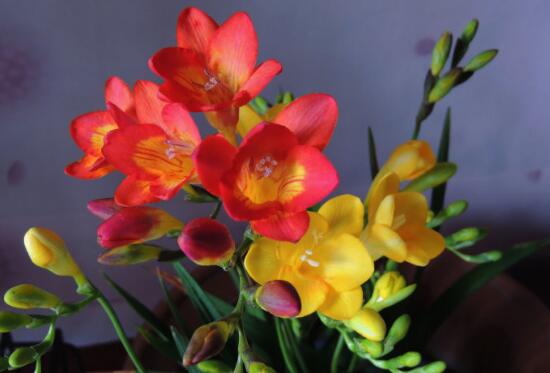
In the cultivation methods for freesia, watering is an indispensable part. But for beginners, watering is very troublesome, because once watering is improper, it will cause freesia leaves to turn yellow. So how do you water freesia? In this regard, the editor will introduce the watering methods for freesia in detail.
2. Watering methods for freesia
Freesia does not have high water requirements, but there are many points to pay attention to. The watering interval is different at different stages. Below, the editor will specifically explain how to water at different stages:
1. Watering after potting
When freesia has just been potted, it does not need too much water; just keep the potting soil slightly moist.
2. Daily watering
Apart from special periods, for daily watering of freesia, we only need to grasp the principle of “water when dry, water when wet”, and water about once a week.
3. Watering during the growing period
During the growing period of freesia, although the water demand is greater than usual, too much watering can easily cause root rot, so the best approach is to continue watering once a week.
4. Watering during the bud stage
During the bud stage of freesia, around February, watering should be paid attention to. At this time the environment will be very dry, so freesia should be watered more, but the watering interval should not change; keep it once a week, only increase the amount of water to keep the potting soil moist.
5. Watering after flowering
During the flowering period of freesia, watering should be paid attention to, especially after the flowers have been open for 1 month, the amount of watering must be reduced. The reason for this is that at this time summer is approaching and the environment is relatively stuffy and hot. If more water is given at this time, it will cause the bulbs to rot.
Overall, freesia is very easy to grow, but attention must be paid to watering: keep watering once a week, control the amount of water, and just keep the potting soil moist. Watering is a technical skill, and flower lovers should not be impatient; after growing them for a while, you will gradually learn. Regarding the watering methods for freesia, the editor has introduced them here, hoping to be helpful to everyone.
How to water freesia
To grow freesia well, watering is a very important part. So how do you water freesia? Below is a summary of freesia watering methods and points to note.
How to water freesia 1. Daily wateringWhen watering freesia daily, flower lovers only need to follow the watering method of water when dry, water when wet. Generally, watering once a week is basically enough to meet the growth needs of freesia.
2. Watering during the growing periodAfter the freesia seedlings have all emerged, watering needs to be controlled. It is better to keep it dry than wet. As long as the potting soil is not dry, do not water. If the lighting environment is not ideal, then wait a little longer. When the surface is dry, there is no need to rush; you can wait until the plant has slight wilting before watering.
After fertilizing during the growing period, generally water once again the next day. Then when the soil is dry, water again, and repeat this process.
3. Watering at plantingFor newly planted freesia, watering needs to be done thoroughly in one go. After watering, place it in a cool place and wait for seedlings to emerge. Before emergence, just keep the freesia potting soil moist. Generally, seedlings will emerge in fifteen days.
4. Watering during floweringFreesia cannot be fertilized during flowering, so water should be controlled appropriately. Only in this way can the flowering period of freesia be extended. After the flowers fade and the stems and leaves wither, wait until May or June of the following year, stop watering, dig out the freesia corms, dry them in the sun, and store them at low temperature.
5. Watering after floweringAfter freesia flowers have been in full bloom for 1 month, flower lovers need to gradually control the amount of watering. At this time summer is approaching, summer temperatures are relatively high, and the environment is also relatively stuffy and hot. If too much water is given at this time, it will cause the bulbs to rot.
How to grow freesia, freesia cultivation methods and points to note / keep warm in winter
Freesia should be familiar to flower lovers. It has strong effects; it is not only good-looking, but can also be used medicinally to treat illness. It is a widely popular flower. In daily life, many people want to grow freesia. So how do you grow freesia? Below are the freesia cultivation methods and points to note carefully compiled by the editor. They are very detailed, and friends who want to grow it should definitely take a look~
1. How to grow freesia, understand its habits
Freesia prefers a cool, moist environment with sufficient light. When growing it indoors, besides placing it in a ventilated spot with light, you should also water it frequently to keep the potting soil moist. However, freesia has poor cold resistance, so in winter the room temperature should be kept above 3°C. Therefore, for how to grow freesia, everyone only needs to meet its growth needs. For specifics, let's continue reading below.
2. Freesia cultivation methods and points to note
1. Potting soil
For how to grow potted freesia, first of all, naturally, choose a good flowerpot and soil suitable for its growth. After all, potted plants bought outside may not be good. The potting soil requirements are as follows:
Flowerpot: For planting freesia, an earthenware pot is generally most suitable. If there is none, a flowerpot with relatively good breathability can be used.
Soil: According to the growth habits of freesia, everyone should choose for it a sandy soil that is loose, well-drained, and strong in water retention. The editor recommends: /3 peat soil plus 1/3 fine sand to make nutrient soil.
2. Light
Plant growth cannot be separated from light, so in freesia cultivation methods, light is very important. It is understood that freesia likes light but fears strong light, so in spring, autumn, and winter, it can receive sufficient sunlight, but in summer it should be protected from direct sunlight.
Points to note: If freesia is to grow well, sufficient light is very necessary, so many flower lovers grow it on the balcony. But everyone must pay attention not to let it receive too strong light, otherwise it can easily cause freesia leaves to turn yellow, and in summer it will enter dormancy and stop growing.
3. Temperature
During the growth process of freesia, temperature regulation is also very important. According to the cultivation experience of expert flower growers, the editor learned that the most suitable temperature for freesia growth is 15-25°C. If the daytime temperature is controlled at around 20°C and the nighttime temperature is controlled at around 15°C, freesia will produce beautiful flowers.
Points to note: Because freesia fears both heat and cold, in winter the temperature should be kept above 7°C, and in summer the temperature should be kept no higher than 30°C; otherwise, cooling measures need to be taken.
4. Watering
In freesia cultivation methods, watering is indispensable. For freesia just after potting, generally water once about every 1 week. During the growing period, it needs more water, but it cannot be watered too much; just keep the soil moist.
Points to note: After transplanting and before sprouting, freesia should keep the soil moist; after budding, gradually increase or decrease the amount of watering, try to keep the soil dry, reduce air humidity, and reduce pests and diseases; if it is the stage of drawing flower stems, be sure to ensure sufficient water supply.
5. Fertilizing
After discussing watering, let's talk about fertilizing, which plays a crucial role in the growth of freesia. It is understood that freesia likes fertilizer. During the flower bud differentiation stage, fertilization should begin, applying bean cake water once every 10-15 days, or phosphorus and potassium fertilizer can be used instead.
Points to note: Do not fertilize at budding time, so as not to cause excessive leaf growth and affect flowering. Therefore, excessive fertilization is also one of the reasons freesia does not bloom. When flowering, apply potassium dihydrogen phosphate as a foliar fertilizer to promote flowering.
6. Netting
In freesia cultivation methods, there is one point everyone should also pay attention to, and that is netting. Because freesia flower stems are soft, when there are many flowers, the flower stems will droop and fall over. So for the healthy growth of freesia, and also for good appearance, when it grows 3-4 leaves, netting can be set up.
Netting method: Set up the first layer of net about 25 cm above the ground. As the freesia grows, set up 2-3 layers of net. The net specification is 10cm×10cm or 10cm×15cm.