When to plant freesia corms? Methods for fast sprouting with autumn planting
Freesia has extremely strong benefits: it is not only beautiful but also can be used medicinally to treat illnesses, so it is deeply loved by flower enthusiasts. In daily life, many flower lovers buy freesia as ready-made potted plants, while expert gardeners like to plant them by hand, so they buy back corms. So when should freesia be planted? Now let's take a look together at the planting methods for freesia corms.
1. When to plant freesia: autumn is best
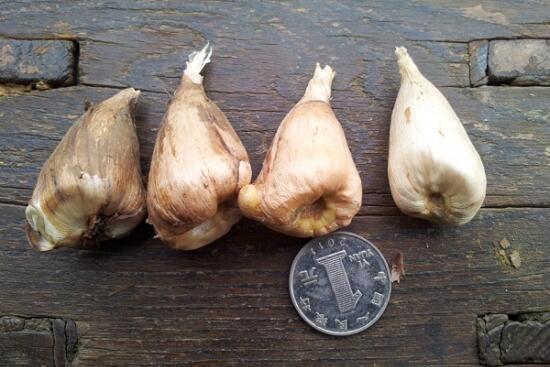
On this question, many flower lovers are dismissive, thinking that when you plant does not matter much and will not have too great an effect. But I can tell you clearly that this is incorrect, because if you plant too early, it is very easy to cause leggy growth. As for when to plant freesia, I suggest choosing autumn.
Although autumn is the best time to plant freesia, the specific time still differs for different regions: in more southern places, you can plant in October, that is, around National Day; in more northern places, you can plant earlier, that is, around September. However, this is not fixed either, because the climate differs from year to year.
2. Freesia corms sprout one month after planting
Once freesia corms are planted, you just wait for them to sprout. As for the sprouting time, it depends on planting depth and corm quality. According to the experience of expert gardeners, under the same conditions, the shallower the planting and the larger the corm, the faster the sprouting; conversely, sprouting is slower. Generally speaking, planted at a depth of 10cm, the sprouting time is about 20-30 days.
3. Planting methods for freesia corms
When to plant freesia, after reading the above, everyone should know! In autumn, September-October, we plant the corms we bought into soil 10cm deep, and after they sprout in 20-30 days, we can begin normal care. Now let's take a look at the planting methods for freesia corms.
1. Temperature
In the planting methods for freesia corms, temperature is what everyone should pay most attention to. Freesia itself likes cool shade, and low temperatures can promote the differentiation of freesia flower buds and can also keep its form compact. So if conditions allow, you can appropriately lower the temperature, but the temperature should not be too low either; it is best to keep it above five or six degrees.
2. Light
After freesia corms are planted, we need to give them sufficient light. Although freesia avoids strong light, autumn light is not strong, so we can let it regularly bask in the sun, which is beneficial to its growth.
3. Water
Water is needed for plant growth. After freesia corms are planted, we need to water them appropriately, but not too much, as excessive water easily causes them to rot. So when watering freesia, everyone should follow the principle of "water thoroughly only after the soil dries out."
4. Fertilizer
The fertilizer here is not the fertilizing mentioned in freesia cultivation methods. This mainly refers to base fertilizer. When planting freesia corms, everyone should add some fertilizer to the soil.
When to plant freesia, and freesia cultivation methods
Freesia flowers are pure white like snow, and the floral fragrance is delicate like an orchid, so it is loved by many people, and many are willing to plant a few pots at home. Today I will share with everyone when to plant freesia and freesia cultivation methods.
Introduction to freesia:
Freesia is also known as xiaocanglan, xiaochanglan, jiandaolan, suxianglan, xiangyuanwei, and yangwanxiangyu. It is a perennial bulbous herbaceous flower belonging to the genus Freesia in the iris family. It originated at the Cape of Good Hope in southern Africa. Because of its early flowering period, bright colors, fragrant flowers, and long vase life, it is deeply favored by flower lovers. It is now also widely planted in our country.
Growth habits of freesia:
Freesia likes a cool, moist environment with sufficient light, and has poor cold tolerance. The suitable growth temperature is 15-20°C, and the minimum wintering temperature is 3-5°C. A temperature of 13.5-15°C can promote rooting and sprouting of the corms. Flower bud differentiation requires a low temperature of 8-13°C. During flower bud development, the suitable temperature is 13-18°C; below 18°C will delay the flowering period and shorten the flower stems. Higher temperatures can promote earlier flowering, but the plant grows weakly.
When to plant freesia:
Propagation is carried out by planting underground corms separately. The planting period is early to mid-September. In a "three-cylinder" pot, 3-4 corms can be planted. When planting freesia, fertilized culture soil should be used. After planting, water thoroughly, first place it outdoors in a wind-sheltered, sunny spot, and move it back indoors after leaves unfold in early October.
In early June, temperatures rise, and by mid-month the leaves begin to turn yellow and wither. At this time, remove the bulbs from the pot, dry them, put them in a cloth bag, and hang them in a cool indoor place for dry storage through the summer. Replant after the Start of Autumn.
Freesia cultivation methods:
1. Soil: Freesia likes sandy loam rich in organic matter, with strong water retention and good drainage, pH6-7.2. For home planting, usually a artificial culture soil made of 2/3 peat soil plus 1/3 fine sand is used. Before planting, it is best to disinfect the soil.
2. Corm treatment: Corms need pretreatment such as disinfection, breaking dormancy, and promoting root growth. For corm disinfection, use 500-800 times diluted carbendazim or thiophanate-methyl and other fungicides to soak the corms for 1-2h (hours), then scoop them out and dry them in the shade.
3. Fertilizer and water: After planting until sprouting, the soil must be kept moist. After bud appearance, gradually reduce the amount of watering appropriately, and try to keep the soil surface dry, so as to lower air humidity and prevent diseases. Since the time from planting to flowering is relatively short, the organic fertilizer and compound fertilizer applied before planting can basically meet the growth needs.
4. Temperature: Temperature is very important for freesia cut flower production. The suitable growth temperature is 15-20°C, and the minimum wintering temperature is 3-5°C. During flower bud differentiation, avoid high temperatures above 25°C and low temperatures below 10°C. From the 4-leaf stage, ensure a temperature of 13-14°C is maintained for more than 4 weeks.
5. Light: During cultivation, appropriate shading is suitable at the seedling stage and flowering stage. During the first leaf growth period, appropriate shading can lower soil temperature and promote root development. Before flower bud differentiation, give about 10h of short-day treatment. Although freesia likes light, it should also avoid strong light. Under conditions of excessively strong light and relatively high temperature, a 70% light-transmittance shade net can be used for shading.
When to plant freesia and freesia cultivation methods have been shared above. In fact, freesia cultivation techniques are not very difficult; as long as you pay attention to the above issues during management, it is fine.
When to plant freesia: teaching you freesia cultivation methods
Freesia is a perennial herbaceous plant. Because its flowers are pure white like snow and its fragrance is delicate like an orchid, it is named freesia. Many flower lovers like to plant a few pots at home. Below, I will tell everyone about freesia cultivation methods, and when to plant freesia?
1. Introduction to freesia
Freesia is also known as xiaocanglan, xiaochanglan, jiandaolan, suxianglan, xiangyuanwei, and yangwanxiangyu. It is a perennial bulbous herbaceous flower belonging to the genus Freesia in the iris family. It originated at the Cape of Good Hope in southern Africa. Because of its early flowering period, bright colors, fragrant flowers, and long vase life, it is deeply favored by flower lovers. It is now also widely planted in our country:
2. Growth habits of freesia
Freesia likes a cool, moist environment with sufficient light, and has poor cold tolerance. The suitable growth temperature is 15-20°C, and the minimum wintering temperature is 3-5°C. A temperature of 13.5-15°C can promote rooting and sprouting of the corms. Flower bud differentiation requires a low temperature of 8-13°C. During flower bud development, the suitable temperature is 13-18°C; below 18°C will delay the flowering period and shorten the flower stems. Higher temperatures can promote earlier flowering, but the plant grows weakly.
3. When to plant freesia?
Propagation is carried out by planting underground corms separately. The planting period is early to mid-September. In a "three-cylinder" pot, 3-4 corms can be planted. When planting freesia, fertilized culture soil should be used. After planting, water thoroughly, first place it outdoors in a wind-sheltered, sunny spot, and move it back indoors after leaves unfold in early October.
In early June, temperatures rise, and by mid-month the leaves begin to turn yellow and wither. At this time, remove the bulbs from the pot, dry them, put them in a cloth bag, and hang them in a cool indoor place for dry storage through the summer. Replant after the Start of Autumn.
4. Freesia cultivation methods
1. Soil: Freesia likes sandy loam rich in organic matter, with strong water retention and good drainage, pH6-7.2. For home planting, usually a artificial culture soil made of 2/3 peat soil plus 1/3 fine sand is used. Before planting, it is best to disinfect the soil.
2. Corm treatment: Corms need pretreatment such as disinfection, breaking dormancy, and promoting root growth. For corm disinfection, use 500-800 times diluted carbendazim or thiophanate-methyl and other fungicides to soak the corms for 1-2h (hours), then scoop them out and dry them in the shade.
3. Fertilizer and water: After planting until sprouting, the soil must be kept moist. After bud appearance, gradually reduce the amount of watering appropriately, and try to keep the soil surface dry, so as to lower air humidity and prevent diseases. Since the time from planting to flowering is relatively short, the organic fertilizer and compound fertilizer applied before planting can basically meet the growth needs.
4. Temperature: Temperature is very important for freesia cut flower production. The suitable growth temperature is 15-20°C, and the minimum wintering temperature is 3-5°C. During flower bud differentiation, avoid high temperatures above 25°C and low temperatures below 10°C. From the 4-leaf stage, ensure a temperature of 13-14°C is maintained for more than 4 weeks.
5. Light: During cultivation, appropriate shading is suitable at the seedling stage and flowering stage. During the first leaf growth period, appropriate shading can lower soil temperature and promote root development. Before flower bud differentiation, give about 10h of short-day treatment. Although freesia likes light, it should also avoid strong light. Under conditions of excessively strong light and relatively high temperature, a 70% light-transmittance shade net can be used for shading.
The above text is an introduction to freesia cultivation methods and when to plant freesia. Freesia cultivation techniques are not very difficult; as long as you pay attention to the above issues during management, it is fine.