How to fertilize oxalis? The fertilizer solution should be dilute, and fertilization should be delayed during the rainy season.
Oxalis has a fairly strong adaptability and its demand for fertilizer is fairly average, but when planting, fertilization is an indispensable part of the methods for growing oxalis, and fertilization should be neither too much nor a long-term lack of fertilizer, which is quite a headache for inexperienced flower enthusiasts, so what fertilizer should be used for oxalis? How to fertilize oxalis? The editor will tell you the fertilization techniques.
What fertilizer to use for oxalis
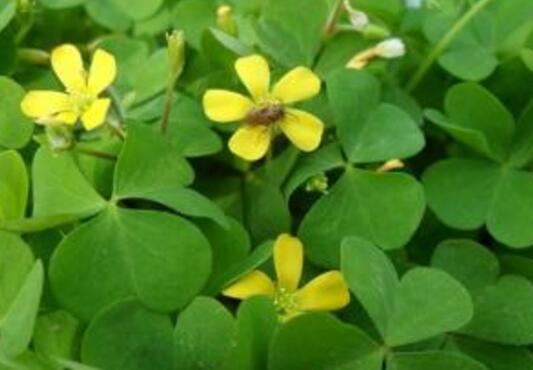
Usually, the fertilizer applied to oxalis should most suitably be decomposed organic fertilizer. In addition, when potting, some livestock manure can be applied at the bottom of the pot as a base fertilizer. In short, the fertilizer must be decomposed; do not apply raw fertilizer, otherwise it will not be conducive to absorption by oxalis.
How to fertilize oxalis
1. Before potting
Before potting and planting, some tiles need to be placed at the bottom of the pot first as a drainage layer, to prevent water poured into the flower pot from quickly flowing out of the pot. In addition, apply some bottom fertilizer on the drainage layer, which is what we commonly call base fertilizer. For example, livestock manure or organic fertilizer are both fine; it can make the soil more fertile.
2. Seedling stage
After cuttings or sowing, no fertilization is needed. Only when the seedlings grow 2-3 true leaves is the first fertilization needed. At this time, a fertilizer with good water solubility is most suitable. When fertilizing, the fertilizer can be dissolved in rice-washing water or soybean cake water and then applied to the soil.
3. During the growth period
Generally, during the growth period, applying a compound fertilizer once every 2-3 months is enough. The fertilizer should be mainly nitrogen, phosphorus and potassium. There is no need to apply too much fertilizer; just keep oxalis growing normally. If the leaf color is found to become lighter, it means the fertilizer is insufficient, and timely fertilization is needed.
4. During the flowering period and after the flowers fade
How to fertilize oxalis during the flowering period and after the flowers fade? No fertilization is needed at this stage, because at this time oxalis is about to enter dormancy, and its nutrient needs are relatively low. Fertilizing may cause fertilizer burn, leading to thick, lusterless leaves, which will affect oxalis's revival in the 2nd year.
Precautions for fertilizing oxalis
1. Watering after fertilization
Generally speaking, watering is needed after fertilization, but if a solid fertilizer dissolved in water is used and then applied, then watering should be controlled. The soil must not be allowed to become too moist or even waterlogged, otherwise the roots will be unable to bear it and will rot.
2. Delay fertilization in the rainy season
If it is March-April when there is relatively more rain, fertilization can be temporarily delayed, to avoid the fertilizer effect being insignificant due to excessive humidity or drainage and waterlogging prevention, and it is easy for the fertilizer to be washed out of the flower pot with the rain, failing to achieve the proper effect.
3. Fertilize cautiously in summer
When the summer temperature exceeds 30 degrees, fertilization needs to be stopped, because when the temperature is high oxalis will enter a dormant state. Once its growth becomes slow, fertilization should be reduced accordingly, otherwise it will cause the leaves to be thick and uneven, greatly affecting the appearance.
How to fertilize oxalis
Fertilization methods for oxalis
Before planting, some base fertilizer can be added to the soil, making the soil more fertile and the nutrients more sufficient.
When the seedlings grow 2 to 3 leaves, the first fertilization can begin. For the fertilizer, you can choose a fertilizer with good water solubility or directly use a slow-release fertilizer. If growing at home, daily rice-washing water or soybean cake water can be used as fertilizer to fertilize the plants.
In daily cultivation, too much fertilizer is not needed; in fact, its demand for fertilizer is not high.
Precautions
Soil that is too moist is very unfavorable to its growth and health. Therefore, when fertilizing, note that the potting soil must not be too wet, and waterlogging must not occur. It has a very strong drought resistance, so fertilization should also be delayed on cloudy and rainy days.
During fertilization, the fertilizer must not splash onto the leaf surfaces of the plant.
When fertilizing, try to pour it along the edge of the flower pot, away from the plant's roots, to prevent the fertilizer from burning its roots and causing devastating damage to the plant.
When the summer temperature reaches above 30 degrees, this plant will also enter a dormant period, and at this time all fertilization work should also be stopped.
When fertilizing, the concentration of the fertilizer must be dilute. When planting, try to choose a flower pot that matches the size of the plant, so that the effect will be better.
How to grow oxalis, the methods and precautions for growing oxalis / sufficient light is needed
Oxalis can be enjoyed for both its leaves and flowers, and it is also a Chinese medicinal herb, so it is very popular among flower enthusiasts. People often grow it in courtyards and indoors, but no matter where it is grown, attention must be paid to reasonable cultivation techniques to bring out the effects and functions of oxalis, so how to grow oxalis? How to make oxalis flourish into a full pot? The editor below will introduce the methods and precautions for growing oxalis.
How to grow oxalis
Before growing oxalis, you can first understand its growth habits. First, it prefers sunny, warm and humid environments, but in summer it cannot be exposed to the sun and needs proper shading. In addition, its cold resistance is relatively weak, so in winter it needs to be kept warm. Because its drought resistance is relatively strong, watering should follow the principle of watering when dry and stopping when wet. Below we will introduce its care techniques in detail.
Methods and precautions for growing oxalis
1. What kind of pot is good for planting oxalis
In fact, oxalis does not have strict requirements for flower pots. Different flower pots have little effect on its flowering, and the key lies in the later care management and growth environment. If a suitable flower pot must be chosen, then an breathable porcelain pot can be chosen.
2. Soil requirements
Oxalis can adapt to various soil conditions; for example, ordinary garden soil can allow it to grow. But if you want it to flourish into a full pot, sandy loam soil containing humus should be the first choice. Moreover, to ensure that the nutrients in the soil can meet the growth needs of oxalis, the soil should be changed once every spring.
3. Light conditions
When flower enthusiasts grow oxalis, it is best to grow it in a sunny place, but because the summer sun is relatively strong, shading treatment is needed in midsummer, and to save effort, it can be placed in a bright place without direct sunlight for care.
4. Suitable temperature
In the methods and precautions for growing oxalis, its suitable temperature is 16-22°C, but as long as the temperature is kept within the range of 10-35 degrees, oxalis can grow normally. In winter it should be kept warm, and in summer it should be placed in a cool place.
5. Nutrient supply
In terms of watering, how to grow oxalis? Generally, the principle of not watering until dry is adopted, watering only after the soil is relatively dry, and each watering should ensure thorough watering, avoiding wet on top and dry below. In summer, appropriate spraying can also be done to achieve the purpose of lowering the temperature and keeping the environment moist.
When fertilizing, base fertilizer can be added when potting, and organic fertilizer can be applied during the growth period to increase the glossiness of the leaves. In autumn, fertilization should be stopped, and no fertilization is needed during or after the flowering period.
Precautions:
1. In winter, heat preservation measures must be taken, otherwise the underground rhizomes are easily frostbitten, and then it will be difficult to sprout new leaves the following spring. In summer, the temperature must be kept below 35 degrees, otherwise the leaves will curl and growth will be slow.
2. Do not water excessively. Especially in winter, watering needs to be controlled, adopting the principle of preferring dry over wet. Water stains must not be allowed in the flower pot of oxalis, otherwise the autumn stems are prone to rot, and once the roots are damaged, recovery is very difficult.
3. Stop fertilizing in July-August. When fertilizing, do not apply only nitrogen fertilizer; mainly use organic fertilizer or compound fertilizer, otherwise the leaves will fade, which is not conducive to viewing by flower enthusiasts. Moreover, when fertilizing, the fertilizer should be applied at the edge of the flower pot, not sprinkled on the leaf surfaces.
4. Do a good job of pest and disease prevention. Because oxalis grows relatively fast, it easily becomes lush with branches and leaves. If the humidity and temperature are relatively high, it is easy to breed powdery mildew, red spider mites, and so on. In daily care, prevention must be done well, such as keeping the environment ventilated and keeping temperature and humidity from being too high.
How to make oxalis flourish into a full pot
In addition to doing the above points well, if you want oxalis to flourish into a full pot, the editor will teach flower enthusiasts a little trick, and that is pruning. When oxalis is growing relatively vigorously and its branches and leaves are relatively dense, part of the old branches and leaves can be cut off, which can not only improve light penetration but also promote the sprouting of new leaves, making oxalis grow more vigorously.