Oxalis cultivation methods and precautions: light must be plentiful
Oxalis is valued both for its foliage and its flowers, and it is also a medicinal herb, which is why it is so popular among flower lovers. People often grow it in courtyards and indoors, but no matter where it is grown, reasonable cultivation techniques must be followed to bring out the efficacy and effects of oxalis. So how do you grow oxalis? How do you get oxalis to fill out its pot? Below, the editor introduces the cultivation methods and precautions for oxalis.
How to grow oxalis
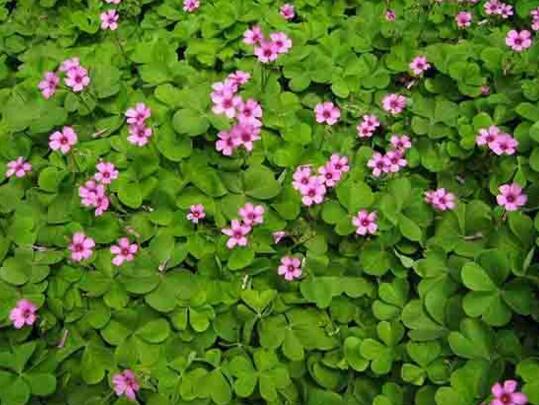
Before growing oxalis, you can first learn about its growth habits. First, it prefers sunny, warm and moist environments, but in summer it cannot be exposed to blazing sun and needs shading. In addition, its cold tolerance is weak, so it needs to be kept warm in winter. Because its drought tolerance is strong, watering should follow the principle of watering when dry and not when wet. Below we introduce its care techniques in detail.
Oxalis cultivation methods and precautions
1. What kind of pot is best for growing oxalis
In fact, oxalis is not strict about flower pots; different pots have little effect on its blooming, and the key lies in later care management and the growing environment. If you must choose a suitable pot, then an air-permeable porcelain pot can be chosen.
2. Soil requirements
Oxalis can adapt to a variety of soil conditions; for example, ordinary garden soil is enough for it to grow. But if you want it to fill out its pot, sandy loam containing humus should be the first choice. Also, to ensure the soil nutrients can meet the growth needs of oxalis, the soil should be changed once every spring.
3. Light conditions
When flower lovers plant oxalis, it is best to grow it in a sunny place, but because summer sunlight is relatively strong, shade treatment is needed in midsummer. To save effort, it can be placed in a bright place without direct sunlight for care.
4. Suitable temperature
In the cultivation methods and precautions for oxalis, its suitable temperature is 16-22°C, but as long as the temperature is kept within the range of 10-35°C, oxalis can grow normally. In winter it should be kept warm, and in summer it should be placed in a cool place.
5. Nutrient supply
Regarding watering, how do you grow oxalis? Generally, the principle of not watering until dry is adopted; water only after the soil is relatively dry, and each watering should soak through to avoid wet on top and dry below. In summer, water can also be sprayed appropriately to lower the temperature and keep the environment moist.
When fertilizing, base fertilizer can be added when potting. During the growing season, organic fertilizer can be applied to increase the glossiness of the leaves. Fertilizing should stop in autumn, and no fertilizing is needed during or after the flowering period.
Precautions:
1. In winter, heat preservation measures must be taken, otherwise the underground rhizomes are easily frostbitten, making it difficult for new leaves to sprout the following spring. In summer, the temperature must be kept below 35°C, otherwise the leaves will curl and growth will slow.
2. Do not overwater. Especially in winter, watering needs to be controlled, following the principle of preferring dry over wet. Do not let water accumulate in the oxalis pot, otherwise the autumn stems are prone to rot, and once the roots are damaged, recovery is very difficult.
3. Stop fertilizing in July-August. When fertilizing, do not apply only nitrogen fertilizer; mainly use organic fertilizer or compound fertilizer, otherwise the leaves will fade, which is not good for flower lovers to enjoy. Also, when fertilizing, fertilizer should be applied at the edge of the pot, not scattered on the leaf surface.
4. Do a good job of pest and disease prevention. Because oxalis grows relatively fast, it easily becomes lush with branches and leaves. If humidity and temperature are relatively high, powdery mildew, red spider mites and so on are prone to breed. In daily care, prevention must be done well, such as keeping the environment ventilated and not letting temperature and humidity get too high.
How to get oxalis to fill out its pot
In addition to doing the above points well, if you want oxalis to fill out its pot, the editor teaches flower lovers a little trick, and that is pruning. When oxalis is growing vigorously and its branches and leaves are relatively dense, part of the old branches and leaves can be cut off. This not only improves light penetration but also promotes the sprouting of new leaves, making oxalis grow more vigorously.
How to grow purple shamrock: cultivation methods for triangular purple-leaf oxalis
Triangular purple-leaf oxalis is also called red-leaf oxalis or purple-leaf oxalis, and it is a perennial herbaceous plant with a persistent rootstock. Purple-leaf oxalis plants are neat, with purple-red leaf color; the purple-red leaves are beautiful and alluring, and the pink flowers are charming and lovely. Used in pots to arrange flower beds and accent scenic spots, it is an excellent potted and groundcover plant. Below, let us tell everyone how to grow purple-leaf oxalis and learn about the cultivation methods for purple-leaf oxalis.
Growth habits of purple-leaf oxalis
Purple-leaf oxalis is suitable for loose soil with good drainage. It likes light and tolerates partial shade; the flowering period lasts as long as 8 months. It has no pest or disease damage; during periods of high temperature and high humidity, old leaves are prone to gray mold, but this does not affect new leaves. It is relatively cold tolerant; above -5°C it stays evergreen in winter, and below -5°C the aboveground leaves wither, but the underground part does not die, and new leaves can sprout again in March of the following year. It has no obvious dormancy period, and cultivation management is extensive.
How to grow purple-leaf oxalis
Purple-leaf oxalis likes moist, partially shaded and well-ventilated environments, and is relatively drought tolerant. It is suitable for growing in sandy soil rich in humus and with good drainage. In midsummer, purple-leaf oxalis grows slowly or enters dormancy; sunlight can scorch the leaves, causing leaf curling and scorching. In summer it must be properly shaded. After entering semi-dormancy, all forms of fertilizing should be stopped and watering controlled, preferring dry over wet, to prevent root or bulb rot.
Cultivation methods for purple-leaf oxalis
1. Propagation: Use division and sowing (planting) for propagation. Division is mostly carried out during the growing season, but avoid the high temperatures of summer; spring is most ideal. When dividing, first dig up the plant and break apart the bulbs for separate planting. The bulbs can also be cut into small pieces, each retaining more than 3 buds, and placed in a sand bed for cultivation. After rooting and leaf development, transplant and cultivate, then water thoroughly after planting.
2. Management: It likes warm, moist and sunny environments, tolerates partial shade and is slightly cold tolerant. The suitable growth temperature is 24-30°C. At home it is mostly grown as a potted ornamental. The potting soil should be neutral or slightly acidic sandy soil rich in humus, loose and fertile, with somewhat good drainage.
3. Light: During the growing period, place it in a place with sufficient light for care. In summer when temperatures are high, the plant is in a semi-dormant state, so it can be properly shaded and ventilation strengthened. Because its leaves have strong phototropism, the pot should be turned frequently during cultivation to make the plant shape symmetrical and beautiful.
4. Watering: Water according to "do not water until dry, and water thoroughly when watering." When the air is dry, spray water on the plant and around it to increase air humidity, making its leaves thick and glossy.
5. Fertilizing: Apply decomposed dilute liquid fertilizer or compound fertilizer about once every 20 days. The fertilizer solution should have comprehensive nitrogen, phosphorus and potassium nutrition. In particular, the nitrogen content should not be too high, so as to avoid excessive vegetative growth of the plant and fading of the purple-red color on the leaf surface, which affects ornamental value.
6. Winter care: In winter, move it indoors to a place with sufficient light, restrict watering, stop fertilizing, and it can overwinter safely above 5°C. After heavy frost in winter, its aboveground leaves wither, and it overwinters in the soil as a rhizomatous bulb, sprouting new leaves in March of the following year.
Is purple-leaf oxalis toxic
Purple-leaf oxalis, namely purple-leaf Yamamoto oxalis, belongs to the Oxalidaceae family, and is non-toxic. Oxalis is an important type of forage crop with wide cultivation significance, and is also an important green manure and soil and water conservation plant. Western Europe, North America and Oceania have the largest cultivated areas.
In Soviet Russia, people like to drink the leaves of oxalis as tea. It is slightly sour, not only tasty but also very effective for easing fever and regulating blood, so it can be called a health-food-like flower.
Purple-leaf oxalis flower language
The flower language represented by purple-leaf oxalis is: patriotism, luck, Easter.
Easter: In Southern Europe, oxalis is called "Hallelujah." Perhaps because it happens to bloom around Easter, its flower language is - Easter. People born under the blessing of this flower are lively, talkative and often smile, and get along very harmoniously with others.
One saying is that the national flower of Ireland is white-flowered oxalis. The oxalis, which belongs to the legume family, is the flower used to honor Ireland's patron saint - Saint Patrick, and is now the national flower of Ireland. To win independence, Ireland once fought a long bloody war of resistance against Britain. Therefore, its flower language is - patriotism.
Ordinary oxalis has only three small leaflets, and occasionally a mutated individual with four small leaflets appears, called a "lucky clover." Legend says that if you have a four-leaf lucky clover, you can make a wish and have it come true.
The above is the relevant introduction to the cultivation methods of purple-leaf oxalis and the flower language of purple-leaf oxalis. I believe everyone should have a deeper understanding of purple-leaf oxalis now. I hope the above content is helpful to everyone.
Cultivation methods for purple-leaf oxalis and the flower language of purple-leaf oxalis
Purple-leaf oxalis is also called red-leaf oxalis or triangular oxalis, and it is a perennial herbaceous plant with a persistent rootstock. Today we will share the cultivation methods for purple-leaf oxalis and the flower language of purple-leaf oxalis.
Cultivation methods for purple-leaf oxalis:
1. Propagation: Use division and sowing (planting) for propagation. Division is mostly carried out during the growing season, but avoid the high temperatures of summer; spring is most ideal. When dividing, first dig up the plant and break apart the bulbs for separate planting. The bulbs can also be cut into small pieces, each retaining more than 3 buds, and placed in a sand bed for cultivation. After rooting and leaf development, transplant and cultivate, then water thoroughly after planting.
2. Management: It likes warm, moist and sunny environments, tolerates partial shade and is slightly cold tolerant. The suitable growth temperature is 24-30°C. At home it is mostly grown as a potted ornamental. The potting soil should be neutral or slightly acidic sandy soil rich in humus, loose and fertile, with somewhat good drainage.
3. Light: During the growing period, place it in a place with sufficient light for care. In summer when temperatures are high, the plant is in a semi-dormant state, so it can be properly shaded and ventilation strengthened. Because its leaves have strong phototropism, the pot should be turned frequently during cultivation to make the plant shape symmetrical and beautiful.
4. Watering: Water according to "do not water until dry, and water thoroughly when watering." When the air is dry, spray water on the plant and around it to increase air humidity, making its leaves thick and glossy.
5. Fertilizing: Apply decomposed dilute liquid fertilizer or compound fertilizer about once every 20 days. The fertilizer solution should have comprehensive nitrogen, phosphorus and potassium nutrition. In particular, the nitrogen content should not be too high, so as to avoid excessive vegetative growth of the plant and fading of the purple-red color on the leaf surface, which affects ornamental value.
6. Winter care: In winter, move it indoors to a place with sufficient light, restrict watering, stop fertilizing, and it can overwinter safely above 5°C. After heavy frost in winter, its aboveground leaves wither, and it overwinters in the soil as a rhizomatous bulb, sprouting new leaves in March of the following year.
The flower language of purple-leaf oxalis:
The flower language represented by purple-leaf oxalis is: patriotism, luck, Easter.
Easter: In Southern Europe, oxalis is called "Hallelujah." Perhaps because it happens to bloom around Easter, its flower language is - Easter. People born under the blessing of this flower are lively, talkative and often smile, and get along very harmoniously with others.
One saying is that the national flower of Ireland is white-flowered oxalis. The oxalis, which belongs to the legume family, is the flower used to honor Ireland's patron saint - Saint Patrick, and is now the national flower of Ireland. To win independence, Ireland once fought a long bloody war of resistance against Britain. Therefore, its flower language is - patriotism.
Ordinary oxalis has only three small leaflets, and occasionally a mutated individual with four small leaflets appears, called a "lucky clover." Legend says that if you have a four-leaf lucky clover, you can make a wish and have it come true.