Cultivation methods and precautions for tuberose: move it outdoors at night
Everyone is surely familiar with tuberose; it is night-blooming jasmine (cestrum), a flower with a beautiful shape and a long flowering period, deeply loved by flower enthusiasts. In daily life, because of the beauty of tuberose, many people want to grow a pot at home, so how do you grow tuberose? Below are the cultivation methods and precautions for tuberose carefully compiled by the editor, very comprehensive, friends who want to grow it must take a look~
1. How to grow tuberose: understand its habits
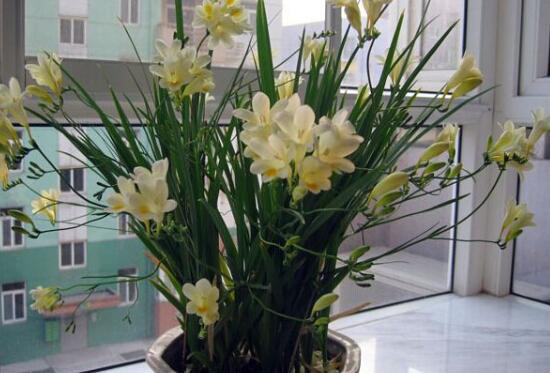
Tuberose likes a warm, humid environment with plenty of sunlight. When grown indoors, besides watering frequently and giving it sufficient light, you should also take good cold-protection measures in winter. As for the potting soil, the requirements are not high; slightly acidic soil that does not hold water is enough. So how to grow tuberose? Just satisfy its growth habits, and we will continue below with the specifics.
2. Cultivation methods and precautions for tuberose
1. Soil
How to grow potted tuberose? First, of course, is choosing the potting soil. According to the growth habits of tuberose, you should choose loose, fertile, well-drained, organic-rich, slightly acidic sandy soil.
Potting soil mix: 3 parts peat soil or leaf mold, 2 parts coarse river mud, and a small amount of farmyard manure. When potting, fill about one-fifth of the depth at the bottom with granular crushed brick pieces to facilitate pot drainage, and use the prepared potting soil for the upper part.
2. Light
In the cultivation methods for tuberose, light is indispensable, because tuberose only grows well in an environment with sufficient sunlight. From early May to the end of September, in order to meet tuberose's light needs, it is best to place it in a sunny spot or on a balcony for care.
Precautions: Although tuberose likes light, it dislikes direct strong light. At noon in summer when the sunlight is intense, we should give it appropriate shade to avoid exposure to the scorching sun, which can cause tuberose leaves to turn yellow, wilt, or even die from sunburn.
3. Watering
Water is essential for plant growth, so to grow tuberose, we must also learn to water it. Summer is the peak growing season for tuberose; at this time, to keep the potting soil moist, you should water it twice a day.
Precautions: Tuberose likes a humid environment. If the potting soil is too dry, the leaf edges will curl, and the flower buds will shrink and be difficult to open; but too much watering is also bad, as it causes water to accumulate in the pot, thus affecting plant growth.
4. Fertilizing
After watering, let's talk about fertilizing, which is also very important in the cultivation methods for tuberose. Tuberose likes fertilizer. During growth, you should apply liquid fertilizer once every 10-15 days or so; in addition, one month after planting and before flowering, topdressing should be done once, and afterward once every 1.5 or 2 months.
Precautions: Although fertilizing benefits tuberose growth, flower enthusiasts should not hold the mentality that the more fertilizer, the faster it grows, because once too much fertilizer is applied, tuberose will not only fail to bloom but may even die in severe cases.
5. Temperature
Tuberose likes a warm environment and can grow normally at 12-38°C, but to make it grow well, it is best to keep the temperature at 25-30°C during the day and 20-22°C at night.
Precautions: Tuberose is not cold-tolerant; in mid-to-late October each year, it should be moved into a shed or indoor room. After night-blooming jasmine is moved into the shed, the temperature should be kept at 8-12°C. If the temperature is below 5°C, the leaves will turn yellow and fall off until the plant dies.
6. Repotting
During the growth of tuberose, appropriate pruning is very important to let it grow better. It is best to repot in early April each spring, removing old roots, replacing the soil, and pruning the branches. After repotting, keep the potting soil moist, but not waterlogged. Once the young leaves are found to droop slightly, water promptly.
7. Move it outdoors at night
In the cultivation methods and precautions for tuberose, there is one point you must pay special attention to: at night, we should move it to a balcony or outdoors. The reason is that the rich fragrance of tuberose is not good for human health. Long-term placement indoors can easily cause symptoms such as dizziness, insomnia, and coughing, and for patients with high blood pressure and heart disease, the symptoms are even more serious.
Night-blooming jasmine - cultivation methods of night-blooming jasmine | night-blooming jasmine pictures | is night-blooming jasmine toxic
Night-blooming jasmine
Night-blooming jasmine, also called night fragrant flower, night fragrant tree, night clove, tuberose, night orchid fragrance, etc., is a flowering ornamental plant native to tropical America. The branchlets are weak, hairy, and have milky sap. The flowers are mostly yellow-green, with a fresh fragrance, even stronger at night. It is mostly grown as a potted ornamental plant, but it is not suitable to place indoors, as its floral fragrance makes breathing difficult.Cultivation methods of night-blooming jasmine
1. Soil: Night-blooming jasmine likes loose, well-drained, organic-rich, slightly acidic soil. Mix peat soil, leaf mold, and sand in a ratio of 3:3:4 respectively. Bed soil prepared this way has the characteristics of raising bed temperature, retaining water, aerating, being fertile, and slightly acidic, and is suitable for rooting and sprouting of branches.
2. Watering: Summer is the peak growing season. Besides applying sufficient fertilizer, the potting soil must be kept consistently moist, and if necessary, water twice a day. If it is a seedling, spray water on the leaf surface once or twice a day.
3. Temperature: In mid-to-late October each year, it should be moved into a shed or indoor room. The shed temperature should be kept at 8°C to 12°C. If the temperature is below 5°C, the leaves will turn yellow and fall off until the plant dies.
4. Fertilizing: During growth, apply a thin, fully decomposed liquid fertilizer once every 10-15 days. From mid-May, continuous fragrant flowering can be ensured, improving its ornamental value. If a nitrogen, phosphorus, and potassium compound fertilizer can be applied, the effect is even better.
5. Pests: Sooty mold and ring spot disease often occur, and can be sprayed with a 500-fold dilution of 50% thiophanate-methyl wettable powder.
6. Pruning: The branches of night-blooming jasmine grow quickly. If allowed to grow naturally, they can grow about 1 m in a year, so it needs pruning every year to sprout more side branches and bloom more. Pruning is generally done in autumn, keeping each side branch 10-12 cm long. After the flowers fade, the dry branches and overly dense branches should be cut off.
Precautions for planting night-blooming jasmine
Night-blooming jasmine is best placed outdoors. As an ornamental plant, its fragrance can make patients with high blood pressure and heart disease feel dizzy, depressed, and uncomfortable, causing symptoms such as chest tightness and difficulty breathing, so night-blooming jasmine is not suitable for indoor placement. If it is kept indoors for a long time, it can cause dizziness, coughing, and even asthma and insomnia, so owners who grow night-blooming jasmine should still put safety first.
Is night-blooming jasmine toxic
Is night-blooming jasmine toxic? Actually, night-blooming jasmine can also be used as medicine; its flowers, leaves, and rhizomes can all be used medicinally. It can be used for acute and chronic conjunctivitis, keratitis, corneal opacity; conjunctivitis caused by measles, etc. But all medicines have some toxicity. Here it is not saying that the flowers and leaves of night-blooming jasmine are toxic; rather, the gas it releases at night is harmful to the human body. Because after night-blooming jasmine stops photosynthesis at night, it emits harmful gas. If people smell it for a long time, they will feel dizzy, have chest tightness, and other symptoms. So, it is better to keep away from night-blooming jasmine at night.
When does night-blooming jasmine bloom
When does night-blooming jasmine bloom? It blooms at night. This is because the petal structure of night-blooming jasmine differs from that of flowers that generally bloom during the day. The stomata on the petals of night-blooming jasmine that release fragrance have a strange quirk: once the air humidity is high, they open wide, and when the stomata open wide, more aromatic oils evaporate. Although there is sunlight during the day, the humidity is much lower than at night. At night, although there is no sunlight, the air is very humid, so the stomata open wide at night, releasing more aromatic oils, and the fragrance becomes especially strong.
The flower language of night-blooming jasmine
The flower language of night-blooming jasmine ~ seeking pleasure on the edge of danger Legend says that in ancient times there was a youth whose flute playing was extremely beautiful and known to all. On a beautiful moonlit summer night, he leaned under a tree playing the flute, when suddenly a beautiful fairy descended gracefully from the clouds. The fairy said: because Chang'e heard his flute playing and liked it very much, she invited the youth to the moon palace to be a musician. But the youth was reluctant to leave the mortal world and asked the fairy to delay one day before going to the moon palace, but the fairy did not agree and only took off the jade hairpin from her head and gave it to him as a keepsake. When the fairy tossed it to him in the air, the youth failed to catch it, and no matter how he searched, he could not find the jade hairpin that had fallen to the ground. As a result, the jade hairpin became a flower, and the youth remained in the mortal world forever. This flower not only gives off fragrance at night, but especially emits a rich, fragrant scent under the bright moonlight, so it also has the beautiful name "lover in the night."
The uses of night-blooming jasmine
The uses of night-blooming jasmine: 1. Ornamental. The branches of night-blooming jasmine are slender, and it blooms in summer and autumn. The yellow-green flowers open in the evening, sending out waves of strong, pungent fragrance. In the south, it is mostly used to decorate courtyards, windowsides, pond edges, and pavilions, and has certain ornamental value.
The uses of night-blooming jasmine: 2. Medicinal. Night-blooming jasmine can be used medicinally, with the effect of clearing the liver and improving eyesight. It can treat red, swollen, and painful eyes, measles affecting the eyes, corneal opacity, etc.
The uses of night-blooming jasmine: 3. Edible. Night-blooming jasmine can be eaten, mainly using its fresh flowers and flower buds. It is a semi-wild vegetable.
The uses of night-blooming jasmine: 4. Mosquito repellent. Night-blooming jasmine is relatively strong in fragrance and has a certain toxicity, so it can drive away mosquitoes, which is also a convenience in life. Usually a screen window is put over the window, and the plant is grown outdoors.
Related encyclopedia
Pocket scale non-woven bag lamp rush crab feet red rice note3 ykk zipper ybs zipper large mountain cherry wall-climbing plum wild senna winter plum green pine wristwatch Omega Longines famous watch children's building blocks flint orchid rolled stick soursop
Night-blooming jasmine Telosma cordata (Burm. F.) Merr. Night-blooming jasmine illustrated guide: how to grow night-blooming jasmine / how to propagate night-blooming jasmine
Night-blooming jasmine profileNight-blooming jasmine Telosma cordata (Burm. F.) Merr.
Cultivation methods and precautions of night-blooming jasmine Introduction to night-blooming jasmine
Night-blooming jasmine is a vine-like shrub, with weak, hairy branchlets and milky sap. The flowers are mostly yellow-green, with a fresh fragrance, even stronger at night, hence the names "night-blooming jasmine" and "night fragrant flower." It is mostly grown as a potted ornamental plant, but is not suitable for indoor placement. Its floral fragrance makes breathing difficult. Leaves are opposite, ovate-cordate. It blooms in summer and autumn; the corolla is salver-shaped with a long tube, yellow-green, strongly fragrant, especially at night, hence the name. It is distributed in tropical Asia and commonly cultivated in East China and South China. Besides ornamental use, the flowers can be used to make tea and can also be used in dishes; the roots and flowers are used medicinally and can calm the liver and improve eyesight.
Night-blooming jasmine belongs to the genus Cestrum in the Solanaceae family. Native to South America, it is an evergreen shrub, also known as evening primrose, night fragrant flower, etc. It is a perennial vine-like twining herb, distributed in Yunnan, Guangxi, Guangdong, and Taiwan, China, and is a semi-wild vegetable whose fresh flowers and flower buds are used for food.
Besides ornamental use, the flowers of night-blooming jasmine can be used in dishes and as medicine, with the effect of clearing the liver and improving eyesight. It can treat red, swollen, and painful eyes, measles affecting the eyes, corneal opacity, etc. Between summer and autumn, clusters of yellow-green bell-shaped small flowers bloom in the leaf axils, and when the moon rises above the treetops, it sends out waves of delicate fragrance. This fragrance, however, frightens mosquitoes, making it an excellent mosquito repellent.
The morphological characteristics of night-blooming jasmine
The leaves of night-blooming jasmine are opposite; the leaf blades are broadly ovate, cordate to oblong-ovate, 4-9.5 cm long and 3-8 cm wide, with a short acuminate apex and a deep cordate base, entire, with 7-9 basal palmate veins, and hairs on the margins and veins.
The umbel-like cyme is axillary, with as many as 30 flowers; the corolla lobes are oblong, yellow-green, with a fresh fragrance, even stronger at night.
The corona has 5 lobes, fleshy, shorter than the anthers, borne on the gynostegium, with an acuminate apex; there is 1 pollinium per chamber, elliptical, erect.
The follicle is lanceolate, 7.5 cm long, with a thick exocarp, hairless. The seeds are broadly ovate, about 8 mm long, with white silky seed hairs at the apex.
The ecological habits of night-blooming jasmine
Night-blooming jasmine mostly grows in woodlands or shrub thickets.
It likes a warm, humid, sunny, well-ventilated environment with loose, fertile soil. It is drought-tolerant and barren-tolerant, not waterlogging-tolerant, and not cold-tolerant. After leaf fall in winter, growth stops; after spring warms, branches and leaves grow, and each node has axillary buds or flower buds. As it grows, it continually produces side branches and sends out inflorescences. It generally blooms successively from May to October, and when blooming it is fragrant, even more fragrant at night.
It fruits in winter.
The distribution area of night-blooming jasmine
Domestic distribution of night-blooming jasmine: South China
Overseas distribution of night-blooming jasmine: cultivated in tropical and subtropical Asia, as well as Europe and the Americas.
The cultivation techniques of night-blooming jasmine
1、Preparing potting soil
Night-blooming jasmine likes loose, well-drained, organic-rich, slightly acidic soil. Its potting soil is generally made from 3 parts peat soil or leaf mold, 2 parts coarse river mud, and a small amount of farmyard manure. When potting, fill about 1/5 of the depth at the bottom with granular crushed brick pieces to facilitate pot drainage, and use the prepared potting soil for the upper part.
2、Suitable environment
Potted night-blooming jasmine requires well-ventilated environmental conditions. From early May to the end of September, it is best placed in a sunny part of the courtyard or on a balcony for care. Although it likes sufficient sunlight, direct scorching sun should be avoided at noon in summer.
3、Fertilizing
During its growth, apply liquid fertilizer once every 10 to 15 days. Starting in late April, apply a thin liquid fertilizer once every half month. From mid-May, continuous flowering can be ensured. If high-efficiency humic acid liquid fertilizers such as Chunquan 883 or Huimanfeng are applied, the effect is even better.
4、Water regulation
Summer is the peak growing season. Besides applying sufficient fertilizer, the potting soil must be kept consistently moist, and if necessary, water twice a day. If it is a seedling, spray water on the leaf surface once or twice a day.
5、Suitable temperature
In mid-to-late October each year, it should be moved into a shed or indoor room. The shed temperature should be kept at 8°C to 12°C. If the temperature is below 5°C, the leaves will turn yellow and fall off until the plant dies.
6、Repotting
Repotting should be done in early April in spring before it is moved outdoors. When repotting, remove part of the old soil and old roots, replace with new potting soil, and prune heavily to promote new branches. After repotting, keep the potting soil moist, but there must be no water accumulation in the pot. If the young leaves are found to droop slightly after repotting, water promptly.
7、Adjusting plant shape
During cultivation and management, a trellis needs to be set up. After the plant climbs onto the trellis, pinch the top promptly to encourage more branching. After the flowers open, promptly cut off the residual flower stalks and apply additional fertilizer. After the flowers fade, cut off the dry branches, leaves, and overly dense branches, and shorten the leggy growth.
8、Pests and diseases
Diseases: Sooty mold and ring spot disease often occur, and can be sprayed with a 500-fold dilution of 50% thiophanate-methyl wettable powder.
Pests: Aphids, scale insects, and whiteflies often cause damage, and can be controlled with a 1000-fold dilution of 50% fenitrothion emulsifiable concentrate, Uranus, cypermethrin, and Kuaishaling, etc., with good results.
9、Uses
Cultivated for ornamental purposes. The branches of night-blooming jasmine are slender, and it blooms in summer and autumn. The yellow-green flowers open in the evening, sending out waves of strong, pungent fragrance. In the south, it is mostly used to decorate courtyards, windowsides, pond edges, and pavilions.
At the same time, it is also a semi-wild vegetable whose fresh flowers and flower buds are used for food. It has the effect of clearing the liver and improving eyesight, and can treat red, swollen, and painful eyes, measles affecting the eyes, corneal opacity, etc.
The propagation methods of night-blooming jasmine
Night-blooming jasmine mainly grows in the jungles of subtropical and warm temperate regions. It likes a warm, humid, sunny, dry climate environment. It has strong environmental adaptability, vigorous vitality, and a developed root system. It mainly grows in well-drained, fertile soil. It begins to bloom every spring, and the flowering period is very long. It has relatively high temperature requirements, with the average annual temperature controlled at around 20 degrees Celsius. Night-blooming jasmine is a plant that likes fertilizer, so during its growth it should be fertilized in small amounts and multiple times. Night-blooming jasmine also has high water requirements. In hot summer, water more, and in winter keep the soil moist but remember to avoid waterlogging.
The propagation methods of night-blooming jasmine mainly include cutting propagation, layering propagation, division propagation, and seed seedling raising, among which cutting propagation is the most commonly used. Cutting propagation can be carried out in any season except winter. Under a suitable warm and humid climate, it is best to cultivate it in fertile soil, preferably sandy loam, because night-blooming jasmine has strong vitality, and new branches will gradually grow into a new seedling. Then move the new seedling into a flowerpot for care. Place the night-blooming jasmine bonsai in a sunny position near a window, and at night you will smell waves of delicate fragrance.
Cutting propagation
1. Selecting cuttings. Choose branches that are robust or free of pests and diseases. On the same plant, choose current-year branches from the middle and upper parts facing the sun. The branches should have shorter internodes, thick branches and leaves, and plump bud tips. Do not choose branches about to bloom or leggy branches.
2. Selecting substrate. Mix peat soil, leaf mold, and sand in a ratio of 3:3:4 respectively. Bed soil prepared this way has the characteristics of raising bed temperature, retaining water, aerating, being fertile, and slightly acidic, and is suitable for rooting and sprouting of branches.
3. Treating cuttings. Before cutting, treat the cuttings with agents such as ABT rooting powder, which has the effect of promoting rooting. Cut the cuttings into sections 8 cm to 12 cm long, each with 2 to 3 buds. The lower cut of the cutting should preferably be 0.5 cm below a node, the cut should be smooth, remove the lower leaves, leaving only 2 to 3 leaves at the top, and the insertion depth is generally about 3 cm.
4. Creating conditions for rooting. The suitable rooting temperature is 20°C to 24°C. Generally, soil temperature 3°C to 5°C higher than air temperature is favorable for rooting. The relative air humidity of the cutting bed is 80% to 90%, which is favorable for rooting, and light of about 30% is required. Moisture should be appropriate: slightly more water in the early cutting stage, slightly drier later. The suitable period for open-field cutting locally is from early May to mid-June. At this time the climate is relatively good and can better meet the temperature and humidity conditions required for cuttings to root.
5. Strengthening post-cutting management. After cutting, water thoroughly, cover with plastic film, and place in a relatively shaded place, or scatter weeds on the film to prevent direct sunlight, and increase light at night to help the cuttings survive. Ventilate once or twice a day to supplement the needed oxygen and prevent disease. Spray water frequently to keep the cutting bed moderately moist, but do not spray too much, otherwise the cutting bed will be too wet, which often affects callus formation and rooting of the cuttings. When the new roots of the cuttings grow to 2 cm to 3 cm, they can be transplanted into pots at the appropriate time. After flowering in winter, in the Nanjing area they should be moved indoors for care.
Cutting propagation
1. Selecting cuttings. Choose branches that are robust or free of pests and diseases. On the same plant, choose current-year branches from the middle and upper parts facing the sun. The branches should have shorter internodes, thick branches and leaves, and plump bud tips. Do not choose branches about to bloom or leggy night-blooming jasmine branches.
2. Selecting substrate. Mix peat soil, leaf mold, and sand in a ratio of 3:3:4 respectively. Bed soil prepared this way has the characteristics of raising bed temperature, retaining water, aerating, being fertile, and slightly acidic, and is suitable for rooting and sprouting of branches.
3. Treating cuttings. Before cutting, treat the cuttings with agents such as ABT rooting powder, which has the effect of promoting rooting. Cut the cuttings into sections 8 cm to 12 cm long, each with 2 to 3 buds. The lower cut of the cutting should preferably be 0.5 cm below a node, the cut should be smooth, remove the lower leaves, leaving only 2 to 3 leaves at the top, and the insertion depth is generally about 3 cm.
4. Creating conditions for rooting. The suitable rooting temperature is 20°C to 24°C. Generally, soil temperature 3°C to 5°C higher than air temperature is favorable for rooting. The relative air humidity of the cutting bed is 80% to 90%, which is favorable for rooting, and light of about 30% is required. Moisture should be appropriate: slightly more water in the early cutting stage, slightly drier later. The suitable period for open-field cutting locally is from early May to mid-June. At this time the climate is relatively good and can better meet the temperature and humidity conditions required for cuttings to root.
5. Strengthening post-cutting management. After cutting, water thoroughly, cover with plastic film, and place in a relatively shaded place, or scatter weeds on the film to prevent direct sunlight, and increase light at night to help the cuttings survive. Ventilate once or twice a day to supplement the needed oxygen and prevent disease. Spray water frequently to keep the cutting bed moderately moist, but do not spray too much, otherwise the cutting bed will be too wet, which often affects callus formation and rooting of the cuttings. When the new roots of the cuttings grow to 2 cm to 3 cm, they can be transplanted into pots at the appropriate time. After flowering in winter, in the Nanjing area they should be moved indoors for care.
Disease and pest control of night-blooming jasmine
Aphids, scale insects, and whiteflies often cause damage, and can be controlled with a 1000-fold dilution of 50% fenitrothion emulsifiable concentrate, Uranus, cypermethrin, and Kuaishaling, etc., with good results.
Pest and disease control
The pests found damaging night-blooming jasmine mainly include mites and scale insects, and the disease is fusarium wilt. For mite control, a 800-fold dilution of Kangman 23 emulsifiable concentrate, a 2000-fold dilution of 73% propargite, etc. can be used. For scale insect control, a 600-800-fold dilution of 40% dimethoate emulsion can be used. For fusarium wilt control, a 600-800-fold dilution of Kusui Like, a 600-fold dilution of 50% carbendazim, etc. can be used. If diseased plants with fusarium wilt are found, they should be promptly removed, taken outside the garden and burned, and the soil around the diseased plants should be turned over and quicklime spread; replant after 1 month.
Potted cultivation methods of night-blooming jasmine
1. Preparing potting soil. Night-blooming jasmine likes loose, well-drained, organic-rich, slightly acidic soil. Its potting soil is generally made from 3 parts peat soil or leaf mold, 2 parts coarse river mud, and a small amount of farmyard manure. When potting, fill about 1/5 of the depth at the bottom with granular crushed brick pieces to facilitate pot drainage, and use the prepared potting soil for the upper part.
2. Suitable environment. Potted night-blooming jasmine requires well-ventilated environmental conditions. From early May to the end of September, it is best placed in a sunny part of the courtyard or on a balcony for care. Although it likes sufficient sunlight, direct scorching sun should be avoided at noon in summer.
3. Fertilizing. During its growth, apply liquid fertilizer once every 10 to 15 days. Starting in late April, apply a thin liquid fertilizer once every half month. From mid-May, continuous flowering can be ensured. If high-efficiency humic acid liquid fertilizers such as Chunquan 883 or Huimanfeng are applied, the effect is even better.
4. Water regulation. Summer is the peak growing season. Besides applying sufficient fertilizer, the potting soil must be kept consistently moist, and if necessary, water twice a day. If it is a seedling, spray water on the leaf surface once or twice a day.
5. Suitable temperature. In mid-to-late October each year, it should be moved into a shed or indoor room. The shed temperature should be kept at 8°C to 12°C. If the temperature is below 5°C, the leaves will turn yellow and fall off until the plant dies.
6. Repotting. Repotting should be done in early April in spring before it is moved outdoors. When repotting, remove part of the old soil and old roots, replace with new potting soil, and prune heavily to promote new branches. After repotting, keep the potting soil moist, but there must be no water accumulation in the pot. If the young leaves are found to droop slightly after repotting, water promptly.
7. Adjusting plant shape. During cultivation and management, a trellis needs to be set up. After the plant climbs onto the trellis, pinch the top promptly to encourage more branching. After the flowers open, promptly cut off the residual flower stalks and apply additional fertilizer. After the flowers fade, cut off the dry branches, leaves, and overly dense branches, and shorten the leggy growth.
8. Pests and diseases.
Diseases: Sooty mold and ring spot disease often occur, and can be sprayed with a 500-fold dilution of 50% thiophanate-methyl wettable powder.
The origin of the name night-blooming jasmine
Many plants rely on insects for pollination to reproduce. Plants that rely on insects active during the day to pollinate them bloom and release fragrance in the daytime, waiting to welcome their messengers. The night-blooming cestrum (Telosma cordata) relies on moths that appear at night for pollination; in the darkness, it uses the intense fragrance it gives off to lure its winged "guests" to visit and carry pollen for it. This habit of the night-blooming cestrum is a form of adaptation to its environment.
The petals of the night-blooming cestrum differ in structure from those of flowers that generally bloom during the day. The stomata on its petals have a special characteristic: once the air humidity is high, they open wide, and when the stomata open wide, more aromatic oils evaporate. Although there is no sunlight at night, the air is much more humid than during the day, so the stomata open wide and the fragrance released is especially strong. If you pay attention, you will notice that the flowers of the night-blooming cestrum are more fragrant not only at night but also on cloudy and rainy days than on clear days, because of the higher air humidity on cloudy and rainy days.
Basic information about the night-blooming cestrum
The night-blooming cestrum is an alias for several plants; the more common ones are
1. An alias for Mirabilis jalapa, a plant of the genus Mirabilis in the family Nyctaginaceae
2. An alias for Cestrum nocturnum, a plant of the genus Cestrum in the family Solanaceae;
3. An alias for Polianthes tuberosa, a plant of the genus Polianthes in the family Amaryllidaceae
4. "Yeh Shang Wan Zhuang," which contains lyrics about the night-blooming cestrum
5. An alias for Oenothera odorata, a plant of the genus Oenothera in the family Onagraceae.
[Flower language] Fantasy, dangerous pleasure
[Habitat and habits] The night-blooming cestrum mostly grows in woodland or among shrubs.
Species of the same genus
Telosma pallida: the flowering period is every summer.
Telosma taiwanensis: flowering period in August, fruiting period in autumn and winter.
Telosma procumbens: flowering period in May, fruiting period in autumn.
Precautions for the night-blooming cestrum: it should not be placed indoors
Its fragrance can make patients with high blood pressure and heart disease feel dizzy, depressed and uncomfortable, causing symptoms such as chest tightness and difficulty breathing, so the night-blooming cestrum is not suitable for indoor placement. It is best placed outdoors as an ornamental plant.
The night-blooming cestrum originated in the tropical regions of Asia, where daytime temperatures are high and flying insects rarely come out to activity; by evening and night, when temperatures drop, many flying insects come out to forage, and at this time the night-blooming cestrum gives off a strong fragrance to lure the flying insects to come and spread pollen. Through the influence of environmental factors over countless generations, the night-blooming cestrum has formed the habit of always releasing fragrance at night. If it is kept indoors for a long time, it can cause dizziness, coughing, and even asthma and insomnia.
The uses and purposes of the night-blooming cestrum
Cultivated for ornamental purposes. The night-blooming cestrum has slender branches and blooms in summer and autumn; its yellow-green flowers open in the evening and send out waves of strong, pungent fragrance. In the south it is often used to decorate courtyards, windowsides, pond edges and pavilion sides. At the same time, it is also a semi-wild vegetable whose fresh flowers and flower buds are used for food. It has the effect of clearing the liver and improving eyesight, and can treat red, swollen and painful eyes, measles affecting the eyes, corneal opacity, and so on.
It is also used as medicine. It is a semi-wild vegetable whose fresh flowers and flower buds are used for food. It has the effect of clearing the liver and improving eyesight, and can treat red, swollen and painful eyes, measles affecting the eyes, corneal opacity, and so on.
The night-blooming cestrum mainly grows in the jungles of subtropical and warm temperate regions. It likes warm, humid, sunny and dry climatic conditions. It has strong adaptability to the environment, vigorous vitality and a well-developed root system. It mainly grows in well-drained, fertile soil. It begins to bloom every spring, and the flowering period is very long. It has relatively high temperature requirements, with the average annual temperature controlled at around 20 degrees Celsius. The night-blooming cestrum is a plant that likes fertilizer, so during its growth process it should be fertilized little and often. The night-blooming cestrum also has high water requirements; in the hot summer it should be watered more, and in winter the soil should be kept moist, but be sure to avoid waterlogging.
Garden uses of the night-blooming cestrum: landscaping and ornamental
The night-blooming cestrum has slender branches and blooms in summer and autumn; its yellow-green flowers open in the evening and send out waves of strong, pungent fragrance. In the south it is often used to decorate courtyards, windowsides, pond edges and pavilion sides.
The dietary therapy or medicinal value of the night-blooming cestrum
The medical information and health dietary therapy information on Huahu.com is for reference only and cannot be used as a basis for diagnosis or medical treatment. Any health problems should be consulted with professional medical personnel, and the treatment of any disease should follow a doctor's advice.
Ultimate flower-care mission: to love yourself, start from reality and strictly follow a doctor's advice. Toward illness, do not be careless, do not delay, do not give up hope; face it bravely, warm the silent world with love, and care for the flower field in your heart with your heart.
Medicinal value
[Medicinal name] Night-blooming cestrum
[Source] Telosma cordatum (Brum. f.) Merr., a plant of the genus Telosma in the family Asclepiadaceae; its leaves, flowers and fruits are used as medicine. The leaves can be collected at any time, and the flowers and fruits are collected respectively during the flowering and fruiting periods, then sun-dried.
[Nature, flavor and meridians] Sweet, bland, neutral.
Functions and indications
Clears the liver, improves eyesight, removes corneal opacity, draws out toxins and promotes tissue regeneration.
Flowers, leaves and fruits: used for acute and chronic conjunctivitis, keratitis, corneal opacity; conjunctivitis caused by measles.
Fresh leaves: for external use to treat ruptured sores, boils and abscesses, and traumatic erosion of the lower legs.
Other information
[Usage and dosage] 1 to 2 qian of flowers and leaves, decocted in water; or 1 fruit (cut open), decocted in water. For external use, an appropriate amount of fresh leaves is scalded with boiling water and then applied. (For traumatic erosion of the lower legs, pound fresh leaves with pork fat and apply to the affected area.) Note: when photosynthesis stops at night, the night-blooming cestrum releases a large amount of waste gas, which is extremely harmful to human health, so one should not linger in front of night-blooming cestrum flowers at night.
[Excerpt] "Compendium of Chinese Herbal Medicines." Note: the night-blooming cestrum is a plant that is harmful to human health, and it is best not to place it indoors. It can affect people's normal sleep.
[Application] It has a peculiar fragrance, and its strong scent has a special mosquito-repellent effect. It can be placed on windowsills and balconies.
Edible value
At the same time, it is also a semi-wild vegetable whose fresh flowers and flower buds are used for food. It has the effect of clearing the liver and improving eyesight, and can treat red, swollen and painful eyes, measles affecting the eyes, corneal opacity, and so on. It is a semi-wild vegetable whose fresh flowers and flower buds are used for food. It has the effect of clearing the liver and improving eyesight, and can treat red, swollen and painful eyes, measles affecting the eyes, corneal opacity, and so on.
Cultural background of the night-blooming cestrum: why it is more fragrant at night
This odd temperament of the night-blooming cestrum also gradually formed over countless generations, over a very, very long time.
Many plants rely on insects for pollination to reproduce. Plants that rely on insects active during the day to pollinate them bloom and release fragrance in the daytime, waiting to welcome their messengers. The night-blooming cestrum relies on moths that appear at night for pollination; in the darkness, it uses the intense fragrance it gives off to lure its winged "guests" to visit and carry pollen for it. This habit of the night-blooming cestrum is a form of adaptation to its environment.
The petals of the night-blooming cestrum differ in structure from those of flowers that generally bloom during the day. The stomata on its petals have a special characteristic: once the air humidity is high, they open wide, and when the stomata open wide, more aromatic oils evaporate. Although there is no sunlight at night, the air is much more humid than during the day, so the stomata open wide and the fragrance released is especially strong. If you pay attention, you will notice that the flowers of the night-blooming cestrum are more fragrant not only at night but also on cloudy and rainy days than on clear days, because of the higher air humidity on cloudy and rainy days.
The floral fragrance is toxic
Among the plants people commonly see, most bloom during the day and release fragrance once they bloom. The night-blooming cestrum is not like this; only at night does it release a rich fragrance. Why is this? This odd temperament of the night-blooming cestrum also gradually formed over countless generations, over a very, very long time.
Many plants rely on insects for pollination to reproduce. Plants that rely on insects active during the day to pollinate them bloom and release fragrance in the daytime, waiting to welcome their messengers. The night-blooming cestrum relies on moths that appear at night for pollination; in the darkness, it uses the intense fragrance it gives off to lure its winged "guests" to visit and carry pollen for it. This habit of the night-blooming cestrum is a form of adaptation to its environment.
The petals of the night-blooming cestrum differ in structure from those of flowers that generally bloom during the day. The stomata on its petals have a special characteristic: once the air humidity is high, they open wide, and when the stomata open wide, more aromatic oils evaporate. Although there is no sunlight at night, the air is much more humid than during the day, so the stomata open wide and the fragrance released is especially strong. If you pay attention, you will notice that the flowers of the night-blooming cestrum are more fragrant not only at night but also on cloudy and rainy days than on clear days, because of the higher air humidity on cloudy and rainy days. The night-blooming cestrum originated in the tropical regions of Asia, where daytime temperatures are high and flying insects rarely come out to activity; by evening and night, when temperatures drop, many flying insects come out to forage, and at this time the night-blooming cestrum gives off a strong fragrance to lure the flying insects to come and spread pollen. Through the influence of environmental factors over countless generations, the night-blooming cestrum has formed the habit of always releasing fragrance at night. If it is kept indoors for a long time, it can cause dizziness, coughing, and even asthma and insomnia. Therefore, if the night-blooming cestrum is placed indoors during the day, it should be moved outdoors in the evening.
The flower language of the night-blooming cestrum
The flower language of the night-blooming cestrum: gentle and peaceful happiness, wandering among the flower stamens.
Only for waiting, for a first love who has traveled far and not returned; the petals that bloom at night slowly open up life. At that moment, the breeze gently caresses it, and its splendor sways faintly. It seems to murmur to loneliness, and also seems to hold full expectation. Gentle and peaceful happiness, wandering among the flower stamens. A delicate fragrance fills the air, revealing unyieldingness amid sorrow. Only for waiting, for a first love who has traveled far and not returned. In the night wind I miss you so much; I ask the bright moon to send you a piece of my longing. And so, shyly raising my head, the feelings of longing drift far away; my heart is thrown into confusion by the sound of your distant footsteps. In my urgency I tell the wind, you must, you must fly to your ear. If only you could also understand my silent call. Quietly standing alone in a forgotten corner, scattering dots of delicate fragrance. I do not care about others' enthusiastic appreciation; I only hope that your soul, longing to return, will dance lightly every night on the tips of my tender petals. This unique moment is our eternal attachment. The dewdrops in the stamens are my tears. Amid bitterness they are full of deep feeling. Their crystal clarity, their dazzling brightness, bloom for you alone in this life! Across the vast wilderness, a few dog barks, how could they understand the flower's language. I cannot understand the sorrow and joy of the wild insects. Dawn is near! When I once again pick up the longing scattered all over the ground, with a touch of dejection, it is time to leave. I can only let the lonely fragrance drift away silently. Desperately clutching the cold wind, telling of powerless, pale weariness. Yet all that remains is a cold heart and fading fragrance. Unable to bear the cold of the night, my heart trembles for you.
Pictures of the night-blooming cestrum