What should you do when Calathea makoyana leaves turn yellow? Adjust watering, fertilizing and light well
As a beautiful foliage plant, the beauty of Calathea makoyana is mainly shown in its leaves, so when its leaves turn yellow, its ornamental value drops sharply. By then, flower lovers must be very anxious, so what should you do when Calathea makoyana leaves turn yellow? In response, the editor has summarized 6 causes of yellowing leaves in Calathea makoyana, along with remedies. Come in and take a look!
I. When Calathea makoyana leaves turn yellow, find the cause
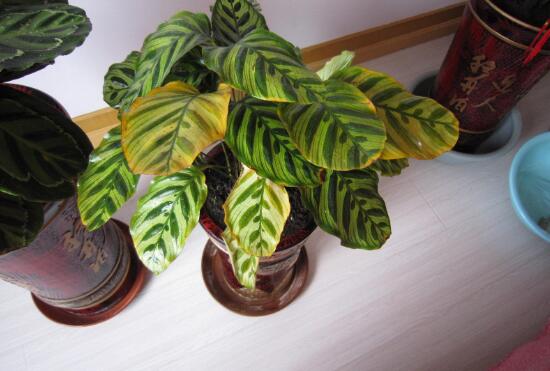
The cultivation method of Calathea makoyana is very simple, but because there are many beginners, they often make oversights during cultivation, causing yellow leaves and thus affecting the plant's ornamental value. As for what to do when Calathea makoyana leaves turn yellow, everyone only needs to calmly find the source of the problem and take good remedial measures, and the Calathea makoyana can still be saved.
II. Causes of yellowing leaves in Calathea makoyana and remedies
1. Sudden environmental change
There are many causes of yellowing leaves in Calathea makoyana, and the first thing everyone thinks of should be environmental problems. Because nowadays, many flower lovers buy their Calathea makoyana potted plants online, which may cause a relatively large environmental change, and the plant cannot adapt for a while, thus showing symptoms of yellow leaves.
Remedy: It is very simple. Ask the seller about the previous growing environment of the Calathea makoyana, then we can change it at home to a similar environment, and after a period of time, the plant will recover its health.
2. Improper light
① Too much light: Calathea makoyana dislikes direct strong light. Once strong sunlight shines directly on the leaves of Calathea makoyana, it easily causes the leaf tips and leaf edges to wither, and yellow spots appear on the sun-facing part of the leaves. Remedy: No excessive treatment is needed, just move it to a shady place in time; if the yellowing is relatively severe, directly remove the leaves.
② Insufficient light: Calathea makoyana likes a semi-shady environment, but if it is placed in a shaded environment for a long time, its leaves cannot get enough sunlight and cannot form chlorophyll, so symptoms of yellowing leaves in Calathea makoyana appear. Remedy: Just supplement light, but note that the light must not be too strong.
3. Improper watering
① Too much watering: Calathea makoyana likes a moist environment, but too much watering will not do. This will cause Calathea makoyana leaves to turn yellow, shown as: young leaves dark yellow and lusterless, old leaves with no obvious change. Remedy: Take the plant out of the pot, let it dry in the sun, replant it after the potting soil becomes dry, and then pay attention to watering an appropriate amount.
② Too little watering: Calathea makoyana has a high water requirement. Once watering is too little, yellow leaves will also appear, shown as: old leaves withering and yellowing from bottom to top and falling off, but new leaves growing relatively normally. Remedy: Just pay attention to watering enough and watering thoroughly.
4. Improper fertilizing
① Too much fertilizing: Besides improper light and watering, too much fertilizing is also one of the causes of yellowing leaves in Calathea makoyana. It is shown as: the tips of new leaves appear dry brown, and are uneven and not smooth, and old leaves scorch yellow and fall off. Remedy: Stop fertilizing, and promptly rinse the soil in the flowerpot to remove excess fertilizer solution.
② Insufficient fertilizing: Too much fertilizer is not okay, but Calathea makoyana lacking fertilizer is also not okay, and this will inevitably cause poor growth. It is shown as: young leaves become lighter in color, yellow or light green, while old leaves are relatively normal or gradually turn from green to yellow. Remedy: Usually apply thin fertilizer frequently and water with some alum water at the appropriate time, and apply fertilizer mainly based on nitrogen fertilizer.
Overall, Calathea makoyana is very easy to grow, but because many flower lovers are beginners, symptoms of yellow leaves will inevitably appear. However, after reading the whole article, I believe everyone has a clearer idea. When the yellow leaf problem appears, just remedy it according to the methods above. That is all the editor will introduce about yellowing leaves in Calathea makoyana, hoping it can help everyone.
What is going on with yellowing leaves in Calathea makoyana? What should you do when Calathea makoyana leaves turn yellow?
Today the editor brings you an article about what is going on with yellowing leaves in Calathea makoyana and what to do when Calathea makoyana leaves turn yellow. Let us take a look below.
Image: Calathea makoyana
Calathea makoyana is a common evergreen plant, often grown indoors by people, but some problems always appear during cultivation,Recently, a flower lover encountered the problem of yellowing leaves in Calathea makoyana. Below, Uncle Gardener introduces the causes of yellowing leaves in Calathea makoyana and the solutions.
1. Too much light:Strong sunlight shining directly on some shade-loving Calathea makoyana easily causes the leaf tips and leaf edges to wither, and yellow spots appear on the sun-facing part of the leaves.
Solution: Just move it to a shady place.
2. Lack of light:Placed in a shaded environment for a long time, the leaves cannot get enough sunlight and cannot form chlorophyll, and the whole plant's leaves turn yellow and then fall off.
Solution: Supplementing light can prevent leaves from turning yellow.
3. Too much watering:Young leaves are dark yellow and lusterless, old leaves show no obvious change, branches are thin and yellow-green, new shoots shrink and do not grow, indicating too much watering.
Solution: Take the plant out of the pot, place it in a ventilated and cool place to let the soil ball dry naturally, then put it back into the pot.
4. Lack of water:Leaf tips or edges wither and dry, old leaves wither, yellow and fall off from bottom to top, but new leaves grow relatively normally.
Solution: Just pay attention to watering enough and watering thoroughly.
Image: Calathea makoyana
5. Too much or too concentrated fertilizer:Yellowing of the plant caused by too much fertilizer or too high concentration is shown by dry brown at the tips of new leaves, generally thick and lusterless leaf surfaces, and uneven and not smooth, and old leaves scorch yellow and fall off.
Solution: Fertilizing should be stopped immediately, and in severe cases use a large amount of washing to rinse away part of the fertilizer.
6. Lack of fertilizer:Young leaves become lighter in color, yellow or light green, while old leaves are relatively normal or gradually turn from green to yellow.
Solution: Check the potting soil. If there is hardening, replace the soil. Usually apply thin fertilizer frequently and water with some alum water at the appropriate time, and apply fertilizer mainly based on nitrogen fertilizer.
[Tips]Calathea makoyana likes semi-shade, cannot tolerate direct sunlight, and adapts to growing in a warm, moist environment. Too much or too little water, too strong or too weak sunlight, and too much or too little fertilizer can all cause leaves to turn yellow, but the yellowing conditions are different, so the causes should be carefully observed and analyzed and corrected.
Is Calathea makoyana toxic? What should you do when Calathea makoyana leaves turn yellow?
Calathea makoyana stays green all year round and belongs to the medium-sized foliage plants. It is used by many people as a home decorative plant, so is Calathea makoyana toxic? What should you do when Calathea makoyana leaves turn yellow?
Is Calathea makoyana toxic?
Calathea makoyana is named because the color of its leaf shape and its leaf veins resemble those of a peacock, so it has also become an indoor plant variety, but due to the particularity of the indoor environment, there is also the doubt of "whether Calathea makoyana is toxic."
It can be confirmed that the Calathea makoyana plant is not toxic and can directly be kept as an indoor potted plant. Not only that, besides its strong ornamental value, Calathea makoyana also has certain environmental protection effects and can help remove ammonia in a certain environment. According to expert testing, the range within which Calathea makoyana can remove ammonia can reach 10 sq m.
Calathea makoyana is not toxic, but the plant's growth is rather special. It is understood that this plant variety belongs to oxygen-absorbing varieties. During the day it meets its nutrient needs through light, while at night it absorbs oxygen factors from the air. Therefore Calathea makoyana has become a special variety that competes with people for oxygen at night. Therefore it is suggested that at night Calathea makoyana can be placed directly on a balcony, in a living room, and other positions, and it is not suitable to place it in a bedroom.
What should you do when Calathea makoyana leaves turn yellow?
Calathea makoyana belongs to foliage plants. Its leaves are green, and its leaf veins are light yellow. Because of various factors such as planting and care, the leaves of Calathea makoyana can also show withering and yellowing. What should be done after Calathea makoyana leaves turn yellow?
1. Light
Symptoms: Too much light will cause the leaves of Calathea makoyana to gradually begin growing yellow spots from the leaf edge parts, and later directly turn yellow and then bend. Second, lack of light, such as placing Calathea makoyana in a hidden environment for a long time, will also cause the leaves to be unable to absorb sufficient chlorophyll, thus directly causing leaf drop.
Solution: The plant should be moved to a shady place in time, and it is not suitable to water immediately. About half an hour after moving it into a shady environment, it can be watered appropriately to cool it down. When leaves turn yellow due to lack of light, it is only necessary to supplement light in time.
2. Watering
Symptoms: Calathea makoyana leaves will turn yellow due to both lack of watering and excessive watering. Excessive watering will directly cause young shoots not to grow, branches to shrink, and mostly appear yellow-green. Lack of watering will first affect old leaves, mostly turning yellow from bottom to top until they fall off, but lack of watering has little effect on new leaves.
Solution: When watering excessively, the plant Calathea can be directly placed in a ventilated place, or the roots of the potted Calathea can be directly taken out, placed in a ventilated place to dry, and then replanted separately. When lacking watering, it needs to be replenished in time and placed in a semi-shady environment.
3. Fertilizing
Symptoms: The main reason for leaves turning yellow due to fertilizing is too concentrated fertilizer or too diluted fertilizer. When the fertilizer is too concentrated, it is mostly shown as flowers turning yellow, or the color of new growing leaves being abnormal, mostly dry brown, and there may also be appropriate scorching yellow. When the plant lacks fertilizer, the leaves fade, and old leaves turn yellow first.
Solution: For too concentrated fertilizer, fertilizing should be paused, normal watering maintained, or the soil and pot can be directly changed. For lack of fertilizer, the soil can also be changed first, and then compound fertilizer applied in time.
Is Calathea makoyana toxic? What should you do when Calathea makoyana leaves turn yellow? That is all we will share with everyone here. We hope this article is helpful to everyone, and wish everyone good luck.