What to Do When Lucky Bamboo Leaves Turn Yellow? Solutions for Strong Light, Lack of Water, Lack of Fertilizer, and Low Temperatures
As everyone knows, one of the feng shui functions of lucky bamboo is to promote prosperity, and only when its leaves are thicker and greener will the prosperity effect be better. Conversely, if the leaves turn yellow, the effect will be very poor. During cultivation, some flower lovers encounter yellowing. So what should be done when lucky bamboo leaves turn yellow? The editor will tell you the answer.
What to Do When Lucky Bamboo Leaves Turn Yellow
1. Drought-induced yellowing
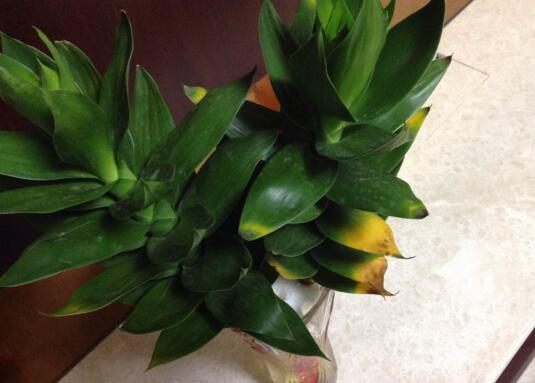
When growing lucky bamboo, water is very important. If you always miss watering or do not water, the soil will lack moisture. After the water stored inside the tissues is used up, the leaves will turn yellow due to drought. This is what people often call drought-induced yellowing.
Solution: Replenish water immediately, but start with a small amount of watering. It is best to use a spray method, and wait until growth gradually recovers before watering normally. Afterward, to avoid the drought-induced yellowing phenomenon in which lucky bamboo leaves lose their luster and become wilted and drooping, you must not miss watering again.
2. Fertilizer deficiency
In lucky bamboo cultivation methods, it should be fertilized once a month. If fertilizer is lacking for a long time, the soil will lack elements such as nitrogen, phosphorus, and potassium. Not only will new leaves become weak and thin, but old leaves will also turn yellow.
Solution: What should be done when lucky bamboo leaves turn yellow due to fertilizer deficiency? It is best to replace the soil and replant it with a relatively fertile substrate, then fertilize reasonably in daily management, applying diluted, thoroughly decomposed fertilizer water once a month, mainly using compound fertilizer.
3. Temperature too low
Lucky bamboo has fair tolerance to high temperatures, but its cold resistance is relatively weak. When the temperature is below 4 degrees, it is easily frostbitten. Once frostbitten, the leaves will wither and turn yellow, and it can often even lead to the death of the plant.
Solution: Quickly move the lucky bamboo to a warm place for care, but do not water or fertilize immediately. Ensure the environment is ventilated and humid, and spray the plant with an appropriate amount of water. Wait until it gets through the cold season and resumes growth, then carry out normal care.
4. Sunburn
Lucky bamboo is a shade-loving, water-loving plant. Although its growth requires sufficient light, it is relatively afraid of direct strong light, especially exposure to the sun in summer. If it is exposed to direct sunlight every midday, its leaves will become scorched and turn yellow.
Solution: Move the lucky bamboo to a cool place. In subsequent cultivation, try to avoid direct sunlight as much as possible. It is best to place it in a bright, ventilated place. As long as the light is not too strong, sunburn can be avoided.
5. Unsuitable environment
To keep warm in winter, some flower lovers place lucky bamboo indoors, but carelessly put it in the air outlet of an air conditioner or heater, causing the lucky bamboo to be exposed to warm or cold air for a long time. Over time, some leaves will turn yellow.
Solution: Keeping the environment ventilated is fine, but lucky bamboo should not be placed at the air outlet of electrical appliances, especially not near electric fans, air conditioners, and other appliances. Otherwise, leaves will turn yellow due to the unsuitable environment.
6. Soil problems
The soil used by each flower lover may be different, and sometimes the soil can cause leaves to turn yellow because it is too alkaline or too acidic. There are many reasons for this. Besides the choice of soil, watering, fertilizing, and so on are also somewhat related.
Solution: For soil, try to choose professional potting soil. Changes in the soil environment caused by watering and fertilizing can be adjusted by applying alum fertilizer water. To avoid too much alkalinity or acidity, this can be solved by changing the soil once every 2-3 years.
What to Do When Lucky Bamboo Leaves Turn Yellow? Do These Five Things and It Is Easily Solved!
Improper watering
Under normal circumstances, the new leaves of lucky bamboo are pale yellow and lack luster, while the old leaves show no change, the branches and stems shrink, and growth is poor. This phenomenon may be caused by too much watering. At this time, take the lucky bamboo out of the potting soil, place it in a well-ventilated place, let the soil become dry, and then repot it.
Lack of water
This situation generally shows symptoms of drying at the edges of the leaves, and some leaves may also fall off. It is very obvious that it is caused by lack of water. Therefore, we should quickly replenish water and keep the soil moist at all times.
Improper lighting
If lucky bamboo is placed under strong light, the edges of the leaves and the branches will become shrunken, and yellow spots will appear on the exposed parts. In this case, you can just move the lucky bamboo to a cool indoor environment.
Lack of light
If lucky bamboo is kept for a long time in a dark corner without light, the leaves will be unable to carry out photosynthesis, and over time the leaves will turn yellow and then fall off. Therefore, we need to move the lucky bamboo on time to an environment with good light to supplement the light needed for growth.
Improper fertilizing
When managing lucky bamboo, during its vigorous growth stage it is unavoidable that excessive or too concentrated fertilizer may be used, causing new leaves to become dark yellow and look very lusterless. At this time, it is necessary to stop using subsequent fertilizer and dilute the excess fertilizer by watering.
Is There Still Hope When Lucky Bamboo Leaves Turn Yellow? Do These Five Things and You Can Save It
The leaves of lucky bamboo are deep green and lush. We usually place it indoors to decorate and beautify the environment. Lucky bamboo often develops yellowing and withering leaves, so is there still hope when lucky bamboo leaves turn yellow? How should we solve it?
Is There Still Hope When Lucky Bamboo Leaves Turn Yellow?
There is still hope.
What to Do When Lucky Bamboo Leaves Turn Yellow
1. Improper watering
Under normal circumstances, the new leaves of lucky bamboo are pale yellow and lack luster, while the old leaves show no change, the branches and stems shrink, and growth is poor. This phenomenon may be caused by too much watering. At this time, take the lucky bamboo out of the potting soil, place it in a well-ventilated place, let the soil become dry, and then repot it.
2. Lack of water
This situation generally shows symptoms of drying at the edges of the leaves, and some leaves may also fall off. It is very obvious that it is caused by lack of water. Therefore, we should quickly replenish water and keep the soil moist at all times.
3. Improper lighting
If lucky bamboo is placed under strong light, the edges of the leaves and the branches will become shrunken, and yellow spots will appear on the exposed parts. In this case, you can just move the lucky bamboo to a cool indoor environment.
4. Lack of light
If lucky bamboo is kept for a long time in a dark corner without light, the leaves will be unable to carry out photosynthesis, and over time the leaves will turn yellow and then fall off. Therefore, we need to move the lucky bamboo on time to an environment with good light to supplement the light needed for growth.
5. Improper fertilizing
When managing lucky bamboo, during its vigorous growth stage it is unavoidable that excessive or too concentrated fertilizer may be used, causing new leaves to become dark yellow and look very lusterless. At this time, it is necessary to stop using subsequent fertilizer and dilute the excess fertilizer by watering.