What to Do When Calathea makoyana Leaves Curl? Adjust Temperature, Increase Humidity, and Water Moderately
For Calathea makoyana, those who have seen it should be deeply impressed. Its leaves are not only evergreen all year round, but also bear a peacock feather pattern, which is truly remarkable. Because of its ornamental value, many people keep Calathea makoyana at home, but as they care for it, its leaves start to curl. What is going on here? Today, the editor will tell you the answer.
I. Finding the Cause of Curling Leaves in Calathea makoyana
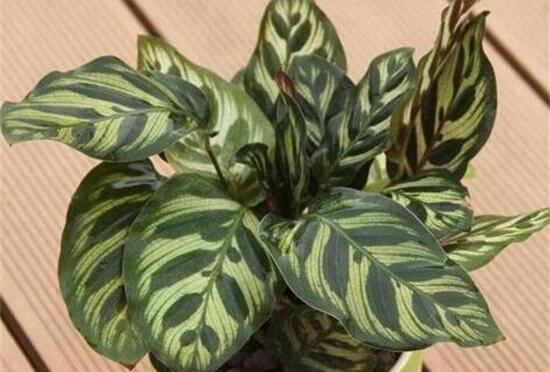
Calathea makoyana is a tropical plant that likes high temperatures and high humidity. When grown indoors, because the environment does not meet its requirements, Calathea makoyana often develops curling, the leaves cannot extend freely, and the lower leaves of the plant turn yellow and withered. So what should be done when Calathea makoyana leaves curl? Regarding this, the editor has summarized 4 causes and attached solutions. Let us continue reading.
II. Causes and Solutions for Curling Leaves in Calathea makoyana
1. Improper Temperature and Humidity
According to the editor's research, generally the curling of Calathea makoyana leaves is caused by inappropriate temperature and humidity.
① Temperature too low
Calathea makoyana is a tropical plant that likes a high-temperature growing environment. When grown indoors, if the temperature is too low, it will cause curling.
Solution: It is very simple, move Calathea makoyana to a place with a higher temperature (above 16°C). However, note that you should not move it to a place with too high a temperature all at once. With careful care for a period of time, the leaves will return to health.
② Humidity not enough
Besides liking high temperatures, Calathea makoyana also likes a highly humid environment. Normally, we should ensure that both the potting soil and the air remain at relatively high humidity. Once the humidity is not enough, the leaves of Calathea makoyana will curl.
Solution: Sprinkle water around Calathea makoyana to increase air humidity; in addition, you should also frequently spray water on the leaf surface to cool it and retain moisture, with humidity preferably reaching 70%-80%.
2. Improper Watering
Besides improper temperature and humidity, if the watering method is wrong, whether watering too much or not watering thoroughly for a long time, the symptom of curling leaves in Calathea makoyana will also appear.
① Watering too little
Calathea makoyana likes a humid environment and should usually be watered more to keep the potting soil moist. Once watering is too little, the insufficient water cannot meet the growth needs of Calathea makoyana, and its leaves will also show symptoms of curling.
Solution: Replenish water for Calathea makoyana, but do not water too much at once; just keep the potting soil moist.
② Watering too much
In addition, watering too much, which causes water accumulation in the pot, is also a cause of curling leaves in Calathea makoyana. Calathea makoyana likes moisture, but if water accumulates in the pot, it will cause root rot, and the leaves will curl and turn yellow.
Solution: Move Calathea makoyana to a ventilated place with scattered light so the water evaporates quickly; in severe cases, take it out of the pot, replace it with fresh growing soil, and then replant it.
What to Do When Calathea makoyana Leaves Curl, Part One: Unsuitable Environmental Temperature and Humidity
Symptoms
When Calathea makoyana is in a stuffy and hot environment, the plant grows poorly, and the leaves gradually curl instead of extending freely. If no measures are taken, over time, the leaves and roots will rot, and it may even wither and die.
Solution
Strengthen daily water and fertilizer management, ensure the plant has sufficient nutrients, and enhance disease resistance.
If the plant is placed in a closed indoor environment, besides rainy days, spray every day to increase humidity, at least 3 times a day.
If the leaf shrinkage is especially severe, you can cover the entire plant with a plastic bag, and poke some small holes at the pot opening to maintain a certain humidity while allowing appropriate ventilation, which helps recovery.
What to Do When Calathea makoyana Leaves Curl, Part Two: Watering Too Little and Humidity Too Low
Symptoms
Calathea makoyana likes a relatively humid environment. If the watering method is wrong and it has not been watered thoroughly for a long time, the soil inside will gradually become compacted, which cannot be seen from the outside, but as time passes, the leaves will gradually curl, accompanied by some dying and the lower leaves turning yellow and withered.
Solution
Calathea makoyana originates from the tropical rainforests of South America and requires relatively humid growing conditions. Besides keeping the potting soil moist, you should not wait until the potting soil dries out before watering. As long as there is no water accumulation and root rot, you should also maintain relatively high air humidity in the surrounding environment. Therefore, in summer, the plant should be placed in a semi-shaded location, and water should be sprayed on the leaf surface 2~3 times a day to increase humidity and lower temperature, promoting robust growth of the plant.