3 Causes of Brown, Crispy Leaf Edges on Calathea makoyana and How to Fix Them - Humidity Must Not Be Low
Calathea makoyana, named for the peacock-feather pattern on its leaves, is a world-famous foliage plant often placed indoors by plant lovers. However, when grown indoors, for various reasons, its leaves can turn yellow and develop crispy edges. So what should you do when Calathea makoyana leaves have crispy edges? Below, the editor has summarized 3 causes, along with remedies. Let's take a look together.
I. Finding the Causes of Crispy Edges on Calathea makoyana Leaves
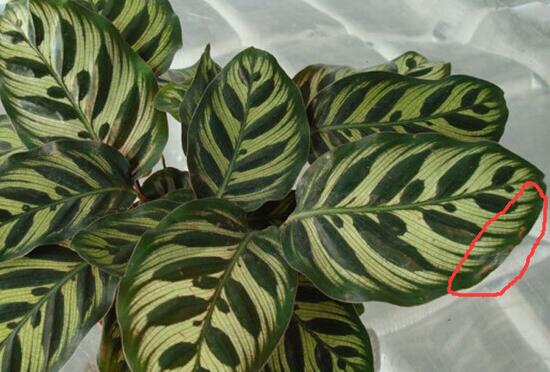
As a beautiful foliage plant, the beauty of Calathea makoyana is mainly shown in its evergreen leaves, so once the leaves develop crispy edges, its ornamental value is seriously affected. As for what to do when Calathea makoyana leaves have crispy edges, just find the cause and then remedy it in time. Below are the 3 causes of crispy edges on Calathea makoyana leaves that the editor has summarized for you. Let's continue reading.
II. Causes of Crispy Edges on Calathea makoyana Leaves
1. Temperature too low
According to the growth habits of Calathea makoyana, we know it likes a high-temperature environment, so during care, attention must be paid to regulating the temperature. Once the temperature is too low during care, the phenomenon of crispy edges on Calathea makoyana leaves will appear.
Remedy: If you find that low temperature is the cause, immediately move it to a warmer place, but be careful not to move it somewhere too hot.
2. Insufficient humidity
Besides high temperatures, Calathea makoyana also likes a high-humidity growing environment, and both its potting soil and the air need to maintain relatively high humidity. Once the humidity is insufficient and cannot meet the growth needs of Calathea makoyana, it will inevitably develop shriveled leaves.
Remedy: Promptly sprinkle water around Calathea makoyana to increase air humidity; in addition, when the air is dry, you should also frequently spray water on the leaf surfaces to cool and retain moisture.
3. Overwatering
Calathea makoyana likes a moist environment, so plant lovers need to water frequently to keep the potting soil moist. But many plant lovers are beginners and easily have problems controlling the amount of water, often overwatering. Once there is too much water, water will accumulate in the pot of Calathea makoyana, and in severe cases this will cause root rot, with leaves curling and crispy edges.
Remedy: Move Calathea makoyana to a ventilated place with indirect light so the water evaporates quickly.
III. Solutions for Crispy Edges on Calathea makoyana Leaves
Now that you know the causes of crispy edges on Calathea makoyana leaves and the temporary remedies, let's next look at the solutions:
Mild crispy edges: First, make sure the temperature and humidity are reasonable: the temperature should be kept at 16 and the temperature and humidity should be reasonable, and the humidity should ideally reach 70%-80%. Pay attention to daily watering and do not let water accumulate in the pot.
Severe crispy edges: Plant lovers can cover the plant with a plastic bag and tie it tightly with string, leaving a small gap if desired. This can preserve moisture and help the leaves recover.
What to Do When Flowers Wilt? Essentials
In the process of growing potted flowers in our daily lives, we often find symptoms such as wilting and withering in flowers during their growth and development. Due to environmental factors and the flowers' own reasons, wilting occurs, which inhibits flower growth, and in severe cases can cause the flowers to die. Measures must be taken promptly for care and rejuvenation.Flower wilting is a phenomenon often encountered by beginner flower growers. There are many causes of flower wilting, but in general it is mostly caused by insufficient water. When flower wilting is caused by air that is too dry, spraying water on the ground around the flowers and on the leaf surfaces 2-3 times a day is enough to improve it; when flower wilting is caused by a lack of water in the potting soil, the potting soil should be watered, but there is one issue especially worth noting here: at this time, watering the potting soil can only be increased gradually, and you must not suddenly pour too much at once. This is because when a flower plant wilts, its root hairs have already shrunk and lost their water-absorbing function. At the same time, wilting has already caused the cells to lose water. If water is supplied too suddenly and abundantly, plasmolysis will occur between the cell wall and the protoplast, so when a plant suddenly absorbs a large amount of water after drought, it can also die.
What to do when flowers wilt? For potted flowers, because less water is stored in the pot, forgetting to water, especially missing watering in the hot summer, often easily causes leaf wilting. If not rescued in time, over time it often leads to plant withering. If the rescue is not done properly, it can sometimes also cause the plant to die.
The correct approach is: when leaf wilting is discovered, immediately move the flowerpot to a shady, cool place, spray some water on the leaf surfaces, and water a small amount. Afterward, as the stems and leaves gradually recover their uprightness, gradually increase the amount of watering. If at this point you pour too much water all at once, it may cause the plant to die. This is because after a flower wilts, a large number of root hairs have been damaged, so their water-absorbing capacity is greatly reduced. Only after new root hairs grow can the original water-absorbing capacity be restored. At the same time, wilting causes cells to lose water. After encountering water, the cell wall absorbs water first and expands rapidly, while the protoplast absorbs water afterward and expands slowly. If at this time you suddenly pour a large amount of water, it will cause plasmolysis, damaging the protoplast and thereby causing the flower to die.
What to do when flowers wilt?
Causes of Potted Plant Wilting and Remedial Measures
I. Drought wilting (dry weather, potting soil too dry)
If flowers and trees are dry for a long time and cannot be watered in time, they begin to wilt from the top downward, the bark of the branches and trunk shrinks, and the whole plant may die. In this case, spray water on the leaf surfaces of the drought-stricken flowers and trees and the surrounding environment to maintain relatively high environmental humidity. Never use large amounts of low-temperature water to irrigate the soil in a high-temperature environment.
In hot, dry seasons, water evaporates from flower leaf surfaces in large amounts, the potting soil dries early, and without water replenishment the plant easily wilts. At this time, move the potted flower to a cool place, and after the potting soil has cooled slightly, water the potted flower thoroughly with water close to the soil temperature.
II. Water wilting (overwatering, potting soil too wet)
When the water content in the soil is too high, the plant root system's respiration is blocked or it suffocates and dies, and the branches and leaves cannot get water supplied by the roots, so they will inevitably wilt or even die. For affected flowers and trees, avoid direct strong light and direct strong wind, and prune away some tender branches and leaves to reduce water evaporation. For flowers and trees planted in the ground, loosen the soil in time. For potted flowers and trees, remove one third of the overly wet potting soil, add dry soil and replant, combine with leaf-surface spraying, and spray a dilute liquid fertilizer once every three days. With such care for 10 days, the affected flowers and trees can recover.
Because the amount of watering is too large, the potting soil remains moist for a long time, or even waterlogged, and the potting soil has poor permeability, the flower roots are damaged, and the leaves of the entire plant wilt all at once. At this time, stop watering and loosen the soil. In severe cases, remove the plant from the pot and change the soil, prune away the rotten roots, replant it, and place it in a cool place for care.
In fact, there is another water-related situation, which is hard water quality. If hard water is used to water flowers for a long time, the soil becomes compacted due to alkalinization, which blocks the root system's water absorption and causes the plant to wilt. Switching to soft water for watering will improve the situation.
III. Fertilizer wilting (overfertilizing)
If the fertilizer concentration in the soil of flowers and trees is too high, the water in the flowers and trees seeps into the soil (that is, reverse osmosis), commonly known as burning the roots, causing the flowers and trees to wilt or even die. For affected flowers and trees planted in the ground, a large amount of water can be irrigated to dilute the fertilizer concentration in the soil, and it should be drained promptly. For potted flowers and trees, remove the surface soil in the pot, irrigate with water so that excess fertilizer flows out from the bottom of the flowerpot with the water, and then cover the pot surface with a layer of plain soil. At the same time, take measures such as shading and leaf-surface spraying for the affected flowers and trees to sustain the life of the branches and leaves, and after 10 to 20 days they can return to normal.
Potted flowers wilt due to excessive fertilizing and fertilizer damage. When this happens, immediately pour a large amount of water into the pot to dilute the fertilizer solution, and elevate the pot so the water drains quickly from the pot holes. Potted flowers with severe fertilizer damage need to be repotted and their roots washed.
What to do when flowers wilt?
IV. Pest wilting (pest and disease damage)
When longhorn beetles and jewel beetles cause serious damage, they destroy the conductive tissue of the main trunk or main branches of flowers and trees, causing partial or whole-plant wilting or death. Wilting caused by insect damage is difficult to reverse. For precious flowers and trees, the branches can be cut off for cuttings or grafting.
Underground pests bite and injure the plant root system, affecting the root system's water absorption and causing potted flowers to wilt. When potted flowers are invaded by wilt pathogens, the roots and stem base rot and are damaged, and wilting occurs. For pest and disease damage, prevention should be the priority, such as regular spraying and soil sterilization. Once potted flowers wilt due to pest or disease damage, it is generally very difficult to cure.
V. Wind wilting
When flowers and trees produce new shoots, especially when spring shoots grow in large numbers, if they encounter strong light and strong wind (especially dry wind), the flowers and trees often wilt. At this time, shading, sheltering from wind, and leaf-surface spraying can prevent the new shoots from losing water and wilting.
VI. Heat wilting (light too strong)
In summer, flowers that like a cool environment, if placed in a place with strong light and high temperature, will have leaves that wilt and curl inward, or even turn yellow and fall off. Immediately place them in a moist, ventilated, cool place.
For shade-loving or semi-shade-loving flowers, if shading is inadequate or they are exposed to direct strong light, the plant's leaves will wilt and curl, or even turn yellow and fall off. At this time, place the potted flower in a cool, ventilated, moist place.
VII. Cold wilting (temperature drop)
In autumn, temperature changes greatly. When the nighttime temperature is below 10°C, warm-loving southern flowers such as Michelia alba, bougainvillea, jasmine, hibiscus, Dieffenbachia picta, and Calathea makoyana may have leaves that wilt in the early morning, and after the temperature rises at noon they can gradually recover. At this time, potted flowers should be protected against cold.
In the north, temperature fluctuates greatly. When the nighttime temperature suddenly drops below 10°C, some southern flowers such as hibiscus, jasmine, and azalea may have leaves that wilt and lose their luster in the early morning, then gradually recover after the temperature rises at noon. Short-term cold wilting has little effect on flowers, but attention should be paid to keeping them warm.
What to do when flowers wilt?
How to Rescue Wilting Flowers
Flower wilting is the most headache-inducing problem for flower growers. There are many causes of flower wilting, such as lack of water, lack of fertilizer, lack of light, unsuitable temperature, unsuitable soil pH, excessive chemical fertilizer, viral infection, pest damage, damage from toxic gases in the air, and so on. The situation is very complex, but most cases are caused by insufficient water.
For wilting caused by air that is too dry, the remedy is to spray water on the ground around the flowers and on the leaf surfaces 2-3 times a day. Some cases of potting soil lacking water are caused by the grower using too little water each time, only wetting the surface soil and thinking that is enough, so the flower roots do not absorb water. In fact, this is a major taboo in watering flowers. Over time, the flowers will wilt because they cannot get water.
The remedy, of course, is to water the potting soil, but there is one issue especially worth noting here: at this time, watering the potting soil can only be increased gradually, and you must not suddenly pour too much at once. Because when a flower plant wilts, its root hairs have already shrunk and lost their water-absorbing function. At the same time, wilting has already caused the cells to lose water. If water is supplied too suddenly and abundantly, plasmolysis will occur between the cell wall and the protoplast, so when a plant suddenly absorbs a large amount of water after drought, it can also die.
What to do when flowers wilt?How to Rescue Wilting Flowers (What to Do When Flowers Wilt in Hot Weather)?
During the Spring Festival, many people go out to visit relatives or vacation, and when they return home they often find that their flowers have wilted leaves due to lack of water and other reasons. What should be done in this situation? Immediately watering heavily is not a good approach; not only will it fail to revive the flowers, it may even harm them.
The correct approach is: when leaf wilting is discovered, immediately move the flowerpot to a shady, cool place, spray some water on the leaf surfaces, and water a small amount. Afterward, as the stems and leaves gradually recover their uprightness, gradually increase the amount of watering. If at this point you pour too much water all at once, it may cause the plant to die. This is because after a flower wilts, a large number of root hairs have been damaged, so their water-absorbing capacity is greatly reduced. Only after new root hairs grow can the original water-absorbing capacity be restored. At the same time, wilting causes cells to lose water. After encountering water, the cell wall absorbs water first and expands rapidly, while the protoplast absorbs water afterward and expands slowly. If at this time you suddenly pour a large amount of water, it will cause plasmolysis, damaging the protoplast and causing the flower to die.
In summer when it is hot, domestic flowers often wilt. The causes of flower wilting are various, such as lack of water, lack of fertilizer, lack of light, unsuitable temperature, unsuitable soil pH, excessive chemical fertilizer, viral infection, pest damage, damage from toxic gases in the air, and so on. But in reality, most cases are caused by insufficient water. Lack of water in the potting soil is often caused by the grower using too little water each time, only wetting the surface of the potting soil and thinking that is enough, so the flower roots cannot absorb water. This is a major taboo in watering flowers. Growers call it "half watering." Over time, the flowers will naturally wilt because they cannot get water.
The remedy, naturally, is to water the potting soil, but pay special attention: at this time, watering the potting soil can only be increased gradually, and you must not suddenly pour too much at once, because when a flower plant wilts, its root hairs have already shrunk and lost their water-absorbing function. At the same time, wilting has already caused the cells to lose water. If water is supplied too suddenly and abundantly, plasmolysis will occur between the cell wall and the protoplast, so when a plant suddenly absorbs a large amount of water after drought, it can also die.
In addition, air that is too dry can also cause flowers to wilt. The remedy is to spray water on the ground around the flowers and on the leaf surfaces 2-3 times a day.
What to Do When Household Potted Flowers Wilt?
What to do when flowers wilt? How to save them? After many flowers bloom, they always inexplicably wilt. There are many causes of flower wilting, and the remedies differ. So, what to do when flowers wilt? How to save them? Below, the editor of Succulent Flower Garden introduces to everyone what to do when flowers wilt and how to save them!
What to do when flowers wilt? How to save them?
Due to environmental factors and the flowers' own reasons, wilting occurs, which inhibits flower growth, and in severe cases can cause the flowers to die. Measures must be taken promptly for care and rejuvenation.
In general, first make sure it is not drought. When watering, do not pour water on the petals; then consider whether the potting medium has good permeability. If permeability is poor, long-term watering will cause root rot and lead to wilting; next, make sure the environment has good ventilation, so that the plant's growing environment does not become too wet and cause disease that makes the plant wilt.
In this situation, replace it with a loose medium as soon as possible, place it in a ventilated place for care and observation, and spray the leaf surfaces with an appropriate amount of water. After the flowers fade, prune off the branches that have bloomed to prevent them from competing for nutrients.
1. Drought wilting
If flowers are dry for a long time and cannot be watered in time, they wilt from the top downward, the bark of the branches and trunk shrinks, and the whole plant may die. At this time, spray water on the flower leaf surfaces and the surrounding environment to maintain relatively high environmental humidity. Never use large amounts of low-temperature water to irrigate the soil in a high-temperature environment.
In addition, when the weather is dry and the potting soil is too dry, flower wilting is a common phenomenon. In hot, dry seasons, water evaporates from flower leaf surfaces in large amounts, the potting soil dries early, and without water replenishment the plant easily wilts. At this time, move the potted flower to a cool place, and after the potting soil has cooled slightly, water the potted flower thoroughly with water close to the soil temperature.
2. Water wilting
When the water content in the soil is too high, the plant root system's respiration is blocked and it suffocates to death, and the branches and leaves cannot get water supplied by the roots, resulting in wilting and death. For affected flowers, avoid direct strong light and direct strong wind, and prune away some tender branches and leaves to reduce water evaporation. Remove 1/3 of the overly wet potting soil, add dry soil and replant, combine with leaf-surface spraying, and spray a dilute liquid fertilizer once every 3 days. After 10 days of care, the affected flowers can recover.
In the usual process of beginners growing flowers, it is easy to overwater and make the potting soil too wet, causing flowers to wilt. Because the amount of watering is too large, the potting soil remains moist for a long time, or even waterlogged, and the potting soil has poor permeability, the flower roots are damaged, and the leaves of the entire plant wilt all at once. At this time, stop watering and loosen the soil. In severe cases, remove the plant from the pot and change the soil, prune away the rotten roots, replant it, and place it in a cool place for care.
If hard water is used to water flowers for a long time, the soil becomes compacted due to alkalinization, which blocks the root system's water absorption and causes the plant to wilt. Switching to soft water for watering will improve the situation.
3. Wind wilting
When flowers produce new shoots, especially when spring shoots grow in large numbers, if they encounter strong light and strong wind, they often wilt. At this time, shading, sheltering from wind, and leaf-surface spraying should be taken to prevent the new shoots from losing water and wilting.
4. Heat wilting
In summer, flowers that like a cool environment, if placed in a place with strong light and high temperature, will have leaves that wilt and curl inward, or even turn yellow and fall off. Immediately place them in a moist, ventilated, cool place.
5. Cold wilting
In winter, temperature fluctuates greatly. When the nighttime temperature suddenly drops below 10°C, flowers such as hibiscus, jasmine, and azalea may have leaves that wilt and lose their luster in the early morning, then gradually recover after the temperature rises at noon. Short-term cold wilting has little effect on flowers, but attention should be paid to keeping them warm.
In autumn, temperature changes greatly. When the nighttime temperature is below 10°C, warm-loving southern flowers such as Michelia alba, bougainvillea, jasmine, hibiscus, Dieffenbachia picta, and Calathea makoyana may have leaves that wilt in the early morning, and after the temperature rises at noon they can gradually recover. At this time, potted flowers should be protected against cold.
Underground pests bite and injure the plant root system, affecting the root system's water absorption and causing potted flowers to wilt. When potted flowers are invaded by wilt pathogens, the roots and stem base rot and are damaged, and wilting occurs. For pest and disease damage, prevention should be the priority, such as regular spraying and soil sterilization. Once potted flowers wilt due to pest or disease damage, it is generally very difficult to cure. I hope this article can be of some help to everyone! Everyone is welcome to follow Succulent Flower Garden several times to learn more about home flower-growing knowledge!