How to grow freesia? Cultivation methods and precautions, with plenty of light
Freesia is an ornamental flower native to southern Africa that was later introduced to China, and today it can be seen in many regions of the country. However, there are many things to pay attention to if you want to grow this plant well, so how do you grow freesia? What are the cultivation methods and precautions for freesia? Let's take a look below.
I. How to grow freesia: understand its habits
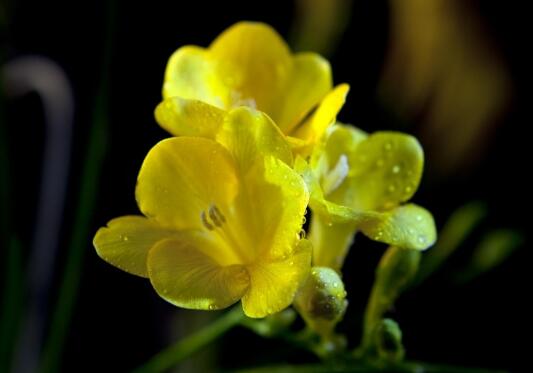
To know how to grow freesia, we first need to understand its growth habits. Freesia is quite light-loving, so when growing it we should best maintain plenty of light. In addition, watering, fertilizing and other aspects also require some care; the details are described below, so let's take a look.
II. Cultivation methods and precautions for freesia
1. Soil: drainage must be good
When growing freesia, we first need to choose the soil. This is the first step and the step that lays the foundation. Generally it is best to choose relatively loose, fertile sandy soil or humus soil; this type of soil has good drainage and is quite suitable for freesia growth.
2. Fertilizing: once every two weeks during the growing season
Fertilizer is one of the main nutrients in the growth process of freesia. Before planting, we need to add an appropriate amount of base fertilizer to the soil so that it has enough nutrients to get through the seedling stage. After it enters the growing season, its demand for fertilizer becomes higher, and it basically needs fertilizing once every two weeks. When fertilizing, we should maintain the principle of applying thin fertilizer frequently.
3. Temperature: suitable growing temperature 15-20°C
If you want freesia to grow well, then it must grow in a suitable environment. Its suitable growing temperature is around 15-20°C. When growing it, we can control the temperature well, and then it will grow more robustly.
4. Watering: keep the soil moist before sprouting
Freesia has different water requirements at each stage. Before sprouting, we need to keep the soil somewhat moist as much as possible. After it buds, we need to gradually reduce the amount of watering and keep the soil surface dry as much as possible; this can prevent pests and diseases to a certain extent.
5. Light: pay attention to shading in summer
Freesia is quite light-loving, but it is not tolerant of strong light. If the light is relatively suitable in spring and autumn, we can grow it outdoors and let it receive light all day. However, in summer when sunlight is too intense, we should best move it indoors to a semi-shaded place to grow it, so as to avoid burning the plant due to too-strong light, which would cause its leaves to turn yellow.
6. Pests and diseases: prevent and control them in time
In the process of growing freesia, if we are not careful enough, it is easy for problems such as pests and diseases to take advantage of the situation. Its common pests and diseases include mosaic disease, bulb rot and many others. If such problems occur, we can prescribe the right treatment according to what is described in the article on freesia pest and disease control.
Cultivation methods and precautions for freesia: the flower language of freesia
Freesia is a very beautiful flowering plant. Its flowers are pure white like snow, and its fragrance is delicate like an orchid, so it is deeply loved by people. Today we will tell you about the cultivation methods and precautions for freesia as well as the flower language of freesia.
Cultivation methods for freesia:
1. Soil: Freesia likes sandy loam rich in organic matter, with strong water retention and good drainage, pH 6-7.2.
2. Watering: before sprouting, the soil must be kept moist. After budding, gradually reduce the amount of watering appropriately and keep the soil surface dry as much as possible, so as to help lower air humidity and prevent diseases.
3. Light: although freesia likes light, it should also avoid strong light exposure. When the light is too strong and the temperature is relatively high, a shade net with 70% light transmittance can be used for shading.
4. Temperature: temperature management is very important for freesia cut flower production. It has poor cold tolerance, the suitable growing temperature is 15-20°C, and the minimum wintering temperature is 3-5°C.
5. Fertilizing: the organic fertilizer and compound fertilizer applied before planting can basically meet the growth needs, but if the plant grows weakly, when it has 2-4 leaves, apply one more topdressing of ammonium nitrate, urea and potassium sulfate. At the beginning of flowering, use 0.2% potassium dihydrogen phosphate for foliar fertilization, but it is best to avoid topdressing before and after budding.
6. Pests and diseases: freesia is prone to mosaic disease, bulb rot, etc. When planting, the soil and bulbs must be thoroughly disinfected, and the potting soil must be completely replaced every year. At the same time, pay attention to controlling aphids. In the early stage of aphid occurrence, spray 40% omethoate 1500x solution or 90% trichlorfon solution for control.
Precautions for growing freesia:
During the growing season, sufficient fertilizer and water are required, and organic liquid fertilizer should be applied once every two weeks; an appropriate amount of compound chemical fertilizer may also be applied. The potting soil should be allowed to dry and then be watered, and must not be waterlogged or too dry. Usually the bulbs are planted in September, flower bud differentiation begins in about early November, and differentiation is completed in late November. After the plant reaches May of the following year, the leaves gradually wither and the bulbs enter a natural dormant period.
When freesia is cultivated indoors, the plant often becomes thin and weak and grows leggy. When the flower stalk is emerging, a stick should be used to support the flower stem to prevent the stalk from bending and affecting its ornamental value. To prevent it from growing leggy and promote "dwarfing," the method is to treat the bulbs with "paclobutrazol" before planting, which can achieve excellent results. The method is: before potting freesia in autumn, soak the stored bulbs in an 80 ppm "paclobutrazol" solution for 15 hours to 20 hours, take them out and rinse them clean with water, then pot them and carry out normal management such as watering. Freesia treated in this way emerges neatly, has dark green leaf color, increased leaf width and reduced length, and a stronger fragrance after flowering.
The flower language of freesia:
The flower language of freesia is: purity. Flower divination: your innocent and sweet face is like the pure young girl in a painting, untouched by worldly concerns, and at the same time ignorant of the dangers of people's hearts. When you hear sweet talk, you seem unable to resist and become intoxicated in a poetic and picturesque romance; this is very dangerous, and you should quickly learn to protect yourself and raise your vigilance. Flower motto: you must know that behind love are hidden both happiness and pain, sorrow and regret.
[Freesia pictures] Cultivation methods and precautions for freesia
Freesia flowers resemble lilies, and its leaves resemble those of orchids. Its flower colors are elegant, exquisite and delicate, its fragrance is rich, and its flowering period is long, making it a flower that people love. It is often used in pots or with cut flower branches placed in vases to decorate interiors, and it is an ideal potted flower for embellishing the living room and study. Below let's learn about the cultivation methods and precautions for freesia:
Freesia pictures
Basic information about freesia:
Freesia (Freesia hybrida Klatt.), also known as xiaocanglan, xiaochanglan, jiandaolan, suxianglan, xiangyuanwei and yangwanxiangyu, is a perennial bulbous herbaceous flower of the genus Freesia in the family Iridaceae. Freesia flowers are pure white like snow, and the fragrance is delicate like an orchid, hence the name freesia. It is native to the Cape of Good Hope in southern Africa. There are about 20 species, and in production they are often divided by flower color into cultivated lines such as the red series, yellow series, white series and blue series. Because of its early flowering period, bright colors, fragrant flowers and long vase life, it can be supplied to the market in early spring and during the Spring Festival. It can be cultivated both as a cut flower and as a greenhouse potted plant, and is deeply favored by flower lovers.
Freesia pictures
Cultivation methods for freesia:
1. Soil:Freesia likes sandy loam rich in organic matter, with strong water retention and good drainage, pH 6-7.2.
2. Watering:Before sprouting, the soil must be kept moist. After budding, gradually reduce the amount of watering appropriately and keep the soil surface dry as much as possible, so as to help lower air humidity and prevent diseases.
3. Light:Although freesia likes light, it should also avoid strong light exposure. When the light is too strong and the temperature is relatively high, a shade net with 70% light transmittance can be used for shading.
4. Temperature:Temperature management is very important for freesia cut flower production. It has poor cold tolerance, the suitable growing temperature is 15-20°C, and the minimum wintering temperature is 3-5°C.
5. Fertilizing:The organic fertilizer and compound fertilizer applied before planting can basically meet the growth needs, but if the plant grows weakly, when it has 2-4 leaves, apply one more topdressing of ammonium nitrate, urea and potassium sulfate. At the beginning of flowering, use 0.2% potassium dihydrogen phosphate for foliar fertilization, but it is best to avoid topdressing before and after budding.
6. Pests and diseases:Freesia is prone to mosaic disease, bulb rot, etc. When planting, the soil and bulbs must be thoroughly disinfected, and the potting soil must be completely replaced every year. At the same time, pay attention to controlling aphids. In the early stage of aphid occurrence, spray 40% omethoate 1500x solution or 90% trichlorfon solution for control.
Freesia pictures
Precautions for growing freesia:
During the growing season, sufficient fertilizer and water are required, and organic liquid fertilizer should be applied once every two weeks; an appropriate amount of compound chemical fertilizer may also be applied. The potting soil should be allowed to dry and then be watered, and must not be waterlogged or too dry. Usually the bulbs are planted in September, flower bud differentiation begins in about early November, and differentiation is completed in late November. After the plant reaches May of the following year, the leaves gradually wither and the bulbs enter a natural dormant period.
When freesia is cultivated indoors, the plant often becomes thin and weak and grows leggy. When the flower stalk is emerging, a stick should be used to support the flower stem to prevent the stalk from bending and affecting its ornamental value. To prevent it from growing leggy and promote "dwarfing," the method is to treat the bulbs with "paclobutrazol" before planting, which can achieve excellent results. The method is: before potting freesia in autumn, soak the stored bulbs in an 80 ppm "paclobutrazol" solution for 15 hours to 20 hours, take them out and rinse them clean with water, then pot them and carry out normal management such as watering. Freesia treated in this way emerges neatly, has dark green leaf color, increased leaf width and reduced length, and a stronger fragrance after flowering.
Freesia pictures
The flower language of freesia:
The flower language of freesia is purity, representing pure people. It is said that a person's beauty is like the pure young girl in a painting, a fairy untouched by worldly concerns, born into the world as a representative of beauty, ignorant of the dangers of the human world and also of the scheming and intrigue of the world, believing all the beautiful things people say. What freesia expresses is a simple purity and beauty.
Freesia flowers are pure white like snow, and the fragrance is delicate like an orchid. It has a very good ornamental effect and can embellish the environment, and its cultivation method is also relatively simple. If everyone likes it, you might as well try planting it, and once it blooms it can be used to beautify the home. That is all for sharing information related to freesia with everyone; for more information, please continue to follow us.