How to Grow and Care for Calathea makoyana: Watering Must Be Generous
Calathea makoyana, also known as the peacock plant, is one of the many varieties of Calathea, and its vivid leaf colour looks exceptionally beautiful. Whether at home or in public spaces, Calathea makoyana can play a very good role in beautification, so how do you grow Calathea makoyana? Below is a carefully compiled guide to the growing methods and precautions for Calathea makoyana, very comprehensive, so friends who want to grow it should come in and take a look!
I. How to Grow Calathea makoyana: Understand Its Habits
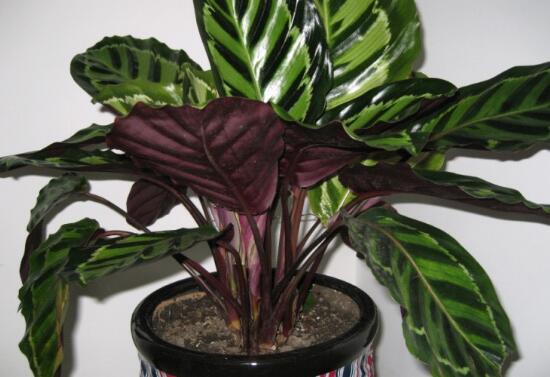
Calathea makoyana likes a warm, humid, semi-shaded environment, and it dislikes strong light, so when growing it indoors, you should water it frequently to keep the potting soil moist, and in winter you should also take good measures to keep it warm. So as for how to grow Calathea makoyana, you only need to satisfy its growth habits, and for the specific requirements, let us continue reading below.
II. Growing Methods and Precautions for Calathea makoyana
1. Potting Soil
How do you grow potted Calathea makoyana? First of course is choosing the potting soil. Although buying Calathea makoyana from a flower shop comes with an existing pot and soil, if you want to grow it well, it is very necessary to choose a new flower pot and soil yourself.
Flower pot: Because Calathea makoyana has relatively shallow roots, when growing it you should best choose a flower pot with a wide opening and shallow depth, so that it neither affects root growth, nor makes the plant look top-heavy when the leaves spread out during the day.
Soil: According to the growth habits of Calathea makoyana, you can choose a loose, fertile, well-drained, humus-rich, slightly acidic loam. For this, the editor recommends mixing 3 parts leaf mould, 1 part peat or sawdust, and 1 part sand, and adding a small amount of bean cake as base fertiliser.
2. Light
In the growing methods for Calathea makoyana, light is indispensable. Calathea makoyana likes semi-shade, so during the growing season from May to September, you should place it in a shaded or semi-shaded spot, maintaining 40%-60% light transmission, and avoid direct sunlight. When the light is not strong, it can be put outside to get some sun.
Precautions: Calathea makoyana dislikes direct strong light; once it is exposed under the strong sun, or if the air is too dry, it easily causes the leaf margins and leaf tips to scorch; but if it is placed in a dark room for a long time, Calathea makoyana will also show symptoms of poor growth.
3. Water
Water is needed for the plant's growth, and Calathea makoyana likes a humid environment, so flower lovers need to water it frequently to keep the potting soil moist. In addition, when the air is dry, you must also frequently spray water on the leaf surface to cool and moisturise.
Precautions: Calathea makoyana has relatively high requirements for air humidity, ideally reaching 70%-80%; once the air is too dry, the basal leaves of the plant turn yellow and scorch, affecting its ornamental value.
4. Fertilising
Having covered water, let us now talk about fertilising, which is also very important in the growing methods for Calathea makoyana. During the growing period of Calathea makoyana, a thin liquid fertiliser should be applied once every 20 days, with a nitrogen-phosphorus-potassium ratio of 2:1:1, which can make the leaf colour glossy and gorgeous.
Precautions: Calathea makoyana is very sensitive to high-concentration fertiliser, so do not over-fertilise, otherwise leaf burn easily occurs. In addition, when the temperature is low, you should control the amount of fertiliser applied, otherwise the leaves of Calathea makoyana will develop scorched edges.
5. Temperature
Calathea makoyana likes warmth and is not cold-tolerant, so as for how to grow Calathea, regulating temperature is very important. The most suitable growing temperature for Calathea makoyana is around 12-29°C, and in winter the temperature should be maintained at 16-18°C. When growing it indoors, if you want it to grow well, you should best maintain this room temperature.
Precautions: In winter, when the room temperature is below 15°C, you should take good measures to keep it warm. If you do not pay attention to temperature regulation, it will cause Calathea makoyana to stop growing, and in severe cases it may even die.
6. Repotting
In the growth process of Calathea makoyana, repotting is also an indispensable part. Flower lovers should repot every 1 to 2 years, when dividing the plant in spring. When repotting, new culture soil must be added, and residual roots and withered leaves cut off, then replanted, to facilitate growth.
7. Pests and Diseases
Calathea makoyana is rarely troubled by pests and diseases, but when grown indoors, if ventilation is poor and the air is dry, the plant can also suffer from scale insect damage. At this time, you should promptly spray pesticide for control, and the pesticide can be a series of imidacloprid products.
Overall, Calathea makoyana is still quite easy to grow, but if you want to grow it beautifully, you need to put in a bit more effort and follow the above requirements for care, so that Calathea makoyana can grow in a way that makes people's hearts flutter. As for the growing methods and precautions for Calathea makoyana, the editor will introduce them here, and flower lovers whose hearts flutter might as well try growing one!
How to Grow Calathea makoyana: Growing Methods and Precautions for Calathea makoyana
Calathea makoyana is one of the most common feng shui plants. So, how do you grow Calathea makoyana? Below we will share the growing methods and precautions for Calathea makoyana.
Growing Methods for Calathea makoyana:
1. Propagation
Calathea makoyana is mostly propagated by division, carried out in spring from April to May together with repotting and soil changing. Dividing too early, when the temperature is too low, makes the wounds heal slowly, easily causing rot and reducing the survival rate. When dividing, take the mother plant out of the pot, remove the old soil, use a sharp knife to cut every 3 to 4 buds into 1 plant, coat the cut with charcoal powder to prevent rot, plant immediately after cutting, water thoroughly, and place in a semi-shaded spot to recover; after 5 to 7 days it can be returned to normal management. When dividing, it is best to plant 3 to 5 plants per pot. If only one plant is planted per pot, more than 5 leaves must be retained and more roots kept, otherwise it will affect the plant's survival and its growth and development after survival.
2. Choosing a Pot
Calathea makoyana is a shallow-rooted plant, and the cultivation container should preferably be a wide-mouthed shallow pot, which helps the root system extend and spread. The potting soil needs to be loose, fertile and well-drained. You can choose 6 parts peat soil (or leaf mould), and 2 parts each of garden soil and sandy soil, mixed evenly. You can also use a soilless substrate, such as an even mix of perlite and vermiculite. Generally repot once every two years, which can be done at the turn of spring and summer together with division propagation.
3. Light
Calathea makoyana is relatively shade-tolerant, with a light intensity of 30%-40% being suitable. In spring and autumn it can be placed in a bright indoor spot, and in summer it should be kept in a semi-shaded spot for care; too strong light will make the leaves turn yellow and scorch, affecting its ornamental value. In winter, when light intensity decreases, move the flower pot near a south-facing window for cultivation; at this time the growing environment should not be too shaded. If placed in a dim spot for a long time, the leaves will lose their characteristic sheen.
4. Temperature
The optimal growing temperature for Calathea makoyana is around 22°C. If the summer temperature is higher than 35°C, not only will the plant's growth stagnate, but the leaf colour will also turn yellow and lose its ornamental value. If the winter temperature is lower than 15°C, the plant grows slowly; below 10°C the leaves easily curl; below 5°C it is prone to cold damage, and in severe cases it can cause the whole plant to die. Therefore, in winter you must pay attention to cold protection and warmth, and the room temperature should be kept above 13°C.
5. Humidity
Calathea makoyana likes humidity, with an air humidity of 70%-75%; when new leaves are developing, the humidity requirement is even higher, so during the growing season it should be watered sufficiently to keep the soil moist, but not waterlogged. In summer, spray water on the leaf surface 2 to 3 times a day, and also sprinkle water on the surrounding ground to increase humidity and lower temperature, to facilitate its growth. In winter, watering should be controlled, and it is enough for the potting soil to be slightly moist. In the dry indoor air of northern winters, besides using clean water close to room temperature to spray and wash the leaf surface around midday during the day, it is best to cover it with a plastic film cover at night to keep it warm and moist. Those with the means can use a humidifier to raise indoor humidity. To keep the leaves fresh, neat and radiant, you should also gently wipe the leaves with clean water about every half a month.
6. Fertilising
During the peak growing season, Calathea makoyana should be given a thin liquid fertiliser about once every half a month; when fertilising, be careful not to apply too much nitrogen fertiliser, otherwise phenomena of poor growth such as fading of leaf markings, thickening of leaves and softening of leaf stalks will appear. Generally the application ratio of the three fertilisers nitrogen, phosphorus and potassium should be 1:1:1, and this ratio can make the leaf colour glossy and beautiful. Soilless cultivation can also be used, applying a complete-element inorganic nutrient solution 1 to 2 times a month during the growing period.
7. Pest and Disease Control
Calathea makoyana has relatively few pests and diseases, but if ventilation is poor and the air is dry, scale insect damage can also occur, so pay attention to ventilation and air flow, and use a series of imidacloprid products for spraying control.
Precautions for Growing Calathea makoyana:
Calathea makoyana likes high temperatures and humid air, and grows fastest above 20°C. In the low-temperature season from October each year to April of the following year, in the north it should be moved into a greenhouse to overwinter, and the overwintering temperature in winter should not be lower than 15°C, otherwise the leaf colour will darken, the leaves will curl, and the leaf tips will turn yellow. If the cold damage is slight, promptly changing the environmental conditions means it can still send out new leaves the following spring. If the cold damage is severe, the leaves will die one after another, and even the whole plant may die.
When growing Calathea makoyana, if the indoor temperature difference between day and night is large, you can use a plastic film to cover the pot or use a glass box to keep it warm and moist, and also wash the leaf surface with warm water once a month to maintain the leaf colour. Every spring, after the temperature steadily rises to 20°C, you can repot once; when repotting, new culture soil must be added, and residual roots and withered leaves cut off, then replanted, to facilitate growth.
More InformationHow to Grow Calathea makoyana: Growing Methods and Precautions for Calathea makoyana
Calathea makoyana originates from tropical America and the islands of the Indian Ocean, and is very beautiful; placed at home it can purify the air and beautify the environment. How do you grow Calathea makoyana? This article introduces the growing methods and precautions for Calathea makoyana.
Growing Methods for Calathea makoyana
Calathea makoyana likes semi-shade, is not tolerant of direct sunlight, and is suited to growing in a warm, humid environment. When cultivating it, a certain degree of shading should be given, and the temperature should be kept at around 12-29°C; in winter the temperature should be maintained at 16-18°C. It grows vigorously in spring and summer, requires relatively high air humidity, and can be misted; it is not very demanding about soil, but requires keeping it moderately moist. During the growing season, fertilise about once every 2 weeks, while in winter the soil can be slightly dry and cool, and the frequency of fertilising reduced; when propagating, the division method is mostly used, carried out in early summer, and additionally the cutting method can also be used; the main pests include mealybugs, red spider mites, aphids, scale insects, and so on.
Soil: For potted Calathea makoyana, a loose, fertile, well-drained, humus-rich, slightly acidic loam should be used. Generally you can mix 3 parts leaf mould, 1 part peat or sawdust, and 1 part sand, and add a small amount of bean cake as base fertiliser; avoid heavy garden soil. When potting, first place a 3 cm thick layer of coarse sand at the bottom of the pot as a drainage layer, to facilitate drainage.
Water: During the growing period, Calathea makoyana should be given sufficient water; especially in summer and autumn, besides frequently keeping the potting soil moist, you must also frequently spray water on the leaf surface to cool and moisturise; it requires relatively high air humidity, ideally reaching 70% to 80%; it dislikes dry air and dry potting soil, but must not be waterlogged. After late autumn, water should be controlled to help it resist cold and overwinter. In winter, maintain a dry environment; if too wet, the basal leaves will turn yellow and scorch, affecting its ornamental value.
Sunlight: During the growing season from May to September, Calathea makoyana should be placed in a shaded or semi-shaded spot, maintaining 40%-60% light transmission, and avoiding direct sunlight; too strong light or dry air easily causes the leaf margins and leaf tips to scorch and the leaf markings to become dull and lustreless; but the light should not be too weak either, for if placed in a dark room for a long time, with low temperature and insufficient light, it will also grow weakly, which is unfavourable for leaf colour formation, and it will lose the characteristic metallic sheen of the leaf surface. In winter it can receive direct sunlight passing through glass.
Fertiliser: When Calathea makoyana lacks fertiliser, the plant is noticeably shorter, the leaf colour is dull, and the golden sheen is not vivid. During the growing period, apply a thin liquid fertiliser once every 20 days, with a nitrogen-phosphorus-potassium ratio of 2:1:1, which can make the leaf colour glossy and gorgeous; by no means should the proportion of nitrogen fertiliser be too large. If you usually spray a 0.2% liquid fertiliser directly on the leaf surface every 10 days, it is extremely beneficial for sprouting and growth. Stop fertilising in winter and summer.
Precautions for Pests and Diseases of Calathea makoyana
Calathea makoyana has relatively few pests and diseases, but if ventilation is poor and the air is dry, scale insect damage can also occur, and a series of imidacloprid products should be used for spraying control.
The leaf spot disease of Calathea makoyana has yellow-brown lesions; in the early stage of the disease, small yellow granular spots form near the leaf margin or in the centre of the leaf, and gradually expand, with the colour deepening and turning yellow-brown; the lesion has a relatively obvious halo around it. As the lesion expands, the leaf gradually dries up, shrivels, and eventually falls off and dies. The pathogen is the sporulating stage of the deuteromycete Drechslera.
The causes of the disease are high temperature and high humidity, poor air circulation, plants placed too densely, many weeds and rotten leaves in the cultivation environment, excessive nitrogen fertiliser application, and leggy growth of the plant. Tender tissues are prone to the disease.
The control method is to strengthen fertiliser and water management, appropriately increase the application of phosphorus and potassium fertilisers, apply less nitrogen fertiliser, and promote full, substantial plant growth and enhance its own resistance. Promptly remove diseased and residual leaves as well as weeds to reduce sources of infection. Plants should not be placed too densely; appropriate ventilation and light transmission and lowering the humidity of the environment can reduce the incidence of disease. When the disease occurs, spray pesticide for protection.
The pesticides are: 50% carbendazim diluted 600 to 800 times; or 75% chlorothalonil diluted 600 to 800 times; 50% mancozeb diluted 500 to 600 times, once every 7 to 10 days. The various pesticides should be used alternately, which can prevent the pathogen from developing drug resistance.