Can Dieffenbachia be grown hydroponically? Hydroponic method, diffused-light care, and frequent water-change tips
As one of the most popular indoor potted plants right now, Dieffenbachia has broad leaves and stays evergreen all year round, with dense irregular white or yellowish-white spots on the leaves and vivid coloring that makes it highly ornamental. Compared with soil culture, hydroponic Dieffenbachia may be even more beautiful, so can Dieffenbachia be grown hydroponically? Next, let's take a look together at the hydroponic method for Dieffenbachia.
1. Can Dieffenbachia be grown hydroponically? Yes
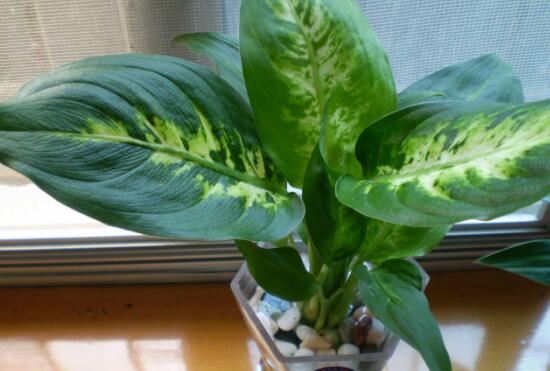
We can get the answer to this question from the growth habits of Dieffenbachia. According to research, Dieffenbachia likes warm, humid and semi-shaded environments, and can be stored and transported at 90% relative humidity. So can Dieffenbachia be grown hydroponically? Clearly it can. Below, let's take a look together at the specific operation method.
2. Hydroponic method for Dieffenbachia
Materials: one pot of Dieffenbachia, scissors, potassium permanganate, a transparent glass bottle, clean water
1. Hydroponic timing
The hydroponic method for Dieffenbachia is, plainly put, the water-cutting method: select a healthy branch without pests or diseases from a healthy Dieffenbachia plant and insert it into water. For this process, it is best to choose spring and autumn, because early spring and late autumn cannot reach the temperature required for rooting, cuttings in the high-temperature summer season are easily infected by microorganisms and rot, and in winter they are easily frostbitten.
2. Hydroponic seedlings
After choosing the time, select a strong branch about 1 cm in diameter from a 1-2 year old Dieffenbachia, a strong branch about 1 cm in diameter, and be careful to retain the aerial roots on the stem nodes. Treatment of hydroponic seedlings: after selecting the branch, disinfect the cut with potassium permanganate, then place it in a cool place to dry.
3. Hydroponic method
Insert the Dieffenbachia hydroponic seedling into the prepared transparent glass bottle, and add an appropriate amount of water, as deep as about 2/3 of the container. Keep the indoor temperature at around 25°C and maintain relatively high air humidity; roots will form after 20 days.
4. Care, frequent water changes
During the rooting period of hydroponic Dieffenbachia, respiration is relatively vigorous, so sufficient oxygen is needed. For this reason, gardeners should change the water frequently to keep the water clean and meet the cuttings' need for oxygen. Note: when changing the water, rinse the cuttings and container clean, especially strengthening the rinsing at the cut; after rooting, it can be transferred to normal hydroponic care.
After hydroponics, everyone should place the plant under conditions with bright diffused light. If the light is too strong, Dieffenbachia leaves turn yellow, and in severe cases may even be burned over a large area; if the light is too weak, the yellowish-white patches will turn green. In addition, spray water on the leaves frequently to maintain 80% environmental humidity. If water is not sprayed for a long time, the leaf surface becomes rough and loses its luster.
Overall, whether soil-cultured or hydroponically grown, Dieffenbachia has very strong ornamental value. But compared with the soil-culture method for Dieffenbachia, hydroponics is relatively simpler, so interested gardeners might as well give it a try. After successful hydroponics, placing hydroponic Dieffenbachia on desktops in a study or living room as decoration will be very beautiful!
How does Dieffenbachia propagate? Dieffenbachia propagation methods / tissue culture can survive
Dieffenbachia has broad, beautiful leaves and is easy to keep alive. It is often used to decorate living rooms, studies and other places, and is currently the most popular indoor potted plant. In daily life, many people keep a pot of Dieffenbachia at home. Some directly buy existing potted plants, while others propagate them themselves. So how does Dieffenbachia propagate? The following are four propagation methods for Dieffenbachia. Let's take a look together.
1. Division / cuttings / sowing / tissue culture
As a common indoor potted plant, the care method for Dieffenbachia can be said to be very simple, but if you want to propagate Dieffenbachia yourself, it is not so easy. Every plant has its own suitable propagation method, and for propagating Dieffenbachia there are generally four methods: division, cuttings, sowing and tissue culture. Next, let's take a look together at the specific operations.
(1) Division propagation of Dieffenbachia
1. Division timing
When it comes to propagating Dieffenbachia, the most commonly used method is still division. This method is generally carried out in spring, together with repotting.
2. Division method
Take Dieffenbachia out of the pot, cut off the rhizome at the stem, and apply plant ash to prevent rot, then place it in a cool, ventilated place. After the cut dries, pot it and water thoroughly. After planting, do not water too much; growth can recover in about 10 days.
(2) Cutting propagation of Dieffenbachia, soil cuttings / water cuttings
1. Soil cutting propagation
① Timing
Dieffenbachia likes high temperatures, so its cuttings are generally taken in July-August. Cuttings taken at this time will have a very high survival rate.
② Cuttings
From a healthy Dieffenbachia, cut off 7 to 10 cm of the stem tip as the cutting. Then remove the leaves from the remaining part to reduce water evaporation through photosynthesis, and be careful to apply plant ash to the cut for disinfection.
③ Cutting
Insert the treated cuttings into a sand bed, place them in a place with relatively high air humidity and semi-shade, maintain diffused light exposure (sunlight intensity about 50%-60%), and control the room temperature at 24-30°C. After insertion, roots will form in about 15-25 days. Wait until new buds sprout on the stem section, then transplant into a flower pot for growing.
2. Water cutting propagation
① Hydroponic timing
For water cutting propagation of Dieffenbachia, it is best to choose spring and autumn, because early spring and late autumn cannot reach the temperature required for rooting, cuttings in the high-temperature summer season are easily infected by microorganisms and rot, and in winter they are easily frostbitten.
② Water cuttings
After choosing the time, select a strong branch about 1 cm in diameter from a 1-2 year old Dieffenbachia, a strong branch about 1 cm in diameter, and be careful to retain the aerial roots on the stem nodes. Treatment of water cuttings: after selecting the branch, disinfect the cut with potassium permanganate, then place it in a cool place to dry.
③ Starting water cutting
Insert the Dieffenbachia water cutting into the prepared transparent glass bottle, and add an appropriate amount of water, as deep as about 2/3 of the container. Keep the indoor temperature at around 25°C and maintain relatively high air humidity; roots will form after 20 days.
④ Care, frequent water changes
During the rooting period of Dieffenbachia water cuttings, respiration is relatively vigorous, so sufficient oxygen is needed. For this reason, gardeners should change the water frequently to keep the water clean and meet the cuttings' need for oxygen. Note: when changing the water, rinse the cuttings and container clean, especially strengthening the rinsing at the cut; after rooting, it can be transferred to normal hydroponic care.
(3) Tissue culture and sowing of Dieffenbachia
How does Dieffenbachia propagate? Besides division and cuttings, there are also tissue culture and sowing, but these are rarely used now. Only large-scale growing cultivation bases choose these methods, and they take a relatively long time.
Overall, when propagating Dieffenbachia, whether by division, cuttings, sowing or tissue culture, all can survive, but the most suitable for home propagation are still division and cuttings. Of course, methods are fixed while people are flexible; everyone can choose a method for propagation according to actual conditions. That is all for the introduction to Dieffenbachia propagation methods. I hope it can help everyone.
38 must-grow flowers for the home, bringing in wealth and prosperity, great riches and honor!
38 must-grow flowers for the home, bringing in wealth and prosperity, great riches and honor!
Gardeners often ask me: "Huahua, what plants are suitable for growing indoors?" There are so many, so many! I'm afraid a day and a night wouldn't be enough to introduce them all. Today Huahua has picked out 33 for everyone as a reference, covering wealth-bringing, prosperity, foliage, flowering and climbing vines, all in one go!
Wealth-and-prosperity flowers
1. Copper coin grass
Its small, round leaves look just like copper coins. Many households grow it, symbolizing abundant wealth.
Care method:
1. Partial sun or a shaded spot is best; avoid strong direct sunlight. It is best to receive 4-6 hours of diffused light every day.
2. Copper coin grass likes water. During the growing season, water 2-3 times a day to keep the potting soil moist.
3. In a half-soil, half-water environment, copper coin grass will grow stronger and its leaves will be larger.
2. Bromeliad
The most striking feature of the bromeliad is the bright red flower center in the middle. It signifies good fortune and prosperity, and keeping it at home can bring good luck.
Care method
1. Bromeliads like diffused light. When the light is too strong, the leaves are prone to sunscald, while when it is too weak, growth will be poor.
2. Bromeliads like humid environments. When watering, it is best to use clean water that has been left to stand for 2-3 days, and water moderately to keep the potting soil moist.
3. Anthurium
Anthurium flowers are unique and vividly gorgeous. They are a world-famous flower, symbolizing booming prosperity and abundant wealth. Growing one at home brings wealth luck!
Care method
1. Anthurium likes warm, humid, semi-shaded environments and avoids direct sunlight.
2. When watering Anthurium, keep the soil moist but not waterlogged. During the flowering period of Anthurium, it should not be watered too much. In high-temperature summer, you can spray water on the leaf surface every morning.
3. You can choose liquid fertilizer specially made for Anthurium sold at flower markets, applying fertilizer once every 5-10 days. Fertilizing can be done at the same time as watering. It is best to fertilize in the morning or evening.
4. Lucky bamboo
Lucky bamboo symbolizes blooming wealth, bamboo bringing peace, great good fortune, and a lifetime of prosperity. Its name comes from this, and the beauty of lucky bamboo is inseparable from its auspicious name.
Care method
1. Lucky bamboo is not strict about light and is suitable for growing under bright diffused light. Too strong light or exposure to the sun can cause leaves to turn yellow, fade green, and grow slowly.
2. Lucky bamboo is suitable for growing in well-drained sandy soil or semi-muddy sand and alluvial clay.
5. Money tree
The money tree symbolizes bringing in wealth and treasure. Its original name is Malabar chestnut, and it should be the hottest-selling flower and tree in the Chinese market.
Care points:
1. The money tree likes high temperatures and semi-shaded environments, and has strong drought and shade tolerance.
2. It likes fertile, well-drained sandy loam.
3. The suitable growth temperature is 20-30°C. It can still grow when the temperature is below 10°C, but below 5°C it is easily damaged; in mild cases it causes leaf drop, and in severe cases it can cause plant death.
6. Money tree plant
Money tree plant, symbolic meaning: bringing in wealth and treasure, glory and prosperity.
Care points:
1. It likes warm, hot and slightly dry, semi-shaded environments with little change in annual average temperature, and avoids strong sunlight exposure.
2. It is suitable for growing at 20°C to 32°C. During the growing season, watering should follow "do not water if not dry; when watering, water thoroughly."
7. Happiness tree
Because of its especially auspicious name, the happiness tree is deeply loved in homes and office environments.
Care points:
1. The happiness tree is not strict about light; both full sun and semi-shaded environments are acceptable.
2. The happiness tree likes moist soil and air environments. When keeping a happiness tree indoors at home, besides keeping the potting soil moist, you should also frequently spray water on the leaf surface.
8. Peace lily
The peace lily has emerald-green leaves and pure white flowers, and can filter benzene, trichloroethylene and formaldehyde from the air, making it very suitable for indoor home growing.
Care method
1. The peace lily does not have a strong demand for sunlight; indoor diffused light can meet its growth needs.
2. During care of the peace lily, keep its potting soil moist. In summer and dry seasons, sprinkle water on the leaves and surrounding ground more often to maintain moisture.
3. For soil-cultured peace lilies, the soil should be mixed with sand or perlite to ensure looseness and air permeability. For hydroponic peace lilies, change the water frequently to keep it clean.
Foliage flowers
1. Fiddle-leaf fig
The fiddle-leaf fig is tall and elegant. At a glance it looks lush and full of vitality. Placed in a corner of the living room, it immediately raises the living room's style.
Care method
1. It has strong adaptability to light and can grow well under indoor diffused light.
2. It has a relatively large demand for water, but there must be no water accumulation in the pot. Too much water or insufficient water will both cause leaves to turn yellow and drop.
3. For the fiddle-leaf fig, plant shape should be controlled. When it grows too tall, pinch the top to promote side branch sprouting. Do not throw away the cut branches; use them for cutting propagation.
2Snake plant
The snake plant can be called the "pollution-control expert" of the room. One pot of snake plant can absorb more than 80% of various harmful gases in a room of about 10 sq m.
Care method
1. The snake plant likes sunlight and is slightly shade-tolerant. It is best to place it in a place with relatively good light, such as a south-facing windowsill or balcony.
2. The snake plant likes loose, breathable soil. You can mix leaf mold soil: garden soil: sand in a 2:1:1 ratio for planting.
3. The snake plant can be propagated by division, or you can remove leaves, cut them into sections and leaf-propagate them. Use sandy soil for leaf propagation, and be careful to disinfect properly.
3. Dragon bone cactus (Brazilian dragon bone)
The dragon bone cactus is praised as a "universal rootstock" and can be grafted with crown of thorns, Christmas cactus and others, making it truly colorful and varied. Moreover, the dragon bone cactus absorbs carbon dioxide and releases oxygen, which helps purify indoor air.
Care method
1. Dragon bone cactus management is relatively extensive and it can grow in ordinary environments, but it is still best to place it in a spot at home with more light.
2. Dragon bone cactus is not strict about soil; ordinary garden soil or leaf mold soil mixed with sand is enough for planting. If conditions permit, put a little organic fertilizer in the pot.
3. Note that the white sap in the stem of the dragon bone cactus is somewhat toxic and must not enter the mouth or eyes. If there are elderly people and children at home, place it so they do not get pricked. Of course, as long as you do not break it, the white sap will not flow out.
4. Boston fern
The Boston fern has feather-like leaves, with graceful green shadows and beautiful charm. When the leaves grow lush, they droop down, so it can be placed on a cabinet or hung up.
Care method
1. The Boston fern is shade-tolerant. Generally place it in a bright, diffused-light spot indoors for care, and it must not be exposed to strong direct light.
2. Water the Boston fern on the principle of keeping it moist; it should not be too dry or waterlogged. In summer, frequently spray water on the leaf surface to maintain moisture.
3. For Boston fern planting soil, you can mix leaf mold soil, garden soil and river sand in a 1:1:1 ratio. If conditions permit, apply organic fertilizer.
5. Aloe
Keeping an aloe vera at home purifies the air and protects against radiation, and it also moisturizes and beautifies - it is extremely practical.
Care methods
1. Aloe vera loves light and tolerates partial shade. It is suitable for a south-facing windowsill or a spot with good light, and it dislikes excessive shade.
2. Aloe vera is a succulent and is very drought-tolerant, so it must not be watered too frequently. Follow the principle of "do not water until dry, and when watering, water thoroughly."
3. Aloe vera is not demanding about soil; ordinary garden soil with good drainage is fine. Aloe vera grows quickly, so it can be repotted after 1-2 years.
6 Guangdong Evergreen
Evergreen has broad, glossy leaves and stays green in all four seasons, and it is especially shade-tolerant. It also purifies the air and has a strong purifying effect on indoor formaldehyde, benzene and trichloroethylene.
Care methods
1. It fears direct sunlight and can grow in a shaded spot for a long time. Brief exposure to strong sun makes the leaf surface turn white and then yellow and withered.
2. During the growing period it needs a sufficient water supply. In midsummer, spray the leaf surface every morning and evening. In winter, stem and leaf growth slows, so water should be controlled and the potting soil should not be too wet.
3. Evergreen grows vigorously from May to October, and during this period it should be fertilized once every half month. If the leaves turn yellow after it is moved indoors in winter, apply one additional diluted nitrogen fertilizer.
7 Monstera
Monstera has the property of absorbing harmful gases such as formaldehyde and benzene, and its leaf shape is unusual and emerald green, making it a very famous indoor foliage plant.
Care methods
1. Monstera is a semi-shade plant and likes a warm, humid environment. It fears direct sunlight, so it is fine to keep it in a spot indoors with diffused light and good ventilation.
2. Monstera likes water and needs the soil kept moist often. It also needs water sprayed on the leaves and the ground to maintain humidity.
3. Monstera likes acidic soil rich in humus and with good drainage. Liquid fertilizer can be applied from April to September.
8 Asparagus fern
Asparagus fern has branches and leaves that spread out flat, like thin clouds overlapping, and stems like bamboo, so it is also called cloud bamboo. It has a very Zen feel.
Care methods:
1. Asparagus fern is a shade-loving plant and grows well under conditions of diffused light.
2. Asparagus fern likes moisture but fears waterlogging. The potting soil should be kept alternating between dry and moist; generally, watering just enough to moisten the topsoil is fine.
9 Spider plant
Spider plant can remove harmful substances from the air and purify the air, and it is one of the most common plants in homes.
Care methods:
1. Spider plant likes a semi-shade environment. In spring and autumn, avoid direct strong sunlight, otherwise the leaf tips will dry up.
2. Spider plant likes a humid environment, and the potting soil should be kept moist often. In summer, watering should be sufficient, and around noon and in the evening water should also be sprayed on the branches and leaves to prevent the leaves from drying up.
3. Spider plant can be propagated by cuttings, division, sowing and other methods. Cutting and division propagation can be done at any time from spring to autumn.
10 Peacock plant
The leaves of the peacock plant are like a peacock's tail, with changeable colors, and growing it at home helps purify the air.
Care methods:
1. It has strong shade tolerance and grows well under bright, diffused light indoors.
2. It likes loose, fertile soil, and a temperature of 18-22 degrees is most suitable for growth.
Trailing and climbing flowers
1 Thousand-leaf spider plant
Thousand-leaf spider plant has small round leaves densely distributed along its branches, graceful and varied, very beautiful and romantic, so many people also call it bridal veil spider plant.
Care methods:
1. Thousand-leaf spider plant is highly adaptable and can survive in both semi-shade and sunny environments.
2. Thousand-leaf spider plant has a particularly high survival rate from cuttings. Branches can be cut in spring and autumn for cuttings.
3. In summer the light is strong, so shade it appropriately, otherwise the leaves easily scorch.
2 Arrowhead plant
Arrowhead plant is a perennial trailing evergreen herb with a graceful plant form, changeable leaf shapes and elegant colors, and it is one of the most popular foliage plants in homes.
Care methods:
1. Arrowhead plant likes a hot, humid, semi-shade environment. The potting soil should be kept moist for a long time, and water should also be sprayed on the leaf surface every day.
2. Arrowhead plant is highly adaptable, but it cannot be kept in complete shade for a long time. It grows best under semi-shade conditions with diffused sunlight.
3. Arrowhead plant likes loose, well-drained sandy loam. Leaf mold, peat soil and coarse sand can be mixed as the growing medium.
3 Ivy
1 A perennial evergreen vine, shade-tolerant and not demanding about sunlight, suitable for care in a warm, humid environment. Ivy has graceful leaf shapes and is suitable for decorating the living room, study and sitting room.
Care methods:
1. Ivy should not be watered too much on ordinary days, but in summer it should be watered somewhat more, while also spraying water on the leaf surface to maintain humidity.
2. In the peak growing season, apply a dilute cake fertilizer solution about once every half month, or spray the leaves with 0.2% potassium dihydrogen phosphate solution; this will make the leaf color more brilliant and beautiful.
3. Ivy is mainly propagated by stem cuttings, either in water or soil, and it roots very easily.
4 Pothos
Pothos is almost the easiest plant to keep alive. It stays green all year round and spreads strongly. It not only adds a touch of green indoors, but also absorbs formaldehyde well and purifies the air.
Care methods:
1. Pothos has super strong propagation ability. Cut off a branch and insert it, and it can be grown in soil or water. The next year you can harvest several pots. If you want to learn cutting skills, click on me!
2. Pothos is a shade plant and does not like direct sunlight. In the north it can overwinter safely above 10 degrees.
3. Pothos likes a humid environment. Usually spray more water on the leaves of pothos to increase humidity.
5 Inch plant
Inch plant is a trailing evergreen plant that mostly grows in damp, shaded places and fears direct sunlight. Its leaves have alternating purple and green stripes, fresh and elegant, and it is very suitable for indoor planting.
Care methods:
1. Inch plant is mainly propagated by stem cuttings, with a very high survival rate, and it roots faster if kept above 18 degrees.
2. Inch plant likes moisture, and the potting soil should always be kept moist, otherwise the leaves will wither.
6 Wax flower
A climbing shrub that can bloom one ball-shaped flower after another in spring and summer, especially cute. Grown indoors and trained into a wall, it is both full of life and full of childlike innocence.
Care methods:
1. Wax flower likes high temperature, high humidity and a semi-shade environment. In summer and autumn avoid direct sunlight and maintain relatively high humidity.
2. Wax flower does not like heavy clay soil and prefers fertile, breathable, well-drained soil.
3. Wax flower likes a humid environment, and the potting soil should be kept moist often, alternating between dry and moist, but it must not become waterlogged.
7 Lipstick plant
The leaves of the lipstick plant are deep green and full, and the flowers are as bright and red as lipstick. It is an excellent hanging flowering plant for the home.
Care methods:
1. It likes a semi-shade environment. If exposed to direct sunlight and dry air, it is most likely to scorch, so it should be placed in a cool, ventilated spot indoors.
2. From March to September, during the peak growing period, it needs a relatively large amount of water, so water and mist it often to increase humidity; after autumn, gradually reduce watering.
Flowering plants
1 Crab claw cactus
Crab claw cactus is an evergreen perennial flower with waterfall-like stem segments, emerald green and lush, and delicate, graceful, bright and beautiful flowers. It is especially loved and sought after by Chinese people.
Care methods
1. The cultivation environment for crab claw cactus requires semi-shade and humidity. In summer avoid scorching sun and rain.
2. Crab claw cactus can be propagated by stem cuttings. The cutting propagation time is spring and autumn. Take 1-2 mature stem segments, place them in a cool, ventilated spot for 3 days, then insert them.
2 Hosta
The flowering period is from July to September. Hosta leaves are lustrous and moist, the flowers are like jade, and the delicate fragrance spreads all around. It is a traditional fragrant flower of China and is deeply loved by people.
Care methods
1. It does not like direct sunlight, prefers a damp, shaded environment, is easy to keep alive and tolerates cold.
2. It is not demanding about soil, but fertile, well-drained, deep sandy soil is best.
3. During the growing period, water more to keep the soil moist, especially in summer. When the air is dry, water can often be sprayed on the leaf surface.
3 Dendrobium flowers
Dendrobium flowers come in various colors and open in strings, very beautiful. The flowering period is generally from April to June.
Care methods
1. Dendrobium likes to grow in a warm, damp, semi-shade and semi-sun environment.
2. Dendrobium orchids have aerial roots, so well-drained leaf mold mixed with sphagnum moss and bark pieces can be used as the medium.
3. The growing temperature for dendrobium is 18-30 degrees. Above 30 degrees growth slows, and below 10 degrees appropriate insulation measures are needed.
4 Dolphin flower
Dolphin flower, as its name suggests, has one blue flower after another really like little dolphins, playful and cute.
Care methods
1. Dolphin flower is suitable for a diffused-light, semi-shade growing environment, but it is best to choose a cool south-facing windowsill with slightly bright light.
2. Dolphin flower likes a cool environment. In summer high temperatures, avoid direct sunlight, and in winter below 10, prevent cold damage.
3. Spring and autumn are the main growing and flowering seasons for dolphin flower, so watering and fertilizing should be increased accordingly.
5 African violet
A perennial herb of the Gesneriaceae family, with many varieties, including large-flowered, single, double, and various flower colors, blooming in all four seasons.
Care methods
1. African violet is shade-tolerant and likes a humid environment, and it is suitable for growing in a diffused-light, cool environment.
2. African violet cannot take direct sunlight and can grow under diffused light indoors. It is best placed by a windowsill.
3. When African violet enters the flowering period, phosphorus and potassium fertilizer should be supplemented, and nitrogen fertilizer can be applied during the growing period.
6 Sweet alyssum
A perennial herbaceous flower of the Brassicaceae family. The flowering period is from May to October. The flowers bloom like balls and have been especially popular with flower lovers in recent years.
Care methods
1. Sweet alyssum likes cool conditions and fears damp heat. It likes sunlight and also tolerates semi-shade, and it is highly adaptable.
2. Sweet alyssum is not strict about soil and tolerates drought and poor soil, but it grows better in fertile, well-drained soil.
3. Sweet alyssum is mostly propagated by sowing. Sow in March, bloom in June, cut off the flower branches after blooming, strengthen water and fertilizer, and it can bloom again in autumn.
7 Gloxinia
A genus of Gloxinia in the Gesneriaceae family, blooming twice in spring and autumn. Although the plant is small, the flowers are indeed huge and gorgeous.
Care methods
1. Gloxinia likes a warm, humid, semi-shade environment and fears direct strong light.
2. Gloxinia leaves have fine hairs, and water droplets on them easily cause rot, so do not spray water on the flowers and leaves. It is best to water by the immersion method.
3. Gloxinia likes fertilizer. From leaf expansion to flowering, apply an organic liquid fertilizer once a week, and apply phosphorus fertilizer after flower buds form.
8 Cyclamen
A perennial bulbous herbaceous plant. December to March is the peak flowering period, and late varieties can also bloom in May to June.
Care methods
1. Cyclamen likes a cool, humid environment. It is not recommended to expose it to strong sun, and it is suitable for care in a spot with diffused light and good ventilation.
2. The potting soil can be made by mixing 2 parts leaf mold, 1 part garden soil and a small amount of superphosphate.
3. Cyclamen (Cyclamen persicum) begins to go dormant in July, so make sure it has a cool, well-ventilated environment, water it less, and avoid high temperatures.
9 Kalanchoe
Kalanchoe (Kalanchoe blossfeldiana) is one of the very good indoor plants to grow; it is not only beautiful but also carries an auspicious meaning, so anyone with elderly people at home should definitely grow kalanchoe.
Care methods
1. Kalanchoe likes sunlight, so it is best placed on a south-facing windowsill or balcony with plenty of light. If the light is insufficient, it will grow leggy and fail to bloom.
2. Like other succulents, kalanchoe stores a lot of water in its tissues and has a strong ability to withstand drought, so it does not need large amounts.
3. During kalanchoe's vigorous growth period, be sure to pinch off the growing tips to encourage branching, so that it produces good flowers and lush leaves and does not lose its ornamental value.
10 Clivia
Clivia (Clivia miniata) is evergreen all year round, highly shade-tolerant, and its flowers stand elegantly upright, making it an ideal plant for decorating halls, reception rooms, venues and offices.
Care methods
1. It has low light requirements and can be cared for under indirect light.
2. Clivia should not be watered too much; water thoroughly only after the soil has dried out completely. After tapping the pot, if the sound is crisp, it means the moisture is insufficient and it needs watering.
3. Clivia can be given liquid fertilizer 1-2 times a month. If applying organic fertilizer, it must be fully decomposed to avoid burning the roots.
11 Geranium
Geranium (Pelargonium) has a long flowering period; except when the weather is hot in summer, it can bloom from October through spring of the following year from April to May. Its flower colors are bright and varied, making it an excellent potted flower.
Care methods
1. Geranium needs a certain amount of light to produce large, brightly colored flowers, so it is best placed on a south-facing balcony or windowsill indoors.
2. Water geranium by the principle of watering when the soil is dry and keeping it moist; if the soil stays wet, the stems become soft and tender, which is unfavorable for the sprouting and opening of flower stems.
3. Geranium is also highly adaptable and can grow in all kinds of soil, but it grows best in sandy loam rich in humus.
12 Epiphyllum
On hot summer days, whenever the night is deep and quiet and the sky is full of stars, the epiphyllum (Epiphyllum oxypetalum) blooms in profusion, and its pure white, plain color is truly stunningly beautiful!
Care methods
1. Epiphyllum likes a warm, humid environment and does not like exposure to strong sun, so it is suitable for indoor care.
2. Epiphyllum is mainly propagated by cuttings; cut 2-3 nodes of healthy leaves and insert them into sand after they have dried.
3. Epiphyllum likes loose soil with good drainage; summer has a lot of rain, so avoid waterlogging that causes root rot.