Winter care for Dieffenbachia requires temperature control, repotting in October, and watering once a week
Dieffenbachia, a variety of the dumb cane, has broad leaves with bright-colored spots, making it highly ornamental. In daily life, because Dieffenbachia is so useful, many people keep it at home. But for beginners, Dieffenbachia is not easy to care for in winter, and it can suffer cold damage if you are not careful. So how do you care for Dieffenbachia in winter? Today the editor will tell you the methods.
I. How to care for Dieffenbachia in winter
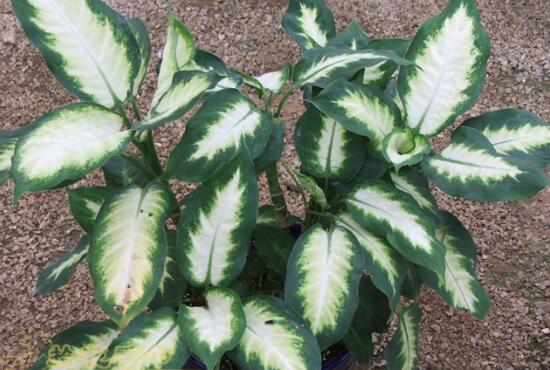
Ordinary indoor potted plants all need good insulation measures in winter, otherwise they will suffer cold damage, and Dieffenbachia is no exception. So in winter, if you want Dieffenbachia to overwinter safely, you need to take good insulation measures. So how do you care for Dieffenbachia in winter? For this, you can start with watering, repotting, temperature and other aspects. For details, read on.
II. Winter care methods for Dieffenbachia
1. Reasonable watering
Dieffenbachia likes a humid environment and cannot lack water during growth. Even in winter, it should be watered appropriately to keep the potting soil alternately dry and moist. Note: the potting soil must not be too dry, otherwise the Dieffenbachia leaves will turn yellow or even wither and die.
Winter watering method: to keep the potting soil moist and the air humid, gardeners should water Dieffenbachia once a week. In addition, to keep the leaf color vivid, while watering, also wash the leaves once with warm water.
2. Repot in October
How do you care for Dieffenbachia in winter? Besides watering, in October, that is, before the onset of winter, Dieffenbachia should also be repotted once. After repotting, water thoroughly, then place it in a shaded spot for a few days and move it into a greenhouse or indoors.
Repotting method: take Dieffenbachia out of its pot, then remove aged rhizomes and remaining dead leaves, then replant it in a soil mix of 2 parts leaf mold, 1 part peat and 1 part sand.
3. Regulating temperature
Dieffenbachia likes warmth and fears cold. To help it overwinter safely, after repotting in October, it should be moved indoors (to a place with ample light and good ventilation) for growing, and the room temperature should be kept at around 15°C.
Notes: indoors in winter, the temperature must not be lower than 10°C, otherwise the stem tip will rot; and once the room temperature is lower than 5°C, the plant will suffer cold damage. As for what to do when Dieffenbachia suffers cold damage, it was introduced earlier, so I will not say more here.
4. Pest and disease control
How do you care for Dieffenbachia in winter? Besides doing the above points well, you should also do a good job of pest and disease control. Its main diseases are leaf spot and anthracnose, and its main pest is scale insects. Once discovered, gardeners should immediately spray pesticide for control. As for what pesticide to spray, it is introduced in detail in the pest and disease control for Dieffenbachia, so I will not say more here.
Overall, Dieffenbachia is not hard to grow, but it is not cold-tolerant, so if you want Dieffenbachia to overwinter safely, everyone should pay special attention in winter. Of course, as long as you do the above points well, Dieffenbachia will grow very well. That is all the editor has to introduce about winter care for Dieffenbachia, and I hope it can help everyone.
Tulip Tulipa Tulip illustrated guide: how to grow tulips / how to propagate tulips
Tulip profileTulip Tulipa
Aliases: foreign lotus, grass musk, tulip fragrance, dry lotus, red-blue flower, purple described fragrance
Classification: bulbous flower
Family and genus: Plantae, Angiosperms, Monocotyledons, Liliales, Liliaceae, Tulipa
Full bloom period: spring
Tulip is a herbaceous plant of the genus Tulipa in the Liliaceae family, and is the national flower of Turkey, Kazakhstan and the Netherlands. English names: Flower of Common Tulip, Flower of Late Tulip. Traditional Chinese medicine names: Tulip in "Supplement to the Materia Medica"; Tulip in "Taiping Imperial Reader"; red-blue flower and purple described fragrance in "Compendium of Materia Medica". Tulips have 3-5 leaves, linear-lanceolate to ovate-lanceolate, with a single large and showy terminal flower, tepals red or mixed with white and yellow, sometimes white or yellow, 5-7 cm long and 2-4 cm wide, 6 stamens of equal length...
Tulip cultivation methods and precautions, introduction to tulips
Tulip is a herbaceous plant of the genus Tulipa in the Liliaceae family, and is the national flower of Turkey, Kazakhstan and the Netherlands. English names: Flower of Common Tulip, Flower of Late Tulip. Traditional Chinese medicine names: Tulip in "Supplement to the Materia Medica"; Tulip in "Taiping Imperial Reader"; red-blue flower and purple described fragrance in "Compendium of Materia Medica".
Tulips have 3-5 leaves, linear-lanceolate to ovate-lanceolate, with a single large and showy terminal flower, tepals red or mixed with white and yellow, sometimes white or yellow, 5-7 cm long and 2-4 cm wide, 6 stamens of equal length, filaments hairless, no style, and the stigma enlarged and cockscomb-shaped.
In plant taxonomy, the tulip is a type of bulbous herbaceous plant belonging to the genus Tulipa (scientific name: Tulipa) in the Liliaceae family. It is also called foreign lotus, dry lotus, grass musk, tulip fragrance ("Taiping Imperial Reader"), red-blue flower and purple described fragrance ("Compendium of Materia Medica"). Its place of origin stretches from southern Europe and western Asia all the way to Northeast China in East Asia. The well-known major exporting country the Netherlands first introduced tulips at the end of the 16th century. Because growing regions differ in latitude, the flowering periods vary, generally from late March to early May. Although there are more than 2,000 tulip varieties worldwide, large-scale producers grow only about 150. It is the national flower of the Netherlands.
Tulips originated in the ancient Western Regions of China and the ** area of Tibet. As early as more than 1,300 years ago, the great poet Li Bai of China's Tang Dynasty left the line "Lanling fine wine tulips, jade bowls filled with amber light" as clear evidence.
Later they spread through the Silk Road to Central Asia, and from Central Asia into Europe and around the world. At present they are grown all over the world, and are the national flower of the Netherlands, New Zealand, Iran, Turkey, Turkmenistan and other countries. They are called the queen of flowers of the world and have become a symbol representing fashion and internationalization.
The tulip's place of origin is the north and south coasts of the Mediterranean, Central Asia and Iran, Turkey, and eastward to Northeast China and other places. Its exact origin is difficult to verify, but it is now mostly believed to have originated in Ceylon and toward the southwest of the Mediterranean. Today tulips are commonly grown in every corner of the world, with cultivation being most prevalent in the Netherlands, where it has become commercial production. As early as the 17th century, in the imperial gardens of the Ottoman Empire, they were specially planted for the royal nobles to view.
The earliest tulips grown in Europe were introduced from Turkey. China began introducing them in the 19th century. Because growing regions differ in latitude, the flowering periods vary, generally from late March to early May. Although there are more than 2,000 tulip varieties worldwide, only about 150 are produced in large quantities.
In the flower beds of the White House in the United States and the Louvre Museum in France, countless tourists come every year to browse and admire its beauty. Not only that, in artistic flower arranging, it is also a most precious flower material. Its flower stalk can reach forty or fifty cm long, and whether arranged in a tall vase, a shallow bowl or a round jar, it looks especially elegant and refined, fresh and meaningful, and never tires the eye.
The tulip flowering period is April-May.
Morphological characteristics of tulips
Tulip is a perennial herb, with a flattened conical bulb bearing a brown skin covering, an oval bulb about 2 cm in diameter, an outer papery skin, and a few appressed hairs on the inner top and base.
The tulip stem and leaves are smooth and covered with a white bloom. Leaves 3-5, elliptic-lanceolate or ovate-lanceolate, 10-21 cm long and 1-6 cm wide; basal ones 2-3, relatively broad and large, stem ones 1-2.
The tulip flower is solitary at the top of the stem. Large and upright, forest-like, magenta, often black-purple at the base. The scape is 35-55 cm long; the flower is solitary, upright, 5-7.5 cm long; petals 6, obovate, bright yellow or purplish red, with yellow stripes and spots: stamens 6, free, anthers 0.7-1.3 cm long, basifixed, filament base broad; pistil 1.7-2.5 cm long, style split to the base in 3, recurved. Flower shapes include cup-shaped, bowl-shaped, ovate, spherical, bell-shaped, funnel-shaped, lily-flowered and so on, with single and double forms. Flower colors include white, pink, magenta, purple, brown, yellow, orange and so on, in varying shades, single-colored or bicolored.
Tulip flower shapes include cup-shaped, bowl-shaped, ovate, spherical, bell-shaped, funnel-shaped, lily-flowered and so on, with single and double forms. Flower colors include white, pink, magenta, purple, brown, yellow, orange and so on, in varying shades, single-colored or bicolored.
The tulip flowering period is generally March-May, with early, middle and late types. The capsule has 3 chambers, dehiscing along the back, with many seeds; the capsule dehisces along the back, and the seeds are flat.
Ecological habits of tulips
Tulips originated in the high mountain areas of Iran and Turkey. Due to the Mediterranean climate, tulips developed the characteristic of adapting to wet and cold winters and dry and hot summers, with summer dormancy, rooting and sprouting new buds in autumn and winter but not emerging from the soil, and needing to go through winter low temperatures before beginning extended growth to form stems and leaves around early February of the following year (at temperatures above 5°C), and flowering in March-April.
The suitable temperature for tulip growth and flowering is 15-20°C. Flower bud differentiation occurs during the storage period when the stems and leaves turn yellow and the bulbs are dug out of the pots and placed in a cool outdoor place to spend the summer. The suitable temperature for differentiation is 20-25°C, and must not exceed 28°C.
Tulips are long-day flowers and like a climate with ample sunlight, warm and humid winters, and cool and dry summers. They are very cold-hardy. In severe cold regions, if covered by thick snow, the bulbs can overwinter in the open field, but they fear intense summer heat. If summer comes early and midsummer is very hot, the bulbs will find it difficult to get through summer after dormancy.
Tulips require loose, fertile, well-drained, slightly acidic sandy loam, and dislike alkaline soil and continuous cropping.
Tulip cultivation techniques: conventional cultivation
Field planting requires well-drained sandy soil, pH 6.6-7. Deep plow and prepare the land, use decomposed cow dung and leaf mold as base fertilizer, and apply a small amount of phosphorus and potassium fertilizer, then plant in beds at a planting depth of 10-12 cm. Generally, topdressing is done after emergence, at the flower bud formation stage and after flowering.
Bulbs root in winter, and before spring flowering, topdress twice. They flower from late March to early April, and in early June the aboveground leaves turn yellow and the plants enter dormancy. During growth, watering is generally unnecessary; just keep the soil moist, and water appropriately in dry weather. The key points of cultivation and management are basically the same as those for hyacinth; it is just that tulip varieties easily hybridize and become mixed, so isolated planting should be noted. Tulip bulbs contain much starch, and are easily eaten by mice during storage, so storage should be watched.
Tulips are bulbous plants, and they need to go through a certain low-temperature stage and only after the flower stem has fully grown can they flower normally.
Conventional cultivation is the ordinary cultivation method, that is, a cultivation method in which tulip bulbs have not undergone cold treatment.
Preparation before cultivation: before planting tulips, a complete production plan needs to be made. The plan includes choosing and preparing the planting site, how to obtain tulip seed bulbs and preparing production tools, and for potted plants, preparing the potting soil mix and containers.
Cultivation key points
Tulip bulbs should be planted in deep, fertile sandy soil. Their root growth most dislikes waterlogging, so the chosen site must have smooth drainage. For planting beds, the bed width is generally..., the ditch depth is 30 cm, and on flat terrain the ditch should be dug deeper. If the soil in the first year of planting is rather clayey, 2 cubic meters of peat and 5 kg of compound fertilizer per 100 sq m can be used as base fertilizer for soil improvement. Tulips should not be continuously cropped; land where tulips have been planted in the previous one or two years is best not used for planting again. One month before planting tulips, the land should be deep-plowed and sun-exposed to kill pathogen spores and remove weeds. Then choose clear weather and drench with 100-fold 40% formalin solution (to a depth of more than 10 cm); after soil disinfection, cover with film for about one week. After removing the film, break the soil up finely and prepare for planting.
Planting: plant in sunny, well-drained sandy loam. Generally, planting can be considered when the soil temperature is steadily below 12°C. After deep plowing, apply decomposed cow dung and other phosphorus and potassium fertilizers (7-10 g phosphorus pentoxide and 13-15 g potassium oxide per sq m). The planting depth is about 2 times the height of the bulb, and the plant and row spacing is 2-3 times the transverse diameter of the bulb. After covering with soil, do not water again, but cover with straw to increase soil moisture and prevent soil crusting. When the young shoots have just emerged and unfolded leaves, apply 1 application of dilute nitrogen fertilizer; after budding, increase the fertilizer concentration (10% fertilizer, 90% water). During growth, watering is generally unnecessary; just keep the soil moist. If the weather is dry, water thoroughly 1-2 times (to a moistening depth of about 15 cm). For use as cut flowers, cut when the flower buds have completely changed color; the ornamental period in a vase is about 10 days.
Seed bulbs should be disinfected before planting. They can be soaked in potassium permanganate solution or formalin solution for 30 minutes, then dried and planted. The density for production planting can be controlled at 12×12 cm or 13×12 cm, with slight differences depending on the variety. Generally, varieties with strong upright leaves and short plants can be planted somewhat more densely.
Potted handling
If it is for exhibition planting, the spacing can be 20-25 cm, and the planting depth is 4-5 cm from the top of the seed bulb to the soil surface. After planting, water thoroughly once to prevent drying and dehydration. Tulips are mostly used for potted viewing, as ground cover plants and for medicinal use.
Cultivation method for seed bulbs treated at 5°C for 12 weeks: tulip seed bulbs that have undergone 5°C, 12-week low-temperature treatment have completed scale nutrient conversion and can be directly used for greenhouse pot planting. From November to December, use 5-inch to 6-inch pots, place them on the ground, 3-4 bulbs per pot, cover the bulbs with only a shallow layer of soil, preferably so that the bulb tips can be exposed at the pot soil surface. When planting, the soil moisture must be high, because roots grow fast, and not much water is needed. The optimum growth temperature is 15°C, keep it at 5°C-18°C, and it must not exceed 18°C; it will bloom in 5-6 weeks. In addition, ventilation in the greenhouse must be good, and no water droplets should appear on the greenhouse film. It can bloom in January-February when flower prices are high.
Planting method for seed bulbs treated at 9°C for 16 weeks: seed bulbs treated at 9°C are suitable for bed planting in greenhouses. Cover the bulbs with 2-5 cm of soil. The soil should be moist and loose. The planting density is 230 bulbs/sq m-250 bulbs/sq m (circumference s=11 cm-12 cm). The management method is the same as for 5°C tulips; however, flowering is 1 month later than for 5°C-treated bulbs. Plant in November-December, bloom in February-March, and they can be sold as fresh cut flowers or potted flowers.
Planting method for natural seed bulbs without low-temperature treatment: because natural seed bulbs have not undergone low-temperature treatment, nutrients have not been transferred to the flower primordium, and the flower bud nutrition is insufficient, so natural seed bulbs must be planted in the open field for natural cold treatment. When planting, deep-plow the planting site 30 cm to ensure the soil is loose. The planting density for seed bulbs differs according to the diameter of the bulb. Generally, the bulb burial depth should be 10-11 cm, and large bulbs can be planted 15 cm deep. The planting time should be from October to the end of November. Do not water after planting. If bulbs are planted after November 15, a thin layer of straw bags can be placed on top, and until May 1 of the following year, do not water; under normal circumstances, no fertilization is needed. If selling cut flowers, cut from the base of the flower stem; if for bulb propagation, cut from the flower neck. Dig the bulbs in June-July; large bulbs have 3-4 small bulbs around them. Separate the large and small bulbs, and do not break the bulb skin. Store bulbs of different sizes at different temperatures: small bulbs at 12°C-18°C, large bulbs at 18°C-20°C, and later store them according to different needs with 5°C, 9°C and natural bulb treatments.
The key points of cultivation and management are basically the same as those for hyacinth; it is just that tulip varieties easily hybridize and become mixed, so isolated planting should be noted. Tulip bulbs contain much starch, and are easily eaten by mice during storage, so storage should be watched.
Field management
Regulating temperature
The suitable growing temperature for tulips is 5-20°C, the optimum temperature is 15-18°C, and the plant's growth temperature should be kept at 0-25°C. The root growth temperature for tulips should be above 5°C and below 14°C, with around 10°C being especially best. The suitable temperature for flower bud differentiation is 17-23°C, and when it exceeds 35°C, flower bud differentiation will be inhibited. In addition, tulips are extremely cold-hardy and can withstand low temperatures of -35°C in winter, and begin to grow when the temperature remains above 8°C.
Water management
During cultivation, absolutely avoid excessive irrigation, but within one week after planting the water requirement is relatively high, so water enough. After germination the water requirement decreases, especially at flowering time when water must not be excessive. Watering should be done "little and often." If too dry, growth will be markedly delayed. During the tulip growing period, the air humidity is best kept at around 80%.
Light conditions
When the seed bulb germinates, the elongation of its flower bud will be inhibited by sunlight. Therefore, it must be planted deep and moderately shaded to prevent direct sunlight from adversely affecting seed bulb growth.
Soil and fertilization
Sandy loam is best, and the soil pH is best neutral to slightly alkaline. Tulips rather like fertilizer, so sufficient base fertilizer should be applied before planting. Generally, dried chicken manure or decomposed compost is used as base fertilizer and watered fully. 2-3 days before planting, carefully plow and harrow to ensure the soil is loose. After the seed bulb produces two leaves, apply 1-2 applications of liquid fertilizer. In the peak growing season, apply a balanced nitrogen, phosphorus and potassium compound fertilizer 3-4 times a month. Stop fertilizing at flowering, and after flowering apply 1-2 applications of liquid fertilizer of potassium dihydrogen phosphate or compound fertilizer.
Seed bulb storage
The storage conditions of seed bulbs directly affect flower bud differentiation within the bulb and the plant's flowering time. After harvest, seed bulbs should be placed in a ventilated, dry and cool place as much as possible. If conditions permit, in the high-temperature season of July-August, place the seed bulbs in a 15-17°C cold storage, then the bulbs will develop smoothly, and this can promote flower bud differentiation and development. If the seed bulbs are placed under high temperatures above 35°C, flower bud abortion and deformed development will occur.
Key maintenance points for tulips
Tulips are highly cold-hardy and can withstand low temperatures of -35°C in winter. They can also grow normally at 5-8°C, making them suitable for winter forcing cultivation.
Tulip forcing cultivation means breaking the dormancy of the flower primordium and leaf primordium through variable temperature treatment of the seed bulbs, eliminating factors that inhibit flower bud germination, and promoting flower bud differentiation, then through artificial heating, supplemental light and other measures, making tulips bloom outside their natural flowering period. On the market, 5°C bulbs and 9°C bulbs are common. We generally choose 5°C bulbs for forcing cultivation to bloom at Spring Festival.
Substrate preparation
First, prepare a high-quality substrate that both retains water and is breathable, with salinity that is not too high and not too acidic; the pH value should be no less than 6, and it should be free of pests, diseases and harmful substances. Seed bulbs should be planted very firmly in a sufficiently deep cultivation bed (at least 5 cm deep). In recent years we have used a mix of peat, decomposed soil and sand at 1:1:1 as the cultivation substrate, with good results. About half a month before planting, apply decomposed farmyard manure into the bed soil as base fertilizer, and add an appropriate amount of carbofuran and carbendazim (or drench and cover with 1% formalin for disinfection), water fully, and carefully plow and harrow before planting to ensure the soil is loose.
Planting
Because the soil temperature in the greenhouse is high, tulips will undergo late vernalization, and this will reduce the effect of the low-temperature treatment in forcing cultivation. Therefore, early planting is not as good as late planting; generally plant around two months before Spring Festival, about early to mid-November. Before planting, remove the brown bulb skin and soak in 500-fold 50% carbendazim solution for about two hours. The plant and row spacing is 9×10 cm. When planting, the top of the bulb should be level with or slightly below the soil surface. Proper shallow planting can advance flowering; sometimes when about 1/3 of the tulip bulb is exposed above the soil, flowering can be advanced by more than 5 days. After planting, water thoroughly to promote rooting.
Cultivation management temperature
Generally after one week, the seed bulbs begin to germinate. Before and during the seedling stage, keep the indoor temperature at 12-15°C during the day. If the temperature is too high, ventilate and cool promptly. At night it should not be lower than 6°C, to promote early rooting, strong rooting and robust seedlings. If the temperature is too high at this time, the plant stems will be weak and flower quality poor. After more than 20 days, when the plant has grown two leaves, increase the temperature promptly to make the flower buds leave the bracts in time. Keep the indoor temperature at 18-25°C during the day and above 10°C at night. Generally after another 20-plus days, the corolla begins to color. The first flower opens from late December to early January, and it takes 10-15 days to reach full bloom. At this time, place them in batches according to the different times flowers are needed; the higher the temperature, the earlier the flowering. Generally, after the corolla has completely colored, the plants should be placed in a 10°C environment for sale.
Light
Sufficient light is essential for tulip growth. Insufficient light will cause poor plant growth, bud drop, weak plants, lighter leaf color and a shortened flowering period. However, within more than half a month after potting, tulips should be properly shaded to help the seed bulbs grow new roots. In addition, at germination, the elongation of the flower bud is inhibited by light; after shading, the elongation of the flower bud can be promoted, preventing excessive early vegetative growth and legginess. After emergence, light should be increased to promote stem elongation, flower bud formation and coloring. In the later stage, after the flower buds have completely colored, direct sunlight should be prevented to prolong the flowering time.
Fertilization
Because the substrate is rich in organic fertilizer, no more topdressing is needed during growth. However, if nitrogen is insufficient and the leaf color becomes lighter or the plant grows insufficiently sturdy, then readily absorbed nitrogen fertilizers such as urea and ammonium nitrate can be applied, but the amount must not be large, otherwise it will cause legginess or even affect the plant's absorption of iron and cause iron deficiency (when iron is deficient, new leaves and flower buds all turn yellow, but old leaves remain normal). Applying liquid fertilizer during growth has a notable effect. Generally, from budding to flowering, spray potassium dihydrogen phosphate solution at a concentration of 2‰-3‰ once every 10 days, to promote large flowers and vivid color, and sturdy, upright flower stems.
Water
After planting, water thoroughly so that the soil and seed bulbs can fully and closely combine, which helps rooting. After sprouting, control water appropriately. When the leaves gradually extend, water can be sprayed on the leaf surface to increase air humidity. During the scape-extending stage and budding stage, ensure sufficient water supply to promote full flower development. After flowering, control water appropriately.
Others
Potted tulips are managed directly in pots, but because seed bulb quality varies, growth and flowering are uneven, affecting their commercial quality. So it is best to first plant them in the greenhouse soil, and after the corolla colors, pot them for management; this does not affect flowering quality and gives better results.
Among the flower colors, red flowers earliest and yellow latest, roughly about 10 days apart. In cultivation, planting times should be suitably staggered to ensure simultaneous flowering.
Tulip potting techniques: potted maintenance
Tulips can be planted in the ground or in pots. As for cultivation time, both planting methods can be carried out in late October.
For field planting, the plant and row spacing is 14-16 cm, with sufficient base fertilizer, a soil covering depth of about 4 cm, and a ditch depth of 15-20 cm; water after planting. Around germination and flowering, apply 2-4 applications of thin fertilizer.
For potting, choose plump, large bulbs; a 30 cm flowerpot can hold 3-5 bulbs. The top of the bulb should be level with the soil surface. After planting in autumn, bury the pot in the soil, then dig it out in spring, place it in a sunny, well-ventilated place, and with normal watering and fertilizing, it will bloom on time.
Cultivation experience
It requires growth in well-drained sandy loam rich in humus. A small amount of rotted barnyard manure and bone meal can be mixed in as base fertilizer.
It likes cool conditions but is highly adaptable; it can face wet and cold winters and also adapt to dry and hot summers. However, for overwintering through summer it should not exceed 27°C. If the temperature is too high, the leaves will become leggy, the leaf-to-flower ratio will be unbalanced, and flowering will be poor. The suitable growing temperature is 15-20°C, and it can grow normally above 8°C, but it can also withstand low temperatures of -14°C.
During the growing period, generally just keep it moist. Apart from appropriate watering in dry weather, large amounts of watering are generally unnecessary. In winter it mainly grows roots and grows slowly, so it may not be watered or only very little. Spring is the vigorous growth period for flower buds and leaves, so water appropriately. After the flowers fade, the main focus is bulb growth, so water should again be controlled appropriately.
With sufficient light, the flowers can bloom well and the ornamental period can be extended. With insufficient light, they will open poorly or even remain closed without opening.
At important growth stages such as after emergence, at flower bud formation and after flowering, topdressing should be carried out. Diluted liquids such as sesame paste residue, horse hoof water and ferrous sulfate can all promote growth. Do not use urea for topdressing.
For those aiming to grow bulbs, once the flower buds color, they should be removed immediately to avoid consuming nutrients. For those aiming at cut flower production, they can be cut only after the flower buds have completely changed color.
If flowers show stripes, it is caused by viral infection, and they should be immediately dug out and burned to avoid contagion and spread.
Forcing cultivation
To make them available for Spring Festival needs, choose early-flowering varieties and plant them in early October on the light-receiving side of a hotbed or greenhouse. Move them into a greenhouse in early December and sprinkle water once a day. Buds can appear in about 20 days. If earlier flowering is desired, the greenhouse temperature should be kept at 16-18°C, and all around should be covered so they do not see sunlight. After two weeks, place them in a sunny spot and cool them appropriately; they can bloom after six weeks.
Tulip hydroponic methods: hydroponic production methods
In hydroponics, a rooting nutrient solution must be used. After planting and adding water, place the planting tray in a rooting room at 5°C with a small amount of air flow. Replenish water in good time. For watering, tap water with a conductivity value of 1.5 ms/cm can be used, and rainwater can also be used. For varieties prone to leaf splitting, water with a conductivity value of 2 ms/cm should be used during the rooting stage.
Tulip is a perennial herbaceous plant of the Liliaceae family, and is welcomed by people because of its large flowers and bright colors. Because it sells well on the market, countries have devoted themselves to researching its cultivation techniques, and hydroponic cut flower production has gradually become popular among professional growers. China began introducing and trial-cultivating it in the 1990s.
Hydroponic experience
Choosing suitable and disease-free seed bulbs is the key to hydroponic production of tulip cut flowers.
After the seed bulbs are transported back, they must be stored in a well-adjusted cold storage at a temperature of 5°C and humidity within 80%. Check in time and select out seed bulbs with severe penicillium disease.
According to the time flowers are needed, choose and determine the cultivation time and planting method. For hydroponic cut flower cultivation, seed bulbs should be planted in disinfected, leak-proof needle trays, keeping the rooting temperature stable at 8°C and humidity between 60%-70%.
After about two weeks of rooting, ensure the roots are more than 3 cm long, then move the needle trays to the greenhouse. Control the temperature at 15-20°C and humidity at 60%-70%. Add nutrient solution so that the Ec value in the water is 1.5 ms to 2.0 ms, to facilitate rapid tulip growth.
In the early growth stage, to prevent diseases caused by filamentous fungi, spray pesticide 2 to 3 times. Choose low-toxicity, high-efficiency agents such as chlorothalonil, thiophanate and thiram, at a concentration of 750-1,000 times.
Spray foliar fertilizer in good time according to growth conditions, coordinating vegetative growth and reproductive growth.
During growth, due to root exudates and other environmental conditions, an oily film will form on the water surface of the needle tray. This will leave the root system lacking nutrient supply, causing the roots to turn brown. Therefore, change the water 2 to 3 times as conditions require.
When harvested finished cut flowers cannot be sent away in time, they must be placed in a cool, ventilated place, avoiding strong light, high temperature and low temperature that would affect cut flower quality.
Tulip propagation methods
Tulip propagation and cultivation generally mainly use separation of small bulbs, as follows: for a one-year-old mother bulb, after flowering 1 to 3 new bulbs capable of flowering the next year and 2 to 6 small bulbs sprout from the base of the bulb, while the mother bulb gradually dries up. The bulbs can be dug out, the soil removed and dried, and the young bulbs on the bulbs separated and stored in a ventilated place at 5 to 10°C. In autumn, the young bulbs can be planted in soil rich in leaf mold and with an appropriate amount of phosphorus and potassium fertilizer, with a plant and row spacing of 14 to 16 cm, a ditch depth of 15 to 20 cm, and a soil covering depth of 4 cm, which is suitable. But note: any young bulb that is round, though small, can also flower; if the young bulb is flat, it generally will not flower. After planting the young bulbs, water thoroughly, and thereafter just keep moist. The next spring, begin normal fertilizer and water management for the seedlings, and they will flower in 2 to 3 years. Seed propagation is generally used only in breeding and large-scale propagation, but it takes 4 to 5 years to flower.
Tulips are propagated by dividing small bulbs in autumn, from September to October. The mother bulb is annual, meaning it is renewed every year; it dries up after flowering, and beside it a new bulb and several bulbils are produced. In autumn, the new bulbs and bulbils can simply be separated and planted. They can also be propagated by sowing in autumn. The number of bulbils produced within the scales of the mother bulb varies with the cultivar and is also related to growing conditions. The swelling of the new bulb and bulbils is usually completed within one month after flowering.
Bulb division and sowing are commonly used for propagation.
Propagation by bulb division
After a season's growth, the mother bulb planted that year can simultaneously produce 1-2 large bulbs and 3-5 small bulbs around it. They can be planted separately according to bulb size; large bulbs can flower in the same year after planting, while small bulbils can also flower after 1-2 years of cultivation.
Propagation by sowing
Sowing propagation of tulips is mostly used for breeding new cultivars. The seeds are collected before the capsule matures and splits open, stored in sand until October, and then sown indoors in pots. Keep them moist; they will not germinate until the following spring. They flower in about 3-4 years.
Sowing propagation is generally used only for breeding and mass propagation. However, it takes 4-5 years to flower, so division of small bulbs is generally the main method, as follows: from a one-year-old mother bulb, after flowering, 1-3 new bulbs capable of flowering the next year and 2-6 small bulbs sprout from the base of the bulb, while the mother bulb gradually dries up. The bulbs can be dug out, cleaned of soil and dried, and the bulbils separated from the bulbs and stored in a ventilated place at 5-10°C; by September in autumn, the bulbils can be planted in soil rich in leaf mold with an appropriate amount of phosphorus and potassium fertilizer, with a plant and row spacing of 14-16 cm, a trench depth of 15-20 cm, and a covering soil depth of 4 cm as suitable; but note that if the bulbil is round, it can flower even if small, whereas if the bulbil is flat, it generally will not flower; after planting the bulbils, water them thoroughly, then just keep them moist normally; the following spring, begin normal fertilizer and water management for the seedlings, and they will flower in 2-3 years.
Flowering regulation of tulips
Tulips are cold-tolerant but not heat-tolerant; they can generally withstand low temperatures of -30°C, and enter dormancy in hot seasons. They normally prefer moist, cool climates and a sheltered, sunny environment, and grow better in neutral or slightly acidic soil. A mature tulip bulb contains three generations of bulbs, also called three generations of planting stock. The large bulb itself is the first-generation bulb, with fully differentiated flower organs, and flowers in the same year after planting. The second- and third-generation bulbs are bulbils, which can be cultivated into large bulbs.
Tulip bulbs must undergo a certain period of low temperature before they can flower. In their place of origin, winters generally provide sufficient low-temperature time, so tulip bulbs can obtain enough chilling treatment and can flower naturally in spring. Generally speaking, tulip bulbs used in production are treated at 5°C or 9°C, and after treatment the main planting methods are greenhouse cultivation and forcing in boxes.
In South China and other southern regions, tulip cultivation is limited by temperature, so planting is done during the three months from December to February of the following year. In December, temperatures in South China may still be very high; at this time tulips can be grown in cultivation boxes and placed in a cold storage at about 5°C for 2-3 weeks, and once the tulip bulbs have rooted and the shoots are about 1-2 cm long, they are moved out of the cold storage and placed in a growing shed to grow.
To ensure that tulips flower on schedule, during the growing period the daytime temperature should be kept at 17-20°C and the nighttime temperature at 10-12°C as much as possible; when temperatures are high, shading and ventilation can be used to lower the temperature, and when temperatures are too low, heating and increased light can be used to promote growth. Using water control to inhibit growth will cause a "dried flower" phenomenon. If high temperatures persist, box-grown plants can be moved into cold storage; note that the cold storage temperature should be around 8-10°C, and it is best to move them in when the flower stems are elongating, otherwise it easily causes poor flower bud development. Tulip flowering can also be regulated with plant growth hormones. For example, soaking tulip bulbs in gibberellin makes them flower in the greenhouse and can increase flower diameter.
Harvesting and fresh preservation
Harvesting and fresh preservation of cut flowers: once the buds are fully colored, they can be harvested for market. Those managed at a slightly lower temperature can color gradually; however, those forced to flower early at high temperature color poorly. At the same time, those that color late are easily damaged during transport and market transactions. Therefore, near flowering, avoid excessively high temperatures, and while providing sufficient shading, maintain good ventilation. When cutting flowers, the bulbs are easily pulled up, so forceps can be used to cut, keeping as much of the stem inside the bulb as possible. Cut flowers are sorted according to cultivar, plant height and flower size, and packed in boxes of 10 stems for transport. For vase preservation, a mixture of 10×10-6 algaecide ammonium, 2.5% sugar, and 10×10-6 calcium carbonate can be used, or a mixture of sugar, chlormequat and 8-hydroxyquinoline citrate.
Postharvest technology
Main characteristics of cut flowers: the longer the low-temperature forcing at night, the longer the vase life of the cut flowers.
Harvest and development stage: the best harvest time for tulips varies by cultivar. Generally, they are harvested when the flower is 1/2 colored. After harvest, immediately place them in an environment at 2°C and at least 85% relative humidity.
Vase life: vase life is only 3-4 days when short, and about 5-7 days when long.
Preservative treatment method: preservative solutions cause the flower stems to elongate too much and have little effect on extending vase life. Therefore, preservative solutions are generally not used.
Storage and transport technology: they can be stored dry (placed horizontally) or wet (placed vertically) at 2°C, with the flower heads tightly wrapped in plastic film, but long-term storage is not suitable. Some cultivars are harvested together with the bulbs at the green bud stage and can be stored at 0°C for 2-3 weeks.
Retailer and consumer handling methods
(1) Recut the flower stems, insert the cut flowers into water 15-20 cm deep, wrap the flower heads in plastic film, and rehydrate at room temperature until the cut flowers are firm.
(2) Cut flowers stored at 2°C have the longest vase life.
(3) Arrangements should be placed in a cool, windless environment and not near a stove. Tulips are phototropic, so indoor light should be evenly distributed to avoid stem bending.
(4) Do not place tulips and narcissus in the same container, otherwise the life of the tulips will be shortened. Tulips may cause red swelling of the skin of the hands, so handle them with care.
Disease control of tulips
The main diseases of tulips are Sclerotium rot, gray mold and breaking virus disease. The control methods are first to select virus-free bulbs as much as possible, and to disinfect the soil and bulbs, promptly burn diseased bulbs and diseased plants, and then spray with 5% benlate wettable emulsion at 2500 times every half month. The main insect pests of tulips are aphids and root mites; aphids are generally controlled by spraying 40% dimethoate emulsion at 1000 times.
Pathogen
TuBV is called tulip breaking virus. The virus particles are filamentous, 700×12-13 nm or 750-175×15 nm, with bundle-shaped or coiled inclusions; the thermal inactivation point is 65-70°C, the dilution end point is 0.00001, and the longevity in vitro at 18°C is 4-6 days. The virus has two strains, a severe strain and a mild strain. The former causes faded mottling on leaves and flower stalks. This virus is closely related to lily latent virus LSV. In addition, CMV, TRV, and TNV are also pathogens of this disease, and their plastids are all spherical. Tulip breaking virus can also harm lilies, Cape lily, yellow fritillary, and others.
Distribution area:
Disease characteristics: tulip breaking virus can be transmitted by sap, aphids and bulbs. The tulip round-tailed aphid mainly transmits the virus during bulb storage, but not during the growing period. In Shanghai and other places, most cultivars of imported Dutch planting bulbs can only be grown for 2-3 years, after which they gradually degenerate and become smaller, or even fail to flower; this virus is the main cause of the degeneration.
Control methods:
(1) Select disease-free bulbs as propagation material. For introduced tulip bulbs, virus elimination should be carried out centrally by combining shoot-tip culture with heat treatment, and virus-free propagation bases should be established to obtain virus-free seedlings before they enter the market.
(2) If tulip round-tailed aphids are found active during bulb storage, or if other aphids are found in the field, promptly spray 40% dimethoate emulsifiable concentrate at 1000 times to kill them and prevent virus transmission.
(3) Promptly pull out and remove diseased plants found in the field.
(4) Fields planted with tulips should preferably be far away from Lilium plants to prevent virus transmission.
(5) In areas with severe disease, it is safer in production to choose single-flowered tulip cultivars with relatively stronger disease resistance.
Preventing bulb rot in tulips
In tulip cultivation, bulb rot often occurs. The main reasons are: the dug bulbs were not dried and carry pathogen-bearing soil, and during storage the high temperature and high humidity are suitable for pathogens to reproduce and spread, causing the bulbs to become moldy and rot; when planting, soil carrying pathogens (mostly Fusarium) and inadequately decomposed fertilizer are used, and the bulbs are attacked by pathogens, causing bulb rot; the potting soil is clayey, and with excessive watering it causes waterlogging in the pot, leading to waterlogged rot of the bulbs; the bulbs are dug too early, and the new bulbs are not plump enough, which also easily causes rot. To prevent bulb rot, corresponding measures should be taken according to the above pathogenic factors.
Pest and disease control
The main pests and diseases of tulips include rot disease, sclerotinia disease, virus disease, thrips, foxglove aphid and root lice, among others.
After infection by sclerotinia disease, slightly raised round spots that are yellow or brown appear on the scales, and sclerotia are produced in the slightly sunken inner parts. When the pathogen infects the stem, it produces long elliptical lesions and produces sclerotia at the soil surface. Control methods: first, disinfect the soil before planting; second, immediately pull out diseased plants after onset and spray with zineb at 500 times.
Virus disease is one of the main causes of germplasm degeneration in tulips. There are many viruses that harm tulips, and two are common in China: mosaic virus and breaking virus. Mosaic virus causes yellow stripes or fine speckled spots on affected leaves and dark spots on petals; in severe cases the leaves rot, so aphids should be controlled promptly and weeds removed. Breaking virus causes pale yellow or grayish-white stripes or irregular spots on diseased leaves, sometimes forming a mosaic, and pale yellow or white stripes or irregular spots on petals, producing broken-color flowers on red or purple cultivars. Its control methods are the same as for general virus diseases, but the planting site should be far away from lilies.
Root lice feed on bulbs in the soil, bore into the epidermis and suck sap, causing plants to grow weak or to rot easily or inducing disease. Soaking infested bulbs in dilute limewater for 10 minutes, then taking them out and rinsing them clean, can kill root lice.
1. Tulip southern blight
Symptoms: the whole plant wilts, white mycelial strands or rapeseed-like tea-brown small sclerotia wind around the stem base, and the affected part turns brown, decays and rots. Large amounts of white mycelial strands and tea-brown fungal bodies can be seen on the soil surface.
Pathogen: Sclerotium rolfsii Sacc., called southern blight, belongs to the Deuteromycotina fungi. The hyphae are white and silky, spreading in a fan or radial shape, later gathering into mycelial strands or tangling into sclerotia. The sclerotia resemble rapeseeds, initially white to yellowish-white, later turning tea-brown, round, with a smooth surface. In addition, Corticium rolfsii (Secc.) Cyrzi. has also been reported as a pathogen of this disease.
Transmission routes: 1. The pathogen overwinters in the soil as sclerotia or mycelial strands with diseased residues, and when conditions are suitable the following year, the sclerotia or mycelial strands produce hyphae for primary infection. 2. The silky hyphae produced by plants extend to contact neighboring plants, or sclerotia are spread by water flow for secondary infection, causing the disease to spread and expand. The disease is severe in continuous cropping, heavy clay soil, low-lying terrain, or in years or seasons with high temperature and high humidity.
Control methods: promptly pull out and burn diseased plants when found; drench the diseased holes and neighboring plants with 5% jinggangmycin aqueous solution at 1000-1600 times, or 50% tianan aqueous solution at 500-600 times, or 20% tolclofos-methyl emulsion at 1000 times, or 90% dexon wettable powder at 500 times, pouring 0.4-0.5 L per plant (hole). In combination with plowing, apply 100-150 kg of lime powder per mu to make the soil slightly alkaline, which can inhibit the reproduction of the southern blight pathogen.
2. Tulip leaf spot
Symptoms: infected leaf buds develop poorly and become deformed and curled; leaves that grow after the young buds are damaged become curled. If the environment is humid, large amounts of gray mold-like conidia are produced on diseased tissues, affecting neighboring healthy plants and causing leaves to become diseased, so bulb growth is greatly affected. After flowers are damaged, white or light yellowish-brown lesions first appear, then they quickly wither and drop, or turn brown and dry up. Ring-like bands appear on the flower stalk, sometimes with a conidial layer on them. Every stage of this disease is highly prone to infecting flowers. Sclerotia form on the outer shell of diseased bulbs, or round to elliptical sunken spots appear on the outer scales, grayish-yellow in the center with brown edges, containing one to several sclerotia inside.
Pathogen: Botrytis tulipae Lind. belongs to the Deuteromycotina, and is common in tulip cultivation areas, becoming more severe in the rainy season. Transmission routes: hyphae and sclerotia remain in rotted bulbs and soil to overwinter. After diseased bulbs are planted, large amounts of conidia are produced on the damaged dead young buds, which are the source of infection for aboveground disease.
Disease conditions: the pathogen can produce conidia at 5°C and 90%-100% humidity. The disease is severe in spring with low temperatures and rainy, humid weather.
Control methods:
(1) Remove diseased bulbs before planting and practice crop rotation.
(2) Once buds or flower buds showing symptoms of this disease are found, remove them immediately to control disease development.
(3) Before planting, soak the bulbs in 2% formalin solution for 30 minutes, then dry and plant to reduce residual pathogens.
(4) During the growing period, spray 50% iprodione at 1000 times, or 50% procymidone at 2000 times, or 50% dimethachlon at 1000 times.
3. Tulip black rot
Symptoms: the bulbs become diseased. On the stem plate and stem surface, sometimes on the 2nd and 3rd scales, irregular lesions first yellowish-brown and later black appear, with a rough surface.
Pathogen: Pseudomonas andropogonis (Smith) Stapp, a Pseudomonas bacterium. The cells are rod-shaped, 1.9×0.8 microns in size, with 1-3 polar flagella. The suitable temperature for disease development is 20-25°C, with a minimum of 5°C.
Transmission routes: infected bulbs and diseased residues in the soil are the sources of infection.
Control methods: try soaking bulbs in agricultural streptomycin sulfate solution for disinfection.
4. Tulip mosaic disease (CMV)
Symptoms: leaves develop mosaic-like markings and chlorotic streaks, sometimes necrotic spots, and petals develop dark spots. Growth and development are inhibited. When symptoms are severe, the bulbs do not grow large, and the damage is great.
Pathogen: cucumber mosaic virus (CMV).
Transmission routes: this virus occurs on many crops and weeds and is transmitted non-persistently by aphids.
Control methods:
(1) Use healthy bulbs.
(2) Control aphids promptly.
5. Tulip wilt
Symptoms: dark brown and gray sunken spots appear on the outer scales of the bulb, then expand into medium-dark brown lesions. If diseased bulbs are placed in a warm, humid place, white or pink hyphae and conidia grow on them, causing the diseased tissues to shrink and harden. After the bulb base is damaged, rapidly developing lesions can spread over all scales, and ethylene produced by diseased scales can cause healthy bulbs to exude gum, affecting growth. Leaves on the bulbs show premature aging, and some leaves appear upright and gradually turn a characteristic purple. The flowers produced are thin and small, deformed, or even withered. In a greenhouse, infected plants will yellow and die prematurely.
Pathogen: Fusarium oxysporum Schl. f. sp. tulipae Apt.; microconidia 5-12×2.2-3.5 microns, macroconidia with 3-5 septa, 30-60×3.5 microns in size.
Control methods:
(1) Appropriately delay planting and dig bulbs early to avoid the high-temperature period as much as possible, so as to prevent rampant damage by the pathogen.
(2) Healthy bulbs should be stored separately in a ventilated, cool place (below 15°C).
(3) Do not plant too densely, and promptly remove diseased plants found during the growing period.
(4) Within 48 hours of digging out the bulbs, soak them in 50% benlate wettable powder aqueous solution for 15-30 minutes, then dry and store.
(5) Plant disease-free bulbs and practice a three-year rotation system.
6. Tulip breaking virus disease
Symptoms: the main symptoms appear on the flowers. The color of the petals in the same flower changes to different degrees of depth: some colors deepen, some remain normal, and some become lighter. Some become mottled, and some become striped. Affected leaves develop lighter-colored spots or stripes, and in many cultivars the anthocyanin on the outer side of the first leaf shows irregular stripes.
Pathogen: tulip breaking virus (Tulip Breaking Virus, TuBV); the thermal inactivation point of the virus is 65-70°C.
Transmission routes: it overwinters and oversummers as sclerotia in bulbs and soil. During the growing period it is transmitted by aphids. Knives and scissors used when cutting flowers can also transmit it.
Control methods:
(1) Select virus-free plants as propagation material.
(2) Promptly remove diseased plants.
(3) Spray 40% dimethoate emulsifiable concentrate at 1000 times, or 40% omethoate emulsifiable concentrate at 1000 times, or 2.5% rotenone at 800 times to control aphids.
(4) When cutting flowers, knives and scissors should be disinfected by heating or washed clean with detergent before use.
Causes of blind branches and blind flowers
Tulip belongs to the Liliaceae family, Tulipa genus, a perennial bulbous herbaceous plant. It has an upright plant shape and large, colorful flowers, with high ornamental value. However, if not cared for properly, tulips are prone to developing blind branches and blind flowers.
Blind flower symptoms are shown as normal development of branches and leaves; in weak-growing plants, the flower bud loses water and appears white, pointed like a leaf tip, and the flower stem shrinks; in strong-growing plants, the flower stem is short, the petals remain green or white, and they curl together with the stamens and pistils and cannot open fully. A blind branch means the aboveground part of the plant has only one oversized leaf, with no leafy branch and certainly no flower branch.
The causes of their formation are as follows
Related to cultivar, biological characteristics and cold treatment time
Because tulips have been tempered over a long period by the harsh natural conditions of their place of origin, they have not only developed the cultivar characteristic of being cold-tolerant but not heat-tolerant, but also possess the biological characteristic of requiring a certain period of low-temperature treatment before stems and leaves grow fully and flowering can occur. In northern China, planting in the open field in autumn and winter can satisfy the low-temperature requirement, and they flower in April-May of the following year. Using this characteristic to subject tulip bulbs to 9-5°C low-temperature treatment allows forcing cultivation and year-round flower supply. The blind flower phenomenon in production is mainly caused by bulbs not having undergone low-temperature vernalization or having too short a cold treatment time, so they have not reached the flowering requirement.
Related to bulb size and intermediate temperature
In production, bulbs above 12 cm are mostly used as planting stock; such bulbs have fully developed flower buds and mostly do not show blind flowers; bulbs below 10-11 cm are mostly used for open-field planting, and after one year, once the flower buds are fully developed, they can also flower normally; if used for forcing cultivation, the blind flower rate is relatively high. This is mainly because most of the flower buds of planting stock of this size have not yet fully developed, and before cold treatment they must be treated at an intermediate temperature of 17-20°C for 1-3 weeks longer than bulbs with a diameter of 12 cm. If the planting stock is uneven in size, the intermediate temperature treatment is improper, and forcing cultivation is then carried out, and fertilizer supply is insufficient during vegetative growth, blind branches and blind flowers easily appear. Therefore, producers are reminded that in large-scale production, bulb specifications should be strictly selected according to different cultivation methods.
Effects of human factors
First, when removing the bulb skin before planting, try not to damage the stem buds, so as to reduce the occurrence of blind branches. Second, extreme high temperatures caused by humans during storage and transport, such as excessive heat dissipation from the bulbs themselves or from other fruits, vegetables, flowers and engines, cause ethylene production within the bulbs. When the ethylene concentration reaches 0.1 dpm, it causes bud necrosis, and after planting a large number of blind branches will appear.
Effects of other factors
For example, incorrect watering during cultivation, excessive humidity in the greenhouse, and diseased planting stock causing root asphyxiation mean there is even less yield to speak of.
Disease control of tulips (additional) pest and disease control
The pathogens of tulip pests and diseases can be carried by bulbs, or carried by soil and infect bulbs; they mostly occur in high-temperature, high-humidity environments. The main diseases include stem rot, soft rot, breaking virus disease, damping-off, and blind buds, and the insect pests are mostly aphids.
Control methods
Carry out thorough soil disinfection before planting, choose virus-free bulbs for cultivation as much as possible, promptly dig out and destroy diseased plants when found, and apply fungicide 1-2 times during greenhouse growth for better results; maintain good ventilation to prevent high temperature and high humidity; when aphids occur, spray 3% natural pyrethrin at 800 times.
Breaking virus disease
Tulip breaking virus disease, also called tulip white stripe disease, occurs in all tulip production areas and is one of the important causes of tulip bulb degeneration. The disease mainly infects tulip leaves and corollas. Affected leaves develop light green or grayish-white streaks, sometimes forming a mosaic. Petals are deformed, and pale yellow or white stripes or irregular spots appear on the petals of single-colored flowers. Affected bulbs degenerate and become smaller, plants grow poorly and become dwarfed, and flowers become smaller and deformed. The pathogen is tulip breaking virus (Tulip breaking virus, TuBV).
The virus overwinters in diseased bulbs and becomes the source of infection the following year, transmitted non-persistently by green peach aphids and other aphids. This virus can also harm lilies, and after infection lilies show mosaic or latent symptoms. Under natural cultivation conditions, double-flowered tulips are more susceptible to the disease than single-flowered tulips.
1. Control aphids and spray insecticides regularly to reduce transmission vectors.
2. Strengthen quarantine to control the expansion and spread of the disease. Pull out diseased plants immediately when found. Avoid planting too close to lilies to prevent mutual infection.
Preventing bulb rot
In tulip cultivation, bulb rot often occurs. The main reasons are: the dug bulbs were not dried and carry pathogen-bearing soil, and during storage the high temperature and high humidity are suitable for pathogens to reproduce and spread, causing the bulbs to become moldy and rot; when planting, soil carrying pathogens (mostly Fusarium) and inadequately decomposed fertilizer are used, and the bulbs are attacked by pathogens, causing bulb rot; the potting soil is clayey, and with excessive watering it causes waterlogging in the pot, leading to waterlogged rot of the bulbs; the bulbs are dug too early, and the new bulbs are not plump enough, which also easily causes rot. To prevent bulb rot, corresponding measures should be taken according to the above pathogenic factors.
Sclerotinia disease
After infection, slightly raised round spots that are yellow or brown appear on the scales, and sclerotia are produced in the slightly sunken inner parts. When the pathogen infects the stem, it produces long elliptical lesions and produces sclerotia at the soil surface. Control methods: first, disinfect the soil before planting; second, immediately pull out diseased plants after onset and spray with zineb at 500 times.
Virus disease
Virus disease is one of the main causes of germplasm degeneration in tulips. There are many viruses that harm tulips, and two are common in China: mosaic virus and breaking virus. Mosaic virus causes yellow stripes or fine speckled spots on affected leaves and dark spots on petals; in severe cases the leaves rot, so aphids should be controlled promptly and weeds removed. Breaking virus causes pale yellow or grayish-white stripes or irregular spots on diseased leaves, sometimes forming a mosaic, and pale yellow or white stripes or irregular spots on petals, producing broken-color flowers on red or purple cultivars.
Rot disease
This disease mainly harms tulip bulbs and plants. After bulbs are infected, water-soaked brown spots first appear, after which the bulbs soft-rot. After plants are infected, the leaf tips and leaf margins of the lower leaves fade, the stem turns purple, the stem base shrinks, and then the plant dies. Control methods: during bulb storage, avoid high temperature and high humidity, pay attention to ventilation, and avoid continuous cropping. Promptly dispose of diseased plants and diseased bulbs when found. In the early stage of infection, promptly spray 70% thiophanate at 1000 times.
Root lice
They feed on bulbs in the soil, bore into the epidermis and suck sap, causing plants to grow weak or to rot easily or inducing disease. Soaking infested bulbs in dilute limewater for 10 minutes, then taking them out and rinsing them clean, can kill root lice.
Damping-off
The flower stem or the plant lodges. The cause is excessively high relative humidity in the greenhouse, or poor rooting of the bulbs leading to reduced water uptake. Control method: in management, do not expose the plants to excessively low temperatures, and do not let the plants grow too quickly in high temperatures; ensure the root system is normal and avoid excessively high relative humidity (above 80%).
Blind bud
The flower bud loses water, the petals remain green, the leaf tips turn white, the stamens and pistils dry up, and the flower cannot open fully. The cause is insufficient cold treatment, temperatures that are too high during storage and transport, relative humidity that is too high in the greenhouse, and improper watering methods that suffocate the roots, etc. Control method: strictly prevent the above phenomena at every stage.
Root rot
In mild infections, part of the root system rots; severe infections cause the flowers to wilt. Infected roots usually become waxy and turn the soil around the roots brown, and finally the entire root system turns brown. The cause is infection by Pythium. Control method: disinfect the soil before planting. Promptly remove heavily infected bulbs. Ensure the greenhouse soil has good soil structure and drainage. For the first two weeks after planting, keep the greenhouse temperature at 10°C or below.
Soft rot
In the early stage of infection, the bulb tissue becomes soft and pink and releases a distinctive odor; in the later stage, soft rot manifests as the plant stopping growth, leaf tips turning yellow, and flowers dehydrating, etc. The cause is infection by Pythium. Control method: thoroughly disinfect and sterilize the bulbs before planting and disinfect the soil. Ensure the greenhouse soil has good soil structure and drainage. Promptly remove infected plants and disinfect the affected soil.
Scald
Water-soaked green spots appear on flowers and leaves and gradually become large white or brown spots; in severe cases they can cause the plant not to develop or can hinder flowering. The cause is infection by Botrytis. Control method: remove already-infected bulbs before planting and disinfect the soil. Apply routine sterilization treatment to infected soil. During cultivation, keep the plant leaves dry, especially at night. It is best to water directly onto the soil.
Southern blight
Symptoms: the whole plant wilts, white mycelial strands or rapeseed-like tawny small sclerotia wind around the stem base, and the affected part turns brown, rots and decays. Large amounts of white mycelial strands and tawny fungal bodies are visible on the soil surface.
Pathogen: Sclerotium rolfsii Sacc., called the southern blight fungus, a fungus of the Deuteromycotina. The hyphae are white and silky, spreading in a fan shape or radially, later gathering into mycelial strands or tangling into sclerotia. The sclerotia resemble rapeseeds, initially white to yellowish white, later turning tawny, round, with a smooth surface. In addition, Corticium rolfsii (Secc.) Curzi has also been reported as a pathogen of this disease.
Transmission route
The pathogen overwinters in the soil as sclerotia or mycelial strands with diseased residues; when conditions are suitable the following year, the sclerotia or mycelial strands produce hyphae for primary infection.
The silky hyphae produced by the plant extend to touch neighboring plants, or sclerotia are spread by water flow for secondary infection, causing the disease to spread and expand; the disease is severe in continuous cropping, or with heavy clay soil, or in low-lying terrain, or in years or seasons with high temperature and high humidity.
Control method: when diseased plants are found, promptly pull them out and burn them; drench the planting holes and neighboring plants with a 1000-1600 times dilution of 5% Jinggangmycin aqueous solution, or a 500-600 times dilution of 50% Tian'an aqueous solution, or a 1000 times dilution of 20% tolclofos-methyl EC, or a 500 times dilution of 90% dexon wettable powder, sprinkling and drenching 0.4-0.5 liters per plant (hole). In conjunction with plowing, mix in 100-150 kg of lime powder per mu to make the soil slightly alkaline, which can inhibit the reproduction of the southern blight pathogen.
Brown spot
Symptoms: infected leaf buds develop poorly and become deformed and curled; the leaves that grow from damaged young buds become curled. If the environment is humid, large amounts of gray mold-like conidia are produced on the diseased tissue, affecting neighboring healthy plants and causing leaf infection, so bulb growth is greatly affected. After flowers are affected, white or light yellowish-brown lesions first appear, then they quickly wither and drop, or turn brown and dry up. Ring-like bands appear on the flower stalk, sometimes with a layer of conidia on them. Every stage of this disease is highly likely to infect flowers. Sclerotia form on the outer shell of diseased bulbs, or round to oval sunken spots appear on the outer scales, grayish yellow in the center with brown edges, containing one to several sclerotia inside.
Pathogen: Botrytis tulipae Lind., belonging to the Deuteromycotina, commonly found in tulip-growing areas, and more severe in the rainy season. Transmission route: hyphae and sclerotia remain in rotted bulbs and soil to overwinter. After diseased bulbs are planted, the damaged and dead bulbs produce large amounts of conidia on the young buds, which are the source of infection for aboveground disease.
Conditions for disease occurrence: the pathogen can produce conidia at 5°C and humidity of 90%-100%. The disease is severe in spring when temperatures are low and there is much rain and humidity.
Control method
Remove diseased bulbs before planting and practice crop rotation.
Once buds or flower buds showing symptoms of this disease are found, remove them immediately to control the development of the disease.
Before planting, soak the bulbs in a 2% formalin solution for 30 minutes, then dry them and plant, to reduce residual pathogens.
During the growing period, spray a 1000 times dilution of 50% iprodione, or a 2000 times dilution of 50% procymidone, or a 1000 times dilution of 50% dimethachlon.
Black rot
Symptoms: the bulb becomes diseased. On the stem plate and stem surface, sometimes on the 2nd and 3rd scales, irregular lesions initially yellowish brown and later black appear, with a rough surface.
Pathogen: Pseudomonas andropogonis (Smith) Stapp, a Pseudomonas bacterium. The cells are rod-shaped, measuring 1.9*0.8 micrometers, with 1-3 polar flagella. The optimum temperature for disease occurrence is 20-25°C, with a minimum of 5°C.
Transmission route: infected bulbs and diseased residues in the soil are the sources of infection.
Mosaic disease
Symptoms: mosaic-like markings and chlorotic streaks appear on the leaves, sometimes necrotic spots occur, and dark spots appear on the petals. Growth and development are inhibited. When symptoms are severe, the corms do not grow large and the damage is great.
Pathogen: Cucumber mosaic virus (CMV).
Transmission route: this virus occurs on many crops and weeds and is transmitted non-persistently by aphids.
Control method:
Use healthy bulbs.
Control aphids promptly.
Fusarium wilt
Symptoms: dark brown and gray sunken spots appear on the outer scales of the bulb, later expanding into medium to dark brown lesions. If the diseased bulb is placed in a warm, humid place, white or pink hyphae and conidia grow on it, causing the affected tissue to shrink and harden. After the bulb base is affected, rapidly developing lesions can spread across all scales; the ethylene produced by diseased scales can cause healthy bulbs to exude gum, affecting growth. The leaves on the bulbs show premature aging, and some leaves stand upright and gradually turn a distinctive purple. The flowers that grow are thin and small, deformed, or even withered. In a greenhouse, infected plants will turn yellow and die prematurely.
Pathogen: Fusarium oxysporum Sch1. f. sp. tulipae Apt.; microconidia 5-12*2.2-3.5 micrometers, macroconidia with 3-5 septa, measuring 30-60*3.5 micrometers.
Control method:
Delay planting appropriately and dig up the bulbs early, avoiding the high-temperature period as much as possible, so as to prevent rampant damage by the pathogen.
Healthy bulbs should be stored separately in a ventilated, cool place (below 15°C).
Do not plant too densely, and promptly remove diseased plants found during the growing period.
Within 48 hours of digging up the bulbs, soak them in a water solution of 50% benomyl wettable powder for 15-30 minutes, then dry and store them.
Plant disease-free bulbs and practice a three-year crop rotation system.
Color-breaking petal disease
Symptoms: the main symptoms appear on the flowers. On the same flower, the petal color shows varying degrees of change; some colors deepen, some remain normal, some become lighter, etc. Some color-breaking forms mottling, some forms stripes. Affected leaves show lighter-colored spots or stripes, and in many varieties the anthocyanin pigment on the outer side of the first leaf shows irregular stripes.
Pathogen: Tulip breaking virus (Tulip Breaking Virus, TuBV); the lethal temperature for the virus is 65-70°C.
Transmission route: it overwinters and oversummers as sclerotia in bulbs and soil. During the growing period it is transmitted by aphids. Knives and scissors used for cutting flowers can also transmit it.
Control method:
Select virus-free plants as propagation material.
Promptly remove diseased plants.
Spray a 1000 times dilution of 40% dimethoate EC, or a 1000 times dilution of 40% omethoate EC, or an 800 times dilution of 2.5% rotenone to control aphids.
When cutting flowers, the knives and scissors should be disinfected by heating or washed clean with detergent before use.
Cultivar classification of tulips
There are many tulip cultivars, about more than ten thousand. Flower shapes include cup type, bowl type, egg type, ball type, lily-flowered type, double-flowered type, etc. Flower colors include white, pink, purple, brown, yellow, orange, etc., in varying shades, single-colored or multi-colored. Flowering periods include early, mid, and late. Although the cultivars are extremely rich, like hyacinths, they are not easy to cultivate successfully in many places in our country and often degenerate.
Today, after long-term crossbreeding and cultivation by horticulturists, there are more than 8,000 cultivars worldwide, of which about 150 are produced in large quantities. It is brightly colored and highly varied, with red, yellow, and purple being the most popular. For example, a yellow flower with red dots sprinkled on the petals is called "King's Blood", a red flower with stripes distributed on the petals is called "Olympic Torch", and a red flower with petals curling around each other is called "Lover's Hot Kiss", etc. Carotenoids turn the petals bright orange and yellow; anthocyanins bring light pink, rose red, and deep purple; tiny air bubbles between petal cells make the flower appear crystal-clear pure white. As for black tulips, the most classic cultivar is named "Queen of Night", and its color is produced by the projection of cell protrusions; the flowers of cultivars such as "Diane's Widow", "Peerless Beauty", and "Black Queen" produced in the Netherlands are not pure black.
By flower shape variation
Cup type: the corolla is cup-shaped, including Cottage tulips, Darwin tulips, and Darwin hybrid tulips;
Bowl type: the corolla is shallow plate-shaped and bell-shaped, with many small flowers, including waterlily tulips;
Lily type: the petal tips gradually taper, the corolla resembles a lily flower, including lily-flowered tulips;
Ball type: the corolla is spherical, being the double-flowered varieties among Cottage tulips and Darwin hybrid tulips.
By early or late flowering
Mainly based on early or late flowering, tulips are divided into: early-flowering types. They flower early, blooming in March to April, including early-flowering single series, early-flowering double series, Mendel series, and Triumph series; late-flowering types. They flower late, from late April to early May, including Darwin series, Darwin hybrid series, Breeder series, lily-flowered series, Cottage series, Rembrandt series, Bizarre series, Parrot series, Bijbloemen series, Beyer series, Peony series species and hybrids.
Classification by color series
1. Red series
Most Madeleine: deep red;
Parel van Rijkdaal: initially orange-red, soon becoming scarlet
Lorado: bright red with white edges;
Professor: bright red
Kees Nelis: deep red with bright yellow edges
Burgundy: scarlet
General Eisenhower: bright red
Preludium: bright peach pink
Hardy Elite: scarlet
Streak of Bim: purplish red
Rose Beauty: deep peach.
2. Yellow series
Héti Fúzes: bright yellow
Gold Medal: dark lemon yellow
Belojiulu: deep yellow
Yellow Flight: bright yellow.
3. White series
Mozart: white with red edges
Player: pure white
Zuma: white base with red edges
Alobiro: pure white, etc.
Although tulip cultivars are extremely rich, like hyacinths, they are not easy to cultivate successfully in many places and often degenerate.
Classification by color
Overall, the flower language of tulips is universal love, thoughtfulness, elegance, wealth, capability, and intelligence.
1. Tulip (red) Tulipa gesneriana, Liliaceae, Tulipa
The tulip is the national flower of the Netherlands. From 1634 to 1637, there was a period known in Dutch history as "Tulip Mania". New and rare tulip cultivars were bought and sold at high prices, becoming investment objects that people competed to pursue.
Flower language: confession of love
Flower-giving etiquette: place several red tulips on square-shaped stiff backing paper, fix the positions with adhesive tape, carefully wrap with transparent plastic paper, and decorate the four corners with golden satin ribbons to add a sense of elegance.
2. Tulip (yellow) Tulipa gesneriana, Liliaceae, Tulipa
In Europe and America, yellow flowers are usually not very popular, and the related flower languages also carry relatively negative meanings. In fact, clear yellow contains the joy of spring; how could such eye-catching bright flowers not make people feel fondness?
Flower language: hopeless love
Flower-giving etiquette: because tulip stems have quite a beautiful curve, it is best to use slightly larger wrapping paper with a white background pattern; tie 4-5 long ones into a bouquet, and the ribbon must be yellow.
3. Tulip (white) Tulipa gesneriana, Liliaceae, Tulipa
Origin of the name: when the Australian ambassador who came to Turkey in the 16th century first saw this flower, he asked the Turks beside him for its name, and the answer was: tulip. In fact, this pronunciation referred to the Turkish turban; that Turk misunderstood the ambassador's meaning, but the flower name was thus produced and has continued to be used.
Flower language: love that has passed away
Flower-giving etiquette: just use a few white tulips to make a bouquet, without adding other decorations. Wrap the outside with pink gauze, then gently tie it with a few thin red ribbons.
Crossbreeding and cultivation
After long-term crossbreeding and cultivation by horticulturists, there are more than 8,000 cultivars worldwide. About 150 are produced in large quantities, among which red, yellow, and purple are the most popular.
The new cultivar Guotai tulip was discovered in 1999 by the Dutchman Jan Carol; the flower is overall deep purple, feathery, and parrot-shaped. On March 24, 2014, China's First Lady Peng Liyuan, invited by the Dutch royal family, named this new purple parrot-shaped tulip "Guotai". "Guotai" gives this purple tulip a brand-new meaning of world peace, national prosperity, and people's well-being. It has now become a flower used for national foreign affairs activities, large celebrations, Chinese and foreign flower exhibitions, high-end hall decoration and display, and high-standard ceremonial gifts.
A yellow flower with red dots sprinkled on the petals is called "King's Blood", a red flower with stripes distributed on the petals is called "Olympic Torch", and a red flower with petals curling around each other is called "Lover's Hot Kiss", etc.
Carotenoids turn the petals bright orange and yellow; anthocyanins bring light pink, rose red, and deep purple; tiny air bubbles between petal cells make the flower appear crystal-clear pure white.
As for black tulips, the most classic cultivar is named "Queen of Night", and its color is produced by the projection of cell protrusions; the flowers of cultivars such as "Diane's Widow", "Peerless Beauty", and "Black Queen" produced in the Netherlands are not pure black.
Species and hybrids:
Koufmaniana Varieties and Hybrids, also called waterlily tulip type: corolla bell-shaped, flowering early, leaves often striped.
Fosteriana Varieties and Hybrids: leaves broad with obvious purplish-red stripes, corolla cup-shaped.
Greigii Varieties and Hybrids: the species has purple-brown striped leaves, corolla bell-shaped, and the flowers of hybrids with Darwin tulips are extremely large.
Other species, varieties and hybrids: such as Tulipa pulchella, Tulipa clusiana, Tulipa acuminata, Tulipa tarda, etc.
Artificially hybridized types
Tulips are hybrids developed through nearly a hundred years of artificial hybridization with the participation of multiple parents, with as many as 8,000 cultivars. Flower shape, flower color, flowering period, and plant type vary greatly. In 1981, tulips were divided abroad into 4 classes and 15 groups.
I. Early-flowering class:
Single early group: plant height 20-25 cm.
Double early group.
II. Mid-flowering class:
Triumph Tulip: large flowers, single, plant height 45-55 cm
Darwin Hybrid Group: large, cup-shaped flowers in vivid colors, plant height 50-70 cm.
III. Late-flowering group:
Single Late Group: plant height 65-80 cm, cup-shaped flowers, many cultivars, with a wide range of flower colors, such as 'Queen of Night', which is purple, etc.
Lily-flowered Tulips: petal tips pointed, opening flat and spreading, resembling lily flowers.
Fringed Tulips: petal edges have crystalline fringed trim.
Viridiflora Tulips: part of the perianth turns green.
Rembrandt Tulips: the corolla has differently colored streaks.
Parrot Tulips: petals twisted, with jagged fringed edges.
Double Late Tulips, also called Paeony Flowered Tulips.
IV. Botanical Species and Hybrids:
Koufmaniana Varieties and Hybrids, also called water-lily-flowered tulips: corolla bell-shaped, early flowering, leaves often striped.
Fosteriana Varieties and Hybrids: leaves broad with obvious purplish-red stripes, corolla cup-shaped.
Greigii Varieties and Hybrids: the original species has purplish-brown striped leaves, bell-shaped corolla, and hybrids with Darwin tulips have extremely large flowers.
Other species, varieties and hybrids: such as Tulipa pulchella, Tulipa clusiana, T. acuminata, T. tarda, etc.
Among the above groups, groups 1-11 were formed after multiple hybridizations and are the common tulips. Groups 12-15 are wild species, varieties or hybrids, whose original species characteristics are still obvious, so the parent species names are still used as the group names.
Distribution areas of tulips
Tulips originated in the high mountain regions of Tibet, China, Iran and Turkey. This species is a widely cultivated ornamental flower, and because of its long history, it has many cultivars.
Tulips originated in the coastal areas north and south of the Mediterranean, Central Asia, Iran, Turkey, and eastward to northeast China and other places. The exact origin is difficult to verify, but it is now mostly considered to be Sri Lanka and the southwestern direction of the Mediterranean. Today tulips are commonly planted in every corner of the world, with the Netherlands being the most prevalent for cultivation, becoming a commercial production. They are also widely cultivated in gardens throughout China.
China's tulip resources are mainly concentrated in the northwest region. On the wastelands and hills of Tibet, the most commonly seen is the Tibet tulip, which blooms yellow flowers in early spring. The most widely distributed wild tulip in China is the Chinese star of Bethlehem (Amana edulis), which can be seen on hillsides and even in parks in East China and Central China.
In 1593, the first tulip bulb was imported from Constantinople (present-day Turkey) by a Dutch merchant named Guesters. It was later widely cultivated in China.
Landscape uses of tulips
Tulips are important spring bulb flowers, suitable for cut flowers or for arranging flower beds and flower borders. They can also be planted in clumps on lawns or under the shade of deciduous trees. Medium and short cultivars can be potted. In landscapes they are mostly used to arrange flower beds or planted in masses on lawns, in woods, and by water to form overall color-block landscapes.
Uses and purposes of tulips: ornamental value
Tulips are world-famous bulb flowers and also excellent cut flower varieties. The flowers are sturdy and upright, the leaves are elegantly plain and beautiful, and the lotus-like flowers are dignified and moving, endearing them to people. In Europe and America they are regarded as a symbol of victory and beauty, and many countries such as the Netherlands, Iran and Turkey treasure them as their national flower.
Pot cultivation use
Tulip flowers resemble lotus flowers, with many colors and rich, gorgeous hues. They are world-famous bulb flowers. In European and American novels and poetry, they are regarded as a symbol of victory and beauty, and can also represent grace and elegance. They are suitable for embellishing courtyards, as cut flowers and for pot cultivation.
In China, tulips have three main uses:
1. Landscape exhibition arrangement
The characteristic of tulips is that when the same cultivar is cultivated in the same area, its flower stem length, flowering time, flower color and flower shape are very uniform, which is the main reason they are generally welcomed; second is their rich and gorgeous flower colors; third is their large flowers and unusual traits; fourth is their wide variety of cultivars, with different cultivars differing in flower color, flower shape, flower posture, plant height, leaf shape and leaf color. In garden applications, tulips can satisfy a wide variety of requirements and artistic techniques. From deep in the woods to open lawns, whether by ponds and lakesides, or by rocks and pavilions; whether in Western-style geometric flower beds, or in Chinese-style scenes of small bridges and flowing water, winding railings and secluded paths, arrangements can be chosen to create scenery that is in very good harmony with nature. Hangzhou Taiziwan Park has held a tulip flower show every year since 1993, achieving good results. Every April, when the tulips in Taiziwan Park are in full bloom, the park is crowded with people, attracting large numbers of Hangzhou citizens and out-of-town tourists, not only achieving very good social benefits, but also very good economic benefits, and greatly expanding the park's reputation.
2. Supplying cut flowers and potted flowers during the Spring Festival period
Beautiful tulips are indispensable wonderful flowers in people's lives. During holidays such as Christmas, the Spring Festival and Valentine's Day, giving a bouquet or a pot of vibrant, spring-filled tulips will add infinite affection to the holiday.
Feng shui effect
It is beneficial to the love luck of people whose Five Elements belong to earth. People born in the Year of the Ox have the Five Elements belonging to earth, and tulips are their lucky flower. They are emotionally rich and clearly distinguish love and hate, and should seek balance through the middle way. In love life there are sometimes disturbances and twists, especially when women place their feelings on entertainment in the outside world, causing disagreements in the family, which must be overcome, and couples should eliminate suspicion. For such a twisted love life, if you plant your lucky flower, the tulip, at home, it can improve your love luck to a certain extent. In addition, planting tulips at home can also improve their fortunes. Heaven blesses good luck to protect people born in the Year of the Ox from disaster and turn bad luck into good, and Heaven blesses good luck to shelter those born in the Year of the Ox so that their fortunes turn around.
The feng shui effect of tulips comes from their fragrance. We know that the fragrance of tulips can kill bacteria in the air. Bacteria grow in the air, and after we inhale them we feel uncomfortable and may even become ill. If tulips wash away these harmful components, they reduce the chance of discomfort and illness [16]. At the same time, they can carry out photosynthesis, inhale large amounts of carbon dioxide, and release fresh air. If the carbon dioxide content in the air is high and oxygen is lacking, we will feel short of oxygen and our minds will be unclear. If tulips balance the indoor atmosphere and restore it to a normal state, we can live healthily. A home feng shui in which one can live healthily and happily is the good feng shui home we hope for. From this it can be seen that a home with good feng shui comes from tulips.
Dietary therapy or medicinal value of tulips
The medical information and health dietary therapy information on Hulhua.com is for reference only and cannot be used as a basis for diagnosis or medical treatment. Any health problems should be consulted with professional medical personnel, and the treatment of any disease should follow a doctor's advice.
Ultimate flower-protecting task: love yourself, start from reality, and strictly follow a doctor's advice. For illness, do not be careless, do not delay, do not give up hope, face it bravely, use love to warm the silent world, and use your heart to care for the flower field within.
Medicinal value
Functions and indications: resolve dampness and dispel foulness. Mainly for damp turbidity of the spleen and stomach; chest and epigastric fullness and oppression; vomiting, counterflow and abdominal pain; bad breath and greasy coating.
① Bencao Shiyi: Mainly treats all odors, removes evil qi and demonic wasting between the heart and abdomen, and is used in various aromatic medicines.
② Kaibao Bencao: Abundant poisons of wild gu, heart qi demonic wasting, and odors such as those of crows and falcons.
Usage and dosage: Oral administration: decoct in water, 3-5 g. External use: appropriate amount, soak in water and gargle.
Pharmacological effects: It has been reported that the flowers and leaves contain a toxic alkaloid whose physiological action is similar to veratrine. Tuliposide ABC has an inhibitory effect on Bacillus subtilis. After tulip juice passes through cation and anion exchange resins, it still has an antibacterial effect on Staphylococcus aureus. The alcohol extract of stems and leaves has an antibacterial effect on Bacillus cereus mycoides, and its active components contain a variety of amino acids.
Pharmacological effects
Tulip flowers contain cyanidin diglucoside, salicylic acid and arginine; the pistil, stems and leaves contain antibacterial tuliposide A, tuliposide B and a small amount of tuliposide C. Tuliposides A and B can partially convert after standing into inactive 6-tuliposide A and 6-tuliposide B. The buds contain gibberellin A1.
Tuliposides A, B and C have an inhibitory effect on Bacillus subtilis. After tulip juice passes through cation and anion exchange resins, Staphylococcus aureus still has an antibacterial effect. The alcohol extract of stems and leaves has an antibacterial effect on Bacillus cereus mycoides, and its active components contain a variety of amino acids.
Tulip flowers and leaves contain a toxic alkaloid whose physiological action is similar to veratrine. Tuliposide ABC has an inhibitory effect on Bacillus subtilis. After tulip juice passes through cation and anion exchange resins, it still has an antibacterial effect on Staphylococcus aureus. The alcohol extract of stems and leaves has an antibacterial effect on Bacillus cereus mycoides, and its active components contain a variety of amino acids. The bulbs and roots can also be used medicinally. The roots and flowers can be used as a sedative. The flowers contain a toxic alkaloid, and after staying with them for one or two hours one may feel dizzy, and in severe cases it can cause poisoning; excessive contact can easily cause hair loss. Nature and flavor: bitter; pungent; neutral.
Medicinal use (traditional Chinese medicine)
Tulip flowers contain cyanidin diglucoside, salicylic acid and arginine. The pistil, stems and leaves contain antibacterial tuliposide A, tuliposide B and a small amount of tuliposide C. Tuliposides A and B can partially convert after standing into inactive 6-tuliposide A and 6-tuliposide B. The buds contain gibberellin A1.
Tuliposides A, B and C have an inhibitory effect on Bacillus subtilis. After tulip juice passes through cation and anion exchange resins, it still has an antibacterial effect on Staphylococcus aureus. The alcohol extract of stems and leaves has an antibacterial effect on Bacillus cereus mycoides, and its active components contain a variety of amino acids.
It has been reported that tulip flowers and leaves contain a toxic alkaloid whose physiological action is similar to veratrine. The bulbs and roots (tulip root) can also be used medicinally.
Origin of the name tulip
Tulips originated in the Middle East and were introduced to Europe in the 16th century. In the Middle East, people always associated them with the Muslim turban. Because its flower resembles a Muslim turban, it was called dulband in Persian, and Turkish borrowed it as tulbend, meaning "Muslim turban." The word entered English through French tulipe/tulipan and Latin tulipa, evolving into the form tulip. The Turkish word tulbend entered English through another channel as turban, still referring to the "Muslim turban."
Cultural background of tulips: "Greigii" tulips make their first appearance in the capital
Right now, in Beijing Zhongshan Park, green leaves with black spots set off magenta and orange-yellow tulips with white edges, attracting many visitors. These 20 cultivars of "Greigii" tulips introduced from the Netherlands are appearing in the capital for the first time. The 10th Large-scale Tulip Flower Show of Zhongshan Park, with the theme "Return to Nature," opened on April 21 and will successively display more than 60 cultivars and 300,000 tulips. According to park engineer Meng Lingyang, in addition to some conventional cultivars such as 'Orange Bouquet', 'Happy Time' and 'Manner', this year's flower show newly added 20 cultivars of the "Greigii" type, including 'Dream Boat', 'Marianne' and 'Yellow Dawn'. The characteristics of this type of tulip are early flowering, large flowers and short plant type. These tulips have different flowering periods, with the latest blooming in early May. The layout of tulips in the park is divided into two types: formal and naturalistic. The formal type is generally arranged in matrix form. The naturalistic type combines the park's terrain, gives play to creativity, and is arranged randomly to achieve a landscape effect in harmony with the environment.
Related legends
When tulips are mentioned, one always thinks of the tulip kingdom, the Netherlands, yet the first people to cultivate tulips were the Turks. The Netherlands could become today's tulip empire thanks to the director of the Vienna royal herb garden in the 16th century. For religious reasons, this herb garden director moved to the Netherlands and also brought with him the European tulips he had cultivated.
Legend one
In ancient Europe, there was a beautiful maiden who was admired and pursued at the same time by three handsome knights. One gave her a crown; one gave her a sword; another gave her gold. The girl was very worried and did not know how to choose, because all three men were so outstanding, so she had to ask the flower goddess for help. The flower goddess then turned her into a tulip, the crown becoming the flower bud, the sword becoming the leaves, and the gold becoming the bulb. In this way she accepted the love of the three knights at the same time, and the tulip also became the embodiment of love. Because the crown represented incomparably noble status, the sword was a symbol of power, and possessing gold meant possessing wealth, in ancient Europe only nobles and distinguished people were qualified to plant tulips.
Legend two
Originally there was no purple in the world. One day, who knows who blended red and blue together, and so magical purple appeared...
In fact, long ago, tulips had only one color - white. Because in their family, white was the noblest and purest. Finally one day, a prince passed by them. When the prince bent down and stroked their petals, they were instantly stunned. His deep purple pupils gave off a faint light, and a light purple robe set off his extraordinary temperament. Most dazzling of all was the amethyst ring on his hand. Although very small, it seemed to possess magical power. They were clearly fortunate. Regardless of his attendants' attempts to stop him, the prince personally and carefully dug them out of the soil and brought them back to the palace. From then on, they lived in a fantasy world full of purple, praying that one day their own petals could also turn purple.
In the end, the one who stopped at nothing won the prince; while the kind one gave everything, yet ultimately chose to give up. In the woods, her sword pierced in from her chest, and blood gushed out. The prince awoke as if from a dream and, holding her, wept bitterly. At that moment, she smiled, smiling so brightly, so beautifully... Her blood flowed over this black soil, glimmering with a faint purple light in the sunlight, that weak yet soul-stirring purple radiance!
From then on, a strange and beautiful flower appeared in the world - the purple tulip. The old people said that she represents love that will never be erased.
Tulip allusions
Tulip allusion one:
Tulips were introduced to Europe from Turkey in 1554, and from then on they immediately became popular. By the 17th century they had become the target pursued competitively by crazy Dutch financial speculators. Someone even made up a story: in ancient times a beautiful maiden lived in a majestic castle, and three warriors fell in love with her at the same time. One gave her a crown; one gave her a sword; one gave her a pile of gold. But she favored none of them, so she had to pray to the flower goddess. The flower goddess felt deeply that love cannot be forced, so she turned the crown into flowers, the sword into green leaves, and the pile of gold into bulbs, and together these became the tulip. Every Valentine's Day, for young men and women expressing love, besides roses, tulips have also become the best choice for conveying affection to a sweetheart. This story further deepened the Dutch impression of this flower. Some media even promoted a motto: "Whoever despises tulips has offended God."
Finally a "tulip mania" swept across the whole Netherlands and even Europe. Many people believed that "a rich man without tulips is not truly wealthy." Some people would even rather exchange a distillery or a house for a few rare bulbs. In 1637, the Dutch tulip market collapsed, and finally the government intervened to stop further speculation.
During the period of crazy speculation, the number of tulips on the financial market exceeded the number actually planted, but these many "dance tunes of madmen" made the Netherlands rich. At the beginning of the 19th century, the whole Netherlands planted only 130 acres of tulips. By the middle of the 20th century this had grown to more than 20,000 acres, accounting for more than 80% of the world's total tulip exports and sold in 125 countries, and it was praised as the "queen of flowers of the world." The emergence of this super flagship product made the tulip worthy of becoming the national flower, and also worthy of being designated, along with windmills, cheese and wooden shoes, as one of the "four national treasures."
Tulip allusion two:
During World War II, in one winter the Netherlands suffered a famine, and many starving people ate the bulbous roots of tulips as food, relying on tulips to stay alive. Grateful for tulips' life-saving grace, the Dutch made the tulip their national flower.
Tulip allusion three:
In ancient Roman mythology, the tulip was the daughter of the god Bratus. In order to escape the one-sided love of the autumn god Vertumnus, she asked Diana, the goddess of chastity, to turn her into a tulip flower. Therefore, one meaning of the wild tulip is chastity. Of course, what different colors of tulips represent is different.
Related poetry
The great Tang dynasty poet Li Bai once wrote a famous poem, "Traveling as a Guest":
Lanling fine wine with tulip fragrance, served in jade bowls with amber light.
If only the host can make the guest drunk, he will not know where his native place is.
The Lanling fine wine mentioned in the poem, due to the development of brewing technology, should be different from today's wine. The "tulip" referred to should mean that it had the fragrance of the spice and medicine "turmeric." The "tulip" wine described in the original poem has in fact been lost to later generations.
But it was precisely inspired by this poem that a wine named "tulip" appeared around the Ming dynasty. The "tulip" wines of Lanling Town in Cangshan County, Shandong Province, and Nanxiang Town in Jiading District, Shanghai, are both quite famous.
Tulip wine is brewed from high-quality white rice after traditional fermentation, combined with more than twenty kinds of medicinal materials such as turmeric, angelica and eucommia. The wine is purple-red and transparent, with high concentration; when drunk it is mellow and fragrant, sweet with a slight sourness, and slightly medicinal. With sugar added it becomes moderate (25 degrees), and the alcohol content is low (20 degrees), so it is naturally deeply welcomed by men. It is said that women also love to drink it, hence it is called "madam's wine." (Note: the turmeric referred to in traditional Chinese medicine does not mean the flower of the tulip or the bulb of the tulip. The turmeric referred to in traditional Chinese medicine is a plant of the ginger family.)
Wuhan, a holy place for viewing tulips
At the tulip flower festival held by the Wuhan Botanical Garden of the Chinese Academy of Sciences, a total of 5 exhibition areas were set up. In the garden, early, middle and late tulip cultivars met in flowering period, and some areas arranged around water bodies entered their best viewing period. For example, the exhibition area along the Lianxuan Lake shore close to the chrysanthemum nursery, a scenic spot named "Top of the Rainbow," has yellow, red, white and purple tulips distributed in bands, flowers setting off the water and the water reflecting the flowers, like a rainbow falling to earth, with flower shadows stirring in the water, delicate flowers and water complementing each other. Wuhan launched a Wuhan flower-viewing map for the convenience of tourists. In mid-spring, besides 600,000 tulips blooming gorgeously, peach blossoms, pear blossoms and camellias also appeared one after another, while narcissus, irises, rhododendrons, peonies and Chinese peonies were unwilling to lag behind and also revealed their beauty.
The under-forest exhibition area at the garden entrance is the site where, in 2013, the tulip scene of Keukenhof Park in the Netherlands was imitated for the first time. Relying on the small river flowing through this area, the garden created a 60-meter-long, 5-meter-wide "flower stream," whose role is like the "Blue Danube" flowing through Keukenhof Park. In the "flower stream," white tulips have already opened, and blue grape hyacinths have also successively entered their flowering period. It is expected that this weekend one will be able to see the beautiful scene of blue and white intermingling and swaying gracefully.
Wuhan Dutch Style Garden
The garden has planted many large tree varieties reflecting Dutch style, and Dutch characteristic groundcover plants are laid out over large areas. The whole garden added more than 2,000 trees in total, and 24 kinds of shrubs (including flowers). The flower varieties are full of "Dutch flavor." Tulips and hyacinths are the most famous flowers of the Netherlands. In the flower fields, 22,000 pots of tulips and 6,500 hyacinths were arranged, with red, pink and blue all available.
**
The 4th Tulip Festival will open at Qinggeda Lake in Wujiaqu City. At that time, 1.2 million tulips of 125 cultivars will reveal their fragrance and adorn the spring scenery of Qinggeda Lake. Qinggeda Lake tourism, with the theme "Colorful Tulips, Charming Wujiaqu," will also be held at the same time.
According to Jiao Mingqi, Party secretary and political commissar of the Wujiaqu City of the Sixth Agricultural Division, the annual tulip festival has become a beautiful calling card of Wujiaqu City. Compared with previous editions, the 2013 tulip festival is large in scale and high in quality. The tulips, budding and blooming, have the delicate beauty of goose yellow, the warmth of fiery red, the purity of snow, and the nobility of purple-black, complementing the rippling blue waves of Qinggeda Lake.
Kunming
Cuihu Park, Kunming: the sunshine is always warm, and the sky seems especially blue. The long-term mild and humid air makes this place the best residence for tulips. Vast expanses of flower fields stretch beyond sight: bright red, tender yellow and purple-white flowers float like clouds and mist! Famous tulip cultivars such as 'Apeldoorn', 'Golden Apeldoorn', 'Merry Christmas' and 'Apeldoorn Beauty' bloom with restraint and refinement, some brilliant like peonies, some concise like rhododendrons, and some so full they bend the branches...
Xining
Theme: "Flower of the Plateau, China's Summer Capital," shaping a new image of "Qinghai-Tibet as one, starting point of the Heavenly Road," attracting tourists and gathering popularity. Through large-scale activities in tourism, commerce, culture and entertainment, it displays the plateau's rich minerals, unique tourism resources, local customs and regional culture, promotes economic and trade cooperation, drives the development of tourism, culture and other industries, comprehensively builds the "China's Summer Capital" brand, and enriches the connotation of "China's Summer Capital."
Since 2002, Xining has successfully held five consecutive tulip festivals, bringing development opportunities to Qinghai and brand effects to the Summer Capital.
The tulip festival, while building a platform for economic and trade cooperation, also provides a rare opportunity to develop tourism. With the opening of the Qinghai-Tibet Railway, more than 6 million Chinese and foreign tourists have visited Qinghai and been guests in Xining, catching a glimpse of the mysterious elegance of beautiful Qinghai.
Jinzhou
On October 6, 2010, at the annual meeting held in Suncheon, South Korea, the International Association of Horticultural Producers (AIPH) voted to agree to support and jointly hold the 2013 China Jinzhou World Landscape Art Exposition with IFLA and Jinzhou City. This World Garden Expo was held from May to October 2013 in the Longqiwan New Area of Jinzhou and lasted 5 months. With the theme "City and Sea, Harmonious Future," this World Garden Expo highlights marine characteristics, showcases marine culture, and promotes marine civilization.
Five million tulips blooming competitively in the bay flower fields became a major highlight of this World Garden Expo.
As one of the series of activities of the Jinzhou World Landscape Art Exposition, the "Tulip Culture Festival" was held in the garden. Nearly 50,000 square meters and 5 million tulips extended from the land of the park all the way to the seaside, attracting many tourists to stroll and admire the flowers and take photos with them. During the culture festival, 20 "Tulip Ambassadors" will also be selected, and tulip calligraphy, painting, photography and literary works will be collected.
This vast flower field is named "Butterfly Loves Flower Valley" and is located in the central part of the World Garden Expo park. The flower planting area is more than 50,000 square meters, with more than 5 million bulb flowers such as tulips planted, making it the world's largest bay flower field. These tulips include more than 100 cultivars such as 'Holland Corner', 'Evita', 'Shirley', 'Orange Emperor' and 'Beauty'.
Other regions
Beijing Shunyi District International Flowers, Shanghai Botanical Garden, Wuxi Meiyuan Park in Jiangsu Province, Shixiang Lake in Sichuan Province, Xi'an Botanical Garden in Shaanxi Province
Hefei Botanical Garden in Anhui Province, Hangzhou Taiziwan Park in Zhejiang Province, Taoyuan Fairy Valley Nanyuan Farm in Taiwan, China, Harbin Botanical Garden in Heilongjiang Province
Related festivals of tulips
2007 China Qinghai Tulip Festival logo. Theme: "Flower of the Plateau, China's Summer Capital," shaping a new image of "Qinghai-Tibet as one, starting point of the Heavenly Road," attracting tourists and gathering popularity. Through large-scale activities in tourism, commerce, culture and entertainment, it displays the plateau's rich minerals, unique tourism resources, local customs and regional culture, promotes economic and trade cooperation, drives the development of tourism, culture and other industries, comprehensively builds the "China's Summer Capital" brand, and enriches the connotation of "China's Summer Capital."
Since 2002, Xining has successfully held five consecutive tulip festivals, bringing development opportunities to Qinghai and brand effects to the Summer Capital.
The tulip festival, while building a platform for economic and trade cooperation, also provides a rare opportunity to develop tourism. With the opening of the Qinghai-Tibet Railway, more than 6 million Chinese and foreign tourists have visited Qinghai and been guests in Xining, catching a glimpse of the mysterious elegance of beautiful Qinghai.
The tulip festival has built a "golden bridge." Chinese and foreign tourists come in a continuous stream, and in this comfortable and pleasant China "Summer Capital," they fully enjoy the customs of the river source and folk culture, carry out economic and trade negotiations aimed at achieving win-win results, enter the Summer Capital Medicine Expo and the local famous, special and excellent products trade fair, and experience the connotation of Qinghai in an all-round and multi-angle way.
The May tulip festival also boosted Qinghai's popularity and self-confidence, becoming a "golden calling card" for the provincial capital Xining to present itself to the outside world.
The bubble economy of tulips
In 1593 a Dutch merchant named Guesters imported the first tulip bulb from Constantinople (Turkey) and planted it. Because this flower was an imported good, owning tulip flowers became a symbol and honor of the wealthy. Rich people had to own tulips to count as rich, so buying tulips became a symbol for wealthy people to display their wealth, and thus this trend spread from the Netherlands to Germany. Coincidentally, at this time tulips happened to catch an infectious disease called Mosaic. This disease made tulip petals even more brilliantly colored, so virus-infected tulips became even more sought after, forming a wave of panic buying.
At first, only tulip experts knew how to appreciate the beauty of tulips, but after the trend formed, people bought tulips only to make money. As the buying wave gradually formed, speculators took the opportunity to drive up prices. As long as you bought today, you could earn a sum tomorrow, and it worked every time. Because more people bought, a trading market formed, and the trading venues gradually became lively, like a stock trading market.
In 1634, the craze for buying tulips spread to the middle class and further spread to become a nationwide movement. Everyone came to buy and sell tulips. Speculators saw only buying low and selling high, and profits came in, so the whole nation became tulip speculators. Every household poured out the assets of the whole family just to buy one tulip. A tulip bulb worth 1,000 US dollars became 20,000 US dollars less than a month later. Such huge profits - no wonder everyone was dazzled. They did not do proper work, and being busy buying and selling tulips every day was enough.
By 1636, tulips were listed on the stock markets of Amsterdam and Rotterdam, and some nearby European stock markets also traded tulips. What is more, some stock markets even launched options and also split them into small shares, lowering the threshold for speculators so that they could buy fractions of a tulip and increasing the ease of trading. Because of the options, prices were pushed up again. Originally, an actual purchase could make a profit of 20 times within a month; through options, the profit could be magnified 100 times.
When the madness reached its peak, a large holder sold everything and made a big profit. At the same time, the Dutch government began to take braking action, and large quantities of tulips shipped from Turkey were also about to arrive. Suddenly, tulips were no longer so rare, and in an instant the price of tulips slid downward. Once the slide started, it actually fell 90% within six weeks, and so there were wails everywhere and wealth dreams were shattered. At this time, no matter how much the government tried to support the market, it could not save it. Tulip prices continued to probe new lows, and many stock market settlements could not be completed. The Dutch government then declared this event a gambling event, exempted settlement, and ended this crazy tulip bubble incident.
It is said that the trigger that caused the collapse of "tulip mania" came from a foreign sailor. The newly arrived sailor mistook bulbs worth a fortune for onions and ate them together with herring. The owner of the bulbs demanded high compensation from the sailor and took the matter to court, but the judge's ruling was: the inflated price of tulips was caused by speculation and could not represent the value of the tulips themselves. This accidental event was like dropping a bomb, causing speculators to begin reflecting, and then some began to sell off frantically. In the end, the inflated price of tulips collapsed like a bursting dam. To this day, with the Dutch tulip mania as a typical case, economics calls the bubble-like surge caused by speculative activity, followed by sharp falls and collapse, the "tulip phenomenon."
In the ten years after this, the Dutch economy only slowly recovered. A tulip worth 76,000 US dollars at the peak was worth only one dollar six weeks later. This was the first recorded bubble event in history.
National flower and city flower of tulips
The tulip is the national flower of the Netherlands. In addition, the tulip is also the national flower of Turkey, Hungary and Iran.
Origin of the Dutch national flower
Tulips originally grew on the Qinghai-Tibet Plateau of China and were introduced to Europe from Turkey in 1554. From then on they immediately became popular. By the 17th century they had become the target pursued competitively by crazy Dutch financial speculators. Someone even made up a story: in ancient times a beautiful maiden lived in a majestic castle, and three warriors fell in love with her at the same time. One gave her a crown; one gave her a sword; one gave her a pile of gold. But she favored none of them, so she had to pray to the flower goddess. The flower goddess felt deeply that love cannot be forced, so she turned the crown into flowers, the sword into green leaves, and the pile of gold into bulbs, and together these became the tulip. Every Valentine's Day, for young men and women expressing love, besides roses, tulips have also become the best choice for conveying affection to a sweetheart. This story further deepened the Dutch impression of this flower. Some media even promoted a motto: "Whoever despises tulips has offended God."
Finally a "tulip mania" swept across the whole Netherlands and even Europe. Many people believed that "a rich man without tulips is not truly wealthy." Some people would even rather exchange a distillery or a house for a few rare bulbs. In 1637, the Dutch tulip market collapsed, and finally the government intervened to stop further speculation.
During the period of frenzied speculation, the number of tulips on the financial market exceeded the number actually planted, but this multitude of "madman's dances" made the Netherlands rich. At the beginning of the 19th century, the whole of the Netherlands planted only 130 acres of tulips; by the middle of the 20th century, this had grown to more than 20,000 acres, accounting for more than 80% of the world's total tulip exports, marketed in 125 countries, and hailed as the "Queen of Flowers of the World." The emergence of this super flagship product made the tulip worthy of becoming the national flower, and also worthy of being designated, together with windmills, cheese and wooden shoes, as the "four national treasures."
Another account holds that during World War II, in one winter the Netherlands suffered a famine, and many starving people ate tulip bulbs as food and survived thanks to the tulips. The Dutch, grateful for the tulips' life-saving grace, made the tulip the national flower.
Tulip Flower Language Traditional Tulip Flower Language
Love, charity, honor, beauty, blessing, eternity, confession of love, eternal blessing
Yellow tulip: elegance, preciousness, wealth, cherish, friendship
Pink tulip: beauty, passionate love, cherish, friendship, happiness
Red tulip: confession of love, declaration of love, joy, passionate love
Purple tulip: noble love, endless love
Black tulip: mystery, nobility
Plateau tulip: pride, uprightness, the beauty of creation, the creation of beauty
Bicolor tulip: beautiful you, happy reunion
Feather tulip: deep and lingering affection
Wild tulip: chastity
In European and American novels and poetry, the tulip is also regarded as a symbol of victory and beauty, and can also represent grace and elegance.
New Tulip Flower Language
The flower language of the tulip is universal love, thoughtfulness, elegance, wealth, capability, intelligence.
Red tulip represents passionate love
Pink tulip represents everlasting love
Yellow tulip represents cheerfulness
White tulip represents pure and lofty love
Black tulip represents unique leadership power, confession of love, crown of honor, eternal blessing
Red tulip: declaration of love, joy, passionate love Black tulip: mystery, nobility
Purple tulip: noble love, endless love
White tulip: pure affection, purity
Pink tulip: beauty, passionate love, cherish, happiness
Yellow tulip: elegance, preciousness, wealth, friendship, symbolizing sacredness, happiness and victory.
Red tulip: I love you.
Purple tulip: faithful love.
Yellow tulip: hopeless love
White tulip: disappointed love.
Black tulip: chivalry (or melancholy love).
The rose and the tulip have the same meaning. Both represent a vow of love:
Number Flower Language
1 stem -- You are the only one in my heart, ONLY YOU!
2 stems -- There are only the two of us in this world!
3 stems -- I love you, I LOVE YOU!
4 stems -- To death unswerving!
5 stems -- Sincere appreciation!
6 stems -- Mutual respect, mutual love, mutual understanding!
7 stems -- I secretly love you!
8 stems -- Thank you for your care, support and encouragement!
9 stems -- Lasting, ALWAYS!
10 stems -- Perfect in every way, impeccable!
11 stems -- My dearest, I care only for you alone!
12 stems -- My love for you grows day by day!
13 stems -- May friendship last forever!
14 stems -- Pride!
15 stems -- I feel apologetic toward you, I'M SORRY!
16 stems -- Fickle and restless love!
17 stems -- Desperate, irrevocable love!
18 stems -- Sincerity and frankness!
19 stems -- Patience and expectation!
17 stems -- Desperate, irrevocable love!
18 stems -- Sincerity and frankness!
19 stems -- Patience and expectation!
20 stems -- I have only one sincere heart!
21 stems -- Sincere love!
22 stems -- Good luck to you!
25 stems -- May you be happy!
30 stems -- Belief is destiny!
36 stems -- Romance!
40 stems -- Love sworn to death unswerving!
50 stems -- A chance encounter, meeting by accident!
99 stems -- Everlasting, FOREVER!
100 stems -- 100% love, 100% LOVE!
101 stems -- Most... most loved!
108 stems -- Marriage proposal!
111 stems -- Endless love
144 stems -- Love you for life after life
365 stems -- Thinking of you every day
999 stems -- Everlasting
1001 stems -- Until forever
Confession of love, honor, blessing, eternity
Tulip pictures
Integrated Control Techniques for Flower Diseases and Insect Pests in Protected Cultivation
In view of the special ecological and environmental conditions of protected flower cultivation, and on the basis of adequate investigation, this paper expounds the degree of damage, occurrence conditions, affected varieties and control techniques of the main flower diseases and insect pests in protected cultivation, and proposes that the control of flower diseases and insect pests in protected cultivation should adhere to the policy of "prevention is more important than cure", actively adopt agricultural control methods, take enhancing plant resistance as the foundation, strengthen ecological regulation, purposefully adopt biological control and physical control, and combine regular chemical regulation with the timely use of high-efficiency, low-toxicity pesticides for control, so as to achieve the goal of controlling diseases and insect pests and attaining high economic efficiency in flower production.
Keywords: protected cultivation flowers; diseases and insect pests; integrated control techniques
The large-scale development of protected cultivation has provided convenient conditions for the year-round production of ornamental flowers. However, its special environmental conditions of high temperature and high humidity also provide a place for the massive breeding and spread of diseases and insect pests. The occurrence and development of flower diseases and insect pests in protected cultivation have their own characteristics, different from those in open fields. As an ornamental product, once a flower is infected with diseases or insect pests, its ornamental value is partially or entirely lost, which will cause relatively large economic losses, and adopting a single control method makes it difficult to achieve satisfactory results. Therefore, the control of flower diseases and insect pests in protected cultivation must adhere to the policy of "prevention is more important than cure", give play to the effectiveness of integrated control, and keep diseases and insect pests below the level permitted by the ornamental value of the flowers. On the basis of adequate investigation, and combined with several years of production experience, this paper discusses the occurrence patterns and integrated control countermeasures of the main infectious diseases and insect pests of flowers in protected cultivation, in the hope of providing a scientific basis for the integrated control of diseases and insect pests in protected cultivation.
1 Main diseases and insect pests of flowers in protected cultivation and their occurrence conditions
1.1 Main diseases and their occurrence conditions
(1) Gray mold is the most common and most damaging fungal disease on flowers in protected cultivation. Under humid and low-temperature conditions, it is extremely prone to occur. Its symptoms are complex, including blight, canker, rot of organs such as corms, bulbs and seeds, and damping-off of seedlings. It often occurs at leaf tips and leaf margins. In the early stage of the disease, the affected part is mostly a water-soaked spot, and in the later stage it is often covered with a gray mold layer. Its host range is very wide, mainly damaging cyclamen, begonia, etc.
(2) Powdery mildew: mostly damages leaves, branches, flower organs and tender shoots. In the early stage of the disease, a layer of powdery mold grows on the affected part, which later turns gray. In the vigorous growth season, high temperature and rainy conditions, heavy application of nitrogen fertilizer, high planting density, insufficient light or poor ventilation are conducive to the occurrence of the disease. It mainly damages Chinese rose, cineraria, etc.
(3) Anthracnose: mainly damages leaves and stems. When the leaves first become diseased, the affected part mostly shows round or oval reddish-brown small spots, which later expand into dark brown lesions; in the center of the lesions, small streaked black dots appear, and the edges are dark green. When the stem becomes diseased, round or nearly round light brown lesions often appear. It is mainly caused by potted flowers being placed too densely, cross-infection of leaves, and high temperature, stuffiness and poor ventilation. It mainly damages foliage plants such as orchid, jasmine, and evergreen.
(4) Leaf spot disease includes black spot, brown spot, ring spot, etc. It is caused by local infection, with local necrosis of the leaves and the production of lesions or perforations of various colors and shapes. Various dots or mold layers grow on the lesions. It mostly occurs under conditions of low temperature and heavy fog, poor ventilation and light transmission, and extensive management. It mainly damages Chinese rose, clivia, camellia and foliage plants, etc.
(5) Mosaic virus disease is a worldwide disease, mainly damaging leaves and flower organs, etc. In the early stage of the disease, the leaves begin to lose green and gradually turn brown; the diseased leaves yellow and twist. It is mainly caused by virus carried in seed bulbs and seedlings. It mainly damages gladiolus, cyclamen, carnation, etc.
(6) Bacterial rot mostly occurs on succulent tissues, namely bulbs, corms and tuberous roots. The affected part shows tissue disintegration and exudes foul-smelling liquid. An environment of high temperature, high humidity and heavy application of nitrogen fertilizer is conducive to its occurrence and epidemic. It mainly damages cyclamen, iris, clivia, etc.
1.2 Main insect pests and their occurrence conditions
Aphids, whiteflies, red spiders and scale insects are the four major insect pests in protected cultivation [1]. (1) Aphids: adults and nymphs gather on branch tips and the backs of tender leaves to pierce and suck sap, causing damage. Affected leaves often curl, flower buds are not easy to open, and the honeydew they secrete also easily leads to sooty mold and virus diseases. It is prone to occur when the climate is dry and the temperature is suitable. It mainly damages lily, cineraria, tulip, etc.
(2) Whitefly, also called small white moth, is one of the important pests harming flowers. Adults or nymphs gather on the backs of young host leaves to pierce and suck sap; affected leaves fade, turn yellow, wilt, and even die. In addition, the honeydew secreted by adults and larvae easily induces sooty mold and virus diseases. In greenhouses it reproduces and causes damage all year round. It mainly damages rhododendron, Chinese rose, jasmine, etc.
(3) Red spider mostly feeds on the backs of leaves, destroying leaf tissue, often causing leaves to lose green, show spots or patches, or curl and shrink; in severe cases the entire leaf withers and scorches, as if roasted by fire. It is prone to occur under high temperature and dry conditions. It mainly damages Chinese rose, rhododendron, etc.
(4) Scale insects are relatively numerous in species. Nymphs and female adults suck sap on branch tips and at the midrib on the backs of leaves, easily causing leaves and branches to dry up. Besides piercing and sucking sap and weakening growth vigor, they also induce sooty mold, and cause damage year-round in greenhouses. They mainly damage Michelia figo, Pittosporum tobira, banyan, camellia, etc.
2 Integrated control techniques
2.1 Cultivating strong, disease- and pest-free seedlings
Before sowing, strictly quarantine seeds, seedlings and seed bulbs, and promptly adopt a combination of chemical disinfection treatment and soaking in warm water to prevent the seed source from carrying pathogens; do a good job in the environmental sanitation of the protected area, thoroughly remove residual plants, fallen leaves and weeds, and reduce sources of disease and pest habitat; strengthen seedling management. When planting or placing flowers and trees, the density should not be too high, and ventilation and hardening of seedlings should be carried out in time to control excessive growth of seedlings and improve the stress resistance of the seedlings. Diseased plants found should be pulled out at any time. Through the above measures, the number of harmful organism species can be reduced by about 50% [2].
2.2 Cultivation control
(1) The cultivation nutrient soil should be sun-dried before planting, or the soil should be treated with agents such as quintozene, to prevent it from carrying pathogens and insect eggs. At the same time, applying decomposed organic fertilizer is beneficial both to enhancing the microbial antagonism around the rhizosphere and to reducing the occurrence of Fusarium wilt and damping-off; (2) Crop rotation. Rotating the planting of different kinds of flowers can effectively reduce the occurrence of soil-borne diseases such as Fusarium wilt, anthracnose and sclerotinia rot; (3) High-ridge cultivation. Sprinkler irrigation can be used for irrigation, and crop straw can be used to cover the walkways, which can lower the relative humidity of the greenhouse and improve ventilation and light transmission, thereby reducing the probability of disease occurrence; (4) Reasonable water and fertilizer management. According to different kinds and habits of flower varieties, scientifically combine fertilization, regulate the growth vigor of flowers, enhance the ability to resist diseases and insect pests, and promote the robust growth of flowers. For watering time, it is best to make the water temperature close to the soil temperature. In spring and autumn, it should be chosen at around 10 a.m. and after 3 p.m.; in summer, it should be in the morning or evening; in winter, it should be chosen around noon. This can also alleviate the relative humidity in the protected area and reduce the frequency of disease and insect pest occurrence. (5) The greenhouse should be covered with drip-free film or antifog polyvinyl chloride film, which can reduce the indoor relative humidity, increase the light transmittance by 15%-20% compared with ordinary film, and improve the heat preservation performance by 2-3 degrees C, thus reducing the occurrence of diseases and insect pests [3].
2.3 Ecological regulation and control
Strengthen environmental regulation, ventilate and exchange air in time, improve the temperature and humidity conditions in the protected area, and keep flower leaves from forming dew as much as possible. Generally, a temperature of 20-25 degrees C and a relative air humidity of 60%-70% can ensure no water droplets. This can reduce the occurrence of diseases such as gray mold and downy mildew [4]. Protected cultivation should adopt variable temperature management, because the temperature in the protected area fluctuates relatively greatly. Strengthening regulation can prevent pathogens from germinating and invading smoothly. High-temperature greenhouse sealing, with the temperature above 28 degrees C, is unfavorable for the sporulation of downy mildew and gray mold, etc.; raising it further can kill the pathogens, and an appropriate high temperature can also activate the defense enzyme system in the plant body, thereby improving the resistance of the plant. At noon on a sunny day, when the greenhouse temperature reaches 35-40 degrees C, sealing the greenhouse for 2 h has a certain inhibitory effect on downy mildew, gray mold, etc.
2.4 Biological control
Where conditions permit, biological control methods should be actively adopted. Encarsia formosa is an endoparasitic wasp of whitefly. When the greenhouse has an average of 1-2 whiteflies per plant, release Encarsia formosa at 2800 insects/667 sq m, once every 7-10 days, for 2 consecutive times, and the control effect can reach 80%-90%. Penicillium can also be used to control greenhouse whitefly. When natural enemies such as hoverflies, green lacewings and ladybugs are seen, protecting them can effectively improve the effect of biological control.
2.5 Physical control
Methods such as heat treatment can effectively control diseases and insect pests. For example, gladiolus corms can be soaked in hot water at 55 degrees C for 30 min to control diseases such as Fusarium dry rot. Silver-gray reflective film can be used to repel aphids. The principle of reflection from silver-white tin foil can also be used to repel migrating aphids, or, taking advantage of the yellow-tropism of aphids and whiteflies, yellow boards can be set on one side of the greenhouse wall or 10-20 cm above the top of the plants, or yellow sticky strips can be hung at the vents for trapping and killing, with excellent results.
2.6 Chemical control
The chemical control of flower diseases and insect pests in protected cultivation should be based on the principle of "prevention is more important than cure". For target diseases and insect pests, fungicides such as chlorothalonil, thiophanate-methyl and Yifan Junke and insecticides such as fenvalerate, dichlorvos and Manjieke should be sprayed alternately at regular intervals, generally 2-3 times a month. Smoke agents can also be used for fumigation and killing in the protected area when the greenhouse is closed in the evening, which saves labor and trouble, disperses evenly, and overcomes shortcomings such as uneven spraying. In winter greenhouses, disease prevention should be the main focus. A 20% chlorothalonil smoke agent can be used regularly, evenly ignited at 250 g per 667 sq m, for fumigation and sterilization, which can prevent the large-scale occurrence of diseases. The following measures should be taken for sudden diseases and insect pests:
2.6.1 Control of main diseases (1) Gray mold, anthracnose and blight: in the early stage of the disease, use 75% chlorothalonil soluble powder at 600 times dilution or 70% thiophanate-methyl powder at 1500 times dilution for control. (2) Powdery mildew: use Nongkang 120 or 25% fenarimol at 2000 times dilution and spray continuously 2-3 times; since powdery mildew fungi are particularly sensitive to "sulfur", ignite a fumigation overnight using 0.25 kg sulfur powder + 0.5 kg sawdust per 250-300 sq m, with good control effect. (3) Bacterial soft rot: use agricultural streptomycin for continuous spraying or drenching 3-4 times, which can effectively prevent the occurrence of this disease. (4) Mosaic virus disease: do a good job in controlling aphids, scale insects, etc., and regularly spray Bingduiling, which has a certain effect on controlling virus diseases. (5) Leaf spot disease: use 25% carbendazim wettable powder at 300-600 times dilution once every 10 days; or use 25% triadimefon wettable powder at 2000 times dilution, sprayed once a month, with good effect.
2.6.2 Control of main insect pests (1) Aphids: use 20% fenvalerate at 3000 times dilution or 2.5% deltamethrin at 5000 times dilution for control. A 22% dichlorvos smoke agent at 0.3 kg/667 sq m or a 10% aphid-killing smoke agent can also be used for closed fumigation overnight. The method is simple and has a special effect on controlling aphids. (2) Whitefly: use 10% imidacloprid (Yashijing) at 3000 times dilution for control, or mix 25% buprofezin wettable powder at 1500 times dilution with 2.5% bifenthrin emulsifiable concentrate at 5000 times dilution. Chlorpyrifos has a special effect on controlling whitefly. The pesticide should be sprayed in the morning or evening, for 2-3 consecutive treatments, which can both alleviate the development of pesticide resistance in whitefly and improve the control effect. (3) Red spiders and scale insects: on the basis of manually removing insect-infested branches and leaves, use 90% trichlorfon emulsifiable concentrate or 40% omethoate emulsifiable concentrate at 1000 times dilution, or 20% pyridaben emulsifiable concentrate at 3000-4000 times dilution, and add a small amount of washing powder to facilitate even spraying, spraying once every 7-10 days, for 3-4 consecutive sprays. Dicofol at 1000 times dilution can also be used, and the control effect can reach more than 90%. In addition, using a 10% Chongmanjing smoke agent at 250 g/667 sq m in the protected area for fumigation for 4-5 hours has a certain control effect on whitefly, red spiders and scale insects.
3 Summary
The occurrence of the main diseases and insect pests of flowers in protected cultivation is closely related to the specific environmental conditions of high temperature and high humidity in protected cultivation. The control work for diseases and insect pests should be based on the policy of "prevention is more important than cure", adopt cultivation prevention as the foundation, strengthen ecological and environmental regulation, actively adopt measures such as biological control, physical control and regular control with low-toxicity pesticides, and follow the principle of timely control according to different kinds of diseases and insect pests, so as to control the occurrence of diseases and insect pests, effectively improve the ornamental value of flowers, and thereby achieve high economic efficiency in flower production.
References
1 Hou Guilan. Insect pests occurring on greenhouse flowers and their control techniques. Rural Science and Technology Development, 1998, (7): 21
2 Chen Xueying. Sustainable control measures for greenhouse pests. China Flower News, 2000, 42, 3
3 Liu Mingchi. Pollution-free control techniques for greenhouse cucumber diseases and insect pests. Northern Horticulture, 1997, (5): 58-59
4 Yi Qi et al., eds. Control of vegetable diseases and insect pests in protected cultivation. Beijing: Agriculture Press. 1995
5 Xu Minghui, ed. Control of flower diseases and insect pests. Beijing: Jindun Publishing House, 1996
6 Chen Junyu, ed. Encyclopedia of Chinese Agriculture (Ornamental Horticulture Volume). Beijing: China Agriculture Press, 1995
7 Wang Ruican et al. Diseases and insect pests of ornamental flowers. Shanghai: Shanghai Scientific and Technical Publishers, 1987
8 Xu Minghui, ed. Control of garden plant diseases and insect pests. Beijing: China Forestry Publishing House, 1993
9 Mu Ding, ed. Year-round production of fresh cut flowers. Beijing: China Agricultural Science and Technology Press. 1997, 224-240
10 Jin Bo et al., eds. Bulbous flowers. Beijing: China Agriculture Press, 1999