What to Do When Dieffenbachia Leaves Won't Grow Big? Start with Nutrients, Light, and Potting Soil
Dieffenbachia is toxic, yet many people still keep it as a potted plant at home. This is not only because it can purify the air, but more importantly because it grows well, especially its spotted leaves, which look particularly charming. So when Dieffenbachia leaves won't grow big, gardening enthusiasts get very anxious. What should be done at this point? Today, the editor will help everyone solve this problem.
I. When Dieffenbachia Leaves Won't Grow Big, Find the Cause
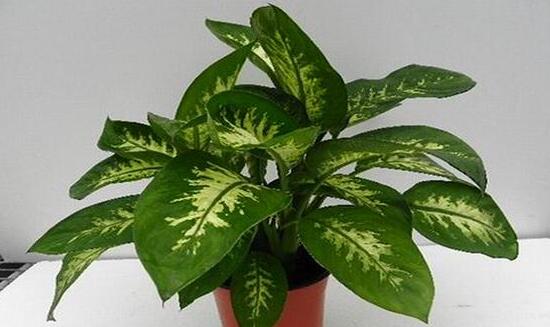
In daily life, because Dieffenbachia has such strong effects, many people keep it as a potted plant at home. But for certain reasons, Dieffenbachia leaves won't grow big, which affects its ornamental value. At that point, gardening enthusiasts must be very anxious! For this, the editor has found 4 causes: unsuitable soil, improper lighting, insufficient fertilization, and pest and disease damage, along with solutions. Let's continue reading.
II. Causes of Dieffenbachia Leaves Not Growing Big
1. Unsuitable Soil
When growing Dieffenbachia indoors, potting soil is the foundation. If it is chosen well, it is very beneficial to the plant's growth. But if the potting soil is poor, such as poor drainage or not fertile enough, it will cause Dieffenbachia leaves to not grow big.
Solution: If the leaves not growing big are caused by unsuitable soil, the remedy is very simple. You just need to find some relatively fertile soil with good drainage and repot it. Of course, when choosing a flower pot, also check its drainage.
2. Improper Lighting
During the growth of Dieffenbachia, light is indispensable, but it prefers semi-shade, so the light cannot be too strong. Once the lighting is improper, symptoms such as Dieffenbachia leaves turning yellow and Dieffenbachia leaves not growing big will appear.
① Too much light: If Dieffenbachia is exposed to direct strong light, its leaves will become lusterless, and its growth will also be affected, resulting in the symptom of leaves not growing big. Solution: Move it to a shaded place and water it appropriately. After a period of time, return to normal care. Usually, when encountering strong light, be sure to shade it promptly.
② Insufficient light: Light cannot be too strong, but it must also be sufficient. Once there is not enough light, Dieffenbachia's ability to absorb nutrients weakens, metabolism slows down, causing its growth to stagnate, and the final manifestation is that the leaves won't grow big. Solution: At this time, be sure to give it appropriate sunlight exposure.
3. Insufficient Fertilization
When Dieffenbachia leaves won't grow big, gardening enthusiasts will definitely think of fertilization problems. After all, plant growth cannot be separated from nutrients. Once Dieffenbachia has not been fertilized for a long time, it will grow slowly, and its leaves naturally won't grow big.
Solution: At this time, we need to apply fertilizer once about every 10 days. After entering autumn, 2 additional applications of phosphorus fertilizer can be made. Only in this way can its growth needs be met, and the leaves will slowly grow bigger.
4. Pest and Disease Damage
During growth, due to various reasons, Dieffenbachia inevitably suffers from various disease invasions, and this will directly hinder its growth, making it slow, thus producing the symptom of leaves not growing big.
Solution: When you find that Dieffenbachia leaves won't grow big, be sure to promptly observe your plant to see whether disease has appeared. If so, first determine which disease it is, then solve it accordingly. For this, you can refer to the pest and disease control for Dieffenbachia.
Overall, Dieffenbachia is not difficult to grow. As long as everyone understands the cultivation methods for Dieffenbachia and is a bit careful, it will grow very beautifully. Of course, if you encounter Dieffenbachia leaves not growing big, don't panic. Just follow the solutions above. Finally, may everyone's Dieffenbachia grow beautifully~
What to Do When Dieffenbachia Leaves Turn Yellow: Adjust Temperature, Fertilize Appropriately, and Control Pests and Diseases
Dieffenbachia, a beautiful foliage plant, has emerald green leaves that stay evergreen through all four seasons, plus spots of different tones, making it look truly gorgeous. But during cultivation, due to improper care, many gardening enthusiasts' Dieffenbachia develops yellow leaves. So what should be done when Dieffenbachia leaves turn yellow? At this time, don't panic. Today, the editor will tell everyone the causes and solutions.
I. When Dieffenbachia Turns Yellow, Find the Cause
In daily life, because of Dieffenbachia's beauty, many people keep it as a potted plant at home. But many of them never looked up the cultivation methods for Dieffenbachia, and as a result, due to fertilization, temperature, and soil reasons, yellow leaves appear. As for what to do when Dieffenbachia leaves turn yellow, you just need to find the cause and solve it accordingly.
II. Causes of Dieffenbachia Leaves Turning Yellow and Solutions
1. Soil Is Too Alkaline
Dieffenbachia grows best in loose, fertile, well-drained loam rich in organic matter, and this type of soil is slightly acidic. But during cultivation, if gardening enthusiasts change the soil to alkaline soil, or water with slightly alkaline water for a long time, it will cause Dieffenbachia leaves to turn yellow. The reason is that the plant lacks absorbable soluble iron and other elements, so its leaves slowly turn yellow.
Solution: Very simple. Change the potting soil and replace it with new culture soil. If the yellow leaves are not serious, you can frequently water with alum fertilizer water to change the soil's pH.
2. Improper Fertilization
Overfertilization: Dieffenbachia likes fertilizer, and during growth it needs appropriate fertilization to ensure sufficient nutrients, but fertilization cannot be excessive either. Otherwise, new leaves will become thick and uneven, and old leaves will dry at the tips, scorch yellow, and fall off. Solution: Immediately stop fertilizing, increase the amount of water replacement to let the fertilizer leach away, or immediately repot, rinse the bulbs with water, and then replant them in the pot.
Insufficient fertilization: Dieffenbachia's growth cannot be separated from fertilizer. Once nitrogen fertilizer has not been applied for a long time or the pot has not been changed, causing the potting soil to lack nitrogen and other nutrient elements, the branches and leaves will become thin and weak, and the leaves will be thin and yellow. Solution: Promptly replace with new culture soil, and gradually increase applications of dilute decomposed liquid fertilizer or compound flower fertilizer.
3. Improper Temperature
Temperature too low: Dieffenbachia likes a warm environment. In winter, if the temperature is too low and no warmth-keeping measures are taken, the plant will develop yellow leaves, and in severe cases wither, turn yellow, and die. Solution: Adjust the temperature in winter and keep the room at 13-18°C.
Temperature too high: Dieffenbachia is not heat-tolerant. Once the room temperature is too high, the plant's transpiration is excessive, and the roots cannot supply enough water and nutrients, which will also make the leaves turn yellow. Attention should be paid to adjusting the room temperature promptly. Solution: Control the temperature in summer and do not let it exceed 30°C.
4. Light Too Strong
Dieffenbachia is a plant that likes semi-shade, so except in winter when it can be placed in the sun, at other times it needs shading when the light is strong. Once Dieffenbachia is placed in a high-temperature location and exposed to direct strong sunlight, it is very easy to cause the leaf tips and leaf margins of young leaves to scorch, or leaves to turn yellow and fall off.
Solution: What to do when Dieffenbachia leaves turn yellow? If it is due to light and temperature, promptly move it to a well-ventilated, cool place.
5. Plant Too Dense
Some gardening enthusiasts think that the denser Dieffenbachia grows, the better, but this is actually wrong. Because when Dieffenbachia branches and leaves grow too luxuriantly, and have not been pruned for a long time, the plant becomes too dense, and the leaves inside cannot receive light, resulting in yellowing and falling off.
Solution: Nitrogen fertilizer cannot be lacking, but it also cannot be excessive. In addition, strengthen pruning to improve ventilation and light penetration.
6. Pest and Disease Damage
During Dieffenbachia's growth, due to improper care, it will suffer from pest and disease damage. Symptoms: In mild cases, Dieffenbachia leaves become soft; in severe cases, Dieffenbachia leaves turn yellow and fall off.
Solution: Determine which pest or disease it is, then spray accordingly. As for what to spray, there is a detailed introduction in the pest and disease control for Dieffenbachia, so it will not be repeated here.
Overall, Dieffenbachia is not difficult to grow, but because many gardening enthusiasts are beginners, yellow leaf symptoms inevitably appear. However, after reading the full article, I believe everyone has a better idea now. If yellow leaf problems appear, just follow the methods above. That is all for Dieffenbachia leaves turning yellow. I hope it can help everyone.
What to Do When Dieffenbachia Leaves Become Soft: Control Watering, Fertilize Appropriately, and Spray for Disease
Dieffenbachia, an elegant indoor foliage plant, has broad leaves with many different spots, and the colors are bright and strong, making it look very beautiful. In daily life, Dieffenbachia is kept at home by many people, but quite a few gardening enthusiasts encounter the phenomenon of leaves becoming soft, which seriously affects its ornamental value. So what should be done when Dieffenbachia leaves become soft? Today, the editor will answer this for everyone.
I. When Dieffenbachia Leaves Become Soft, Find the Cause
Growing plants indoors is not the same as outdoors. When many gardening enthusiasts grow Dieffenbachia at home, due to improper care and other reasons, its leaves become soft. So what should be done when Dieffenbachia leaves become soft? At this time, gardening enthusiasts must be very anxious, but being anxious is useless. Everyone should find the cause and then solve it accordingly. For this, the editor has summarized 5 causes and attached solutions. Let's continue reading.
II. Causes of Dieffenbachia Leaves Becoming Soft and Solutions
1. Too Little Watering
When it comes to the cause of Dieffenbachia leaves becoming soft, the first thing everyone thinks of should be: Is it being watered too little? Because leaves cannot lack water, and once they lack water, they become soft. Specific symptoms: The soft part of Dieffenbachia leaves starts from the top, and is also accompanied by withering and yellowing.
Solution: For leaves becoming soft due to lack of water, it is very easy to handle. Replenish water promptly, and at the same time spray water on the leaves for a better effect.
2. Too Much Watering
Some gardening enthusiasts will say, I water quite a lot, so why do Dieffenbachia leaves still become soft? Actually, this problem is very simple: it is because of too much watering! Although Dieffenbachia likes moisture, if it is too wet, its roots cannot tolerate it, which affects the leaves' absorption of water, and naturally the symptom of softening appears.
Solution: In this situation, move the potted soil to a ventilated, lighted place (the light cannot be too strong) to let the water evaporate quickly. In addition, loosen the soil for ventilation and replace part of the wet soil. After this treatment, it won't take too long, about a week, for your plant to recover.
3. Too Much Fertilizer
Dieffenbachia likes fertilizer, and sufficient nutrients can make the plant grow better. But everything has a limit. If too much fertilizer is applied, osmotic pressure will increase, and the plant will also show water deficiency, thus causing the leaves to become soft.
Solution: Water it to dilute the fertilizer and let it drain out from the bottom of the pot; or remove part of the soil and add some normal soil. If rescued in time, Dieffenbachia will quickly recover its health.
4. Pests and Diseases
If none of the above situations have occurred, everyone still needs to observe whether Dieffenbachia has been invaded by pests or diseases. If so, promptly remove the diseased parts and spray relevant agents for prevention and control. As for what to spray, there is a detailed introduction in the pest and disease control for Dieffenbachia, so it will not be repeated here.
5. Other Causes
If the above 4 points are ruled out, then everyone should also consider factors such as strong wind and strong light, because they may also cause Dieffenbachia leaves to become soft.
Solution: Everyone only needs to promptly move Dieffenbachia to another place, placing it in a ventilated, cool, and moist location, and spray water on the leaves to replenish moisture.