What to Do When Maidenhair Fern Leaves Wither? Six Maintenance and Care Tips to Help You Improve the Situation
Maidenhair fern (Adiantum) is a perennial evergreen herbaceous plant. If the environment is suitable and the care techniques are correct, its leaves should be green and glossy. However, sometimes the leaves wither for various reasons, which is very frustrating. So what should you do when maidenhair fern leaves wither? Below we analyze the main causes and corresponding solutions for you.
What to Do When Maidenhair Fern Leaves Wither
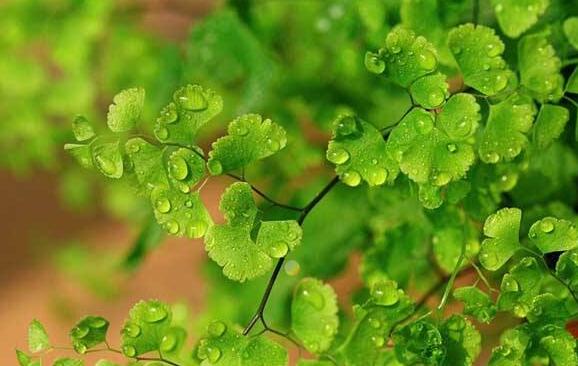
1. Severe lack of water
Cause: Botanists tell us that maidenhair fern is a plant that likes a humid environment, and it has relatively high water requirements in particular. Therefore, during the growing season, watering once every 1-2 days is recommended. If you often fail to water or do not water thoroughly, the leaves will wither due to severe water shortage.
Solution: Master two principles for watering. The first principle is to alternate between dry and wet soil, which means watering when the soil is dry and stopping watering when the soil is moist. The second principle is not to let the plant go without water for a long time. Take a few minutes each day to check the moisture of the soil; if it is on the dry side, replenish water promptly.
2. Plant frostbite
Cause: Leaf withering is more likely to occur in winter because the temperature is relatively low at this time. A brief drop below 5 degrees has a minor effect, but if the plant is often kept in a low-temperature environment, the maidenhair fern is easily frostbitten, causing water loss and withering.
Solution: What should you do about maidenhair fern leaf withering caused by frostbite? The answer is to take insulation measures before winter arrives. A commonly used method is to move it indoors. If you can confirm that the temperature can be kept above 5 degrees, you can wrap plastic film around the outside of the plant, but you need to make sure to maintain a certain level of ventilation.
3. Light too strong
Cause: Maidenhair fern is relatively afraid of strong direct light, especially exposure to blazing sunlight. If you place it in the sun in summer, the leaves will wither and droop within a very short time. This is because it is scorched by the sunlight, and the leaves will first turn yellow and then gradually wither, greatly affecting its appearance.
Solution: Some flower enthusiasts keep maidenhair fern outdoors so that it can enjoy sufficient light. This itself is not a problem, but note that at noon and when the temperature is relatively high, 50% of the light should be shaded to prevent the light from being too strong and damaging the leaves.
4. Leaf clusters too dense
Cause: Some flower enthusiasts find it strange that the maidenhair fern is being cultivated correctly and the environment is also relatively suitable, yet a small number of leaves still wither. What exactly is the reason? In fact, vigorous growth can also lead to withering, because when the leaf clusters are relatively dense, some of the outer branches and leaves block the light, preventing light from penetrating among the plants, and some leaves that lack light will wither.
Solution: Leaf withering caused by this reason requires regular pruning. Cut away part of the relatively dense branches and leaves, and keep some new and healthy branches and leaves so that every part of the plant can receive a certain amount of light, which can prevent some leaves from withering.
5. Dry air
Cause: When the air is relatively dry, the water contained in the leaves and stems of the maidenhair fern is consumed too quickly, causing it to wither from lack of water. This phenomenon is relatively common in winter when it is kept indoors with heating, or in places that are unventilated and stuffy.
Solution: Pay attention to the ambient humidity. If the air is relatively dry, you can increase humidity by spraying water on the maidenhair fern. At the same time, avoid an environment that is too stuffy and unventilated. Especially in winter when plastic film is wrapped around it for insulation, you should pay even more attention to avoiding excessive enclosure and poor ventilation.
6. Poor soil
Cause: After maidenhair fern has been planted for some time, the nutrients in the soil will gradually be absorbed. If it is kept in relatively poor soil for a long time, the leaves will wither because growth lacks nutrients. This phenomenon generally occurs when the potting soil has not been changed for more than 3 years.
Solution: When choosing soil, it is best to use relatively fertile soil containing more humus. If the soil conditions are average, you can add some organic fertilizer as a base fertilizer. In addition, changing the soil once every 1-2 years can prevent the soil from becoming too poor.
What to Do When Maidenhair Fern Leaves Wither: How to Deal with Spores Growing on the Back of Maidenhair Fern Leaves and Turning Black
Maidenhair fern is a plant that likes warmth and cannot tolerate strong light, and it is distributed in many places in our country. It is now a relatively popular houseplant, but if improper management occurs during cultivation, it will cause the leaves to wither or turn black.
What to Do When Maidenhair Fern Leaves Wither
1. When cultivating maidenhair fern, it is generally best to place it in a relatively dim indoor location. However, during the season of relatively vigorous growth, it is still better to provide sufficient scattered light.
2. Note that during daily care, the soil should be kept moist, so watering must be sufficient. In relatively dry weather, you should also sprinkle water on the leaves of the maidenhair fern to increase air humidity.
3. If withering occurs, you can first control watering, or switch to hydroponics. In ordinary care, you should still control the amount of watering. You can spray water more often to maintain air humidity. For leaves that have already dried out, it is best to cut them off.
How to Deal with Spores Growing on the Back of Maidenhair Fern Leaves and Turning Black
1. Causes of blackening: Low temperatures and freezing. In winter, the plant grows slowly, and the nutrients in the leaves are already insufficient. If the temperature is relatively low, the leaves are frostbitten and gradually turn black. Shaded and unventilated environment. Maidenhair fern likes shade, and many households keep it in the living room or bedroom. Some poor ventilation is unavoidable. If there is insufficient light for a long time and the air does not circulate, the leaves will turn black. Insufficient fertilizer and water. Maidenhair fern likes fertilizer. If it is not fertilized for a long time, the moist potting soil will cause the plant's leaves to wilt and gradually turn black.
2. Prevention and control methods: In winter, the temperature is low, and it is very easy for the plant to suffer freezing damage. In addition, winter light is relatively weak, and many households move the maidenhair fern to a sunny balcony, but opening the windows in the morning and evening makes it very easy for the plant to freeze. Therefore, control the indoor temperature well. Especially in the morning and evening, do not place it by the window. Maidenhair fern does not like a stuffy and hot environment, especially in summer. It needs frequent ventilation to increase air humidity, while also appropriately supplementing light. Maidenhair fern likes sandy loam rich in humus and needs sufficient fertility. Before planting, an appropriate amount of brick crumbs or lime granules can be added to the soil to enhance calcium content and improve soil drainage. In addition, during ordinary care, fertilize once a month, with emphasis on supplementing calcium.
Causes of Maidenhair Fern Leaf Withering
1. Strong light. Maidenhair fern itself is a plant that likes a semi-shaded growing environment and is relatively afraid of direct strong sunlight. If the light is too strong, the water on the leaves will evaporate quickly, causing the leaves to wither.
2. Insufficient water. Maidenhair fern likes a relatively moist growing environment. When cultivating maidenhair fern, the soil should be kept moist, and air humidity should also be kept at a relatively high level. If watering is insufficient, water will be lacking, which often causes maidenhair fern leaves to wither.
3. Waterlogging. Maidenhair fern leaves will dry out, and waterlogging is also an important factor. This is because most plants do not like waterlogging, and waterlogging can cause far too many problems, such as root rot, yellowing leaves, and so on. Although maidenhair fern is a plant that likes a moist environment, too much watering will also cause problems and lead to leaf withering.
What to Do When Maidenhair Fern Leaves Have Scorched Edges
1. Brown scorched edges on maidenhair fern leaves are a common problem encountered in cultivation. It is mainly because the care environment is unsuitable, the sunlight is too strong, and water is insufficient. When the leaves lack water, some cells dry out and dehydrate, the green color gradually fades, and scorched edges then appear.
2. Immediately move the maidenhair fern to a semi-shaded place for care. If the maidenhair fern is kept on a balcony, it is recommended to move the flowerpot to a bright indoor location, and it will gradually recover after a few days. In the following days, care for it carefully and try to avoid stimulation by strong light again. Promptly cut off the scorched leaves and spray water on the leaves and around them to increase air humidity.
Maidenhair fern leaves withering or turning black are generally caused by fertilizer, water, or temperature problems. You can observe carefully to find the cause and then solve the problem at its root. Some specific solutions are explained above, and we hope they can be of help to everyone.
What Are the Causes of Maidenhair Fern Leaf Withering? What Should You Do When Maidenhair Fern Leaves Wither?
Maidenhair fern, also known as wire grass, iron wire grass, etc., is a perennial herbaceous plant of the genus Adiantum in the family Pteridaceae. It has strong adaptability and is easy to cultivate. It is suitable for indoor potted ornamental display all year round. Small pots can be placed on a desk or coffee table, while larger pots can be used to decorate the windowsill, hallway, or living room of a shaded room. It is also a good material for cut leaves and dried flowers. However, during the process of cultivating maidenhair fern, it is often found that its leaves wither. So, what are the causes of maidenhair fern leaf withering? What should you do when maidenhair fern leaves wither? Let us learn about it below.
Maidenhair Fern
What Are the Causes of Maidenhair Fern Leaf Withering?
1. Unsuitable soil
[Cause] Maidenhair fern needs to be repotted every spring. It likes loose, permeable, fertile calcareous sandy loam. When repotting, pay attention to the choice of soil. If the soil is unsuitable, it can easily cause maidenhair fern leaves to turn yellow and fall off.
[Solution] Maidenhair fern likes calcium fertilizer. When dividing and repotting, you can add a small amount of lime and crushed eggshells to the pot to supplement some calcium fertilizer.
2. Improper pruning
[Cause] During the care process, if dead leaves are found on maidenhair fern, they should be cut off promptly to keep the plant fresh and attractive and to help new leaves sprout. Otherwise, if the branches and leaves are too messy and crowded, growth will weaken and the leaves will turn yellow.
[Solution] When the leaf clusters of maidenhair fern are too dense, the old leaves can be properly pruned every autumn.
3. Insufficient watering
[Cause] During the growing period, maidenhair fern needs sufficient watering and relatively high air humidity to maintain a deep green leaf color. If the water supply is insufficient or the air is dry, its leaves will turn yellow or curl and scorch at the edges.
[Solution] During the peak growing season, maidenhair fern needs to be sprayed with water on the branches and leaves 2-3 times a day.
4. Light too strong
[Cause] Maidenhair fern is a shade plant, and direct strong sunlight can easily cause scorched leaf edges and yellow, withered leaves.
[Solution] When cultivating maidenhair fern outdoors, pay attention to shading, but it also needs sufficient sunlight. Indoors, it is best to place the flowerpot on a windowsill facing east or north in the home for care.
5. Improper fertilizing
[Cause] Improper watering and fertilizing of maidenhair fern can stain the leaf surface, causing the leaves to turn yellow and wither and affecting the ornamental effect.
[Solution] Maidenhair fern does not need much fertilizer. Generally, applying a dilute cake fertilizer solution once every 2-3 weeks is enough. If a small amount of calcium fertilizer can be added, the effect will be even better.
6. Overwatering
[Cause] Maidenhair fern likes a high-humidity environment, but if it is overwatered, it can also cause waterlogging, which in turn causes the leaves to dry out.
[Solution] During ordinary care of maidenhair fern, follow the principle of watering less and spraying more. In dry northern areas, you can consider placing a tray with water under the pot to increase air humidity.
Maidenhair Fern
Precautions
1. Soil: Maidenhair fern likes loose, permeable, fertile calcareous sandy loam. When potting, the growing medium can be made by mixing equal parts loam, leaf mold, and river sand.
2. Watering:Maidenhair fern likes a moist environment. During the peak growing season, water it sufficiently. In addition to keeping the potting soil moist, also pay attention to maintaining relatively high air humidity.
3. Sunlight:Maidenhair fern likes bright scattered light and is afraid of direct sunlight. If the light is too strong, the leaves will turn yellow and wither or even die. In summer, appropriate shading can be provided. Long-term direct strong light will cause most of the leaves to turn yellow and wither.
4. Temperature:Maidenhair fern likes warmth and is also cold-tolerant. The suitable growing temperature is 21-25°C during the day and 12-15°C at night. In winter, it should be moved into a greenhouse for cultivation.
5. Fertilizing: Fertilize maidenhair fern with dilute liquid fertilizer 2-3 times a month. When fertilizing, do not stain the leaf surface to avoid causing leaf rot. An appropriate amount of lime and crushed eggshells should be added to the potting soil. In winter, reduce watering and stop fertilizing.
6. Pests and diseases: Maidenhair fern often suffers from leaf blight. In the early stage, Bordeaux mixture can be used for control. In severe cases, a 1000-1500 times dilution of 70% thiophanate-methyl can be used for control. If there is damage from scale insects, a 1000 times dilution of 40% omethoate can be used for control.
7. Pruning: After autumn begins, as the temperature drops, maidenhair fern enters a stage of slow growth, and the old leaves will gradually turn yellow. At this time, they should be cut off.
The above are the causes and solutions for leaf withering in the maidenhair fern. Friends who grow maidenhair fern at home can refer to the methods above to solve the problem. The above content was compiled for you by the editors of First Agricultural Economics Network, and we hope it is helpful to you.