How to grow a dawn redwood bonsai? Cultivation methods and precautions such as avoiding strong light
The dawn redwood is a highly ornamental plant. It can be grown in pots or planted over large areas, but there are many things to pay attention to if you want to grow it well. So how do you grow a dawn redwood bonsai? What are the cultivation methods and precautions for a dawn redwood bonsai? Let me walk you through them below.
1. How to grow a dawn redwood bonsai: understand its habits
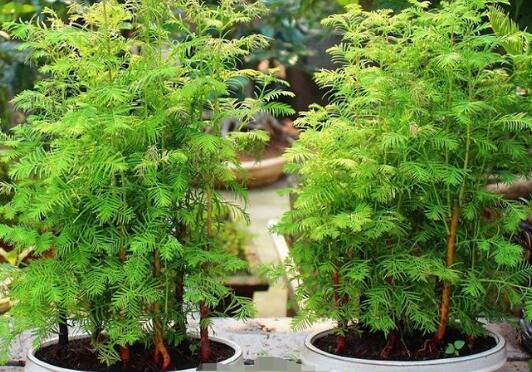
If you want to know how to grow a dawn redwood bonsai, you first need to understand its growth habits. It likes warm, humid environments, so the soil must be kept moist when growing it. In addition, light, fertilizing and other methods also need attention. The details are described below; let us take a look.
2. Cultivation methods and precautions for a dawn redwood bonsai
1. Soil requirements: good air permeability
The dawn redwood mostly grows in places with gentle terrain, deep soil layers, and humid or slightly waterlogged conditions. If you are growing a dawn redwood bonsai, you can choose acidic mountain yellow soil or purple soil, mixed with breathable substrates such as peat soil for cultivation. This way the soil will have very good drainage and air permeability.
2. Fertilizing requirements: light fertilizer applied frequently
Before planting the dawn redwood, we first need to apply an appropriate amount of base fertilizer to the potting soil, and after it enters the growing season, it also needs regular fertilizing so it can grow vigorously. When fertilizing, we should follow the principle of light fertilizer applied frequently. Before fertilizing, it needs to be diluted with water first, otherwise it can easily burn the plant. Everyone should pay attention to this point.
3. Watering requirements: control the amount of water
During the growth process of the dawn redwood, the demand for water is very high, so we should water frequently to keep the soil moist. When watering, water thoroughly at one time, but remember that waterlogging must not be allowed, otherwise the roots can easily rot. Everyone should pay attention to this point.
4. Light requirements: provide shade in summer
The dawn redwood is relatively fond of light, but it is afraid of strong light. In spring and autumn, the light is relatively suitable, and we can let it receive light all day. However, in summer when the light is too strong, it is best to move it indoors to a semi-shaded place for cultivation, so as to avoid yellowing leaves caused by strong light exposure.
5. Pruning requirements: prune branches regularly
In order to maintain the ventilation and light transmission of the dawn redwood, we need to prune it regularly during its growth process. We can prune its branches at a moderate level, which can also maintain the plant's shape and promote branching, allowing it to grow into a full pot.
6. Pests and diseases: deal with them promptly, do not delay
During the growth process of the dawn redwood, if we are not careful enough with care, pests and diseases can easily take advantage of the situation. Such problems are extremely harmful to the plant, so once discovered they must be dealt with promptly. Do not delay, because the longer the time, the harder it is to deal with. For specific treatment methods, you can learn about them in the article on pest and disease control for dawn redwood.
Basic conditions for selecting material for stump bonsai
Our country has a vast territory and rich resources. In terms of trees, among the world's more than 30,000 species of higher plants, our country has more than 7,500 species of trees and shrubs, among which ginkgo, Cathaya argyrophylla, dawn redwood, golden larch and others known as "living fossils" can all be potted as bonsai. Even for the same kind of tree, differences in growth years and environmental conditions will form different appearances, making it dazzling and providing a basis for bonsai creation. It is not only trees; even a single branch or leaf has beauty everywhere, and all are objects pursued, imitated and captured in the creation and study of bonsai modeling. Therefore, nature provides bonsai with a large amount of material of extremely wide themes and many varieties.
When selecting material, it should be based on creative needs. First, pay attention to external conditions, such as gnarled roots and intertwined branches, ancient and vigorous; second, pay attention to inner meaning, such as the proud spirit of pine and cypress, the noble purity of bamboo and plum.... In this way, the completed work will naturally give people great inspiration and healthy, uplifting motivation.
(1) External conditions of the material
The materials for stump bonsai mainly use woody ornamental plants, including trees, shrubs and vines. Trees should grow slowly, have small leaves, and be capable of controlled dwarfed growth; shrubs should be easy to shape, have the "spirit" of trees, live long, and tolerate pruning. The specific conditions are:
① Leaves: The leaves of bonsai plants are one of the ornamental contents. From the leaves one can appreciate the changes of the four seasons, differences in leaf shape, shades of depth and lightness, and the spiritual temperament shown within, such as healthy color, seasonal color, lushness and sturdiness. The most ideal is that the plant's leaves are evergreen, small (fine), and fresh and beautiful in color; in addition, the tree should live long, adapt to the environment, and have strong sprouting ability. Also, in addition to selecting leaves, it is advisable to choose tree varieties that are easy to propagate, suitable for bending and shaping, and easy to control growth, such as five-needle pine, Buddhist pine, true juniper, pearl boxwood, golden larch, Chinese elm, Sageretia thea, cotoneaster, firethorn, Serissa japonica, emarginata wingceltis, Chinese loropetalum, barberry, azalea, Japanese pomegranate, crabapple, plum, longevity peach, Caragana, hawthorn, wisteria, winter jasmine, small-leaf gardenia, damnacanthus, Fortunella, shade tree, etc.
② Roots: As another ornamental content of bonsai, roots show age, reflect strength, and determine the starting momentum of the modeling and the distinction between front and back. It is best to choose those that are coiled and interlaced, exposed and ancient. Materials include Caragana root (main root long and soft), boxwood root, pine root, cypress root, Sageretia thea root and others, all of which can be selected.
③ Trunk: It is another important ornamental part of bonsai and the central skeleton of the whole composition. The shape of the trunk is restricted by changes in the overall modeling, and it also determines the modeling form of the stump. Generally, the trunk should be short and sturdy; short yet powerful, sturdy yet vigorous, thick at the bottom and thin at the top, with natural and powerful transition. In addition to the outer shape of the trunk, changes in the bark are also required. The older the tree age, the more ancient the bark layer, the better. Only when the two cooperate with each other can charm emerge.
Bonsai trunk
Only after a certain number of years will the trunk bark form an old and mottled appearance, which young trees cannot compare with.
Of course, artificial stimulation such as carving, corrosion, and scorching with fire can also cause wound changes, strengthening the age markers of the work and adding "power." But the treatment must be done properly, must not leave artificial traces, and even more must not forcibly kill the stump.
The trunk bark should be old and mature, rough and spirited, such as the scales of pine bark, the twist of cypress bark, the ancientness of elm bark, the cracks of Japanese black pine, and the smoothness of crape myrtle. In addition, bark also has features such as "nodes," "dryness," "spots," "color," and "charm." Ancientness refers to vigorous and powerful, old and mature, with the appearance of having endured many vicissitudes, old bark, simple and ancient color, with cracking, born naturally in old trees and impossible to imitate, such as Sageretia thea, elm, pomegranate, etc.
Scales refer to bark showing scale-like cracking, majestic and vigorous, rugged and vivid, such as five-needle pine, black pine, etc.
Cracks refer to bark cracking with deep concavities, solemn and simple, peculiar and interesting, unique to bark appreciation, and impossible to create artificially, such as the bark of Japanese black pine, which is unique among trunk barks.
Twist refers to bark bending and spiraling, showing power within rigidity, shaped like a strong man's tendons, and also like ten thousand vines entwined. Old trees such as ancient cypress and Buddhist pine possess this appearance. Many tree species can also achieve a twisting effect when shaped from a young stage.
Nodes are old trunk scars and lumps, mainly caused by external injury, ancient and peculiar, with the appearance of having endured hardships; artificial stimulation can promote them, but be careful to keep them natural and spirited, such as ginkgo, elm, plum, etc.
Dryness refers to ancient trees hollowed and decayed by insects, lightning, or fire, with new shoots sprouting on the branches and trunk, representing the meaning of a dead tree coming back to life and spring returning to the earth. Old trees such as pomegranate, elm, and cypress can create this wonder, and bonsai stumps can also be made to look real through skillful processing.
Smoothness means the bark is smooth and glossy without cracks, showing strength within moisture and power within smoothness, unique to certain tree species, such as white-bark boxwood and crape myrtle stumps.
Spots refer to bark mottled with markings of varying shades, or with obvious bud-eye ring patterns and stomata, giving people room to guess and imagine, such as the bark of whitebark pine, Caragana, spotted bamboo and others with this feature.
Color means certain trees have obvious color on the trunk, such as the red branches of red maple, the green branches of green maple and winter jasmine, the brown-red of apricot branches, and the powdery green of bamboo. There are also highly ornamental bamboo varieties such as golden bamboo with jade inlay and jade bamboo with golden inlay.
Charm is the appeal produced in combination with external interest, such as rain beating banana leaves, the soughing of pines, dancing bamboo shadows, spring wind and willow, and other scenes where feeling and scene blend.
④ Branches: Mainly refers to primary and secondary branches, which assist the main trunk in forming the shape. The arrangement and distribution, length and thickness of branches must be carefully selected to meet the basic requirements of modeling. A certain modeling style requires selecting branch and trunk conditions suitable for that style, that is, the original form of branches and trunk is suitable for a certain
form. This is the basic requirement; otherwise, although it can still be shaped and posed, it will always be unsatisfactory. Branches should be evenly distributed, but this does not mean equal distribution; within, there should be gathering and scattering, high and low, left and right, and appropriate density; thickness should be reasonable, with both contrast and harmonious echo; length should be moderate, generally longer below and shorter above, with clear primary and secondary lengths. When the front of the modeling is determined, the conditions of each branch should meet the modeling needs, and the top branches must not be thin, weak, and small; the upper and lower parts should be balanced.
In bonsai modeling, vertical branches, that is, drooping ones, represent lightness, elegance, and unrestrainedness; horizontal branches represent gentleness and peace; inclined branches represent movement. In production, differences and changes in leaf shape should also be considered, such as the pointed fineness of pine needles, the thorny corners of holly, the incised cracks of maple, and the fan shape of ginkgo, and even small branches above the third level each have their own individuality, such as the rigidity of Sageretia thea and the softness of tamarisk.
Undesirable bonsai branches
(1) Whorled branches (2) Opposite branches
(3) Bare legs (4) Branching too low
Branch distribution
(1) Evenly distributed branches (2) Inclined branches (3) Horizontal branches
⑤ Selection of material size: The selection of stump bonsai materials should be considered according to creative requirements, pot size and other factors, and decided according to specific circumstances.
Large tree stumps should be ancient and picturesque. For this kind of material, only naturally shaped ones are taken, especially when the tree trunk and first-level main branches are already very hard and highly lignified and difficult to change. Therefore, very little artificial reprocessing is done, and only small branches and other shapable parts are taken for binding and shaping. For some tree species with strong sprouting ability, heavy pruning can be used, cutting the trunk short and cutting off or shortening branches; afterward many new branches will sprout and can be reselected and cultivated for modeling, becoming an ideal stump landscape, such as Sageretia thea, elm, etc. Although production takes several years, the effect after success cannot be found in the wild. If one can select a naturally shaped one that already appears old and mature, even better; only slight changes are needed to cultivate it into a superior piece, but such material is very difficult to find. However, not all ancient, old, and large stumps are beautiful. If blindly dug back and impossible to transform, they are useless to keep and a pity to discard. Therefore, when digging in mountains and wilds, strict screening must be done first, and carpet-style brutal digging must not be used, as this will inevitably destroy local vegetation and endanger ecological balance; on the other hand, it wastes manpower, material resources, and land resources. In addition, although old stumps have many advantages in form and momentum, their roots spread over a large range and will be damaged during digging. In addition, considering the requirements for future potting, the smaller the root base the better, so main roots and hard roots are shortened, damaging fibrous roots and affecting healing and survival. Moreover, the physiological functions of old stumps decline, growth slows, recovery after digging is slow, and they may even become half-dead. Therefore, the technical handling and maintenance of large stump digging must be especially careful.
Requirements for small and miniature tree stumps: Small tree stumps and miniature tree stumps have relatively abundant sources and ample room for selection. Relatively speaking, there are many good materials, and small things are highly plastic and can flexibly change according to the author's intention and material conditions, and through directional cultivation finally achieve the creative purpose. Many excellent works are cultivated from small plants. In addition, small stumps have active physiological functions, strong sprouting ability, tolerance to pruning, and strong adaptability. Therefore, the selection of materials is not as demanding as for old stumps, and deficiencies can be made up through grafting and other means, which further allows small materials to transcend their original limits.
When selecting small and miniature tree stumps, one absolutely must not use the standards for selecting old stumps, but one can consider and move toward the possibility of developing into an old stump, such as symmetry and sturdiness of the trunk, exposure of roots, and coordination of proportions among parts.
The selection of materials for medium-sized tree stumps lies between the above two. It has the unfavorable side of being close to old stumps, such as stiff, hard, and brittle trunks and branches that break easily; it also has aspects better than old stumps, such as some branches and trunks still having a certain toughness and being able to be cultivated gradually and in stages. Its growth vigor and sprouting rate are also superior to old stumps, especially when the tree age and ancient appearance already possess the characteristics of old stumps, and its charm is far beyond what small materials can match.
The selection of materials introduced above should, according to large, medium, and small
(miniature), have different emphases and differences, and should also be selected and matched according to the creative form, but there are common points, such as a short and sturdy trunk with spirit, thick at the bottom and thin at the top with natural connection, reasonable branching, dense fibrous roots, exposed surface roots, no obstructive old roots, vigorous growth, and no pests or diseases.
(2) Sources of materials
① Digging in mountains and wilds: The purpose of digging stumps is not only their many advantages such as good form, ancientness, and shortness and sturdiness, but also that surviving in very poor environments makes them more suitable for bonsai cultivation. In addition, the character pursued in the artistic conception of bonsai, and the spiritual temperament formed by wild stumps enduring long-term harsh environments, are even more what enthusiasts pursue, and cannot be imitated artificially in a short time, so they are highly esteemed.
In mountains and wilds, tree bases within the range of human and livestock activity, due to injuries from various causes, plus harsh growing conditions, produce wound changes, stunted changes, and deformities, and external forces such as wind, snow, lightning, floods, and rolling stones further promote changes in form, such as dwarfing and aging. Many trees, also affected by genetic factors, appear even more twisted and vigorous. These materials are what we seek, and they are a quick way to obtain ideal stumps and are convenient for reflecting landscapes and embodying charm in bonsai. In order to protect resources and ecology, digging wild stumps is strictly forbidden especially in scenic and famous areas and protected areas. In addition, digging must also be arranged in a planned and step-by-step manner, and must never cut off the source of materials for future generations or ecological balance.
Besides mountains and wilds, river valleys, roadsides, under old trees, ruined ancient temples, and old wall foundations, wild old stumps can also be found. In addition, old and eliminated fruit trees can also be used as bonsai material after transformation. Wild stumps include Sageretia thea, ginkgo, nandina, elm, damnacanthus, Serissa japonica, holly, gardenia, boxwood, maple, small-leaf holly, firethorn, wisteria, Caragana, wood, hawthorn, abelia, etc.
Digging time can be based on the physiological characteristics of the variety and the regional ecological environment conditions. It is generally arranged from leaf fall in autumn at the place of origin to before leafing out in early spring of the following year, and the specific time should be set in combination with local climate conditions and equipment. Digging should be placed during the tree's dormant period, so that even if vitality is damaged it is easy to recover. To ensure survival, the arrangement of the season is very important. If the amount collected is large and overwintering facilities are insufficient, it is best to dig in early spring of the following year, reducing the trouble caused by insufficient overwintering conditions. Handling in this season must be decisive and quick, as the weather is rapidly warming; if the season is missed, one can only wait until the next year.
Digging method: Go to the place of origin with a clear target. First, understand the resources and environmental conditions, first thin-prune the aboveground part, and while maintaining the main features of the form, shorten overly long branches; remove diseased and dead branches; thin out overly dense areas. This is a means of heavy pruning, and of course it also depends on the variety. Then dig the underground part. First remove the soil on the root surface to understand the direction of root extension. During digging, protect fibrous roots as much as possible, and dig with soil when necessary; after unearthed, trim the wounds of injured roots flat to reduce wound infection and reduce evaporation, which helps future wound healing. On the premise of retaining fibrous roots, remove hard roots and dead, rotten roots that are obstructive.
For ancient stumps of great digging value, digging can be divided over two or three years. As with trees leaving the nursery, dig one-third or one-half this year, cover again with soil, and in the following year or the third year dig out the remaining part and move it back to continue field planting; if it can be planted locally for one or two years after collection and transported back after survival, it is even more beneficial for adaptation to the new environment, ensuring survival, and restoring growth. The entire digging and transport process should be completed quickly, otherwise after the tree dehydrates the survival rate is extremely poor. To reduce water loss during transport, put the dug stumps into baskets, stuff soft moisture-retaining materials such as pine needles and moss into the gaps in the baskets, and spray enough water. Under these conditions, a delay of about a week on the road is not a problem. The roots can also be dipped in mud slurry, tied in bundles of several pieces, and wrapped and covered with wet moss, which is not a concern within a few days. For large stumps, wrap the trunk and thick branches entirely with wet grass, moss, etc., both to retain moisture and allow ventilation, and absolutely not to generate heat, so as to avoid mildew and death. Also prevent stumps from loosening, colliding with each other, and being injured by friction, which accelerates evaporation. Transport back as soon as possible, and pay attention to avoiding cold waves. If there is freezing, stop digging immediately, and also do good warmth preservation work on the road. In short, everything is for ensuring survival and future quality.
After digging half in the first year, cover with soil, and dig out all the next year
Roots, trunk, and branches wrapped and protected with moss
After the materials are transported back, carry out an "artistic" pruning immediately, that is, corrective pruning of the roughly pruned stumps from digging and transport, laying a reliable foundation for future growth and development direction. The pruned branches can be used as cuttings after trimming. The pruned materials can be potted in clay pots, or planted in the ground, and grown for one or two years to give them a process of recovery and adaptation. Of course, for wild stumps dug and transported back, the environmental conditions for stacking and refurbishing must also be arranged thoroughly. They cannot be exposed to wind and sun or suffer freezing damage. Although temporary, sometimes a small inadequate link can cause overall disadvantage. For wild stumps planted in the ground, also conscientiously do management work such as pruning, weeding, fertilizing, and pest control. Among these, note that the planting posture and angle, including depth, must meet the cultivation requirements of each tree. One must not force uniform straight planting for management convenience, as this is unfavorable for directional shaping of the form. The summer of the year after transplanting is a key period, because the roots have not yet healed and grown fully. Although they can still sprout, unfold leaves, and send out shoots, they are actually consuming nutrients accumulated in their own branches and trunk. A slight negligence can lead to death. Therefore, spray frequently and sprinkle water, keep the soil a bit more moist than the normal habit, provide shade when necessary, and wrap branches and trunk with wet grass. Cold protection facilities for overwintering that year must also be in place to prevent freezing damage. Daily watering combined with light fertilizer applied frequently should be even lighter than fertilizer used in bonsai maintenance. At this time, although the stump needs fertilizer, because its functions have not fully recovered, fertilizer use must be controlled
well. When clearing weeds, prevent the stump from loosening, so as not to affect root healing and the development and growth of fibrous roots.
Stump bonsai is about paying attention to controlling its form from the very beginning. The purpose of the provided sunlight, rain and dew, fertilizer, water, and pest and disease prevention is also centered on controlling growth (dwarfing) and controlling appearance, plus pruning, bud removal, and bud (leaf) picking all lay a good foundation for future modeling.
② Grafting: The branches or buds of a plant used for propagation are called scions; the plant joined with the scion or bud during graft propagation is called the rootstock. A method of asexual propagation in which the scion is attached to an appropriate branch or trunk position of the rootstock, and after healing and survival the supporting branches and leaves on the rootstock are removed, with nutrients transferred to the new plant formed from the scion, is called grafting. Grafting is an important means of obtaining ideal bonsai materials. It is used for tree varieties whose material sources are difficult, growth is slow, are rare varieties, or are difficult to survive or have very low survival rates through sowing and cutting, and is especially suitable for small bonsai; for varieties that grow slowly, have poor resistance, insufficient maternal advantage, and are prone to degeneration, grafting can make up for deficiencies and obtain new individuals with stronger advantages such as sturdiness and fast growth.
The rootstock should be selected from 1- to 2-year-old seedlings with strong resistance, fast growth, no pests or diseases, moderate thickness, and sturdiness and fullness. For scions, use current-year tender buds or 1- to 2-year-old branches, also selecting healthy ones without pests or diseases.
Grafting methods include multi-head grafting (the rootstock is an old stump with form, and grafting is done at places lacking in form), greenwood grafting, bud grafting, and bark-tearing grafting. Specific techniques include multiple grafting, approach grafting, cleft grafting, cut grafting, etc. They are good methods for changing inferior traits and obtaining ideal materials. In particular, multi-head grafting is an excellent way to quickly form stumps, and can even be used to transform medium and large bonsai.
The suitable grafting time is mid-February in early spring. Some varieties can also be grafted during the plum rain season. For a small amount of grafting, as long as management and care are proper, grafting can be carried out in all four seasons.
For batch grafting, as long as the season is well chosen, it has a considerable relationship with the survival rate. In addition, reasonable operating techniques, such as a good grafting position, smooth and clean interface, reasonable slope of the cut surface, mutual alignment of cambium layers, moderate tightness in tying the interface, and protection of wounds before and after grafting, all affect future survival, growth speed, flowering and fruiting, root reversal or not, and quality. In addition, the tools used for grafting, the grafting technique, and post-grafting management all affect the grafting effect.
After grafting, move the stump to a place with protective facilities, such as inside a plastic shed, to prevent rain washing, sun scorching, wind shaking, etc., so as not to affect healing of the interface. A small plastic bag can also be used to cover the grafting site to reduce evaporation and maintain humidity, and also prevent water from entering during watering
the wound and causing infection, because a water film forms in the wound, and the interface
contact surface is not easy to heal.
③ Cutting: Selecting healthy, well-shaped branches and inserting them into a seedbed or sand bed, where under suitable conditions they will heal and root and become new independent individuals, is called cutting. Using cuttings is an important way to obtain
small and miniature bonsai materials. Among them, old-branch cutting and root cutting are especially good. This is a shortcut to raising materials obtained through years of practice by bonsai workers. As long as it survives, one can obtain a stump whose skeletal form is old and dwarfed, and with slight shaping it can become a landscape and even show considerable age, which is truly not easy.
Whether old branches or tender branches, cuttings should be selected from branches that are healthy, free of pests and diseases, and have basic modeling form, with smooth and clean cuts and moderate cutting depth (angle). As bonsai material, one can also choose twisted branches caused by external injury for cuttings, such as pruned stump branches or branches deformed after being knocked and injured at the roadside, selecting sturdy ones. Absolutely do not use stiff old branches, branches parasitized by pests or diseases, or old and weak branches as cuttings, because although these branches have appearance, they are not easy to survive, and even if they survive, their growth is very weak and it is difficult for them to meet the conditions for making a landscape.
For shrub cuttings, select branches from the middle part of the tree, because shrubs have the habit of growing upward to compete for sunlight. Lower branches will naturally age, shrink, and be eliminated, and their growth decline is transferred to the middle branches. Although upper branches grow upward vigorously, their internodes are large and they lack posture. Only middle branches meet the requirements for bonsai cuttings.
The cutting time is chosen during the plum rain season. In this season, air humidity is high, temperature is suitable, and strong light is scarce. Plants are in a stage of active growth, with fast respiration, absorption, and callus formation. But at this time they are prone to mildew and disease. Operations must be strict and management fine, otherwise they can easily become diseased and die.
Branches discarded during ordinary bonsai pruning can, after appropriate trimming, be casually inserted into gaps in the sand bed and left to nature. Many of them survive and become ideal miniature or small stump materials, and unexpected excellent material may even appear. Even if they do not become useful material, there is no regret in discarding them. In general, it is not suitable to take cuttings during the flowering and fruiting period, because at this time branches consume a lot of nutrients, and the survival rate of cuttings taken then is very low.
After cutting, prevent the cutting from loosening, maintain appropriate humidity in the soil (seedbed), provide shade against exposure, and also prevent drought, hot wind, and rain washing. Protect the wound surface of the cutting so it heals and roots easily.
Division can also produce materials of varying sizes and forms and valuable age markers. Layering propagation can also obtain certain ideal variety materials. The above are asexual propagation methods.
④ Other means: Sexual propagation by sowing is a good way to obtain large numbers of seedlings, from which good seedlings with cultivation potential can then be screened out. The disadvantage is that the time to take shape is long, and it lacks the marks of time, requiring long-term cultivation to produce a superior piece.
Japanese maple bonsai pictures and planting techniques
Among potted plants, the Japanese maple is deeply liked and favored by people from all walks of life for its graceful posture and beautiful leaf shape. In horticulture, its varieties vary greatly in leaf shape and leaf color, and are very ornamental. If planted on lawns, by streams, beside ponds, at wall corners, near pavilions, or among rocks, all have a quite natural and elegant charm.After autumn, bright red Japanese maple bonsai pictures are as colorful as flowers and as brilliant as rosy clouds. As an excellent foliage tree species, it is believed that no matter where it is planted, it has natural and elegant beauty. This article will combine Japanese maple pictures to tell everyone about the price of Japanese maple seedlings and Japanese maple planting techniques.
[Editor's picks] How to grow Guzmania How to grow spider plant What plants absorb formaldehyde Propagation methods of azalea Price of Dendrobium officinale
——————————————————————————————————————————————[Plant profile]
——————————————————————————————————————————————
Chinese name: Japanese maple
Scientific name: Japanese Maple
Aliases: Chicken-claw maple, maple tree
Family: Aceraceae
Genus: Acer
Origin and distribution: Shandong, southern Henan, Jiangsu, Zhejiang, Anhui, Jiangxi, Hubei, Hunan, Guizhou and other provinces; also distributed in countries such as Korea and Japan.
Morphological characteristics: Deciduous small tree or tree, crown umbrella-shaped, posture elegant and beautiful. Bark smooth. Branchlets reddish brown. Leaves opposite, palmately 7-9 lobed, base truncate to heart-shaped. Lobes caudate at the apex, margins with irregular sharp teeth or double sharp teeth, young leaves densely soft-hairy, old leaves smooth and hairless. In autumn the red leaves are like brocade, very pleasing to the eye. Flowers polygamous, composed of small purplish-red flowers in corymbs, opening in April. Samaras spreading at an obtuse angle, curved upward, maturing in October, brownish yellow.Japanese maple planting techniques
——————————————————————————————————————————————Ecological characteristics of Japanese maple
————————————————————————————————————
It likes warm, humid, and semi-shaded environments. It is cold-resistant, not tolerant of waterlogging, relatively drought-tolerant, and afraid of strong light exposure. The suitable growth temperature is 15-25°C, and in winter it can tolerate a low temperature of -8°C. The soil should be deep, fertile, and well-drained sandy loam, and it also tolerates acidic and calcareous soils.
Propagation methods of Japanese maple
————————————————————————————————————
VI Sowing: Collect seeds in October, briefly dry them and remove the wings, sow in autumn or stratify in wet sand, and sow in February in spring. Cover with 1 cm of soil. After sowing, they germinate in 30-40 days. Seedlings need shading and moisture retention. Current-year seedlings can reach 30-40 cm in height.
VII Grafting: Mainly used for cultivated varieties. The rootstock uses 2- to 3-year-old Japanese maple. Branch grafting is carried out in March in spring, using cut grafting or side grafting when the rootstock leaf buds swell; bud grafting is carried out in August in summer, mainly using single-bud side grafting, with a high survival rate. Seedlings can be produced in the same year.
VIII Layering: Carry out in October, using the air layering method. Perform ring barking 20-25 cm from the branch tip, and wrap with leaf mold and plastic film. New plants can be produced in the following spring.Key planting points for Japanese maple
————————————————————————————————————
Transplanting Japanese maple should be done after leaf fall in autumn and winter or before bud break in spring. Large seedlings should be moved with soil balls, and planted in a fertile, semi-shaded, humid site. Potted plants should be handled after removing leaves in late August, placed in a semi-shaded, humid place, and fertilized 1-2 times to promote lush branches and leaves. After frost, the leaves turn yellow and red; keeping them indoors delays leaf fall and can prolong the leaf-viewing period.
Pest and disease control
————————————————————————————————————
During Japanese maple cultivation, there are often hazards from anthracnose, leaf spot, and black spot. Usually, Bordeaux mixture or 70% mancozeb wettable powder at 600 times dilution can be sprayed. Pests include slug moths, bagworms, aphids, and star longhorn beetles, which can be killed by spraying fenitrothion at 1500 times dilution.Price of Japanese maple seedlings
——————————————————————————————————————————————
The price of Japanese maple seedlings also varies with variety and specification. Here, the editor has collected some price lists for Japanese maple seedlings for everyone's reference.
Price of Japanese maple seedlings
Reference price for one-year-old seedlings (H: height cm unit/yuan) Note: The following seedlings all have large specifications of 2-15 cm
Variety
Specification
Unit price
Variety Specification Unit price
Chinese hackberry
H30
0.8
Schima superba
H300.2
Red beech
H30
1
Sweetgum
H600.25
Crape myrtle
H70
0.6
Tung tree
H100
1
Trident maple
H60
0.5
Goldenrain tree
H60
0.3
Sassafras
H50
0.65
Dawn redwood H600.12
Slash pine
H20
0.15
Slash pine
H20
0.15
Chinese tulip tree
H50
0.35
Camphor tree
H40
0.25
Elaeocarpus
H80
0.5
Red robin photinia
H30
1
Chinese bishopwood
H60
0.3
Osmanthus
H30
0.6[More Plant Encyclopedia]
What is daylily The symbolic meaning of lilies The benefits and effects of globe amaranth The uses of mulberry How to grow peonies Flower-growing knowledge
Types of ball cacti Is gardenia poisonous What is the flower language of lavender Gardenia leaves turning yellow Potted vegetables The uses of asparagus fern
The uses of pothos The flower language of hyacinth Cactus flowers How to care for lilies Flower cultivation methods Flower cultivation Potted plants Radiation-absorbing plants
Indoor plants Hydroponic plants Flower language Complete guide to flower language Complete guide to flower language with pictures Complete guide to flower pictures Flower pictures and namesJapanese maple has an attractive leaf shape and is a foliage plant, generally planted along roadsides and other places; there are now also potted varieties for display in the home. How to grow Japanese maple:
Basic information about Japanese maple:
Japanese maple (Acer palmatum Thunb), also known as chicken-claw maple, belongs to the Aceraceae family, Acer genus, and is a deciduous small tree or tree with an umbrella-shaped crown and an elegant appearance. The bark is smooth. The twigs are reddish-brown. The leaves are opposite, palmately 7-9 lobed, with a truncated to heart-shaped base. The lobe tips are tail-like, and the margins have irregular sharp teeth or double sharp teeth; young leaves are densely covered with soft hairs, while old leaves are smooth and hairless. In autumn the red leaves are like brocade and very pleasing to the eye. The flowers are polygamous, forming corymbs of small purplish-red flowers, opening in April. The samaras spread at an obtuse angle and curve upward, maturing in October, brownish-yellow.
How to grow Japanese maple:
1. Soil: Japanese maple has strong vitality. For open-ground cultivation, choose a site with high, dry, sunny conditions, loose and fertile soil, and deep soil layers. Avoid planting in low-lying, waterlogged places or where the soil is heavy clay, otherwise it will grow poorly.
2. Watering: For potted Japanese maple, watering should be sufficient during the growing season, but not excessive, just enough to keep the potting soil moist.
3. Sunlight: Japanese maple is a weakly light-demanding tree species and tolerates partial shade. When planted as a solitary specimen in direct sunlight, it is prone to sunscald damage in summer. In spring and autumn, it can be placed on a balcony or in a courtyard for cultivation; in summer, move it to a semi-shaded place and provide appropriate shading to prevent scorching sun exposure, which can cause the leaf margins to burn. If it needs to be placed indoors for viewing, it should be kept in a well-lit spot, with attention to air circulation; after a period of time, move it back outdoors to a sunny place for cultivation.
4. Temperature: Japanese maple prefers a warm climate. In the north, before winter begins, it should be moved promptly to a cold indoor room for overwintering, placed in a room at 0-5°C.
5. Fertilizing: For potted Japanese maple, generally from spring bud break, apply a thin cake fertilizer solution once a month; from September onward, switch to potassium fertilizer. For example, applying a 0.5%-1% potassium sulfate solution or wood ash extract will make the leaf color more vivid.
6. Pests: Common pests of Japanese maple include white grubs, mole crickets, scarab beetles, stinging moths, aphids, longhorn beetles, and heart-boring worms. Prevention should be the priority; spray with hymexazol or dimethomorph or Aimiao emulsifiable concentrate + ningnanmycin + abamectin + lambda-cyhalothrin or chlorpyrifos or acetamiprid + organosilicon at 3000 times dilution, once every 15-20 days when there is no disease, and once every 5-7 days when the disease is severe. Be careful to alternate the chemicals used.
Japanese maple has a unique and beautiful leaf shape and also changes color after autumn, giving it good ornamental value; potted cultivation for indoor environmental beautification is also a very good choice. That is all for the introduction to how to grow Japanese maple, and I hope it is helpful to everyone.