How to prune maidenhair fern to make it look beautiful? Timing, methods and key after-pruning care and management points
To make the maidenhair fern more beautiful, besides mastering the correct care techniques to keep it growing strong with deep green leaves, there is one more thing that all flower lovers should understand, and that is pruning. Timely pruning not only keeps the plant shape prettier, but also increases air circulation and promotes the sprouting of new buds, so it has many benefits. So how do you prune a maidenhair fern to make it look beautiful? Below, the editor has compiled the maidenhair fern pruning methods shared by flower lovers.
How to prune maidenhair fern to make it look beautiful
I. Does maidenhair fern need pruning?
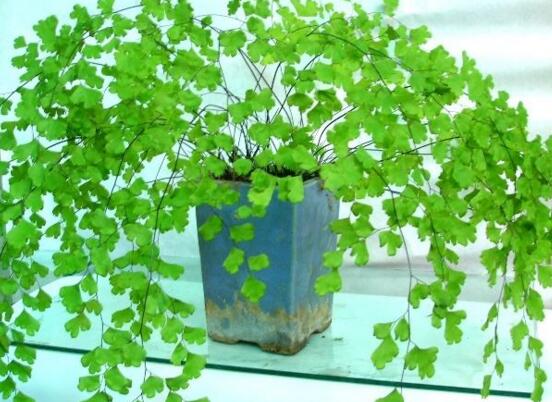
Many flower lovers think that as long as care and management are done well, the maidenhair fern will be able to grow healthily, but in fact this idea is not entirely correct, because pruning and letting it grow healthily are not contradictory; instead, pruning can help the maidenhair fern grow faster. For example, cutting off old branches and leaves can reduce nutrient consumption, allowing new leaves to get more nutrients and thus grow better, so pruning is very necessary.
II. When to prune maidenhair fern
1. When the plant shape is messy
Because the maidenhair fern grows relatively fast, after a period of time its branches and leaves become very lush. Not only will the branches and leaves be too dense, but there will also be messy and crowded branches, making the overall plant shape look very messy, and also causing some leaves blocked inside to lack light and turn yellow. At this time, pruning is needed.
2. When repotting and removing the plant from the pot
In the cultivation methods for maidenhair fern, we once emphasized that it should be repotted with new soil every 1-2 years. When removing the plant from the flower pot, some old fibrous roots in the root system need to be cut off, and this is also a rare opportunity in the year to prune the roots. Flower lovers must not miss it.
3. Before growth resumes in spring
When the maidenhair fern is overwintering and dormant, it is inevitable that some yellow leaves, dead branches, and so on will appear. If left alone, they will affect its appearance, and it will be difficult for them to return to green again, so pruning is also needed at this time. Cutting them off can make growth more vigorous when the spring growing season arrives.
III. Pruning methods for maidenhair fern
1. Use relatively sharp scissors to cut off the thinner and older branches among the branches crossing each other on the plant, so that the overall plant shape remains good and the distribution of branches and leaves is more even. Be careful not to cut off all the interwoven branches, otherwise it will look abrupt and unattractive.
2. Shaping. In spring, how do you prune the maidenhair fern to make it look beautiful? Besides cutting off dead and yellow branches and leaves, you can also use thin wire, wooden sticks, supports, and so on to shape it, letting the plant grow in the expected direction, so you can grow the shape the flower lover wants. However, when shaping, be careful to avoid breaking the branches.
IV. Pruning precautions
After pruning, do not place the maidenhair fern in sunlight; instead, care for it in a relatively cool place. Wait until the cut surfaces dry naturally, then water appropriately. At the same time, clean up the cut branches and leaves to avoid them falling into the flower pot and mixing with the soil.
Maidenhair fern cultivation methods and precautions for maidenhair fern, teaching you how to grow maidenhair fern well
Among ferns, the maidenhair fern is one of the most widely cultivated species. Its stems and leaves are elegant and varied, with graceful forms and a small plant shape, making it extremely suitable for small pot cultivation and for accenting rock bonsai. Because the black leaf stalks are slender and glossy, closely resembling human hair, and their texture is very soft and beautiful, like a young girl's soft hair, it is also called "maidenhair".
(I) Morphological characteristics:Perennial evergreen herb, plant height 15-40 cm. Rhizome creeping, densely covered with brown lanceolate scales. Leaf stalks slender, chestnut-black, thin and hard, about 5-23 cm long, shaped like iron wire. Leaves sparse, ovate-triangular to oblong-ovate, 2-3 times pinnately finely divided, pinnules nearly round or fan-shaped, dark green, with bluntly rounded coarse incisions. Sori round, borne on the underside of the leaves.
(II) Habits:Originally wild-growing on wet stones in streamside valleys, it likes warm, humid and semi-shaded environments, is not cold-tolerant, and avoids direct sunlight. It likes loose, fertile and calcareous sandy loam.
(III) Cultivation and management:When potting, light-colored glazed pots and clay pots can be chosen; the potting soil must have good water permeability and aeration. Generally use humus-rich peat soil or leaf mold, then add about 1/3 coarse sand and fine sand, and put in some bone meal. The bottom of the pot should be lined with some broken tiles or coarse sand to facilitate drainage. The rhizome planting depth is 1.5-2.5 cm.
The maidenhair fern likes shade and fears light, and cannot grow smoothly under strong light. Potted plants should be placed under half-day shade or indirect light inside a shed for cultivation, and exposure to sunlight must be avoided in summer. Water fully during the growing season. Normally water once a day; in summer, water 2 times a day and maintain relatively high air humidity; in the high-temperature summer season, mist the leaf surface 2-3 times a day to keep the leaf color emerald green, and the pot can also be soaked in water once a week. After late autumn, gradually reduce the frequency of watering, keeping the potting soil moist is enough, to enhance its cold resistance. When water is insufficient, the leaves easily turn yellow. But if the soil moisture is too saturated, or if a large amount of water is given immediately when the roots are too dry, the plant will wilt and may even die. It does not need much fertilizer; during the growing period, apply liquid fertilizer once every 15-30 days, and nitrogen fertilizer can be topdressed at the seedling stage. When fertilizing, do not let fertilizer stain the leaves, otherwise the leaves easily turn dry and yellow, reducing ornamental value.
The maidenhair fern has strong adaptability and grows quickly. If the leaf clump is too dense, growth will weaken and leaves will turn yellow, so it should be divided and propagated or repotted in time. The maidenhair fern likes calcium fertilizer. When dividing or repotting, a small amount of lime and crushed eggshells can be added to the pot to supplement some calcium fertilizer. An overly dense leaf clump is also unfavorable for new leaf germination, so appropriate pruning can be done in autumn, removing some old leaves and yellow leaves, to help maintain the plant's fresh and graceful appearance. The suitable growth temperature is 18-25°C, and the overwintering temperature should not be lower than 10°C.
(IV) Propagation: commonly by division or spore propagation
1. Division propagation.It can be done indoors in all four seasons, but generally it is carried out in early spring together with repotting. Take the mother plant out of the pot, cut its rhizome, so that each piece carries part of the rhizome and leaves, then plant them separately in small pots. Cover the rhizome with mixed soil, water, and place in a shady and humid environment for cultivation, and new plants can be obtained.
2. Spore propagation.Place peat and fine sand used as the substrate in an oven for high-temperature sterilization to kill pathogens and weed seeds. Then, put the sterilized soil into a shallow sowing pot. Cut leaves with mature spores, collect the spores and evenly scatter them on the shallow sowing pot, no need to cover with soil, cover the top with a glass sheet, soak water from the bottom of the pot, keep the potting soil moist, and place it in a semi-shaded environment at 20-25°C. After about one month, the spores can germinate into prothallia, and after they fill the pot, they can be divided and planted. Note that 1-2 days before division and planting, the glass on the sowing pot should be removed for ventilation, to avoid causing plant rot or pest and disease problems. In addition, in warm and humid environments, it very easily disperses spores and reproduces on its own.
Precautions for cultivating maidenhair fern
Pest and disease control:The main problem is leaf blight. In the early stage of the disease, spray Bordeaux mixture 1-2 times for control. For pests, there are scale insects, which can be killed by spraying 50% malathion 1500 times solution, or 2.5% deltamethrin 3000 times solution.
Brown scorched leaf edges:Maidenhair fern leaves most easily develop brown scorched edges, which is a common problem in cultivation. The maidenhair fern originally grows in shady and damp wall cracks or on stone surfaces, and likes moisture most. Because summer light is strong, if the maidenhair fern is not placed in a shaded environment, it cannot grow normally. Direct sunlight causes the water in the leaves to evaporate quickly. Before the roots can absorb water up, some cells in the leaves have already shrunk and dehydrated, and the green color gradually fades, thus scorched edges appear. Rescue measures:
①It must immediately be placed in a semi-shaded place for cultivation.
②Cut off the scorched leaves, and promptly spray water on the leaf surface and the surrounding ground.
③It should be cared for carefully, and try to avoid being stimulated by strong light again.
Leaves turning black:Due to improper care, the leaves of the maidenhair fern often turn black. The causes and control measures:
①Winter temperatures are low, and it suffers frost damage from late frost or early frost. The maidenhair fern likes a warm and humid climate, is not cold-tolerant, and the suitable growth temperature is 15-24°C. If the winter room temperature is above 10°C, the leaves can remain emerald green; below 5°C, they will turn black and yellow.
②Too shady, with no sunlight for a long time. The maidenhair fern fears summer heat and cannot be exposed to sunlight, but it also cannot be completely shaded. In summer, it is best to place it outdoors under a shade shed and under large trees, or move it outdoors at night and back indoors during the day. In winter, it should receive sufficient light.
③Summer weather is stuffy and hot, with poor ventilation. Air humidity should be increased and ventilation strengthened.
④Fertilizer and water issues. The maidenhair fern likes humus-rich sandy loam and needs sufficient fertility. Charcoal powder and brick crumbs can be added to the culture soil to improve the aeration and water permeability of the potting soil. The potting soil should be allowed to dry before watering and kept alternately dry and wet.
The maidenhair fern can absorb about 20 micrograms of formaldehyde per hour, so some people compare the maidenhair fern to the most effective biological "purifier". Its own strong air purification effect plays an important role in improving the home environment.
Maidenhair fern cultivation methods and precautions, teaching you how to grow maidenhair fern well
Among ferns, the maidenhair fern is one of the most widely cultivated species. Its stems and leaves are elegant and varied, with graceful forms and a small plant shape, making it extremely suitable for small pot cultivation and for accenting rock bonsai. Because the black leaf stalks are slender and glossy, closely resembling human hair, and their texture is very soft and beautiful, like a young girl's soft hair, it is also called "maidenhair".
(I) Morphological characteristics: Perennial evergreen herb, plant height 15-40 cm. Rhizome creeping, densely covered with brown lanceolate scales. Leaf stalks slender, chestnut-black, thin and hard, about 5-23 cm long, shaped like iron wire. Leaves sparse, ovate-triangular to oblong-ovate, 2-3 times pinnately finely divided, pinnules nearly round or fan-shaped, dark green, with bluntly rounded coarse incisions. Sori round, borne on the underside of the leaves.
(II) Habits: Originally wild-growing on wet stones in streamside valleys, it likes warm, humid and semi-shaded environments, is not cold-tolerant, and avoids direct sunlight. It likes loose, fertile and calcareous sandy loam.
(III) Cultivation and management: When potting, light-colored glazed pots and clay pots can be chosen; the potting soil must have good water permeability and aeration. Generally use humus-rich peat soil or leaf mold, then add about 1/3 coarse sand and fine sand, and put in some bone meal. The bottom of the pot should be lined with some broken tiles or coarse sand to facilitate drainage. The rhizome planting depth is 1.5-2.5 cm.
The maidenhair fern likes shade and fears light, and cannot grow smoothly under strong light. Potted plants should be placed under half-day shade or indirect light inside a shed for cultivation, and exposure to sunlight must be avoided in summer. Water fully during the growing season. Normally water once a day; in summer, water 2 times a day and maintain relatively high air humidity; in the high-temperature summer season, mist the leaf surface 2-3 times a day to keep the leaf color emerald green, and the pot can also be soaked in water once a week. After late autumn, gradually reduce the frequency of watering, keeping the potting soil moist is enough, to enhance its cold resistance. When water is insufficient, the leaves easily turn yellow. But if the soil moisture is too saturated, or if a large amount of water is given immediately when the roots are too dry, the plant will wilt and may even die. It does not need much fertilizer; during the growing period, apply liquid fertilizer once every 15-30 days, and nitrogen fertilizer can be topdressed at the seedling stage. When fertilizing, do not let fertilizer stain the leaves, otherwise the leaves easily turn dry and yellow, reducing ornamental value.
The maidenhair fern has strong adaptability and grows quickly. If the leaf clump is too dense, growth will weaken and leaves will turn yellow, so it should be divided and propagated or repotted in time. The maidenhair fern likes calcium fertilizer. When dividing or repotting, a small amount of lime and crushed eggshells can be added to the pot to supplement some calcium fertilizer. An overly dense leaf clump is also unfavorable for new leaf germination, so appropriate pruning can be done in autumn, removing some old leaves and yellow leaves, to help maintain the plant's fresh and graceful appearance. The suitable growth temperature is 18-25°C, and the overwintering temperature should not be lower than 10°C.
(IV) Propagation: commonly by division or spore propagation
1. Division propagation. It can be done indoors in all four seasons, but generally it is carried out in early spring together with repotting. Take the mother plant out of the pot, cut its rhizome, so that each piece carries part of the rhizome and leaves, then plant them separately in small pots. Cover the rhizome with mixed soil, water, and place in a shady and humid environment for cultivation, and new plants can be obtained.
2. Spore propagation. Place peat and fine sand used as the substrate in an oven for high-temperature sterilization to kill pathogens and weed seeds. Then, put the sterilized soil into a shallow sowing pot. Cut leaves with mature spores, collect the spores and evenly scatter them on the shallow sowing pot, no need to cover with soil, cover the top with a glass sheet, soak water from the bottom of the pot, keep the potting soil moist, and place it in a semi-shaded environment at 20-25°C. After about one month, the spores can germinate into prothallia, and after they fill the pot, they can be divided and planted. Note that 1-2 days before division and planting, the glass on the sowing pot should be removed for ventilation, to avoid causing plant rot or pest and disease problems. In addition, in warm and humid environments, it very easily disperses spores and reproduces on its own.
Precautions for cultivating maidenhair fern
Pest and disease control: The main problem is leaf blight. In the early stage of the disease, spray Bordeaux mixture 1-2 times for control. For pests, there are scale insects, which can be killed by spraying 50% malathion 1500 times solution, or 2.5% deltamethrin 3000 times solution.
Brown scorched leaf edges: Maidenhair fern leaves most easily develop brown scorched edges, which is a common problem in cultivation. The maidenhair fern originally grows in shady and damp wall cracks or on stone surfaces, and likes moisture most. Because summer light is strong, if the maidenhair fern is not placed in a shaded environment, it cannot grow normally. Direct sunlight causes the water in the leaves to evaporate quickly. Before the roots can absorb water up, some cells in the leaves have already shrunk and dehydrated, and the green color gradually fades, thus scorched edges appear. Rescue measures:
① It must immediately be placed in a semi-shaded place for cultivation.
② Cut off the scorched leaves, and promptly spray water on the leaf surface and the surrounding ground.
③ It should be cared for carefully, and try to avoid being stimulated by strong light again.
Leaves turning black: Due to improper care, the leaves of the maidenhair fern often turn black. The causes and control measures:
① Winter temperatures are low, and it suffers frost damage from late frost or early frost. The maidenhair fern likes a warm and humid climate, is not cold-tolerant, and the suitable growth temperature is 15-24°C. If the winter room temperature is above 10°C, the leaves can remain emerald green; below 5°C, they will turn black and yellow.
② Too shady, with no sunlight for a long time. The maidenhair fern fears summer heat and cannot be exposed to sunlight, but it also cannot be completely shaded. In summer, it is best to place it outdoors under a shade shed and under large trees, or move it outdoors at night and back indoors during the day. In winter, it should receive sufficient light.
③ Summer weather is stuffy and hot, with poor ventilation. Air humidity should be increased and ventilation strengthened.
④ Fertilizer and water issues. The maidenhair fern likes humus-rich sandy loam and needs sufficient fertility. Charcoal powder and brick crumbs can be added to the culture soil to improve the aeration and water permeability of the potting soil. The potting soil should be allowed to dry before watering and kept alternately dry and wet.
The maidenhair fern can absorb about 20 micrograms of formaldehyde per hour, so some people compare the maidenhair fern to the most effective biological "purifier". Its own strong air purification effect plays an important role in improving the home environment.
Through the detailed introduction in this article, we hope everyone can gain something from it! Thank you all for your support and attention to the Succulent Garden!