The benefits and uses of Oriental lilies: rich in flower colors and excellent for viewing, and they can treat tuberculosis
Everyone is probably familiar with Oriental lilies. With beautiful flower shapes and rich colors, they are a very attractive flowering plant. In daily life, many flower lovers grow Oriental lilies, and most of them do so simply for their beauty. However, if you think Oriental lilies are only beautiful, you would be greatly mistaken, because Oriental lilies have many other benefits and uses. Today, let's take a closer look together with the editor.
The benefits and uses of Oriental lilies
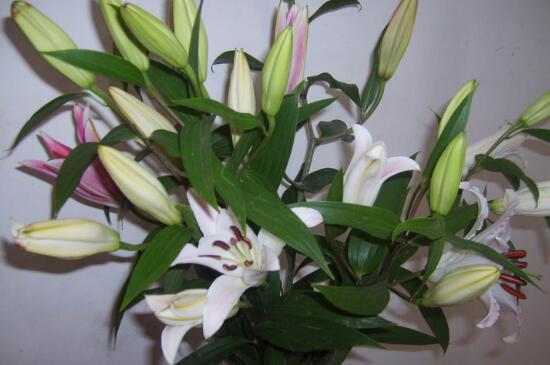
1. Ornamental value
When it comes to the benefits and uses of Oriental lilies, the first thing that comes to mind is naturally their ornamental value. It is said that Oriental lilies are the queen of lilies. With beautiful flower shapes and rich colors, whether white, yellow, or pink, they all look extremely beautiful. Getting up in the morning and looking at the beautiful blooms of Oriental lilies can make a person feel very cheerful.
2. Beautifying the home
Because Oriental lilies are very beautiful, placing them indoors so that when they bloom they beautify the home. In an unchanging indoor environment, placing a few pots of Oriental lilies will give you a subtle sense of romance and warmth at home. After a busy day, opening the door and looking at the beautiful Oriental lily flowers, a person's fatigue seems to drift away.
3. Purifying the air
Besides looking good, Oriental lilies, like other indoor potted plants, also have the benefit of purifying the air. If there is a strong odor indoors or the space has been unused for a long time, then you might as well place two pots of Oriental lilies, and soon the indoor air will become fresh. Living in a comfortable environment ensures both a person's health and mood.
4. Economic value
As a common indoor potted plant, Oriental lilies are very easy to grow, and placing them indoors not only purifies the air but also beautifies the home. Such a plant is naturally in demand by the public, and where there is demand there is a market, so growing Oriental lilies in large quantities can make money.
5. Medicinal value
In addition to the above points, the benefits and uses of Oriental lilies are also reflected in their medicinal properties. According to research, Oriental lilies contain special nutrients such as colchicine. When these components act on the human body, they not only have a good nourishing effect but can also treat diseases such as chronic bronchitis and tuberculosis. In addition, Oriental lilies have a certain therapeutic effect on various cancers and are also a natural anti-tumor medicine.
6. Cultivating character
Growing Oriental lilies indoors can also cultivate our character and enhance our temperament. Not only that, but growing Oriental lilies for a long time can also regulate mood, relieve stress, and increase vitality. It can be said that growing Oriental lilies can prevent the environment from being too dull, which helps prolong the life of the grower.
Overall, Oriental lilies are very beautiful, and growing a pot of Oriental lilies indoors is very good for your health. So if you are tempted, you might as well grow a pot at home, and after it blooms, you can fully enjoy its beauty. That's all the editor has to introduce about the benefits and uses of Oriental lilies, and I hope it can be helpful to everyone.
What are the characteristics of lilies_An introduction to the benefits, uses, and prices of lilies
The lily is a very beautiful flowering plant, and its qualities and significance are deeply cherished by many people. It not only has very good ornamental value but also carries beautiful symbolism. There are many varieties of lilies, and different varieties display different charms. Its appearance is very elegant and alluring, and when viewing it, it also carries a faint floral fragrance, bringing us a different kind of beautiful enjoyment. Lilies have a unique spirituality that lets people enter a different world while admiring them, purifying people's souls and welcoming a different kind of bright life. Below, the editor will introduce the characteristics of lilies, as well as the benefits and uses of lilies, and briefly introduce the price of lilies, so that more and more people can better understand lilies.
[Lily—Introduction]
The lily is a perennial herbaceous bulbous plant belonging to the Liliaceae family and Lilium genus, and it is especially popular. It originated in China and is mainly distributed in eastern Asia, Europe, North America, and other temperate regions of the Northern Hemisphere, where it is very abundant. More than 120 species of lilies have been developed worldwide, and China alone has more than 50 species. There are many varieties, which can be classified by variety, color, and so on. Different lilies display different effects, and their varieties are also very good. The bulbs of lilies are rich in starch and are edible, and they also have very good medicinal value.
[Lily—Characteristics]
There are many varieties of lilies, mainly including Lilium lancifolium, Lilium pumilum, Lilium speciosum, and so on. Their bulbs are nearly white in color and relatively thick and fleshy. They mainly begin to form buds in early June and begin to bloom in mid-July. Their flowering period is relatively long, ending in late July, and the fruiting period is from July to October. When lilies are in full bloom, their flower colors are very rich, and they have been praised by many people. Their beautiful and moving blooming constantly pursues beautiful wishes. Especially the lilies blooming in the wind display a noble soul, using their hard-won life to bloom with the brilliance of life for us. They are flowers with very beautiful symbolism.
[Lily benefits—Medicinal value]
The lily is a very traditional export specialty of China, and lilies can be eaten fresh or dried. They are rich in nutrients such as protein, reducing sugars, fat, calcium, phosphorus, iron, starch, vitamin B, vitamin C, colchicine, and various alkaloids, and have a very good nourishing effect on the human body. They can effectively prevent various diseases caused by seasonal changes. Lilies have the effects of calming the heart and soothing the nerves, and moistening the lungs to stop coughing, and are especially beneficial for people with weak constitutions. The lily is sweet in nature and flavor, slightly bitter and slightly cold, and enters the heart and lung meridians. It has the effects of nourishing yin and moistening the lungs, clearing the heart and calming the nerves, and has very good therapeutic effects on chronic cough due to yin deficiency, blood-streaked sputum, the later stages of febrile disease with unresolved residual heat, insomnia and frequent dreaming, mental absentmindedness, carbuncles and swellings, eczema, or dysphoria and palpitations caused by emotional distress.
[Lily effects—Culinary value]
Lilies can also be made into delicious dishes
1. Lily congee: Using lilies and japonica rice, it is very suitable for people who are physically weak, have heart vexation and insomnia, or low fever and irritability. You can also add white fungus and mung beans, which has the effects of nourishing yin and moistening the lungs, and clearing heat and detoxifying.
2. Lily soup: Boil lilies into soup and drink it, adding some white sugar, which is very beneficial for tuberculosis patients.
3. Lily decoction: Use lily powder, dwarf lilyturf tuber, apricot kernel, honey-fried loquat leaf, and three-leaf plants to boil into water, which has the effects of nourishing yin and releasing the exterior, and moistening the lungs to stop coughing.
4. Lily tea: Steep lilies and honey in tea and drink it; the therapeutic effect is also very good.
5. Rock sugar stewed lilies: Use lilies, rock sugar, and coltsfoot flower to boil into water and drink, which has the effects of clearing the heart and nourishing the lungs, relieving restlessness and quenching thirst, and stopping coughing and moistening the lungs.
6. Lily and winter melon soup: Use lilies, fresh winter melon, and eggs to make a soup and drink, which has the effects of relieving summer heat and clearing heat, and is especially suitable for drinking in summer.
[Lily effects—Beauty value]
The lily has a pure and elegant appearance, a faint fragrance, an elegant and alluring flower posture, and pure white and delicate flower colors. It is called the "Fairy in Cloud Garments" and is often used by people as a cut flower for viewing. It is very beautiful and delicate. Fresh lilies are rich in mucilage and vitamins, which are very beneficial to the metabolism of skin cells. Lilies can be used in face masks and have the effect of beautifying and nourishing the skin, making your skin smooth, white, and tender. They are a very good flowering plant for beauty.
[Lily—Price]
There are many varieties of lilies, and different varieties have different prices. Lilies from different places and different seasons are also different. Generally, lilies cost 5-10 yuan each, and pink lilies cost 15-25 yuan each. The value of lilies is not particularly expensive, and we can buy them back and grow them as potted plants. They are a very good flowering plant.
Summary: The above is the editor's introduction to the characteristics of lilies, as well as the benefits, uses, and prices of lilies, so that more and more people can learn to grow lilies, have a better understanding of lilies, and make better use of lilies. Thank you for reading.
[More related information] Money tree planting techniques Sophora japonica planting methods What are the effects of black burreed Complete collection of rose flower meanings Sophora japonica pictures
The benefits and uses of lilies, and how to grow lilies. What are its benefits and uses?
Lily, also known as Qiangqu, Fanjiu, Shandan, Daoxian, Chongmai, Zhongting, Moluo, Chongxiang, Zhongfenghua, Baihesuan, Dashifusuan, Suannaoshu, and Yehehua, is a perennial herbaceous bulbous plant of the Liliaceae family and Lilium genus. It originated in China and is mainly distributed in eastern Asia, Europe, North America, and other temperate regions of the Northern Hemisphere. At least 120 varieties have been found worldwide, of which 55 species are produced in China. It is mainly used for ornamental or medicinal purposes, and common varieties include: Asiatic lily, Easter lily, and Oriental lily.
How to grow lilies
1. Temperature
To obtain high-quality lily cut flowers, temperature control in the greenhouse is very important. Within 3-4 weeks after planting, the soil temperature must be kept at a low temperature of 9-13°C to promote rooting. Too low a temperature will unnecessarily prolong the growth period, while a temperature above 15°C will lead to poor development of stem roots. These stem roots will soon replace the basal roots in providing 90% of the plant's water and nutrients, so to obtain high-quality lilies, the development of stem roots is very critical. After the rooting period, the ambient temperature for Oriental lilies should be controlled at 15-25°C, and the ambient temperature for Asiatic lilies and Easter lilies should be controlled at 14-23°C. If the daytime temperature is too high, ventilation and shading should be used to lower the temperature; if the nighttime temperature reaches 15-25°C, lily cut flower stems will be short, there will be fewer buds, and quality will decline. At this time (domestically available), spraying the plants with a gibberellin solution to increase stem length can be used. The specific amount varies with different growth stages and different ambient temperatures. Generally, less can be used in the early growth stage and more in the later stage. In domestic solar greenhouses, winter temperatures generally prolong the growth period of lilies and seriously affect cut flower quality, so temperature regulation measures should be increased.
2. Humidity
The soil humidity before planting is best when the soil holds together when squeezed and crumbles when dropped. In hotter seasons, if conditions permit, water once with cold water before planting to lower the soil temperature. After planting, water once again so that the soil and bulbs are fully in contact, creating good conditions for the development of stem roots. Subsequent watering should be based on keeping the soil moist, that is, a handful of soil holds together when squeezed but no water comes out. Watering is generally done in the morning on sunny days. The relative humidity should preferably be 80%-85%, and sharp fluctuations in relative humidity should be avoided, otherwise leaf scorch may occur.
3. Fertilizer
In the early stage of growth, flowering lily bulbs mainly consume the nutrients stored in their own scales, so too much base fertilizer is not needed before planting. One month after planting, some fertilizer can be applied according to soil fertility. Lilies have a very high demand for potassium, and a compound fertilizer can be prepared in the ratio N-P2O5-K2O=14:7:21. Apply 10 kg per mu each time, once every 10-15 days, until 3 weeks before flower harvest. At the same time, attention should also be paid to the supplementation of trace elements such as iron, boron, and zinc.
4. Light
Light is an important condition for controlling quality, and lily flower bud development especially requires sufficient light. Insufficient light will cause poor plant growth and cause lily bud drop, lighter leaf and flower colors, and shortened vase life. When growing lilies in winter in northern China, due to the influence of glass or plastic film and other insulation materials, about 25-30% of sunlight is blocked, so in addition to keeping the surface of glass and plastic film clean to ensure good light transmission, some varieties also need supplemental lighting, which can be done with incandescent lamps. In good modern greenhouses, horticultural high-pressure sodium lamps should be used. When producing lilies in summer, strong direct sunlight should also be avoided, generally using shade nets for shading. Asiatic and Easter lilies are shaded 40%, and Oriental lilies are shaded 50%.
5. Carbon dioxide
Carbon dioxide is beneficial to the growth and flowering of lilies. On sunny mornings from 8-10 o'clock, in an unventilated shed, apply carbon dioxide gas pills to increase the carbon dioxide content in the shed. Other methods can also be used, for example: hang a plastic bucket every 15-20 m (the bucket height from the ground is 1 m), fill the bucket with a 20% sodium bicarbonate solution (the baking soda commonly used at home is sodium bicarbonate), then gradually pour the prepared 10% dilute sulfuric acid solution into each plastic bucket in 3-4 portions. Sodium bicarbonate reacts with sulfuric acid to produce carbon dioxide gas. A solar greenhouse 60 m long and 7 m wide requires 1.7 kg of pure sodium bicarbonate and 1 kg of concentrated sulfuric acid (concentration 98%).
Lily propagation methods
1. Lily propagation by dividing bulbs
If you need to propagate 1 plant or a few plants, you can use the lily bulb division propagation method. Usually, some small bulbs grow around the stem plate of the old bulb. When harvesting lilies in September-October, these small bulbs can be separated and stored in indoor sand to overwinter. The following spring, plant them in pots. After growing until September-October of the third year, they can grow into large bulbs and be cultivated into large plants. Bulb division propagation produces a small quantity and is only suitable for home potted propagation.
2. Lily propagation by sowing
Lilies can be propagated by sowing. The main method is to collect seeds in autumn and store them until sowing the following spring. After sowing, they germinate in about 20-30 days. During the seedling stage, appropriate shading is needed. By early autumn, the underground part has already formed small bulbs, which can be dug out and planted separately. Depending on the species, some seed-grown seedlings bloom in 3 years, while others need many years of cultivation before they bloom, so it is not suitable for home use.
3. Lily propagation by scale cuttings
The lily scale cutting propagation method can be used for moderate quantities. In autumn, dig out the bulbs, break off the plump and thick scales from the old bulb one by one. The base of each scale should carry a small part of the stem plate. Let them dry slightly in the shade, then insert them into flower pots or shallow wooden boxes filled with river sand (or vermiculite), allowing 2/3 of the scale to be inserted into the substrate, keeping the substrate at a certain humidity. At about 20°C, in about 1.5 months, roots will grow from the wound of the scale. In winter, the humidity should be kept at about 18°C, and the river sand should not be too wet. When cultivated until the following spring, the scales can grow small bulbs. Separate them, plant them in pots, and manage them carefully. After about 3 years of cultivation, they can bloom.
4. Lily propagation by bulbils
The lily bulbil propagation method is only suitable for a few species. For example, lilies such as Lilium lancifolium and Lilium 'Yellow Giant' mostly use this method. The method is: take the small bulbs formed in the leaf axils of the aboveground stems and leaves (also called "bulbils," when the bulbils have fully grown in summer but have not yet fallen off) and cultivate them. From growing into large bulbs to blooming usually takes 2-4 years. To encourage the production of more small bulbils for propagation, after the plant blooms, press the aboveground stem down and shallowly bury it in soil, or divide the aboveground stem into small sections each with 3-4 leaves and shallowly bury the stem nodes in wet sand, and then small bulbils can grow from the leaf axils.
5. Lily propagation by tissue culture
The lily tissue culture propagation method uses different parts of the lily, such as filaments, styles, ovaries, and axillary buds at the base of scales, to culture test-tube plantlets, which are then transplanted to seedbeds for care and growth to produce seed bulbs.
Harvesting and storage of lilies
1. Harvesting
Harvest after at least 2-3 buds have shown color. Harvesting too early affects flower color, making the flowers look pale and unattractive, and some buds may not open. Harvesting too late will make post-harvest handling and packaging difficult, the petals will be soiled by pollen, and flowers that have already opened will release ethylene, greatly shortening the vase life of the flowers.
2. Handling
After harvesting, remove the lower 10 cm of leaves, then grade and bundle them. A grade interval of 10 cm is appropriate. In a bundle of lilies, the longest stem and the shortest stem should preferably differ by no more than 5 cm, and the flower tops should be aligned.
3. Storage
After bundling, lilies should immediately be placed in clean, pre-cooled water, then placed in a cold storage room. The temperature of the water and the cold storage room should preferably be 2-3°C.
Common pests and diseases of lilies and their control methods
(1) Blue mold
Symptoms
During storage, white spots grow on the rotting lesions of the scales, and then fluffy green-blue patches grow. After infection, even at a low temperature of -2°C, the rot will gradually increase. The pathogen will eventually invade the basal plate of the bulb, making the bulb worthless or causing stunted plant growth. Although infected bulbs look unhealthy, as long as the basal plate of the bulb is intact, the plant's growth during planting will not be affected. After planting, the infection will not transfer to the stem, nor will it infect the plant from the soil.
Control
Store the bulbs at the recommended minimum temperature; do not plant bulbs whose basal plates have already been damaged: infected bulbs must be soaked for 30 minutes in a 1/1000 aqueous solution of fungicides such as captan, chlorothalonil, or carbendazim before planting. After planting, maintain suitable soil temperature.
(2) Bulb and scale rot and stem diseases caused by Fusarium
Symptoms
Plants with bulb and scale rot grow very slowly, and the leaves are pale green. Underground, brown spots appear at the top of the scales, on the sides, or where the scales connect to the basal plate, and these spots gradually begin to rot. If the basal plate stem is infected, then the entire bulb will rot. The stem disease caused by Fusarium is a disease that infects the aboveground part. The identifying sign is that the basal leaves turn yellow before maturity, and the yellowed leaves turn brown and fall off. On the underground part of the stem, orange to dark brown spots appear, and later the lesions expand and finally extend into the interior of the stem. After that, the stem rots, and finally the plant dies before maturity:
Control
a. Disinfect infected soil; b. Plant lightly or moderately infected bulbs as quickly as possible, and the soil temperature should be low.
(3) Rhizoctonia
Symptoms
If the infection is mild, it only harms the leaves in the soil and the green leaves below the young shoots, with sunken light brown spots appearing on the leaves. Generally speaking, although the plant's growth is somewhat affected, it can still continue to grow. In severely infected plants, the upper growth is hindered, and the white leaves underground as well as the lowest leaves aboveground will rot or wilt and fall off, leaving only brown scars on the stem:
Control
Disinfect soil suspected of infection with a soil disinfectant. After disinfection, it must be ensured that the soil is no longer infected; if the previous crop has already shown infection, ordinary soil disinfectants cannot be used, so before planting, pre-treat the soil with a fungicide for controlling Rhizoctonia (fully penetrating 10 cm deep into the soil).
(4) Phytophthora
Symptoms
Foot rot of the plant (Phytophthora) will hinder growth or cause sudden wilting. Soft rot occurs at the infected area at the base of the stem, becoming dark green to dark brown and extending upward, the leaves turn yellow, and discoloration begins at the base of the stem. Similar soft rot infections often also occur on the aboveground stem, causing stem damping-off or bending.
Control
Disinfect infected soil with a general soil disinfectant; during cultivation, fungicides that control Pythium can also effectively control foot rot; ensure good soil drainage conditions; prevent the crop from remaining wet for a long time after watering: in summer, the soil temperature should be as low as possible.
(5) Pythium
Symptoms
This type of fungus infects both individual plants and plants within an area. Plants are short, the lower leaves turn yellow, the upper leaves become narrower, the leaf color is paler, and they often wilt. In plants affected by root rot, the flower buds shrink and dry up. When the plant is pulled up, transparent, light brown rotting spots can be seen on the bulb and root crown, or they have completely become soft and rotten.
Control
Disinfect infected or suspected infected soil with a general soil disinfectant; maintain low soil temperature in the early cultivation period, and adopt correct cultivation procedures throughout the cultivation period: cultivation in boxes containing potting soil and peat can keep Pythium under control. After the crop has emerged or where Pythium infection may have occurred, a fungicide for controlling Pythium that is easy to spray onto the crop can be used, preferably in the evening. Spraying water for a few minutes (about three minutes) before applying the fungicide will significantly enhance the effect of the fungicide and can also rinse the crop clean.
The benefits and effects of lilies
1. Treating chronic lung diseases
For patients suffering from chronic bronchitis or emphysema, it has the effects of calming the heart, stabilizing the gallbladder, benefiting the intellect, and moistening the lungs to stop coughing. It can moisten the lungs to stop coughing and calm the heart and soothe the nerves. It has remarkable effects on chronic cough due to yin deficiency, moistening the lungs and resolving phlegm, blood-streaked sputum, and dysphoria and palpitations. It also has certain effects on regulating the lungs, and is used for dry cough due to lung dryness, cough due to lung deficiency, and lung cancer with vomiting blood, as well as for treating cough and dizziness.
2. Clearing heat and detoxifying
Whether it is the dry heat of summer or the dry heat of winter, you can often drink lily tea to clear and cool the lungs, reduce internal heat, and calm the nerves. It regulates the body's damp-heat balance and has a very good effect on health care.
3. Calming the nerves
Lilies have a certain sedative effect. They are especially effective for insomnia and frequent dreaming, and mental absentmindedness.
4. Beauty and skin care benefits
It is often said that fairness covers a hundred flaws. Women all hope their skin is delicate and fair, and lilies are not only pure white and delicate, but fresh lilies are also rich in mucilage and abundant vitamins. Therefore, they are very helpful to skin cell metabolism and can accelerate skin metabolism, making the skin more youthful. If lilies are often eaten, they have a beauty effect on the skin.
5. Can prevent and fight cancer
Lilies contain various alkaloids. These components have a preventive effect on leukopenia and can also increase blood cells, and have a therapeutic effect on cytopenia after chemotherapy and radiotherapy. If cancer patients undergo chemotherapy and radiotherapy, they can eat more lilies, which can reduce the damage to white blood cells and lessen the side effects of drugs. Moreover, lilies in the body can also promote and enhance the mononuclear phagocyte system and phagocytic function, and can improve the body's humoral immune capacity. Therefore, people who want to stay away from cancer can eat more lilies in their daily diet.
How to eat lilies
1. Lily congee
Take 50 grams of lily powder and 60 grams of japonica rice. First wash the lilies and rice separately, put them into a pot, add water, and simmer over low heat. When the lilies and japonica rice are cooked and soft, add an appropriate amount of sugar and it is ready to eat. It is especially suitable for middle-aged and elderly people and those who are physically weak after illness and have heart vexation, insomnia, low fever, and irritability. In addition, adding white fungus to lily congee has a stronger effect of nourishing yin and moistening the lungs; adding mung beans can strengthen the effect of clearing heat and detoxifying.
2. Lily soup
Remove impurities from the lilies and wash them, rinse them repeatedly in clean water, then add water and put them into a pot. Boil until extremely soft, add an appropriate amount of white sugar, and eat together with the soup. It can serve as an excellent dietary therapy for tuberculosis patients. Although it has a slight bitter taste when eaten, savored carefully it is sweet within the bitterness and leaves a pleasant aftertaste; if placed in the refrigerator for a while, it is also an excellent iced drink.
3. Lily decoction
Take 30 grams of lily powder, 9 grams of dwarf lilyturf tuber, 12 grams of mulberry leaf, 9 grams of apricot kernel, and 10 grams of honey-fried loquat leaf, add water and boil. It has the effects of nourishing yin and releasing the exterior, and moistening the lungs to stop coughing. Alternatively, take fresh lilies and lotus plumule and boil them together in water. Drinking the liquid frequently every day can treat mouth and tongue sores.
4. Steamed lily
Mix fresh lily petals with honey, steam them, and chew them to treat cough due to lung heat.
5. Stir-fried lily
Take 50 grams of lily powder and 50 grams of pork tenderloin slices, mix with salt, egg white, and wet starch, then stir-fry together in an oiled pan until hot, and add an appropriate amount of seasoning. This dish is mellow but not greasy, crisp, sweet, and fragrant, and has the effects of tonifying the five viscera and nourishing yin and clearing heat; for people with no appetite and reduced food intake, eating this dish can also increase appetite.
How to prevent and control leaf scorch in lilies?
First, young leaves curl slightly inward. After a few days, yellow to white spots appear on the scorched leaves. If leaf scorch is mild, the plant can still continue to grow normally, but if leaf scorch is very severe, the white spots can turn brown, and at the site of damage, the leaves bend. In very severe cases, all leaves and young shoots will fall off, and the plant will not develop further. This is called the most severe scorch. Control: The soil should be moist before planting; it is best not to use susceptible varieties: the planting depth should be appropriate, with 6-10 cm of soil above the bulb: during periods of increased sensitivity, avoid large differences in temperature and relative humidity in the greenhouse, and try to keep the relative humidity at about 75%.
How to prevent and treat bud drop and bud shriveling in lilies?
Bud drop occurs when the buds grow to 1-2 cm. The color of the buds turns pale green, and at the same time, the pedicel connecting to the stem shortens, after which the buds drop off. In spring, the lower buds are affected first, while in autumn, the upper buds will drop off first. Prevention and treatment: do not cultivate varieties prone to bud drop in environments with poor light. To prevent bud shriveling, the bulbs must not dry out during cultivation. Make sure the bulbs have a good root system and let them grow under conditions as suitable as possible, paying particular attention to light and transpiration.