How to grow sweet alyssum so it blooms profusely? Master watering, fertilizing, light and temperature
Sweet alyssum fills the air with fragrance when it blooms, and the number of flowers is very large; the many tiny blossoms gathered in the inflorescence are a delight to the eye. But different environments and growing methods affect the number of flowers. As an ordinary flower lover, how do you grow sweet alyssum so it blooms more? Let me tell you a few practical tips.
How to grow sweet alyssum so it blooms profusely
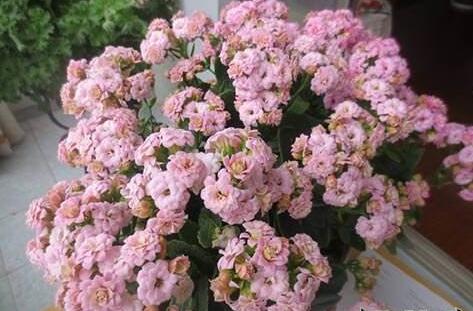
The number of flowers is directly related to nutrients. If water and nutrients are sufficient, it will produce more flowers and the colors will be vivid; conversely, if nutrients are insufficient, not only will there be fewer flowers, but the colors will be less bright. To ensure nutrients, you need proper watering and fertilizing.
1. How often to water sweet alyssum
1. Watering in spring and autumn
For sweet alyssum grown indoors, spring is an important period for sprouting new buds and growing, so you must be sure to water enough at this time, generally once every 5-7 days. Each watering should be moderate, neither too little nor too much; the standard is that there is no standing water and the soil surface does not turn white.
2. Watering in summer
Sweet alyssum is afraid of hot weather, so in summer watering needs to keep the soil moist, usually once every 3-5 days, and you must avoid the soil drying and caking. In addition, there is another watering tip in summer: you can appropriately spray some water on the leaves, which not only rinses the leaves but also has a cooling and moisturizing effect.
3. Watering in winter
Many plants need to be watered less often in winter, and sweet alyssum is the same, because when the temperature is lower in winter, sweet alyssum enters a slow-growing dormant period. Too much watering easily causes root rot, so in winter you should water once every 1-2 weeks.
2. How often to fertilize sweet alyssum
1. Growth period
In the growing methods for sweet alyssum, the importance of fertilizing is self-evident and very high, and the growth period determines whether it can sprout more flower buds. At this time, fertilize generally once every half month, mainly with dilute liquid fertilizer each time, and you can appropriately lower the concentration.
2. Flowering period
Before the flowering period of sweet alyssum, you can increase the amount of phosphorus fertilizer applied, which can promote flowering and make the flower colors more vivid. After flowering begins, you need to stop fertilizing, and no additional fertilizing is needed afterward. If the flowers fade in autumn, you can apply a small amount of potassium fertilizer.
3. Summer
When the temperature is above 30°C, sweet alyssum stops growing, and at this time no fertilizing is needed either, so generally no fertilizing is needed in summer. However, depending on temperature changes, you can water with some carbendazim solution, which not only prevents and controls pests and diseases but also improves the plant's disease resistance.
How to grow sweet alyssum so it blooms profusely, growing methods for sweet alyssum
Flower Bonsai Network introduction: Today the editor of Flower Bonsai Network will share with you an article about how to grow sweet alyssum so it blooms profusely. Flower lovers, let's take a look.
Growing sweet alyssum requires care and patience, so that you can grow a beautiful sweet alyssum. So, when growing sweet alyssum, how can you make it bloom more?
Sweet alyssum is a perennial herbaceous flower, often cultivated as an annual or biennial. It is much branched and prostrate, with a plant height of 15-30 cm. Leaves are alternate and lanceolate. The raceme is terminal, with small flowers densely clustered into a spherical shape, in colors such as white, light purple, deep purple, and purple-red; there are also large-flowered varieties and foliage varieties with white edges and variegated leaves, with a slight fragrance. Seeds are flat. The flowering period is from May to October.
Sweet alyssum prefers cool conditions, avoids damp heat, likes sunlight, and also tolerates partial shade. It has strong adaptability and is not strict about soil requirements, being relatively tolerant of drought and poor soil, but it grows well in fertile, well-drained soil.
Water and fertilizer management for sweet alyssum
When growing sweet alyssum, you need to maintain the supply of water and fertilizer. Because the flowering period of sweet alyssum is very long, you should fertilize and water appropriately. Generally, fertilize once every half month, preferably with dilute liquid fertilizer. Watering should meet the growth needs of sweet alyssum. For soil, generally choose well-drained soil, but note that it must not be too moist. So when watering, do it moderately.
In addition, during the process of growing sweet alyssum, you need to change the potting soil according to the plant's growth, so that it will grow well. With sufficient nutrients, sweet alyssum will have the possibility of blooming more.
Pruning for sweet alyssum flowering
Besides daily care, pruning is also an important method for making sweet alyssum bloom more.
Before sweet alyssum blooms, you need to pinch it back, generally twice, so that there will be more flowering branches and more flowers. When the sweet alyssum seedlings grow to about 10 cm, you can pinch them back by removing the tops of the seedlings to encourage branching. After about another month of growth, you can pinch them back again; at this time, mainly pinch the side branches, so that the side branches will also grow many new shoots, the overall plant shape of the sweet alyssum will become fuller, and the number of flowers will also be very large.
When sweet alyssum is blooming, cutting off the spent flowers can appropriately extend the flowering period. Note that before summer, prune it back hard, and it will bloom more vigorously in autumn. After sweet alyssum blooms, you can combine seed collection with pruning off spent flowers, which can promote the growth of new flowering branches. When the plant ages, prune it back hard to renew the plant and make it bloom again.
Growing methods for sweet alyssum
Propagation and cultivation of sweet alyssum
Sweet alyssum can be propagated by seeds or cuttings, but seed propagation is generally more common. In northern regions, spring sowing is more common, generally sowing and raising seedlings in a greenhouse in March. Sweet alyssum seeds germinate faster than ordinary flower seeds, and the seedlings emerge neatly. The optimum germination temperature is 20°C, and seedlings emerge in about 5 days. When there are 3-4 true leaves, transplant into pots, and they bloom in June. When summer is hot, growth is poor and flowering is very sparse; at this time, cut off the branches that have already flowered and strengthen fertilizer and water management, and they will bloom again in autumn. In North China and southern regions, autumn sowing is more common, overwintering in cold frames or protected areas, potting up or transplanting in March of the following year, and blooming in April.
In northern regions, spring sowing is more common, generally sowing and raising seedlings in a greenhouse in March. Sweet alyssum seeds germinate faster than ordinary flower seeds, and the seedlings emerge neatly. The optimum germination temperature is 20°C, and seedlings emerge in about 5 days. When there are 3-4 true leaves, transplant into pots, and they bloom in June. When summer is hot, growth is poor and flowering is very sparse; at this time, cut off the branches that have already flowered and strengthen fertilizer and water management, and they will bloom again in autumn. In North China and southern regions, autumn sowing is more common, overwintering in cold frames or protected areas, potting up or transplanting in March of the following year, and blooming in April.
Temperature:
The optimum temperature for rooting of cuttings is 18°C-25°C. Below 18°C, the cuttings root with difficulty and slowly; above 25°C, the cut ends of the cuttings are easily infected by pathogens and rot, and the higher the temperature, the greater the proportion of rot. When low temperatures are encountered after cutting, the main measure for keeping warm is to wrap the flowerpot or container used for cutting with plastic film; when the temperature is too high after cutting, the main measure for cooling is to shade the cuttings, blocking out 50-80% of sunlight, and at the same time mist the cuttings 3-5 times a day. On sunny days with higher temperatures, mist more often; on cloudy and rainy days with lower temperatures and higher humidity, mist less often or not at all.
Humidity:
After cutting, the relative humidity of the air must be maintained at 75-85%. Humidity can be increased by misting the cuttings 1-3 times a day. On sunny days, the higher the temperature, the more often you mist; on cloudy and rainy days, the lower the temperature, the less often you mist or you do not mist. But if you mist excessively, the cuttings are easily infected by pathogens and rot, because many kinds of pathogens exist in water.
Light:
Cutting propagation cannot do without sunlight, but the stronger the light, the higher the temperature inside the cuttings, the more vigorous the transpiration of the cuttings, and the more water they consume, which is not conducive to the survival of the cuttings. Therefore, after cutting, you must block out 50-80% of sunlight, and after the root system grows out, gradually remove the shade net: on sunny days, remove the shade net at 4:00 p.m. each day, and cover it again before 9:00 a.m. the next day.
Potting up or transplanting:
When potting up seedlings, first place coarse granular substrate or expanded clay 2-2 cm thick at the bottom of the pot as a drainage layer, sprinkle a layer of fully decomposed organic fertilizer on top as base fertilizer, about 1-2 cm thick, then cover with another layer of substrate about 1-2 cm thick, and then place the plant in, so as to separate the fertilizer from the root system and avoid burning the roots.
When does sweet alyssum bloom? Indoor sweet alyssum flowering time March-July (flowering period 30 days)
Sweet alyssum is a plant in the Brassicaceae family, also known as little white flower. The genus Lobularia in Brassicaceae has only 5 species worldwide. Sweet alyssum is native to the Mediterranean coast and is a perennial herbaceous plant. Sweet alyssum has a beautiful appearance and often blooms in a mass, with small flowers densely clustered into a spherical shape, in colors such as white, light purple, deep purple, and deep red, and it gives off waves of delicate fragrance. So when does sweet alyssum bloom? Let's take a look together with the editor of Flower Language Network!
Sweet alyssum flowering time
Sweet alyssum is a garden plant, and its plants are relatively short, with many branches. When it blooms, the flowers form a mass and give off waves of delicate fragrance. It is an excellent flower for arranging rock gardens, and also an excellent edging material for flower beds and flower borders. So do you know when sweet alyssum blooms? Sweet alyssum generally blooms in summer, in June-July, and the flowering period lasts about 30 days.
Although sweet alyssum is mainly used in gardening, some people also cultivate it indoors. So when does indoor sweet alyssum bloom? Is the flowering time of indoor sweet alyssum the same as that of open-air cultivated sweet alyssum? Under various artificial interventions, in fact the two different growing environments also lead to different flowering times for sweet alyssum. The flowering time of indoor-cultivated sweet alyssum is March-April, while open-air planted sweet alyssum blooms in June-July.
The common flower colors of sweet alyssum are generally white and purple. Sweet alyssum prefers a cool, dry climate and is not tolerant of cold and heat; it likes loose, well-drained soil, avoids standing water, and is relatively tolerant of drought and poor soil. I believe everyone now has some understanding of when sweet alyssum blooms. So do you know how sweet alyssum should be cared for during its full flowering period? Next, let's take a look at the points to note in sweet alyssum flowering-period care!
Sweet alyssum flowering-period care
1. Light
In late autumn, winter, and early spring, because the temperature is not very high, you should give it direct sunlight to help it carry out photosynthesis and form flower buds, bloom, and set seed. In summer, if high-temperature weather occurs, you need to shade it from about 50% of sunlight.
2. Temperature
It likes a cool climate, avoids extreme heat, and tolerates frost and cold. It is not very strict about winter temperature; as long as it is not exposed to frost, it can overwinter safely. It dies when the temperature reaches above 30°C in late spring and early summer. The most suitable growing temperature is 15-25°C.
3. Watering
You should master the watering principle of "alternate dry and wet, dry means dry thoroughly, do not water if not dry, and water thoroughly when you do water." On cloudy and rainy days or during low temperatures, lengthen the interval or do not water. Try to schedule watering at noon on sunny days when the temperature is relatively high.
4. Soil
Fertile, moist, and well-drained sandy loam is suitable. It is best to use peat + perlite, and leaf mold can also be used.
5. Fertilizing
Sweet alyssum has a long flowering period. Fertilize in a timely manner and water as needed; you should apply dilute liquid fertilizer once every half month. If you feel the plant is aging and declining, you can also prune it back hard to renew it, apply a little liquid fertilizer, and before long it will again be covered with flowers.