Is String of Hearts Toxic? Suitable Indoor Temperature Conditions for Growing It
There are many kinds of plants on Earth. Some plants are very beautiful but are not suitable for growing indoors, because they may contain certain toxins, so when people choose plants, they often first consider their safety. So is the highly ornamental String of Hearts toxic? Is String of Hearts suitable for growing indoors? Let the editor tell you the answer.
Is String of Hearts Toxic?
1. Above-ground parts / non-toxic
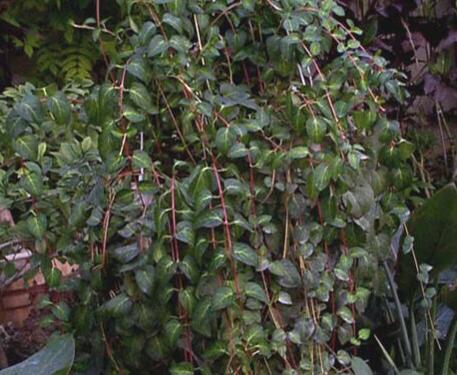
The above-ground parts of String of Hearts include stems and vines, leaves, flowers and so on. Its stems and vines are slender and grow creeping; if grown in a hanging basket, they will trail downward, and when the wind blows they sway with it. The heart-shaped opposite leaves are closely linked together, just like two people in love who are never apart. Scientific research shows that its stems, leaves and flowers are all non-toxic and will not harm people.
2. Underground parts / non-toxic
The underground rhizome of String of Hearts is relatively large, often a tuber, and it is also non-toxic. Therefore it can be said that the whole String of Hearts plant is non-toxic. Not only is it non-toxic, it also has certain medicinal effects, with the effect of clearing heat and detoxifying. It can be taken as a decoction or applied externally, and can treat swelling and toxins, fractures, bruises and injuries, and so on. Of course, gardening enthusiasts should not take it on their own at home.
Is String of Hearts Suitable for Growing Indoors?
Since String of Hearts is a non-toxic plant, is it suitable for growing indoors? The answer is that it can be grown indoors. Because String of Hearts has many benefits and strong adaptability, gardening enthusiasts often grow it in pots and hang it on walls or supports, letting its stems and vines trail down, making the plant shape very elegant and beautiful. But when growing it indoors, the following points must be done well.
How to Grow String of Hearts Indoors
1. Soil: Gardening enthusiasts are advised to mix leaf mold, garden soil and fine sand to make the growing soil, because this can ensure the soil is fertile, loose and well-drained. At the same time, some base fertilizer can be added when planting, at one tenth of the amount of the soil. In addition, replace the soil once every 1-2 years to ensure the soil conditions are more suitable for String of Hearts.
2. Temperature: String of Hearts has weak cold resistance. In winter, the temperature must be kept above 10 degrees. If it is below 8 degrees, it is prone to frost damage, so it is best to move it to a warm indoor spot. In summer, the temperature should be controlled below 32 degrees. You can cool it down by spraying water or moving it to a cool place, to avoid it entering dormancy early.
3. Light: Both partial shade and full light are suitable for the growth of String of Hearts, but the most suitable position is a bright place where scattered light can be seen. In summer, do not let it be exposed to direct sunlight. In winter, autumn and spring, light can be appropriately increased, and let it enjoy the sunlight, thereby reducing the appearance of diseases and pests.
4. Fertilizer and water: Both watering and fertilizing should follow one principle, which is moderation. Especially when watering, there must be no standing water. It is better to let the soil be appropriately on the dry side than to water too frequently. Fertilizing not only requires dilute fertilizer, but also attention to balanced nutrition. Do not increase the amount of nitrogen fertilizer applied just to promote leaf growth.
Is Pennywort Toxic? How to Plant Pennywort Seeds
Pennywort is currently one of the most popular aquatic plants. But many people say that pennywort is toxic, so is pennywort actually toxic? How do you plant pennywort seeds? Today I will share this knowledge with everyone.
How to Plant Pennywort Seeds?
Pennywort is relatively rarely propagated by sowing; generally speaking, it is propagated directly by division. Because pennywort is very easy to keep alive, most gardening enthusiasts directly buy pennywort seedlings, but some also like to sow pennywort, since in some places the distance is too far to mail seedlings. In addition, be careful when buying seeds, and do not buy fake pennywort seeds. Some gardening enthusiasts bought pennywort seeds with a blue coating; according to the experience of gardening enthusiasts, most of these are Dichondra repens seeds.
For the sowing methods of pennywort, there are mainly two methods. One is the conventional ordinary sowing method, and the other is more rough and simple: just throw it into water, soak it, and it will sprout on its own.
Sowing method one: Pour the seeds into a small container, add just enough water to cover the seeds. If the temperature is low, cover it with plastic wrap, change the water frequently, and place it in a cool, ventilated place. After a few days it will sprout. Once the sprouts grow to about one cm, it can be planted.
Sowing method two: Soak the seeds in a small amount of water for half an hour. Put soil in a pot, water it thoroughly, then pour the seeds together with the water they were soaked in into the pot, trying to pour them evenly and not pile them together. Cover with a thin layer of soil, spray water, and spray twice a day, just keeping the surface moist. Place it in a warm, dark place, and after about three days they will sprout. Once true leaves grow, they can be transplanted for hydroponic growing.
Is Pennywort Toxic?
It is said that "pennywort is one of 52 plants that can cause cancer." So is pennywort really toxic? In fact, pennywort is not toxic. Not only is it not toxic, pennywort can also be used medicinally and can be used as medicine. It has effects such as promoting urination, clearing heat and removing dampness, and detoxifying and reducing swelling. So why is there such a rumor? The reason is that there is a plant called Lysimachia christinae, also known as "copper coin grass" or "ground copper coin," which is a perennial herbaceous plant. Lysimachia christinae is not pennywort; they merely share the same alias. What is toxic is Lysimachia christinae, not pennywort. These are two different plants. So we can grow pennywort with peace of mind.
Pennywort is not toxic and can be safely kept in the bedroom. Pennywort is even less toxic when it blooms. Its flowering period is around April, and it produces small white tiny flowers. Pennywort is one of the beautiful and easy-to-grow aquatic plants. It can be grown indoors in pots or hanging baskets, making the home look fresh and natural and making the mood relaxed and happy.
Is Pennywort Toxic? Pennywort Growing Methods
Pennywort leaves resemble copper coins, are very cute and have ornamental value, and also carry the meaning of wealth and reunion, so they often appear in homes. However, many people still do not know much about pennywort and do not know whether pennywort is toxic or how to grow pennywort. Today, I will tell everyone about knowledge related to pennywort.
Is Pennywort Toxic?
It is said that "pennywort is one of 52 plants that can cause cancer." So is pennywort really toxic? In fact, pennywort is not toxic. Not only is it not toxic, pennywort can also be used medicinally and can be used as medicine. It has effects such as promoting urination, clearing heat and removing dampness, and detoxifying and reducing swelling. So why is there such a rumor? The reason is that there is a plant called Lysimachia christinae, also known as "copper coin grass" or "ground copper coin," which is a perennial herbaceous plant. Lysimachia christinae is not pennywort; they merely share the same alias. What is toxic is Lysimachia christinae, not pennywort. These are two different plants. So we can grow pennywort with peace of mind.
Pennywort is not toxic and can be safely kept in the bedroom. Pennywort is even less toxic when it blooms. Its flowering period is around April, and it produces small white tiny flowers. Pennywort is one of the beautiful and easy-to-grow aquatic plants. It can be grown indoors in pots or hanging baskets, making the home look fresh and natural and making the mood relaxed and happy.
Pennywort Growing Methods
I. Soil culture method
This plant is mainly propagated by division or cuttings, mostly from March to May. It is easy to grow; keep the growing soil moist, and roots will form in about 1-2 weeks. It can also be propagated by sowing. For the growing medium, a mixed substrate made of leaf mold, river mud and garden soil can be used, with their proportions by volume being 0.5:2:2.
For pot culture, this can be done once the pennywort seedlings have formed. A medium-sized flower pot without drainage holes is often used as the planting container. To obtain a better ornamental effect, 1 seedling can be placed in each pot, and after the operation is finished, just add water. To make it easier for the seedlings to recover, the planting operation is best done on a cloudy day.
II. Hydroponic method
Pennywort is not strict about water quality and can be grown in freshwater with relatively low hardness; salinity should not be too high. The pH of the water is best controlled between 6.5 and 7.0, that is, slightly acidic to neutral. It has a relatively high demand for fertilizer; during the vigorous growth stage, topdressing once every 2-3 weeks is enough. If grown in a pot or container, then a small amount of fertilizer is needed, such as a quick-acting fertilizer - Hyponex No. 2, or a slow-release fertilizer - Osmocote (which can maintain fertilizer effects in water for a long time).
Pennywort likes an environment with sufficient light; in a shaded environment the plant grows poorly. It grows well in full sun. Under half-day sun, its leaf stalks will stretch longer and grow toward the light, and its posture will need slight adjustment to be more beautiful. It is best to let it receive 4-6 hours of scattered sunlight every day; using special fluorescent lamps and giving 8-10 hours of artificial light per day also allows the plant to grow normally. It likes warmth and fears cold, and grows well within a temperature range of 10-25°C. The overwintering temperature should not be lower than 5°C. Under good management conditions, pennywort is not prone to disease and is also less affected by harmful animals. This plant is perennial, and it sprouts quickly and forms shape relatively fast. Without repotting, shaped plants should not be continuously grown for more than 2 years, otherwise growth may become weaker and weaker.
III. Semi-aquatic semi-soil growing method
When growing pennywort, it is best not to use only water. Pure hydroponics generally does not give very good results, while semi-water semi-soil gives better results, just like growing water lilies and lotus. This way it is very easy to grow. If using only water, you need to add hydroponic nutrient solution, and also use river sand, ceramsite or pebbles to press down the base. Pennywort extremely loves sunlight when growing, so it is best to place the water basin outdoors or beside a window with sufficient light. If cultivated indoors, the daily sunlight exposure time should be no less than 4-5 hours. Pennywort is generally propagated by division. In summer, use scissors to cut at the position where the stolon has rooted, and transplant the front plant into another water basin to propagate.