What are the harmful symptoms of chrysanthemum virus disease?
Viral disease is an important disease in chrysanthemum cultivation, with a wide distribution range. It occurs throughout China. Chrysanthemum viral diseases include chrysanthemum infertility virus, chrysanthemum mosaic disease, chrysanthemum malformation disease, and others.
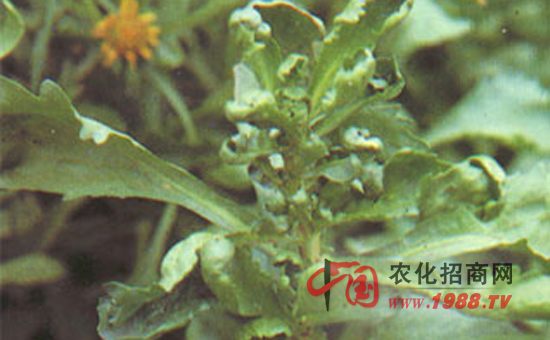
Chrysanthemum viral disease is also known as mosaic disease. The whole plant is affected, and the damage is relatively severe. Common symptoms include: the young leaves of diseased plants turn yellow or show mosaic patterns, the veins remain green, and the leaves wither from the bottom upward; the seedlings of diseased plants have deformed leaves, with grayish-green slightly raised linear stripes on the young leaves arranged irregularly, and the symptoms gradually disappear in the later stage; yellow irregular patches appear on the leaves with clearly defined edges; the leaves are dark green, small and thick, with the leaf margins or undersides turning purplish-red, and affected plants are prone to downy mildew and brown spot disease, causing early leaf withering. Among these, CVB causes mild mosaic or no symptoms, and can produce severe mosaic and necrotic spots on susceptible varieties. ToAV often manifests as small plants, abnormal flower color, and sometimes causes leaf deformation or enations. ToSWV causes white ring-shaped linear markings on the leaves. In addition, when several virus sources infect together, the symptoms become even more complex.
What is chrysanthemum viral disease?
Chrysanthemum viral disease is very harmful and often causes severe damage to the growth of chrysanthemums, so what are the characteristic manifestations after chrysanthemum viral disease appears?
Chrysanthemum viral disease manifests as mild mosaic or no symptoms on chrysanthemums, and susceptible varieties can develop severe mosaic and necrotic spots (CVB). ToAV can manifest as abnormal flower patterns, short plants, and sometimes causes leaf deformation or enations. ToSWV causes white ring-shaped linear markings on the leaves. Because chrysanthemum varieties, growth stages, and cultivation environments differ, as well as the composite infection caused by viruses, the manifestations are very complex.