Eight taboos to remember for high-quality, high-yield management of greenhouse cucumbers in winter and spring
Winter-spring greenhouse cucumberGrowing has eight taboos:
1. Do not change the light-receiving angle of the greenhouse at will. The angle of the solar greenhouse currently used for cucumber cultivation has been established through long-term scientific verification; its north-south span, height and rear slope angle should not be changed at will.
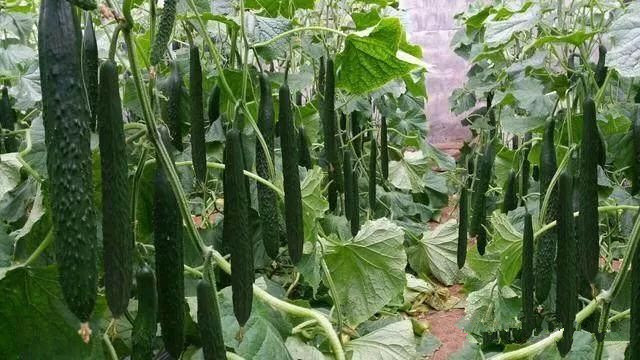
2. Do not apply fertilizer in a concentrated way at transplanting. Various chemical fertilizers, especially nitrogen fertilizers, produce large amounts of harmful gases under humid and high-temperature conditions. If concentrated in the transplanting furrow, they can burn cucumber roots and kill the seedlings.
3. Do not transplant too deep. As everyone knows, cucumber grafting is done to resist disease. If the transplanted seedlings are too deep, the cucumber will grow regenerative roots, lose the effect of grafting and fail to achieve the purpose of grafting.
4. Do not leave the straw mats unrolled on cloudy, rainy or snowy days. People often think that rolling up the straw mats on cloudy, rainy or snowy days will lower the temperature inside the greenhouse. Therefore, they do not roll up the straw mats on cloudy, rainy and snowy days. In fact, this practice does more harm: not rolling up the straw mats will only make the temperature drop slowly, and at the same time, because the cucumbers cannot see sunlight for a long time, it will cause physiological disorder.
5. Do not apply large amounts of nitrogen fertilizer in winter. This is because after nitrogen fertilizer meets water, during its dispersal process it will cause the water temperature to drop substantially, promote a drop in ground temperature and affect the normal growth of cucumber vines.
6. Do not apply undecomposed organic fertilizer. Organic fertilizer will ferment quickly after encountering high temperatures, and a large amount of ammonia gas will be produced during the fermentation process. In mild cases it decomposes the nitrogen fertilizer in the greenhouse; in severe cases it will kill all the cucumber seedlings in the shed.
7. Do not spray pesticides at noon or in the evening. Spraying at noon makes the greenhouse temperature too high, the leaf moisture transpires quickly, and before the pesticide is absorbed it is evaporated away. In particular, manganese-zinc type pesticides will cause phytotoxicity. Spraying in the evening is exactly the opposite of noon: because after spraying it is not completely absorbed by the cucumber leaves, it will decompose and become ineffective due to moisture, failing to achieve the treatment purpose and instead worsening the occurrence of disease.
8. Do not lower the vines too much. Lowering the cucumber vines too much at one time will reduce the light received by the leaves and affect the normal growth of the vines.