What to Do When Nasturtium Leaves Turn Yellow and Dry Up? Four Tricks to Keep the Leaves Lush and Green
The leaves of the nasturtium resemble lotus leaves, looking unique and elegant. However, some flower growers encounter yellowing, drying and other such phenomena when growing them, and often feel at a loss because they do not know what is causing it. So what should be done when nasturtium leaves turn yellow and dry up? Here the editor will analyze the common causes and solutions for you.
What to Do When Nasturtium Leaves Turn Yellow and Dry Up
1. Leaf dehydration
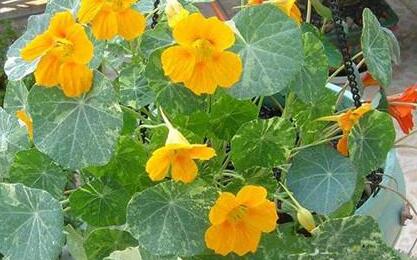
If the nasturtium is not watered for a long time, or the air is always too dry, the moisture contained in its leaves will be lost, causing dehydration, yellowing and drying. If a flower grower encounters this situation, they can first think about whether they often fail to water.
Solution: Water reasonably at ordinary times. Do not go a long time without watering, and do not water too much at once. Water flexibly according to the growth condition of the nasturtium and in combination with the local climate and environment. The most basic principle is to keep the soil moist but not waterlogged.
2. Lack of nutrients
The nasturtium itself has a relatively low demand for fertilizer. If the soil is fertile, leaf yellowing generally will not occur. However, some flower growers use soil with a low nutrient content, and on top of that rarely fertilize, which causes the nasturtium to dry up due to insufficient nutrients.
Solution: This needs to be solved from multiple aspects. Besides adding some base fertilizer to the soil when planting, you can also use relatively fertile soil such as leaf mold. In addition, reasonable fertilization is needed at ordinary times, and for the method you can refer to the detailed introduction in how to fertilize nasturtium.
3. Scorching sun exposure
We know that the nasturtium is a light-loving plant, and it has a certain phototropism, but in summer it must not be exposed to the scorching sun, otherwise not only will the leaves turn yellow and dry up, but it will also make flowering difficult.
Solution: What should be done when nasturtium leaves turn yellow and dry up due to scorching sun exposure? Pay attention to reasonably controlling light. Except in summer, the nasturtium can be grown in a semi-light environment in the other seasons, but in summer reasonable shading is needed, and when temperatures are relatively high in spring and autumn, attention should also be paid to reducing light at noon.
4. Soil on the acidic side
The nasturtium can grow in slightly acidic soil, but it cannot survive in acidic soil such as red loam, because it lacks magnesium, and this kind of soil is relatively common in some places in the south. In addition, it also cannot grow in soil on the alkaline side.
Solution: The soil used should be as close to neutral as possible. If the soil is relatively strongly acidic, calcium magnesium phosphate fertilizer can be sprayed to adjust the pH value. In addition, when watering at ordinary times, be careful to let tap water sit for a few days before watering.
Why Nasturtium Leaves Turn Yellow and What to Do About It
It likes a mild climate and cannot tolerate severe cold or intense heat. The suitable growth temperature is 18 to 24°C. It can endure short-term 0°C, likes warmth and humidity, and the overwintering temperature should be above 10°C. As the stems and vines grow, bamboo strips should be used in time to set up a trellis and tie the branches and vines. So why do nasturtium leaves turn yellow? What should be done about nasturtium leaves turning yellow? Below, the editor of wed114 wedding website brings you the detailed content.
Why Nasturtium Leaves Turn Yellow
1. Too much water
After the nasturtium blooms, watering should be reduced to prevent excessive growth of the branches. If watering is excessive and drainage is poor, the roots are prone to rot from dampness; in mild cases the leaves turn yellow and fall off, and in severe cases the whole plant wilts and dies. If the potting soil is waterlogged, it will cause the leaves to turn yellow. The nasturtium can be watered frequently, but each watering should be relatively small, to avoid the water evaporation rate failing to keep up with your watering rate.
2. Excessive fertilization
For fertilizing the nasturtium, the concentration must not be too high, and the amount of fertilizer must not be too much, otherwise it is easy to burn the roots. After the root system is damaged, the leaves naturally suffer as well. For the nasturtium's fertilizer, natural fertilizer can be chosen, and the manure water of chickens, ducks and geese is best. If you do not have that, you can dilute a special flower fertilizer when fertilizing.
3. Too strong light
The temperature and light of spring, autumn and winter are no problem for the nasturtium, but the light in summer is somewhat too strong. The nasturtium is a herbaceous plant that fears heat. When the light is too strong and the temperature too high, it will go dormant, and the leaves will show signs of withering and yellowing. Therefore, in summer the nasturtium should be given appropriate shade.
4. Pests and diseases
Common pests of the nasturtium include red spider mites and leaf miners. If there are pests, after they harm the leaves, the leaves will show signs of yellowing. Check carefully whether there are spider webs or insect eggs on the leaves, and observe the underside of the leaves especially carefully. Once discovered, kill them immediately, and cut off the diseased leaves and burn them.
Generally speaking, the reasons for nasturtium leaves turning yellow are many-sided. Water, fertilizer, light and pests may all be causes, so when flower growers read the article, they should judge the reason their own nasturtium leaves are turning yellow according to their actual situation.
What to Do When Nasturtium Leaves Turn Yellow
If the yellowing is due to too much or too little watering, then pay attention. After the nasturtium blooms, watering should be reduced, and note that the drainage of the flowerpot and soil must be good. Before flowering, be sure to follow the principle of not watering until dry, and watering thoroughly when you do. The editor's flowers, because of excessive watering, did not have yellow leaves, but the branches grew wildly, which is especially unattractive.
Summer is the dormant period of the nasturtium. During this period, absolutely do not water or fertilize excessively, as this also easily makes nasturtium leaves turn yellow. It is enough to place the potted plant in a cool, dry and ventilated place. A very important point is not to let water accumulate in the soil in the pot. Summer is the period when nasturtium leaves turn yellow most intensively.
Observe your nasturtium carefully. If there are spider webs on your nasturtium leaves, or insects hidden inside the inner leaves of the plant, then the yellowing of the leaves must be caused by pests and diseases, and in severe cases it can cause all the leaves to wither and die. July to September is the season with a very high outbreak rate of pests and diseases. At this time we should prune off the branches threatened by pests and diseases and dispose of them cleanly; you can also use insecticide and spray 3—4 times a day until the leaves turn green again.
Nasturtium flower language:
One flower language of the nasturtium is that love is everywhere, it is just that your heart is absent. This tells us that in life we should be good at discovering love and love with our hearts, for love, this beautiful thing, is everywhere, hehe. There is also a saying that the nasturtium flower language means something that cannot be sought but comes by chance, and being happy is enough. In fact, flower language is often teaching us how to live and how to face life. The nasturtium flower language also has the meaning of a patriotic heart.
What to Do When Nasturtium Leaves Turn Yellow and Dry Up?
The nasturtium is a plant of the family Tropaeolaceae and the genus Tropaeolum, a perennial semi-trailing or prostrate plant. The plant height is 30cm-70cm. The basal leaves have long petioles, and the leaf blades are pentagonal, ternately parted, with the secondary segments having a few small lobes and sharp teeth. The flowers are solitary or 2-3 in cymes, with five petals and 8-19 sepals, yellow, elliptic-obovate or obovate, the petals and sepals of equal length, narrowly linear. Previously some flower growers encountered the phenomenon of nasturtium leaves turning yellow. Generally speaking, the reasons for nasturtium leaves turning yellow are many-sided; water, fertilizer, light and pests may all be causes. Below, look at the analysis of the causes and solutions for nasturtium leaves turning yellow and drying up.
Causes of Nasturtium Leaves Turning Yellow and Drying Up 1. Nasturtium leaf yellowing: improper wateringAlthough it is named nasturtium, which is relative to the lotus, it is not a plant that likes drought. Watering needs alternating dry and wet; do not water first if the surface soil is not dry, and when dry be sure to water thoroughly. In addition, after the nasturtium blooms, watering should be reduced to prevent excessive growth of the branches. If watering is excessive and drainage is poor, the roots are prone to rot from dampness; in mild cases the leaves turn yellow and fall off, and in severe cases the whole plant wilts and dies. (If the potting soil is waterlogged, it will cause the leaves to turn yellow.)
2. Nasturtium leaf yellowing: low temperatureIf the temperature is too low, it is best to keep the temperature above 10°C, and the lower the temperature, the more the watering frequency should be controlled. Also prevent cold wind from blowing on it and dry hot air from heating or air conditioning from blowing on it, otherwise it is very easy to cause leaf yellowing.
3. Nasturtium leaf yellowing: excessive fertilizationExcessive fertilization: although fertilizer needs to be applied during the growth process, excessive fertilizer will cause fertilizer damage. Especially when pouring fertilizer liquid, prevent the fertilizer liquid from splashing onto the leaves.
4. Nasturtium leaf yellowing: strong lightLight: this cannot be discussed simply as light, but rather as season. The nasturtium is a perennial plant that fears cold and heat, and goes dormant in summer. It can be placed in a cool and ventilated place, with fertilizer stopped and watering reduced. During the yellow plum season, do not let the potting soil become waterlogged. Doing these things basically allows it to get through the summer. (Simply put, the nasturtium fears heat. Especially in summer, it is prone to yellow leaves, also because of the difficulty of getting through the summer.)
5. Nasturtium leaf yellowing: pests and diseases. Pests and diseases, red spider mite damage. When the air is dry, it is prone to this pest damage. The control method is to increase humidity, and you can also spray a specialized acaricide.Solutions for Nasturtium Leaves Turning Yellow and Drying UpTo grow potted nasturtium well, first choose a reasonably prepared culture soil; second, strengthen fertilizer and water management during the growth period; third, ensure relatively sufficient sunlight.
1. For the culture soil, it is advisable to choose a loam mixed and prepared from 4 parts leaf mold, 4 parts garden soil, 1 part compost soil and 1 part sandy soil.
2. During the growth period of the nasturtium, phenomena such as long internodes and yellow leaves, thin stems and small leaves, or luxuriant branches and leaves but sparse flowers often appear due to improper fertilizer and water management. During the growth process, generally apply once a month a 20% concentration of decomposed soybean cake water; during the flowering period, stop applying nitrogen fertilizer and instead apply 0.5% superphosphate or decomposed chicken and duck manure water, applying once every half a month; after the flowers fade, apply one topdressing of 30% decomposed soybean cake water to supplement the nutrients consumed by flowering.
3. In summer, when the weather is hot, stop fertilizing. At the end of autumn, apply one more compound overwintering fertilizer to enhance the plant's cold resistance. Watering is a daily management task, and the watering frequency and amount should be determined according to the weather and the growth condition of the plant. In spring and autumn, generally water once every other day; in summer, water once a day to maintain relatively high air humidity. When flower buds appear, the watering frequency should be appropriately reduced, but the amount of each watering should be increased, so that the potting soil alternates between dry and wet. After flowering, watering should be reduced.
4. The nasturtium likes sunlight. In spring and autumn it should be placed in a place with sufficient sunlight; in summer it needs appropriate shade; in winter, if the room temperature is kept at around 15°C and there is sufficient sunlight, it can continue to grow and develop.