How to Grow and Care for Bird's Nest Fern: Keep Light from Being Too Strong
Among foliage plants, the bird's nest fern is known for its lush, large fronds, and it has many uses and benefits, so many people grow it. So is the bird's nest fern easy to grow? The answer is that it is very easy to grow. And how do you grow a bird's nest fern? Let's look at the growing methods and precautions for the bird's nest fern.
Is the Bird's Nest Fern Easy to Grow?
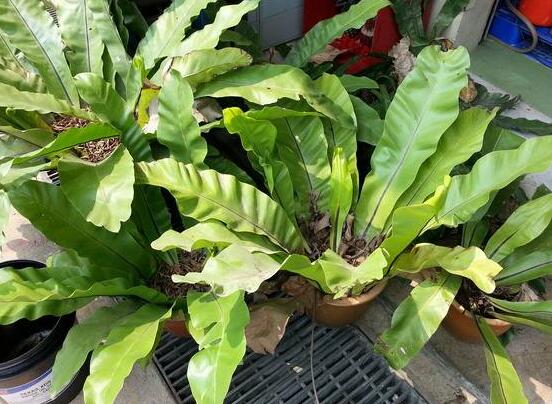
Based on the growing experience of flower enthusiasts, the bird's nest fern is a very easy plant to grow. You only need to give it a semi-shaded environment and avoid long-term shortages of water, fertilizer, or light, and it will grow normally. Of course, if you want to grow it well, you still need some techniques.
How to Grow a Bird's Nest Fern
Before planting, first understand its growth habits. First, the bird's nest fern is a plant that likes semi-shaded environments. It is not tolerant of strong light and especially fears being exposed to direct sunlight for too long. Its cold tolerance is also average, and it prefers humid environments, so pay attention to reasonable watering. As for soil, the bird's nest fern prefers sandy soil.
Growing Methods and Precautions for the Bird's Nest Fern
I. Growing Methods
1. Soil
When potting, the soil should mainly consist of leaf mold, peat soil, and vermiculite, and some river sand can be mixed in to increase the soil's air permeability and drainage. The flowerpot used should also preferably be porous to increase the pot's air permeability and let the roots breathe more freely.
2. Light
In the growing methods and precautions for the bird's nest fern, light is a very important factor because the bird's nest fern is relatively sensitive to light. It only needs a small amount of scattered light to grow, and it is relatively afraid of direct strong light, so in summer 70% of the sunlight needs to be shaded out.
3. Temperature
The most suitable temperature is 16-27 degrees. From March to October, the temperature can be kept between 22-27 degrees. If the temperature exceeds 30 degrees, shading and cooling are needed to ensure vigorous growth even in summer. In winter, the temperature needs to be kept above 5 degrees to avoid the roots and leaves being frostbitten and withering.
4. Watering
The bird's nest fern likes moist soil and also likes relatively high air humidity, so during the growing season it needs frequent watering. At the same time, in summer, spray water more often to ensure the humidity can reach the ideal state. When the temperature is lower in winter, it is only necessary to keep the soil slightly moist, so water less and use spraying instead.
5. Fertilizer
Because the bird's nest fern has densely growing scales, its rhizome can also produce many spongy fibrous roots that can absorb and store a lot of water, so even during the vigorous growth period it does not need excessive fertilizing. Generally, applying an organic fertilizer with nitrogen, phosphorus, and potassium once every 15 days is enough. If it is often short of fertilizer, the leaf edges will turn brown, affecting the ornamental value among the uses and benefits of the bird's nest fern.
II. Precautions
1. Soil disinfection. No matter what type of soil is used, it is best to disinfect it first, either by drying it in the sun or soaking it in disinfectant. In short, make sure it contains no pathogens or insect eggs, otherwise it can easily cause root rot, which will cause the plant to grow slowly.
2. Potting techniques. Small potted plants generally use flowerpots with a diameter of about 9 cm. Before planting, it is best to place about 2 cm of substrate at the bottom of the pot, then move the seedling into the pot. Do not plant it too deep, and press the substrate firm but not too tight.
3. Pest and disease prevention. The bird's nest fern is prone to anthracnose and may also suffer from nematode damage. Usually, good care management is needed, such as not letting humidity get too high and not letting light be too strong or too weak. When disease occurs, spray chlorothalonil wettable powder and so on for prevention and control.
How to Grow a Bird's Nest Fern: Growing Methods and Precautions for the Bird's Nest Fern
The bird's nest fern is an epiphytic fern native to Southeast Asia, eastern Australia, Indonesia, India, and eastern Africa, and it is widely distributed in the tropical regions of China. How do you grow a bird's nest fern? This article introduces the growing methods and precautions for the bird's nest fern.
Growing Methods for the Bird's Nest Fern
1. Planting: For potted bird's nest ferns, peat soil or leaf mold is best. A bird's nest fern grown for 2-3 years has an open plant shape, and the roots fill the pot rack. It can be taken out of the pot, part of the residual roots and the withered spore leaves at the base removed, the plant separated, and each part replanted into pots. When repotting in spring, add leaf mold and moss to the pot, and add a little crushed stone.
2. Temperature and light: The suitable growing temperature for the bird's nest fern is 22-27°C. In summer, shade it, or place it in a lightly shaded spot under a large tree, avoiding direct strong sunlight. This is good for growth and makes the leaves glossy. Indoors, place it in a bright spot and do not keep it in a dark place for a long time. In winter, move it into a greenhouse and keep the temperature above 16°C so it continues to grow, but the lowest temperature must not be below 5°C.
3. Watering and fertilizing: Under high temperature and high humidity in summer, new leaves grow vigorously and need more spraying, fully spraying the leaf surfaces and maintaining relatively high air humidity, which is favorable for spore germination. As the leaves enlarge, they often cover all the potting soil in the pot, so watering must soak through the pot to avoid the plant's leaves drying out and curling due to lack of water.
Precautions for Growing the Bird's Nest Fern
1. The bird's nest fern is suitable for growing in peat soil or leaf mold, and the suitable growing temperature for the bird's nest fern is 22-27 degrees Celsius;
2. Under high temperature and high humidity in summer, the new leaves of the bird's nest fern need more spraying during growth, and maintaining air humidity is favorable for spore germination;
3. Growing the bird's nest fern does not require too much sunlight; a moderate amount is enough;
4. During the growing season of the bird's nest fern, water it thoroughly, and when the room temperature is low in winter, keep the potting soil moist.
The above is the relevant introduction to the growing methods and precautions for the bird's nest fern. I believe everyone now knows how to grow a bird's nest fern. The functions of the bird's nest fern are mainly reflected in medicinal use and potting. The bird's nest fern can be used as a potted plant or an epiphytic ornamental plant. Its leaves are excellent floral material, and the curled young leaves can be stir-fried, boiled, eaten, or made into pickles; the bird's nest fern is slightly bitter in nature and flavor and can be used to clear heat and detoxify.
How to Grow a Bird's Nest Fern: Growing Methods and Precautions for the Bird's Nest Fern
There are many kinds of ferns, and the bird's nest fern is one of them. How do you grow a bird's nest fern? Today we will tell you the growing methods and precautions for the bird's nest fern.
I. Introduction to the Bird's Nest Fern
The bird's nest fern is also known as nest fern, crown fern, and mountain fern flower, with the commercial name "cornucopia." It is a perennial herbaceous plant in the genus Asplenium of the family Aspleniaceae. The plant grows upright, and the fronds grow radially and directly on the rhizome, forming a rosette. In the center of the rosette is a cylinder, wrapped with black fibers, which looks very much like a bird's nest when viewed from above, hence the name "bird's nest fern." The fronds have no divisions and are broadly lanceolate, about 20 cm wide and up to 1 m long, generally controlled at 30 cm to 50 cm in length, or even shorter. Mature fronds have narrow, elongated sporangia along the lateral veins on the underside. The leaf color is bright green, leathery, and glossy. The midrib on the back of the leaf is prominent and gradually darkens toward the base, appearing black. The bird's nest fern can be grown as a large or medium potted plant or hanging plant, placed in bright living rooms, bedrooms, meeting rooms, and other places, full of vitality.
The bird's nest fern likes a warm, humid, semi-shaded environment. It is not cold-tolerant, is also afraid of drought, and avoids scorching sun exposure. Usually it can be placed in a bright indoor spot or another place without direct sunlight for care. If there is insufficient light, the leaves will become thin and wide and bright green, while too strong light will make the leaf color yellow and hinder growth. Therefore, attention should be paid to controlling light during cultivation. During the growing season, water frequently to keep the soil moist, but avoid water accumulating in the pot. Often sprinkle water on the plant and the surrounding environment to increase air humidity, so that the air does not become too dry and cause the leaf edges to dry out and turn brown. During the growing season, apply a fully decomposed dilute liquid fertilizer or inorganic liquid fertilizer about once every 10 days to promote new leaf growth and make the leaf color bright and attractive. Otherwise, lack of fertilizer can easily cause the leaves to become smaller and the leaf color dull and lusterless. In winter, place it in a spot with sufficient indoor light, and keep the temperature above 15°C so the plant can continue to grow. If the temperature is below 10°C, the plant will suffer cold damage. Repot once every two to three years in spring. The potting soil should have good drainage and air permeability. It can be mixed with peat, leaf mold, and a small amount of decomposed horse manure, or it can be grown in artificial synthetic materials such as ceramsite, but nutrients should be replenished in time. Bird's nest ferns grown in greenhouses can also be grown epiphytically on trees or rocks.
The bird's nest fern can be propagated by division or by sowing spores. Division is carried out together with repotting. Cut the clustered plant, leaves and roots together, into sections with 5 to 7 leaves each, and pot them separately. A single robust plant can also be cut from the base into 4 pieces, and the leaves shortened by 1/3 to 1/2, so that each piece has leaves, rhizome, and roots, and then potted separately. After new leaves grow, the original plant shape can gradually be restored. Place newly potted plants in a semi-shaded place above 20°C for care, and be careful to keep the air humid, but the soil must not be too wet, otherwise it will easily rot. Sowing spores can be done in March or in July and August. Scrape mature spores from the back of the leaves, sow them in leaf mold, cover with plastic film, and after rooting, move them into sandy soil rich in humus.
II. Growing Methods for the Bird's Nest Fern
1. Planting: For potted bird's nest ferns, peat soil or leaf mold is best. A bird's nest fern grown for 2-3 years has an open plant shape, and the roots fill the pot rack. It can be taken out of the pot, part of the residual roots and the withered spore leaves at the base removed, the plant separated, and each part replanted into pots. When repotting in spring, add leaf mold and moss to the pot, and add a little crushed stone.
2. Division: In late April each year, the bird's nest fern can be divided. Generally, when dividing, choose a robustly growing plant, cut its rhizome together with leaves and root clusters into several pieces, or pull off the small plants growing beside it, cut off 1/2 of the leaves, pot them separately, and cover with a small amount of leaf mold to create a small environment that is humid, ventilated, and well drained. The ambient temperature should be controlled at about 25 degrees, which gives a relatively high survival rate. When watering it, note that the potting soil must not be too wet, so as to avoid root rot. Division is the most effective propagation method for flower enthusiasts.
3. Temperature and light: The suitable growing temperature for the bird's nest fern is 22-27°C. In summer, shade it, or place it in a lightly shaded spot under a large tree, avoiding direct strong sunlight. This is good for growth and makes the leaves glossy. Indoors, place it in a bright spot and do not keep it in a dark place for a long time. In winter, move it into a greenhouse and keep the temperature above 16°C so it continues to grow, but the lowest temperature must not be below 5°C.
4. Watering and fertilizing: Under high temperature and high humidity in summer, new leaves grow vigorously and need more spraying, fully spraying the leaf surfaces and maintaining relatively high air humidity, which is favorable for spore germination. As the leaves enlarge, they often cover all the potting soil in the pot, so watering must soak through the pot to avoid the plant's leaves drying out and curling due to lack of water.
III. Precautions for Growing the Bird's Nest Fern
1. The bird's nest fern is suitable for growing in peat soil or leaf mold, and the suitable growing temperature for the bird's nest fern is 22-27 degrees Celsius;
2. Under high temperature and high humidity in summer, the new leaves of the bird's nest fern need more spraying during growth, and maintaining air humidity is favorable for spore germination;
3. Growing the bird's nest fern does not require too much sunlight; a moderate amount is enough;
4. During the growing season of the bird's nest fern, water it thoroughly, and when the room temperature is low in winter, keep the potting soil moist.
IV. Uses of the Bird's Nest Fern
The bird's nest fern combines ornamental value, landscape value, medicinal value, and edible value, with obvious main value, and is deeply loved by many people. The bird's nest fern is an effective air purifier. Through photosynthesis, it absorbs carbon dioxide and releases a large amount of oxygen, making enclosed indoor air fresh. The bird's nest fern is rich in vitamin A, potassium, iron, calcium, dietary fiber, and so on. It has the effects of strengthening muscles and bones and invigorating blood and removing stasis, and can also be used for conditions such as bruises, fractures, blood stasis, headache, bloody strangury, impotence, and gonorrhea. Moreover, after the young shoots of the bird's nest fern go through kitchen preparation, they are also a delicious dish to go with rice.