Can Calathea makoyana be grown hydroponically? A hydroponic method with water changed every 2 days
Beautiful things always stay in people's minds and make them want them to be even more beautiful. So when people see the beauty of a potted Calathea makoyana, many begin to think about growing it in water, because compared with soil culture, hydroponic plants are clearly a bit more beautiful. So can Calathea makoyana be grown hydroponically? Based on an understanding of the growth habits of Calathea makoyana, it can be grown hydroponically. Now let's take a look together at the hydroponic method for Calathea makoyana.
1. Can Calathea makoyana be grown hydroponically? Yes
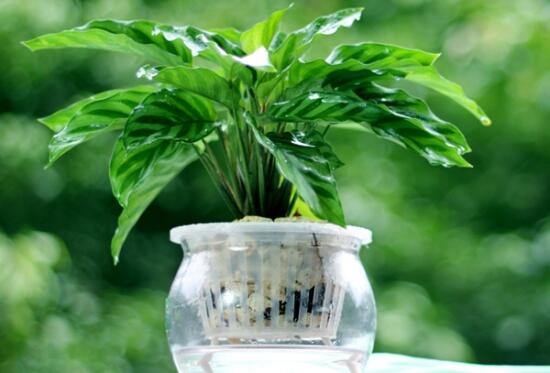
Calathea makoyana has a beautiful appearance, especially the patterns on its leaves, which look like a peacock spreading its tail. A soil-grown Calathea makoyana is already this beautiful, so how much more so would a hydroponic one be? So can Calathea makoyana be grown hydroponically? Because Calathea makoyana likes a humid environment and requires relatively high humidity, it can be grown hydroponically. Next, let's look at the specific hydroponic method.
2. Hydroponic method for Calathea makoyana
Materials: one pot of Calathea makoyana, a hydroponic container, potassium permanganate solution, clean water
1. Substrate selection
Actually, the hydroponics of Calathea makoyana is not the all-water culture that everyone imagines, but rather a combination of water and soil. Generally speaking, flower enthusiasts usually use perlite:vermiculite at 1:1 or perlite:peat:slag at 1:1:1:1 mixed as the substrate.
2. Hydroponic plants
To grow Calathea makoyana hydroponically, you first naturally need hydroponic plants. For this, everyone can select small, robustly growing soil-grown plants. It should be noted that Calathea makoyana that has grown very large should not be used, because if the plant is too large, it will be difficult to choose a hydroponic container, and it will easily fall over and be difficult to maintain.
3. Hydroponic method
① Take out the small soil-grown Calathea makoyana, wash the soil from the roots using the root-washing method, and try not to leave any soil; then soak the roots in diluted potassium permanganate solution for about ten minutes, rinse again with clean water, then plant it in the container, and add clean water up to 1/3-1/2 of the Calathea makoyana's roots.
With this hydroponic method for Calathea makoyana, the leaves will initially curl. Don't panic, everyone; this is normal. At this time, simply place it in a ventilated, shaded spot, mist the leaves appropriately, and change the clean water once every 1-2 days. Before long the leaves will return to normal, and after about 10 days new roots will grow. Once the plant has adapted to the hydroponic environment, add nutrient solution and replace it once every 3-4 weeks.
② Regarding the hydroponics of Calathea makoyana, there is also a method using a substrate. As above, after taking out the soil-grown Calathea makoyana, also clean the roots with clean water; then spread a layer of ceramsite at the bottom of the pot as a drainage layer, set the seedling upright, add the prepared substrate until the pot is eight-tenths full, press firmly with your hands, and finally add another layer of ceramsite on top of the pot to prevent algae growth after sun exposure and to prevent the substrate from being washed away or the seedling from being knocked over.
Can Calathea makoyana be grown hydroponically? Hydroponic cultivation method for Calathea makoyana
Calathea makoyana is a typical foliage plant, with patterns just like those on peacock tail feathers. Common Calathea makoyana are all potted, so can Calathea makoyana be grown hydroponically? And what is the hydroponic method?
1. Can Calathea makoyana be grown hydroponically?
Calathea makoyana is native to Brazil. It likes high temperatures, high humidity and a semi-shaded environment, is not cold-tolerant, likes ample diffused light, and avoids direct sunlight. Calathea makoyana can be grown hydroponically. Hydroponic Calathea makoyana looks even fresher and more elegant, wonderfully refined, and is deeply loved by everyone.
For hydroponic Calathea makoyana, select small, robustly growing soil-grown plants, wash the soil from the roots using the root-washing method, soak the roots in a very dilute potassium permanganate solution for about ten minutes, then rinse with clean water, and then plant them in a container. Add clean water up to 1/3-1/2 of the Calathea makoyana's roots.
At the beginning of hydroponics the leaves will curl, so it is best to place it in a ventilated, shaded spot and mist the leaves appropriately, changing the clean water once every 1-2 days. Before long the leaves will return to normal, and after about 10 days new roots will grow. When the plant has fully adapted to the hydroponic environment, add foliage plant nutrient solution for care, replacing the nutrient solution once every 3-4 weeks, and usually you only need to top up the water that has evaporated.
2. Hydroponic cultivation method for Calathea makoyana
For hydroponic Calathea makoyana, either a plastic pot or an antique-style ceramic flower pot can be used. The substrate can be a mixed substrate of perlite:vermiculite at 1:1 or perlite:peat:slag at 1:1:1:1. When potting, spread a layer of ceramsite at the bottom of the pot as a drainage layer, then set the seedling upright, add the prepared substrate until the flower pot is eight-tenths full, press firmly with your hands, and finally add another layer of ceramsite on top of the pot to prevent algae growth after sun exposure and to prevent the substrate from being washed away or the seedling from being knocked over.
Calathea makoyana is afraid of dryness. In dry seasons and during high-temperature periods in summer, frequently mist the leaves. During winter heating periods, do not place it near a stove, radiator or air conditioner. If necessary, cover it with a plastic bag, and frequently open it to mist for moisture retention and ventilation. During low-temperature periods in winter, reduce the frequency of nutrient replenishment and watering, and water only after the surface substrate has dried, so as to avoid root rot and leaf rot.
Calathea makoyana plants are most afraid of direct sunlight; exposure to direct light will cause leaf curling and dry edges, so they must be placed in a spot with bright diffused light indoors all year round. In northern regions, during the period before winter heating starts and after it stops, pay attention to cold protection and warmth retention. The room temperature must not be lower than 13°C, otherwise it is prone to cold damage, root rot and yellow leaves. You can put a plastic bag over the flower pot to protect the plant, which also increases air humidity.
For the nutrient solution, you can choose the aforementioned foliage plant nutrient solution or a compound flower fertilizer. The first time you apply the nutrient solution, dilute it 3-5 times and water thoroughly once, until there is seepage in the tray under the pot. For regular nutrient replenishment, do it 1-2 times a week, 100 ml each time. For regular watering, keep the substrate moist. Do not water on days when you replenish nutrients. Do not let water remain in the tray under the pot for a long time, to facilitate aeration and prevent root rot.
The above ishydroponic cultivation method for Calathea makoyanashared. Friends who like hydroponic cultivation can take a look, and I hope it is helpful to everyone.
Can Calathea makoyana be grown hydroponically? Hydroponic cultivation method for Calathea makoyana
Calathea makoyana has brilliant leaf colors, a graceful plant shape, and a charming, alluring temperament, so it is much loved by people. So can Calathea makoyana be grown hydroponically? Below, let's introduce the hydroponic cultivation method for Calathea makoyana.
Can Calathea makoyana be grown hydroponically
Calathea makoyana can be grown hydroponically. Hydroponic Calathea makoyana looks even fresher and more elegant, wonderfully refined, and is deeply loved by everyone.
Hydroponic cultivation method for Calathea makoyana
For hydroponic Calathea makoyana, select small, robustly growing soil-grown plants, wash the soil from the roots using the root-washing method, soak the roots in a very dilute potassium permanganate solution for about ten minutes, then rinse with clean water, and then plant them in a container. Add clean water up to 1/3-1/2 of the Calathea makoyana's roots.
At the beginning of hydroponics the leaves will curl, so it is best to place it in a ventilated, shaded spot and mist the leaves appropriately, changing the clean water once every 1-2 days. Before long the leaves will return to normal, and after about 10 days new roots will grow. When the plant has fully adapted to the hydroponic environment, add foliage plant nutrient solution for care, replacing the nutrient solution once every 3-4 weeks, and usually you only need to top up the water that has evaporated.
For hydroponic Calathea makoyana, either a plastic pot or an antique-style ceramic flower pot can be used. The substrate can be a mixed substrate of perlite:vermiculite at 1:1 or perlite:peat:slag at 1:1:1:1. When potting, spread a layer of ceramsite at the bottom of the pot as a drainage layer, then set the seedling upright, add the prepared substrate until the flower pot is eight-tenths full, press firmly with your hands, and finally add another layer of ceramsite on top of the pot to prevent algae growth after sun exposure and to prevent the substrate from being washed away or the seedling from being knocked over.
Calathea makoyana is afraid of dryness. In dry seasons and during high-temperature periods in summer, frequently mist the leaves. During winter heating periods, do not place it near a stove, radiator or air conditioner. If necessary, cover it with a plastic bag, and frequently open it to mist for moisture retention and ventilation. During low-temperature periods in winter, reduce the frequency of nutrient replenishment and watering, and water only after the surface substrate has dried, so as to avoid root rot and leaf rot.
Calathea makoyana plants are most afraid of direct sunlight; exposure to direct light will cause leaf curling and dry edges, so they must be placed in a spot with bright diffused light indoors all year round. In northern regions, during the period before winter heating starts and after it stops, pay attention to cold protection and warmth retention. The room temperature must not be lower than 13°C, otherwise it is prone to cold damage, root rot and yellow leaves. You can put a plastic bag over the flower pot to protect the plant, which also increases air humidity.
For the nutrient solution, you can choose the aforementioned foliage plant nutrient solution or a compound flower fertilizer. The first time you apply the nutrient solution, dilute it 3-5 times and water thoroughly once, until there is seepage in the tray under the pot. For regular nutrient replenishment, do it 1-2 times a week, 100 ml each time. For regular watering, keep the substrate moist. Do not water on days when you replenish nutrients. Do not let water remain in the tray under the pot for a long time, to facilitate aeration and prevent root rot.