What to Do When Campanula Wilts? Learn Four Tricks to Prevent Wilting
Although the flowering period of campanula is not the longest, the viewing time from April to June, lasting as long as 2 months, can still feast the eyes of many flower lovers. However, some flower lovers encounter the situation of campanula wilting, which not only affects the appearance but also indicates problems with care and management. So what to do when campanula wilts? The editor will tell you the methods.
What to Do When Campanula Wilts
1. Reduce watering
Campanula needs a large amount of water during its growing period, so watering is relatively frequent. However, some flower lovers do not know how to judge whether it should be watered or how much water to give, which can lead to accidentally watering too much. The roots then cannot breathe, causing the campanula to wilt.
Solution: Reduce the frequency and amount of watering. The way to judge is to see whether water flows out of the drainage holes of the flowerpot and whether there is standing water in the pot. If no water flows out, it means the plant has not been watered thoroughly; if there is standing water, it means too much water was given.
2. Increase light
Campanula prefers places with plenty of sunlight, but it can also tolerate semi-shaded environments. However, it cannot stay in a place lacking light for a long time, otherwise the leaves may wilt. This is caused by insufficient photosynthesis and poor growth.
Solution: What to do when campanula wilts due to lack of light? The solution is to increase light. As long as the temperature does not exceed 35 degrees, keep it in a place with plenty of sunlight, but shade it in summer.
3. Replace the soil
In most cases, as long as the soil for planting campanula is relatively fertile and loose, the leaves rarely wilt due to soil problems. However, if environmental management and scientific fertilization are neglected, soil conditions can deteriorate and nutrients may be lacking.
Solution: Replace the soil as soon as possible when the temperature is suitable, usually in April. When watering normally, do not use tap water with too high alkalinity. In addition, pay attention to applying phosphorus and potassium fertilizer to avoid a lack of iron and other elements in the soil.
4. Pest and disease control
The more common pests and diseases of campanula include aphids, red spider mites, powdery mildew, leaf spot, and so on. They can all cause campanula leaves to turn yellow, curl, wilt, and so on, and if not treated in time, more plants will be affected.
Solution: Learn the methods for pest and disease control of campanula, and spray carbendazim, supusha emulsifiable concentrate, thripsling, thiophanate-methyl wettable powder, and so on for control. After that, strengthen environmental management and scientific care to reduce the possibility of pests and pathogens appearing on campanula plants, and do a good job of pruning and propagating campanula.
What to Do When Fittonia Wilts and How to Prevent Fittonia from Wilting
Fittonia is a common indoor foliage plant, but during care, improper maintenance and other reasons may cause fittonia to wilt, seriously affecting its ornamental value. So what to do when fittonia wilts? How do you prevent fittonia from wilting? Follow along below to see the answers.
What to Do When Fittonia Wilts
What to Do When Fittonia Wilts 1: Lack of water
If fittonia is not watered thoroughly, it will lack water and wilt. The best solution is to replenish water immediately; generally, it can recover after half a day. The correct watering method is to check the surface soil, water alternately when dry and wet, and water thoroughly when watering. Do not follow a fixed frequency; change it at any time according to the soil and weather. The surface soil refers to the shallow soil layer of 3 to 5 cm. Test the dryness and moisture with a toothpick or tweezers, and water thoroughly once it is completely dry.
What to Do When Fittonia Wilts 2: Too much watering
Watering fittonia frequently causes standing water inside the soil. The roots cannot breathe properly, leading to root rot and wilting of fittonia. Try pulling the fittonia out and replanting it, but the chance of recovery is not very high.
What to Do When Fittonia Wilts 3: Temperature too low
When the temperature is below 13°C, fittonia will develop yellowing and wilting leaves. Therefore, in winter, if the temperature cannot be guaranteed, it is recommended not to keep fittonia casually.
How to Prevent Fittonia from Wilting
Fittonia prefers a humid environment and needs relatively high air humidity during the growing period, especially in the high-temperature summer season when water evaporation is high and the air is dry. In addition to watering to increase the moisture of the potting soil, spraying water on the leaves and sprinkling water on the ground are even more necessary. Maintaining relatively high air humidity is beneficial to the growth of fittonia stems and leaves. However, the potting soil must drain well and must not have standing water, and the leaves must not be soaked in water mist for a long time, otherwise the leaves will turn white and are prone to falling off and rotting. In winter or on rainy days, the potting soil can be slightly drier, and the air humidity can be moderate.
Fittonia does best with scattered light and should avoid direct light. In summer, a shade net is needed, with a shading rate of 50% to 60% being most suitable. In winter, sufficient sunlight is needed, with slight shading protection at noon. On rainy and snowy days, supplemental light should be added. Then the leaves grow robustly, the leaf color is emerald green, and the veins are clear. If it is too shaded for a long time, the stems and leaves tend to grow leggy, and the ornamental value of the leaves is poor.
What to Do When Lantern Flower Leaves Wilt: Supplement Light / Apply Fertilizer Moderately / Do Cooling Treatment
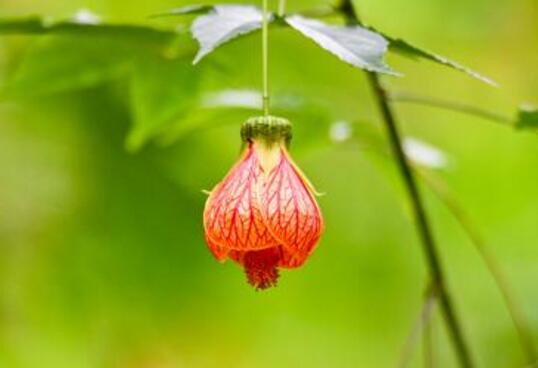
As a common flower, the cultivation method of the lantern flower is not difficult. It only needs moderate water and fertilizer and care under scattered light, and it will bloom beautiful flowers. But during cultivation, many flower lovers still have problems with care, causing lantern flower leaves to wilt and affecting the plant's ornamental value. So what to do when lantern flower leaves wilt? Today the editor will solve this problem for everyone.
1. When lantern flower leaves wilt, find the cause
The beauty of the lantern flower is 9 parts in the flower and 1 part in the leaves. Even so, problems with the leaves will also affect the lantern flower's blooming. In daily life, many flower lovers find that the leaves of their lantern flowers wilt as they care for them. What is going on? For this, the editor has summarized 4 reasons: too little light, insufficient fertilization, temperature too high, and also a growing environment that is too poor. For the specific solutions, let us continue reading below.
2. Causes and Solutions for Lantern Flower Leaves Wilting
1. Insufficient light
Although the lantern flower can grow in a semi-shaded environment, it cannot do so for long, because its growth requires more sufficient light. Once light is insufficient, photosynthesis in the lantern flower leaves will be hindered, resulting in a lack of nutrients and wilted leaves.
Solution: If light is lacking, then naturally light needs to be supplemented. After discovering that the lantern flower leaves have wilted, flower lovers should place the lantern flower in a place with good light, such as a balcony, windowsill, and so on. If conditions are limited, a fluorescent lamp can be used to supplement light.
2. Insufficient nutrients
The growth of the lantern flower requires sufficient nutrients, and besides photosynthesis, the source of nutrients is fertilization. Once too little fertilizer is applied, causing a lack of nutrients, the lantern flower leaves will also wilt.
Solution: Supplement fertilizer and water in time, but fertilizer should not be applied too much or too little. For this, flower lovers can refer to the fertilization methods for lantern flowers. As long as fertilizer is applied appropriately, the lantern flower leaves will return to health.
3. Temperature too high
The lantern flower likes a cool environment. In the hot summer, the leaves wilt very easily. The reason is that the lantern flower is a plant afraid of high temperatures. If the air humidity is insufficient or the temperature is too high, its leaves will wilt.
Solution: Do cooling treatment for the lantern flower and move the potted plant to a cool and ventilated place, such as a north-facing windowsill at home, and at the same time spray a small amount of water on the leaves and soil. After careful care for a period of time, the lantern flower leaves will return to health.
4. Environment too poor
Although the lantern flower has strong adaptability, if the growing environment is too poor, such as being hit by strong winds or washed by rain during the rainy season, it will develop various problems, such as wilted leaves or pest and disease damage.
Solution: Move the lantern flower indoors where there is ventilation and scattered light, avoiding wind and rain. If it suffers pest or disease damage, spray pesticide in time for control. For exactly what pesticide to spray, you can refer to pest and disease control for lantern flowers.