What to do if your Calathea makoyana won't grow tall? Do these 5 things for vigorous growth, and controlling fertilizer is key
Calathea makoyana is a beautiful foliage plant with broad leaves bearing a peacock-feather pattern that looks especially enchanting. But if the plant won't grow tall, beautiful leaves alone won't do, because the overall look will be awkward. So what should you do if your Calathea makoyana won't grow tall? For this, the editor has summarized 5 points; as long as you do them, your Calathea makoyana will grow vigorously. Let's take a look together!
1. If your Calathea makoyana won't grow tall, find the cause
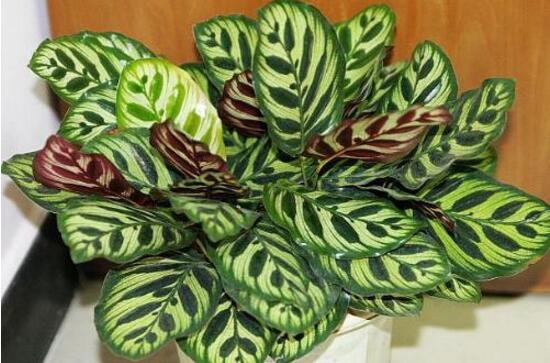
When it comes to a Calathea makoyana that won't grow tall, the first thing everyone thinks of is certainly fertilizer; after all, without sufficient nutrients, how could it grow? Besides this, unsuitable temperature and light are also key, because they are indispensable in the process of growing Calathea makoyana; once there is any negligence, failure to grow tall is quite normal. In addition, there are quite a few other reasons why Calathea makoyana won't grow tall. Let's continue reading below for the specifics.
2. Reasons why Calathea makoyana won't grow tall and solutions
1. Improper fertilization
① Insufficient fertilization: During the growing season of Calathea makoyana, we should apply a liquid fertilizer once a month, which ensures the nutrients needed for plant growth and promotes healthy growth. Once fertilization is insufficient, the plant has no nutrient support, so naturally it won't grow tall. Solution: Fertilize appropriately, and note that the fertilizer must not be concentrated or excessive; just meet the plant's growth needs.
② Excessive fertilization: The growth of Calathea makoyana cannot do without nutrients, but if too much or too concentrated fertilizer is applied, it can also cause the problem of stunted growth. Solution: Water the plant to dilute the fertilizer, and once the plant recovers, resume normal care.
2. Unsuitable temperature and light
Besides fertilization, the reason your Calathea makoyana won't grow tall may be unsuitable temperature or insufficient light.
① Unsuitable temperature: As far as the habits of Calathea makoyana go, it likes warmth, is not cold-tolerant, and dislikes high temperatures, so once the temperature is unsuitable, it may cause the plant to not grow tall. Solution: Keep the room temperature above 16°C, but below 30°C.
② Insufficient light: As a foliage plant, a large part of Calathea makoyana's nutrients is produced through photosynthesis. So once light is insufficient, it will also cause a lack of nutrients, and the result is that Calathea makoyana won't grow tall. Solution: Give it sufficient light, but do not expose it to blazing sun, so in the hot summer season move the plant to a shaded place.
3. Unsuitable potting soil
In the cultivation methods for Calathea makoyana, it is mentioned that the plant should be repotted at the right time to replenish the nutrients in the potting soil, so the reason your Calathea makoyana won't grow tall may be insufficient nutrient supply in the potting soil.
Solution: Repot your Calathea makoyana and replace the soil with the fertile, loose, and well-draining soil it likes, preferably slightly acidic leaf mold, or a potting mix made from decomposed base fertilizer, leaf mold, peat, and river sand.
4. Insufficient watering
If the above points can be ruled out, the reason your Calathea makoyana won't grow tall may be insufficient watering. Because Calathea makoyana likes moisture, especially during its growing season when its water demand is high; once watering is insufficient and cannot meet the plant's growth needs, it naturally won't grow tall.
Solution: During the growing season, appropriately increase the amount of watering to keep the environment moist. However, note that in winter you should control the amount of watering; as long as the potting soil is not dry, that is enough, and wait until early spring to gradually increase the amount of watering.
Overall, Calathea makoyana is not difficult to grow, but we must also satisfy its growth habits, otherwise it will not only fail to grow tall but also develop situations such as yellowing leaves and curled leaves! So in everyday cultivation, everyone must follow the methods! That's all the editor has to share about Calathea makoyana not growing tall, and I hope it helps everyone.
What to do if your Calathea makoyana won't grow tall
Suitable temperature and light for Calathea makoyana
One reason Calathea makoyana won't grow tall is unsuitable temperature, too high or too low, or insufficient light. As far as the habits of Calathea makoyana go, it likes a warm, humid, shaded environment and does not like low temperatures or windy conditions. Secondly, especially be careful not to expose it to blazing sun, so in the hot summer season move the plant to a shaded place. In addition, be sure to avoid high-temperature environments, keep the ambient temperature below 30 degrees, and frequently spray water and ventilate to cool and maintain moisture, so as to avoid situations such as yellowing leaves. Of course, in winter, appropriately increase light and raise the temperature.
Suitable potting soil conditions for Calathea makoyana
The second reason Calathea makoyana won't grow tall is insufficient nutrient supply in the potting soil, because Calathea makoyana likes fertile, loose, and well-draining soil, preferably slightly acidic leaf mold, or a potting mix made from decomposed base fertilizer, leaf mold, peat, and river sand.
The correct way to water Calathea makoyana
The third reason Calathea makoyana won't grow tall is insufficient water supply. As mentioned earlier, Calathea makoyana likes moisture, especially during its growing season when its water demand is high, so appropriately increase the amount of watering and spray water at the right time to keep the environment moist. In winter, however, control the amount of watering; as long as the potting soil is not dry, that is enough, and wait until early spring to gradually increase the amount of watering.
The correct way to fertilize Calathea makoyana
The fourth reason Calathea makoyana won't grow tall is improper fertilization causing poor nutrition in the plant. During the growing season of Calathea makoyana, apply a liquid fertilizer once a month, which ensures the nutrients needed for plant growth and promotes healthy growth. As for the types of fertilizer, mainly use phosphorus fertilizer and potassium fertilizer, and do not use too much nitrogen fertilizer. Improper fertilization will cause the problem of stunted growth. Besides applying fertilizer, you can also spray liquid fertilizer on the leaves and then water them. Take special note that after winter arrives you must stop fertilizing.
What are the benefits of keeping Calathea makoyana at home (feng shui effects)? What to do if your Calathea makoyana won't grow tall
Surely everyone is fairly familiar with Calathea makoyana; it gets its name because its leaves closely resemble the beautiful feathers of a peacock. It likes a warm, humid environment and is very suitable for growing at home. Its ornamental value is very high, and like lucky bamboo, it is evergreen in all four seasons, with thick and bright leaves. Not only that, it also has very good feng shui effects.
What are the benefits of keeping Calathea makoyana at home (feng shui effects)
Calathea makoyana is a shade-loving plant and can be placed in the bathroom at home, not only purifying the air but also bringing wealth.
What to do if your Calathea makoyana won't grow tall
1. Cause: Unsuitable temperature, too high or too low, or insufficient light.
As far as the habits of Calathea makoyana go, it likes a warm, humid, shaded environment and does not like low temperatures or windy conditions. Secondly, especially be careful not to expose it to blazing sun, so in the hot summer season move the plant to a shaded place. In addition, be sure to avoid high-temperature environments, keep the ambient temperature below 30 degrees, and frequently spray water and ventilate to cool and maintain moisture, so as to avoid situations such as yellowing leaves. Of course, in winter, appropriately increase light and raise the temperature.
2. Cause: Insufficient nutrient supply in the potting soil.
Because Calathea makoyana likes fertile, loose, and well-draining soil, preferably slightly acidic leaf mold, or a potting mix made from decomposed base fertilizer, leaf mold, peat, and river sand.
Cause: Insufficient water supply. As mentioned earlier, Calathea makoyana likes moisture, especially during its growing season when its water demand is high, so appropriately increase the amount of watering and spray water at the right time to keep the environment moist. In winter, however, control the amount of watering; as long as the potting soil is not dry, that is enough, and wait until early spring to gradually increase the amount of watering. 3. Cause: Improper fertilization causing poor nutrition in the plant.
During the growing season of Calathea makoyana, apply a liquid fertilizer once a month, which ensures the nutrients needed for plant growth and promotes healthy growth. As for the types of fertilizer, mainly use phosphorus fertilizer and potassium fertilizer, and do not use too much nitrogen fertilizer. Improper fertilization will cause the problem of stunted growth. Besides applying fertilizer, you can also spray liquid fertilizer on the leaves and then water them. Take special note that after winter arrives you must stop fertilizing.
Propagation methods for Calathea makoyana
1. Division
Division propagation is carried out each year in early summer when the daily temperature is around 20°C. After digging up a dense, mature clump, divide it along the underground rhizome, keeping 2-3 growing buds per section. After dividing, pot them up immediately, place them in a shaded spot for a week, then gradually move them to a spot with sufficient light. In the early stage after division planting, control water; only water thoroughly after new roots have formed.
2. Cuttings
Cutting propagation usually involves selecting in summer young shoots with 2 to 3 leaves at the base as cuttings, or using the creeping stems of some varieties for cuttings. You can use a mix of half peat soil and half river sand, or use vermiculite and perlite as the medium, keep it moist, and roots will form in about 5 weeks, after which they can be divided and potted up.
Methods for preventing and treating leaf spot disease in Calathea makoyana
1. Harm
The greatest ornamental value of Calathea makoyana lies in its leaves, so it goes without saying that leaf spot is fatal to it. When leaf spot disease occurs, the leaves gradually dry up and shrink, and may even gradually fall off and die.
2. Symptoms
The leaves of Calathea makoyana already have white and pale green markings, so in the early stages of leaf spot disease, you cannot see anything without careful observation. But as the pathogen spreads, many yellow-brown, nearly round lesions appear on the leaves, and these lesions gradually link together, with a halo around the outside. In the later stage the lesions expand, and the entire leaf turns yellow and withers.
3. Patterns of occurrence
The occurrence of leaf spot disease is mainly related to the environment: high temperature and high humidity, poor air circulation, excessive planting density, too many weeds or rotting leaves in the pot, or heavy fertilization with too much nitrogen fertilizer, and other such causes.
4. Prevention and treatment methods
Strengthen cultivation management and control temperature. During the growing season, water thoroughly to keep the potting soil moist, but do not let it become overly wet or waterlogged, otherwise root rot easily occurs, and even the whole plant may die. Although it likes to grow under low light or shade, it should not be placed indoors in overly shady conditions without sunlight for a long time; in autumn and winter it should receive sunlight to maintain the leaves' distinctive luster. In winter keep it on the drier side; if too wet, root rot or yellowing of the base leaves easily occurs. During the growing season, apply a dilute liquid fertilizer once every half month to strengthen its disease resistance.
Once diseased leaves are found, remove them immediately to avoid infecting other leaves. In the early stage of the disease, spray 25% prochloraz emulsifiable concentrate (such as Guoguang Bixian) at 500-600 times dilution, or 50% mancozeb wettable powder (such as Guoguang Yingna) at 400-600 times dilution. Use 2-3 times in succession, with an interval of 7-10 days.
Calathea makoyana likes a semi-shaded growing environment, so it will also grow very well when cultivated indoors. Everyone grows it at home to beautify the home environment, but during the care process you should still learn more about its growth habits and master some techniques.