How to prune a Brazil wood (Dracaena fragrans) so it looks good? A step-by-step guide to cutting from top to bottom
Brazil wood, the most popular foliage plant in recent years, has a graceful form, glossy leaves, and can give off a fragrance, making it deeply loved by plant enthusiasts. However, although Brazil wood's benefits are great, for growers it requires careful attention, especially pruning, which must not be done carelessly. So how do you prune Brazil wood so it looks good? Let's take a look together with the editor at the illustrated guide to Brazil wood pruning methods.
1. How to prune Brazil wood: the method matters
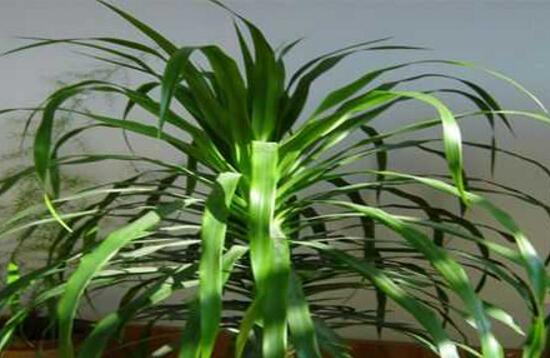
As a beautiful foliage plant, Brazil wood is kept in many enthusiasts' homes, but growing it well indoors is not simple. It is said that with sufficient nutrients, Brazil wood can grow up to 6 m tall! Such a height is definitely not suitable indoors, so enthusiasts need to control the height of Brazil wood through pruning. As for how to prune Brazil wood, this requires us to master the correct pruning method.
2. Illustrated guide to Brazil wood pruning methods
Tools: scissors, small knife, marker pen, alcohol, etc.
(1) How to prune Brazil wood when it is too tall
Brazil wood has a robust plant shape, and its main trunk grows upright. Once nutrients are sufficient, it can push through the roof, so when growing it indoors, proper pruning to control the height of Brazil wood is very important. The specific pruning method is as follows:
① Marking: To prune Brazil wood, first determine which section you want to prune, and make a mark on it.
② Disinfection: Before pruning, to ensure the safety of the plant, you should use alcohol to disinfect the scissors and small knife.
③ Pruning: When pruning Brazil wood, generally a branch needs to be cut off from the entire root node section. When cutting, go from top to bottom, then from bottom upward, paying attention to keeping the cut surface flat, preferably close to the main trunk.
(2) Pruning Brazil wood leaves
During the growth of Brazil wood, as the main trunk grows taller, the branches and leaves also grow taller, causing the lower part of the main trunk to appear empty, so the taller branches and leaves should be pruned in time. However, because Brazil wood has many leaves, before pruning you must mark the leaves to be cut on the plant with a marker pen, to avoid cutting the wrong ones because there are too many leaves.
(3) Care after pruning Brazil wood
Brazil wood's cultivation method is already simple, and care after pruning is not difficult either; you only need to water less and place it in a cool environment. However, note that after pruning, fertilize less, because too much fertilizer will make the plant grow quickly due to sufficient nutrients, and in that case the purpose of shortening Brazil wood will be lost.
How to prune Brazil wood so it looks good? After reading the above, everyone should be more confident about growing Brazil wood well! Overall, Brazil wood has strong vitality. If you grow Brazil wood, try pruning it yourself, and don't be afraid of cutting it badly~ That's all from the editor on Brazil wood pruning methods, and I hope it can help everyone.
How to propagate Brazil wood: illustrated guide to Brazil wood propagation methods / cutting survival rate 100%
As an introduced foliage plant from abroad, Brazil wood has been very popular among plant enthusiasts in recent years. It not only looks good, but also has amazing effects in purifying air and beautifying the home, so it is propagated in large quantities. Different plants have different propagation methods, so how do you propagate Brazil wood? Let's take a look together with the editor at the illustrated guide to Brazil wood propagation methods.
1. How to propagate Brazil wood: cuttings/layering/sowing
As a common foliage plant, Brazil wood's cultivation method can be said to be very simple; with care, it can be amazingly beautiful. However, if you want to propagate Brazil wood yourself, it is not easy. According to research, Brazil wood has three propagation methods: cuttings, division, and sowing, among which cuttings are most commonly used. Let's take a look at the specific operations below.
2. Illustrated guide to Brazil wood propagation methods
(1) Cutting propagation of Brazil wood
When it comes to propagating Brazil wood, cutting propagation is still the most commonly used. According to the editor's research, Brazil wood cutting propagation can also be divided into two types: column cutting and thin-branch cutting.
1. Column cutting of Brazil wood
① Cuttings: Choose thick trunks with a diameter of 6-10 cm as cuttings. However, trunks above 10 cm can also be chosen, but the trunk must be kept fresh, and the color of the bark should preferably be light yellow;
② Substrate: According to Brazil wood's growth habits, the cutting substrate can be river sand, vermiculite, or moss. The substrate depth should be about 30 cm. Remember to disinfect it before cutting;
③ Cutting: Insert the cutting into the substrate to a depth of about 10-25 cm. Of course, the depth is mainly related to stability; if the cutting height reaches above 1 m, for stability of the cutting, other methods can be used to secure it;
④ Care: After cutting, water promptly to keep the soil moist, while avoiding sunlight around noon. After about one month, new buds can be seen emerging. When the new buds grow to 5 cm to 10 cm high, they can be planted out.
2. Thin-branch cutting of Brazil wood
Thin-branch cutting of Brazil wood is combined with pruning. In order to control the height of Brazil wood, the cut branches (extended reading: Brazil wood pruning methods) can be used for cuttings. When cutting, horizontal insertion and vertical insertion can be chosen, keeping the room temperature at 25-30°C; after about one month, new roots can grow. Note: To avoid pests and diseases of Brazil wood, before cutting you should likewise disinfect various soils, containers, and tools.
(2) Other propagation methods for Brazil wood
Besides cuttings, Brazil wood can also be propagated by air layering (complicated operation, low survival rate). Also, after Brazil wood blooms it will bear fruit, and afterward seeds will remain, so Brazil wood can also be propagated by sowing. However, it is generally difficult to obtain mature Brazil wood seeds, so sowing propagation is not often used.
Overall, when propagating Brazil wood, whether by cuttings, division, or sowing, it can survive, but the one suitable for home propagation is still cuttings. Of course, methods are fixed while people are flexible; everyone can choose a method to propagate according to the actual situation. That's all from the editor on Brazil wood propagation methods, and I hope it can help everyone.
Brazil iron tree (Dracaena fragrans): cultivation methods and precautions for Brazil iron tree
?`?.??.?′′ˉ`?Related recommendations:
? Mucuna birdwoodiana
? Ash tree price
? Scutellaria barbata pictures and effects
? Baohua magnolia picture appreciation collection
? When does osmanthus bloom
?`?.??.?′′ˉ`?Decorate your small home, enjoy every minute of life! This article comes from Aiyouwo!
..........................................................................................
Brazil iron tree sounds like it is very far away, but in fact it is often right beside us; it's just that we may not have known its name at the time or did not pay much attention to it. But do not underestimate it, its role is very great. Below, let's look at the Brazil iron tree explained by the editor, and the cultivation methods and precautions for Brazil iron tree.
Introduction to Brazil iron tree
Brazil iron tree, also known as fragrant dragon blood tree, Brazil wood, dragon blood tree, etc., is an evergreen tree of the genus Dracaena in the lily family. It is generally used as a potted plant, has branches, leaves clustered at the top of the stem, curved leaves, bright green leaf color, glossy, small but fragrant flowers. The plant shape is graceful and neat, and it is hailed as the world's most famous new-generation indoor foliage plant. It is a relatively popular large indoor potted plant nowadays, suitable for placement in living rooms, studies, offices, etc. Its elegant shape also plays a very good role in indoor decoration.
Growth habits of Brazil iron tree
Brazil iron tree originates from tropical regions, northern Africa. It likes a climate environment with sufficient light, high temperature, and humidity, and is also tolerant of shade and dryness, with strong vitality. It only needs sunlight, air, and very little water; relying on its own potential energy, it can also grow well in the relatively dry environment of a bright northern room. It is planted in areas such as Yunnan and Hainan in China. Common varieties include: Dracaena fragrans 'Massangeana', Dracaena fragrans 'Victoria', Dracaena fragrans 'Lindeni', etc.
Cultivation methods and precautions for Brazil iron tree
Soil: When Brazil iron tree is generally grown as a household potted plant, it is not advisable to buy one that is too large. The soil used only needs to be sandy culture soil containing humus, with strong permeability, fertile and loose.
Watering: After Brazil iron tree is planted, water it thoroughly, then place it in a cool place for half a month, after which place it in a sunny and ventilated place for care. Keep the potting soil moist, but it must not be too wet, and there must be no water accumulation. If it is kept outdoors, drain promptly after rain.
Pests and diseases: During growth, Brazil iron tree is prone to damage by scale insects. Scale insects generally hide on the back of leaves, and sooty mold is more likely to occur in non-ventilated environments, so Brazil iron tree must be placed in a ventilated place, and medication should be used promptly for treatment.
Pruning: Only when Brazil iron tree has grown to maturity can the lower old leaves be cut off, keeping 2 to 3 rounds of leaves; it does not need frequent pruning. If leaves turn yellow and dry up after being harmed by pests and diseases, the leaves should be cut off promptly.
Summary: Brazil iron tree's appearance is elegant, upright, and rich in tropical flavor. If the home decor has a tropical style, placing one or two pots of Brazil iron tree is most suitable. Using it to decorate the living room makes the whole room look dignified and elegant, full of natural charm. So friends who like it must not miss it.
☆═━┈┈Recommended reading
? Wedding supplies wholesale market ? Cross-stitch "Happiness for Ten Thousand Years" ? What brand of massage pillow is good ? How is the Xiaoruan health pillow ? Illustrated guide to bowl lotus planting methods
? Cultivation methods for calla lily ? Cultivation methods for kalanchoe ? Cultivation methods for bamboo fern ? Cultivation methods for clivia ? Is it good to sleep without a pillow
? Dendrobium planting techniques ? Cross-stitch online store franchise ? Can pregnant women use electric blankets ? Bed cover size for a 1.5 m bed ? Do cacti protect against radiation