How to Grow Oncidium 'Sharry Baby': Five Tips to Extend the Blooming Period
Oncidium 'Sharry Baby' is a plant of the Orchidaceae family, Oncidium genus. It is native to Central and South America, and is much loved for its good branching, elegant flowers and vivid colors. It is grown in Zhejiang and other places in China, and because of its distinctive lip color it has become one of the most popular types of exotic orchids in recent years. So what is the way to grow Oncidium 'Sharry Baby'? Let's find out together.
How to Grow Oncidium 'Sharry Baby'
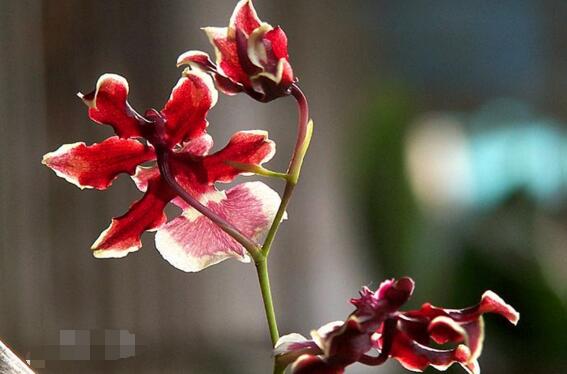
Oncidium 'Sharry Baby' prefers a warm, humid climate. In terms of light it adapts to strong light better than ordinary Oncidium varieties, and it is also fairly drought tolerant, so you can water only after the soil has dried out. Because it has pseudobulbs, propagation is usually done by division. In addition, its requirements for soil and fertilizer are average.
1. Soil: Many flower lovers say Oncidium 'Sharry Baby' can only be grown in the south, but in fact if you give it a suitable environment according to its habits, it can rebloom in the north too. The soil should be mainly pure sphagnum moss, and you can add some wood shavings or peat moss to improve aeration.
2. Temperature: Generally, the temperature should stay above 13°C for it to grow normally, so in winter you need to keep it warm. It is best to place it in an environment of 15-25°C, which lets it reach its best growing state and also avoids many growing problems.
3. Light: In the growing method for Oncidium 'Sharry Baby', its biggest difference is that it can adapt to sunlight, but in summer you still need to shade it appropriately. So apart from winter, it is best at other times to put it on a north-facing balcony, where it can get some sunlight but the light will not be too strong.
4. Watering: Oncidium 'Sharry Baby' has fairly strong drought tolerance, so you can wait until the soil has dried out completely before watering. But you must observe it carefully: if the soil stays dry for too long without watering, the plant will turn yellow from lack of water, so try to avoid this situation.
5. Fertilizing: We know the roots of Oncidium are fairly thin and weak, so when fertilizing you cannot apply concentrated fertilizer. You can sprinkle some compound fertilizer around the soil every 2-3 weeks, and before the flowering period arrives you can apply some water containing phosphorus fertilizer. The principle is light fertilizer applied frequently.
Notes on Growing Oncidium 'Sharry Baby'
1. Avoid direct sun exposure: Under strong light, Oncidium 'Sharry Baby' has a certain ability to adapt, but in summer you must not let it sit in the sun all day, otherwise most plants cannot take it. At best the plant will turn grayish-white, and it may even become infected with anthracnose.
2. Care during the flowering period: The flowering period of Oncidium lasts a fairly short time, but we can also use some techniques to extend it as much as possible. For example, when it is blooming, place it in a spot around 25°C where it can get scattered light, then water it appropriately, and you can make the flower-viewing time last as long as a month.
3. Propagation techniques: The main propagation method for Oncidium 'Sharry Baby' is division. Cut the daughter plants that have pseudobulbs off the mother plant, then replant them in a substrate mainly of sphagnum moss and keep the air humidity high. After a period of time they will sprout new shoots and new roots.
How to Grow Oncidium and the Flowering Period of Oncidium
Oncidium is also called wart-lipped orchid, dancing lady orchid, dancing girl orchid and golden butterfly orchid. It is a plant of the Orchidaceae family, subfamily Epidendroideae. Today we will introduce how to grow Oncidium and the flowering period of Oncidium.
How to Grow Oncidium:
1. Soil: Oncidium is suited to growing in airy, breathable, well-draining soil. It is usually made up of materials such as fern roots, charcoal, moss, volcanic ash, crushed brick pieces and bark chunks. You can mix fine fern roots, peat soil, charcoal, vermiculite (perlite) and crushed brick (crushed stone pieces) in a 4:1:2:2:1 ratio, and it is best to add 1/3 crushed stone (crushed brick) at the bottom of the pot to aid drainage and aeration.
2. Temperature: The suitable growing temperature is 12-33°C. Thick-leaved varieties like warmth, with the best temperature at 18-25°C; thin-leaved varieties like coolness, with the best temperature at 10-22°C. The plant stops photosynthesis below 12, and in winter the temperature should not be lower than 10°C; if it exceeds 6-8 hours it will be damaged and die. In summer, temperatures above 33°C are likewise bad for growth. During the flowering period you can lower the temperature as appropriate to increase the flowering time.
3. Sunlight: Oncidium tolerates partial shade. Apart from winter, it cannot take direct sunlight in the other seasons. In summer it needs 40-50% shade, to avoid slowing its growth or even sunscald and then death. In spring and autumn the sunlight is relatively less strong, so 30% shade is enough. Be careful to control the amount of shading; too much will leave the plant with insufficient light, which affects flower bud differentiation, development and blooming.
4. Water: It likes a humid environment. During the growing period you should not only water the potting soil in the morning and evening, but also spray water on the leaves and the ground to increase the moisture in the air and promote the growth of the flower stems. At low temperatures in winter, no watering is needed. Of course, different varieties have very different water needs. For example, Oncidium without pseudobulbs is not drought tolerant and needs frequent watering, topping up as soon as it looks dry.
5. Ventilation: All Oncidium need ventilation, especially lines with pseudobulbs and thin leaves, which are prone to disease if too stuffy. In the hot summer, you not only need to water and spray the plant and its surroundings, but also increase ventilation to help lower the temperature.
6. Fertilizer: Fertilizing should be done according to the variety and growth stage. For base fertilizer you can use a little slow-release fertilizer. Apply a 1500-2000 times diluted liquid water-soluble quick-acting fertilizer once every 2-3 weeks, or you can apply solid fertilizer. Outside the flowering period you can apply a compound fertilizer with balanced nitrogen, potassium and phosphorus. As the flowering period approaches, supplementing phosphorus and potassium fertilizer helps flower bud differentiation and blooming. When flower stems appear or the temperature is below 10°C, stop fertilizing, and fertilize again after the flowering period.
7. Pests and diseases: Oncidium generally suffers from pests such as scale insects, snails and whiteflies. Especially in the rainy season, snails come out frequently, so you can regularly scatter lime powder around. For scale insects you can spray 800-1000 times diluted Supusha or Sujieling, and 3000 times diluted Supufengya or Yashixiao can kill whiteflies. The main disease is yellow leaf disease, so keep things as clean as possible and spray pesticides thoroughly, covering the undersides of leaves, corners and the ground. Disinfect the greenhouse once a month.
The Flowering Period of Oncidium:
Oncidium is very beautiful, so do you know when Oncidium blooms? When can we see Oncidium in full bloom to decorate our indoor space? Because the traits of the varieties differ greatly, the cultivation and management methods also differ considerably. Its flowering period is not fixed; as long as the plant is mature it can bloom.
Oncidium is the general name for plants of the Oncidium genus in the Orchidaceae family. This genus has as many as more than 750 native species worldwide, while the diverse commercial varieties used in the trade are mostly hybrids. It is fairly widely distributed, including tropical, warm temperate, high mountain temperate and cold zones. Therefore, the growth and flowering period of Oncidium all differ.
More InformationHow to Grow Oncidium
1. Soil
Oncidium needs naturally airy, fertile soil. Before planting you can lay a layer of broken tiles at the bottom of the pot. The soil is commonly a mix of bark, fern roots, sphagnum moss, charcoal and so on.
2. Light
Oncidium likes a partially shaded environment. The light should not be too strong or too weak, otherwise it will affect blooming. In summer it needs shading to avoid scorching, and in winter it can receive light all day.
3. Temperature
Because Oncidium varieties differ, their suitable growing temperatures also differ. The suitable growing temperature for thick-leaved varieties is 18-25°C and cannot be lower than 12°C; the suitable temperature for thin-leaved varieties is 10-22°C, and the minimum cannot be lower than 8°C.
4. Watering
Oncidium rather likes dryness. Water as soon as the soil surface is slightly dry, but there must be no standing water. In winter reduce the amount and frequency of watering, and the water used should not be too cold.
5. Fertilizing
Because Oncidium in spring and autumn needs organic fertilizer once every half month, it can be applied to the roots or leaves. Because winter temperatures are low, no fertilizing is needed.