What fertilizer to apply to Oncidium during the growing season? Method and timing matter
The flowers of the Oncidium orchid closely resemble dancing golden butterflies, both dynamic and beautiful, making it one of the most important types of potted flowers. To make it bloom with vivid flowers, you need to understand how to grow Oncidium, and among these factors, fertilizing is the key element that determines whether the flower color is bright. So how do you fertilize Oncidium? What fertilizers can be applied during the growing season of Oncidium? Let's take a look at Oncidium fertilizing methods.
How to fertilize Oncidium
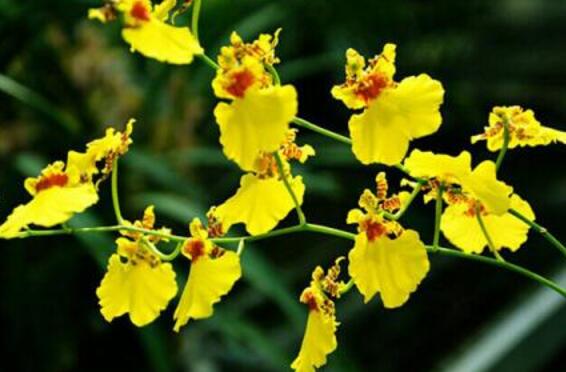
In terms of fertilizer selection and amount, you need to constantly adjust according to the growth condition of the Oncidium. Generally, during the growing season, fertilize once every 2-3 weeks, and after each fertilizing you should water a little to increase the fertilizer effect. When the temperature is too high or too low, you need to reduce or stop fertilizing.
What fertilizers can be applied during the growing season of Oncidium
Theoretically speaking, the fertilizer used for Oncidium needs to meet one basic condition, which is being fully decomposed, but when choosing fertilizer you also need to pay attention to balanced nutrition. Nitrogen fertilizer is related to whether the leaves are emerald green, while phosphorus and potassium fertilizers are related to whether the flower color is bright and how strong the disease resistance is. So fertilizers generally choose soybean cake water, bone meal or compound fertilizer, etc.
Oncidium fertilizing methods
1. Spring and summer: fertilize once every 2-3 weeks, mainly with liquid quick-acting fertilizer. Before the flowering period is about to begin, you can increase the amount of phosphorus and potassium fertilizer, which can both ensure its ability to resist pests and diseases and make the flower color more vivid. When fertilizing, it should be applied along the edge of the flower pot.
2. Autumn and winter: In autumn the temperature gradually drops. At this time the Oncidium fertilizing method is to fertilize once a month. When the temperature falls below 10 degrees, fertilizing should be stopped. Fertilizing again needs to wait until the Oncidium resumes growth in spring. Although fertilizing is not needed, you can add some carbendazim solution when watering, thereby reducing the chance of germs developing in the soil.
How to make Oncidium burst into a full pot
1. Reasonable fertilizing. No matter what season it is, when applying fertilizer you must note that it cannot be excessive, and at the same time you cannot apply only nitrogen fertilizer or only phosphorus and potassium fertilizer. Fertilizer should be selected flexibly according to the growing season, flowering period and dormant period. Only by matching the growth habits of the Oncidium can it grow normally.
2. Environmental ventilation. Normally pay attention to environmental ventilation. Maintaining air circulation is very beneficial to the Oncidium. It can help us control air humidity well, and can also avoid pests and diseases caused by excessively high temperatures, but it cannot be placed in a place with relatively strong wind.
What soil to use for Oncidium, Oncidium growing methods and precautions / avoid low temperatures
We know that there are many benefits to growing Oncidium, and the main one is flower viewing. But to make it bloom with pure yellow, elegant flowers, you not only need to choose the right variety, but also need to master certain care techniques. For flower lovers, what is the best way to plant Oncidium? What soil to use for planting Oncidium? Let's take a look at the growing methods and precautions for Oncidium.
How to plant Oncidium
Oncidium is native to the tropical regions of the Americas. It likes high temperature and humid environments, and some varieties such as the sword-leaved Oncidium like cool environments, but most Oncidium orchids like heat and fear cold, so attention should be paid to keeping warm in winter. In addition, Oncidium is also suitable for growing in semi-shaded and humid environments, so attention should be paid to watering and moisture retention, and too strong light should be avoided.
Oncidium growing methods and precautions
I. Growing methods
1. What soil to use for planting Oncidium
In terms of soil selection, crushed fern roots, peat soil, crushed charcoal, vermiculite and sphagnum moss should be mixed in a ratio of 4:1:2:2:1. Of course, you can also use a mixture of leaf mold, garden soil and fine sand. You must ensure that the soil is sufficiently fertile and has good drainage and air permeability.
2. Choice of flower pot
When potting, how to plant Oncidium? In terms of flower pot selection, it is best to choose one with relatively many air holes, and preferably a shallow pot, such as a 15 cm pot, etc. When potting, you can place some weathered stones or small brick particles, tiles and the like at the bottom of the pot, which is beneficial for moisture retention and drainage.
3. Light
In the growing methods and precautions for Oncidium, light is an important factor. Since it does not like semi-shaded environments, the light cannot be too strong when planting, otherwise it is easy to cause burns and damage the plant, which may cause the leaves to turn yellow and trigger anthracnose. The light also cannot be too weak, otherwise the leaves will droop and the number of flowers will be small.
4. Temperature
The suitable temperature differs for different Oncidium varieties. For example, the suitable temperature for the thick-leaved type is 18-25 degrees, while for the thin-leaved type it is 10-22 degrees. But no matter which type of Oncidium it is, you must pay attention not to let the temperature be too low, otherwise frost damage is likely to occur.
5. Humidity
The ideal humidity is 60%-80%, but flower lovers need to choose moisture retention according to climate changes when growing it. Another relatively important and useful technique is to maintain environmental ventilation, which is very helpful for increasing air humidity.
6. Fertilizer and water
Watering: Oncidium has relatively strong drought tolerance, so the soil can be kept appropriately dry, but when the soil surface is found to be relatively dry, it needs to be watered thoroughly. In spring and summer when growth is relatively vigorous, it is best to water once in the morning and once in the evening.
Fertilizing: Usually fertilizing should mainly use fertilizers with relatively slow fertilizer effect, and during the growing process, you can often pour some carbendazim or thiophanate-methyl solution, thereby reducing the possibility of germs and pests appearing.
II. Precautions
1. Proper shading. If it is large-scale cultivation, it is best to add a shade net for the Oncidium, keeping the light transmittance at around 40%. In winter, light can be appropriately increased, so that it can bloom smoothly after the flowering period arrives. If the light is too weak, it is not conducive to flower bud differentiation.
2. Regular repotting. When potting Oncidium, you can change the flower pot and soil once every 2-3 years. The time for repotting is generally chosen after the flowering period, and it is best to choose spring. During repotting, pay attention to protecting the roots to avoid root damage.
3. Alternating dry and wet. When watering, you generally need to pay attention to alternating dry and wet, trying to keep the soil slightly moist, and water again after the soil surface is slightly dry. When the winter temperature is below 10 degrees, watering needs to be stopped promptly. In spring and summer, appropriate spraying is needed.
Fertilizing and growing conditions for Oncidium
Fertilizing of Oncidium should be carried out according to the growth conditions of different varieties. Spring, summer and autumn are the growing seasons of Oncidium. For general varieties, liquid fertilizer should be applied 2-3 times per month. Once the plant sends out flower stems, fertilizing should be stopped, and it can only be resumed after the flowering period ends. When the temperature is below 10°C, fertilizing should also be stopped. In addition, according to varieties with different leaf shapes, it is best to fertilize tubular-leaved and leathery-leaved varieties twice a month. Thin-leaved varieties should start fertilizing in April, once every 10 days. If some solid fertilizer is also placed on the pot surface at the same time, the effect will be even better.