How to grow potted hollyhocks? Growing methods and precautions, light must be sufficient
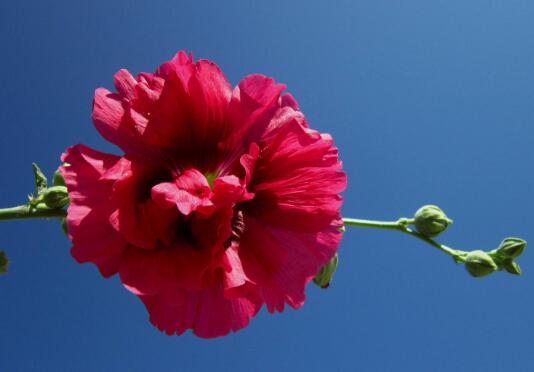
Hollyhock is a highly ornamental flowering plant, because it can grow to about a zhang in height, and its flowers are mostly red, so it is also called "one-zhang red." However, for this plant, there are many things to pay attention to if you want to grow it well. How to grow potted hollyhocks? What are the growing methods and precautions for hollyhocks? Below, the editor will take everyone through them.
1. How to grow potted hollyhocks, understand their habits
2. Growing methods and precautions for hollyhocks
1. Soil, sandy soil
Among the growing methods and precautions for hollyhocks, choosing soil is a very important part. Although it has strong adaptability to soil, choosing a suitable soil is still very helpful for its growth. Hollyhock prefers loose, fertile, sandy soil with good drainage, which can help it grow better.
2. Fertilizing, apply liquid fertilizer / avoid concentrated fertilizer
Fertilizer is one of the main nutrients for hollyhocks, but there is no need to fertilize too frequently. Generally, before planting, we can add an appropriate amount of base fertilizer to the soil. During its growing period, it can be fertilized 1-2 times, generally mainly with nitrogen fertilizer and potassium fertilizer. After the flower buds form, we also need to fertilize 1-2 times, and at this time the fertilizer is generally mainly phosphorus fertilizer and potassium fertilizer. However, before fertilizing, there is one thing we need to pay attention to: we need to dilute the fertilizer with water first, so as not to burn the plant.
3. Temperature, monthly average temperature not lower than 17°C
Growing temperature is also a very important point for hollyhocks. Only when it grows in a suitable environment can it grow better. If it is in the growing period, we can keep the temperature between 25°C—30°C, and during the flowering period, we can keep it between 26°C—28°C. When growing it, remember not to let the monthly average temperature fall below 17°C, otherwise it will affect its flowering.
4. Watering, avoid waterlogging
Among the growing methods and precautions for hollyhocks, watering is also a rather particular point. This plant prefers water, but fears waterlogging, so when watering we must pay special attention to the amount. Generally, keeping the soil somewhat moist is enough. Remember not to cause water accumulation, otherwise root rot is very likely to occur.
5. Light, maintain sufficient light
Hollyhock prefers light, so when we grow it normally, we can place it in direct sunlight, so that it can carry out photosynthesis better and grow better. However, in summer when the sunlight is too strong, it is best to pay attention to shading, so as not to burn the plant.
6. Pruning, prune regularly to maintain light penetration
In order to maintain the ventilation and light penetration of hollyhocks, we need to prune them regularly during their growth. We can moderately prune the branches, which can also maintain the plant's shape and promote branching, allowing it to grow into a full pot. After it blooms, we should also promptly cut off the aboveground parts so that it can sprout new shoots.
7. Pests and diseases, prevent and control promptly without delay
When we grow hollyhocks, if we are not careful enough, problems such as pests and diseases can easily take advantage of the situation. Such problems are extremely harmful to the plant, so after discovering them we must deal with them as soon as possible. For specific treatment methods, everyone can refer to the article on pest and disease control for hollyhocks, which has detailed introductions.
How to grow hollyhocks? Growing methods and precautions for hollyhocks
Hollyhock, also known as one-zhang red, big Shu season, Wu sunflower, etc., is a biennial upright herbaceous plant of the genus Alcea in the mallow family. Hollyhock has rich flower colors, either fresh and elegant or rich and gorgeous, and has high ornamental value, so it is often potted indoors and in courtyards. So, how to grow hollyhocks? The growing methods and precautions for hollyhocks are introduced below.
Image: Hollyhock
1. Growing methods for hollyhocks
1. Light:Hollyhock prefers a sunny environment and tolerates partial shade. Usually when growing it, hollyhock should be placed in a place with direct sunlight to receive sunlight.
2. Temperature:Hollyhock is cold-resistant. In winter, the aboveground branches wither and die, but the underground perennial roots can overwinter naturally in the open field and sprout new shoots the next year. In North China, it can overwinter safely in the open field. The growing temperature for hollyhock is 25°C—30°C, and the most suitable temperature during the flowering period is 26°C—28°C. A monthly average temperature below 17°C affects flowering, and a nighttime temperature below 14°C causes poor growth.
3. Watering:Pay attention to watering normally and keep the soil moist, but do not water excessively, as hollyhock fears waterlogging. Hollyhock should be watered appropriately during the flowering period to extend the flowering period and increase the number of flowers.
4. Soil:Hollyhock has strong adaptability to soil and strong salt-alkali tolerance, and can still grow in soil with 0.6% salt content. It grows best in loose, fertile, well-drained sandy soil rich in organic matter.
5. Fertilizing:Before planting hollyhocks, deeply turn the soil and add base fertilizer to the soil. During the growing period, apply liquid fertilizer mainly composed of nitrogen and potassium fertilizer once or twice. After the flower buds form, apply liquid fertilizer mainly composed of phosphorus and potassium fertilizer once or twice more.
Image: Hollyhock
2. Precautions for growing hollyhocks
1. Prune promptly:After hollyhock blooms, promptly cut off the aboveground parts, and it can still sprout new shoots.
2. Provide half shade in summer:In summer, due to strong light, hollyhock should not be exposed to the sun as much as possible, so as not to affect plant growth. It should be properly shaded and receive scattered light.
3. Control plant height:To dwarf the plant, root cutting can be used to control height, that is, during the growing period, use a spade to vertically cut the root system at 10 cm to the left and right of the plant base, and after 2—3 weeks, similarly cut the front and back two places. The more times the roots are cut, the shorter the plant becomes, making it suitable for potting.
[Editor's conclusion]Hollyhock prefers a sunny environment and tolerates partial shade, but fears waterlogging, so special attention is needed during care. The above has introduced the growing methods and precautions for hollyhocks for everyone, and I hope it can help everyone!
How to grow hollyhocks? Growing methods for hollyhocks
Hollyhock has rich flower colors, either fresh and elegant or rich and gorgeous, and has high ornamental value, so it is often potted indoors and in courtyards. So how is hollyhock grown? Below, the growing methods for hollyhocks are introduced for everyone.
Growing methods for hollyhocks
1. Light: Hollyhock prefers a sunny environment and tolerates partial shade. Usually when growing it, hollyhock should be placed in a place with direct sunlight to receive sunlight.
2. Temperature: Hollyhock is cold-resistant. In winter, the aboveground branches wither and die, but the underground perennial roots can overwinter naturally in the open field and sprout new shoots the next year. In North China, it can overwinter safely in the open field. The growing temperature for hollyhock is 25°C-30°C, and the most suitable temperature during the flowering period is 26°C-28°C. A monthly average temperature below 17°C affects flowering, and a nighttime temperature below 14°C causes poor growth.
3. Watering: Pay attention to watering normally and keep the soil moist, but do not water excessively, as hollyhock fears waterlogging. Hollyhock should be watered appropriately during the flowering period to extend the flowering period and increase the number of flowers.
4. Soil: Hollyhock has strong adaptability to soil and strong salt-alkali tolerance, and can still grow in soil with 0.6% salt content. It grows best in loose, fertile, well-drained sandy soil rich in organic matter.
5. Fertilizing: Before planting hollyhocks, deeply turn the soil and add base fertilizer to the soil. During the growing period, apply liquid fertilizer mainly composed of nitrogen and potassium fertilizer once or twice. After the flower buds form, apply liquid fertilizer mainly composed of phosphorus and potassium fertilizer once or twice more.
Precautions for growing hollyhocks
1. Prune promptly: After hollyhock blooms, promptly cut off the aboveground parts, and it can still sprout new shoots.
2. Provide half shade in summer: In summer, due to strong light, hollyhock should not be exposed to the sun as much as possible, so as not to affect plant growth. It should be properly shaded and receive scattered light.
3. Control plant height: To dwarf the plant, root cutting can be used to control height, that is, during the growing period, use a spade to vertically cut the root system at 10 cm to the left and right of the plant base, and after 2-3 weeks, similarly cut the front and back two places. The more times the roots are cut, the shorter the plant becomes, making it suitable for potting.
The above is an introduction to the growing methods for hollyhocks. Friends who like hollyhocks can refer to the above growing methods and grow them reasonably.