Why Is My Anthurium No Longer Pink? Three Causes and How to Respond
The flowers of the pink anthurium should normally be pink or scarlet, but some growers find that after keeping one for a while, the flower color begins to fade from pink, and may even turn green or whitish, greatly hurting its ornamental value. So why is the anthurium flower no longer pink? How do you prune an anthurium after it has bloomed? Let me give you the answers.
Why Is the Anthurium Flower No Longer Pink
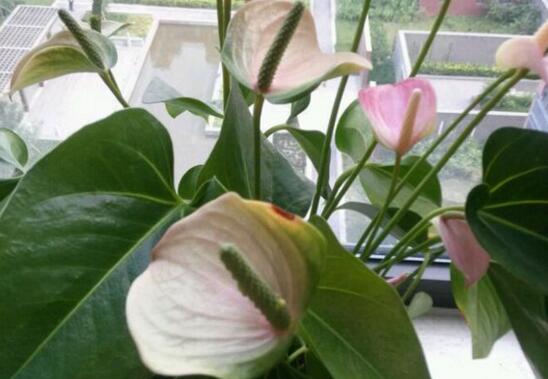
1. Wrong variety: The pink anthurium is a very popular ornamental plant, and botanists have bred many varieties of it. Some do not have pink flowers at all, but rather creamy white, white-green, multicolored, and so on, so the flower color of anthuriums is extremely varied.
What to do: When choosing an anthurium, you must be clear about the variety. Some may produce flowers that are rich, colorful and very showy, but the color is not necessarily pink, so creamy white or greenish flowers may simply be due to the variety.
2. Too much light: After an anthurium blooms, some growers place it in the sun for care. If it is spring or autumn when the sunlight is not intense, the effect may be small, but if you put it in the sun in summer, the flowers may lose their pink color because of the scorching sun, so too much light is also one of the reasons an anthurium flower is no longer pink.
What to do: Whether during the flowering period or other growth stages, never place the anthurium directly in full light, otherwise the leaves easily turn yellow, the flowers lose color or wither, and in severe cases the plant may even die.
3. Flower aging: Anthurium flowers do fade; they do not stay in bloom and keep their pink forever. When they first open, the color is vivid and the flower shape is beautiful, but as time goes on and the end of the flowering period approaches, some flowers will stop being pink and may even turn green and wilt.
What to do: Flowers slowly fading is a natural phenomenon. Relatively fresh flowers can be kept, while spent flowers that have been open for a long time need to be cut off, which encourages them to bloom again the following year.
How to Prune an Anthurium After It Has Bloomed
1. Cut off the spent flowers. One way to deal with an anthurium after the flowers fade is to prune away the spent blooms, and you should gather the flowers together for disposal rather than letting them fall into the soil, otherwise they will breed bacteria and cause pests and diseases. If the pruned flowers are relatively fresh, they can still be enjoyed.
2. Cut off the dead branches. After the flowers fade, the anthurium may develop some old, yellowed and withered branches and leaves, which also need to be pruned away. In addition, some weak branches should also be cut so that nutrients are more concentrated on the sprouting and growth of new shoots and the anthurium can overwinter smoothly.
Why Is My Anthurium Not Blooming? Four Causes You Need to Know / Plus Tips to Encourage Blooming
The reason many people love the anthurium has a lot to do with its pink flowers; its name comes precisely from its pink flower color. But some growers run into the problem of keeping one for a long time without it blooming, which is very frustrating. So why is the anthurium not blooming? The main causes are as follows.
Why Is My Anthurium Not Blooming
1. Unsuitable temperature: The anthurium is native to Colombia in South America, where the climate is hot and humid. If you keep an anthurium in an environment where the temperature stays below 20°C or even lower for a long time, it will fail to bloom, or bloom late, because of the unsuitable temperature.
What to do: Avoid too low a temperature around the anthurium and create a temperature more suitable for its growth and blooming. For example, 20-28°C is the most suitable for its growth, but do not let the temperature frequently exceed 35°C, otherwise the anthurium leaves will turn yellow.
2. Sufficient light: One feature of tropical rainforests is that very little sunlight reaches the ground, and the anthurium likes an environment with light but not too intense light. A lack of light makes the anthurium grow slowly, while too much light scorches the leaves.
What to do: It is best to place the anthurium in a shaded spot, such as by an indoor window or on a windowsill that does not face the sun, so that it is not fully exposed to the sun but can still receive some scattered light, which helps the anthurium bloom.
3. Suitable soil: Acidic soil leads to a deficiency of magnesium, while alkaline soil is unfavorable for the development of the anthurium's root system. Once root growth is hindered, blooming becomes difficult, and moreover its entire growth will run into problems.
What to do: When choosing soil, do not use extreme soil types; using soil rich in humus is the wisest choice, such as garden soil, leaf mold, river sand, and so on. If conditions are limited, you can buy fertile potting soil from a specialty market.
4. Scientific fertilizing: Sometimes growers find that the anthurium grows fine and leaves are sprouting normally, yet it still does not bloom for a long time. At this point, why is the anthurium not blooming? The answer is that fertilizing is lacking and scientific, reasonable fertilization is needed.
What to do: During cultivation, follow the principle of light fertilizer applied frequently. Before the flowering period, apply some nitrogen fertilizer, and before autumn you can also apply some phosphorus and potassium fertilizer; these can all encourage the anthurium to bloom. For specific fertilizing methods, you can refer to how to fertilize an anthurium.
What to Do If the Anthurium Root Rots: Three Situations to Prevent / Waterlogging / Soil / Overfertilizing
The root of the anthurium is its main organ for absorbing nutrients and water. Once it rots, the plant grows slowly, and if the rot is severe it may even cause the plant to die. Therefore, when planting, you must avoid this situation. And if the anthurium root rots, what should you do? Let me tell you the causes and solutions.
What to Do If the Anthurium Root Rots
When we find that the anthurium's roots have rotted, we need to promptly cut off the rotten roots, because they may breed bacteria and cause more roots to rot. In addition, we need to find the cause of the rot and then take corresponding measures to prevent the roots from rotting again.
Causes of and Solutions for Anthurium Root Rot
1. Caused by waterlogging
Cause: When the soil used to grow the anthurium stays wet or waterlogged for a long time, its roots have serious breathing problems, just as a person has difficulty breathing in water. Once root respiration is blocked, the root system gradually rots, and this situation is irreversible; rotted roots can only be cut away.
Solution: The soil used should maintain good drainage. During the rainy season, keep the anthurium from being exposed to wind and rain, and avoid overwatering at ordinary times. As a rule, once water flows out of the drainage holes at the bottom of the pot, it means the plant has been watered thoroughly and you should not continue watering.
2. Soil problems
Cause: If the soil was not sterilized when planting, it may contain pathogens and insect eggs. After the anthurium is potted, it may become infected with pests and diseases, such as root-knot nematodes, which hide in the roots and cause enormous damage. This is one of the main causes of anthurium root rot.
Solution: What should you do if the anthurium root rots due to soil problems? You need to do two things. First, sterilize the soil before potting, either by drying it in the sun or soaking it in a disinfectant solution. Second, maintain good ventilation around the environment and keep the soil clean and tidy, and replace the soil every 1-2 years.
3. Overfertilizing
Cause: In how to fertilize an anthurium, we stressed not to overfertilize. If you always apply too much fertilizer without dealing with it in time, it leads to excess nutrients in the soil, which burns the roots and causes fertilizer damage. This cause is relatively rare, but it should not be ignored.
Solution: When too much fertilizer has been applied, there are two methods. One is to water more to lower the fertilizer concentration in the soil, which lets some of the excess fertilizer drain out of the pot with the water, but this method is only suitable when overfertilizing is not serious. The second method is to replace the soil, because once the soil has excess nutrients it is hard to fix in the short term, and replacing the soil is relatively the simplest and most thorough solution.