How Often to Water a Bird's Nest Fern? Water Flexibly Based on Climate and Growth
In bird's nest fern care, watering not only keeps the soil moist but also helps the plant maintain high humidity, which is very important for its growth. So how do you water a bird's nest fern? How often should you water a bird's nest fern? Below, the editor will tell you the secrets of watering.
How to Water a Bird's Nest Fern
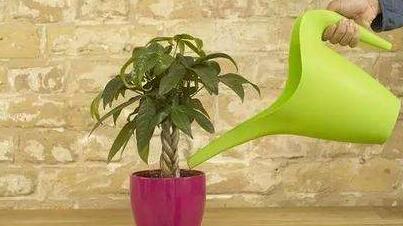
Bird's nest ferns like a humid environment, but their leaves are leathery, which can prevent water evaporation to a certain extent, so watering should be neither too much nor too frequent. In principle, water when dry and stop when wet, that is, water when the soil surface turns white, and stop watering when the soil is moist.
How Often to Water a Bird's Nest Fern
1. Watering During the Growing Season
In spring and autumn, if the temperature is between 22-27°C, the bird's nest fern grows most vigorously. At this time, how often should you water a bird's nest fern? The answer is once every 3-5 days. The difference is because the climate varies from place to place. In warmer southern areas, you can water once every 3 days, while in colder northern areas, water once every 5 days.
2. Watering in Summer
Watering in summer should be more frequent than in other seasons because water evaporates faster. Besides watering the soil, you can also spray the leaves every evening, which not only lowers the temperature but also increases air humidity, making the leaves more glossy.
3. Watering in Winter
In winter, watering generally needs to be reduced. You can switch to spraying to prevent the air from becoming too dry, which can cause the leaf edges to curl. If grown indoors, with the temperature kept above 5°C, you can replenish water once every 10 days.
Precautions for Watering Bird's Nest Ferns
1. Water Along the Edge of the Pot
Many plant enthusiasts like to sprinkle water directly onto the leaves when watering, but this is actually not conducive to water absorption and can also cause some water to collect or remain at the base of the leaves, causing the leaves to rot and deteriorate. So watering should be done along the edge of the flower pot as much as possible.
2. Prevent Waterlogging During the Rainy Season
If you grow bird's nest ferns outdoors, you need to ensure good drainage and prevent waterlogging during the rainy season, because standing water is what most plants fear the most. It easily causes root rot, and once the roots are damaged, it is very difficult to recover. Long-term overwatering can also lead to plant death.
How to Grow Staghorn Fern and Its Propagation Methods
Staghorn fern, also known as elkhorn fern, bat fern, and staghorn fern, is a plant in the genus Platycerium of the family Polypodiaceae. How do you grow a staghorn fern? Let's take a look at the propagation methods of staghorn fern below.
How to Grow Staghorn Fern
1. Soil Selection for Staghorn Fern Cultivation
Staghorn fern is an epiphytic plant, and the soil used for its cultivation is very different from that required by other potted plants. Staghorn ferns are usually grown with a small amount of fern roots, moss, or leaf mold plus a small amount of decomposed dry cow dung as the growing medium, tied to a section of bark-covered wood, or planted in flower pots, wooden frames, or in coconut shells made into pot shapes.
2. Temperature, Humidity, and Light for Staghorn Fern Cultivation
The optimal growing temperature for staghorn fern is 18-30°C. It dislikes cold and frost, and the overwintering temperature should preferably be kept above 10°C. When the ambient temperature approaches 0°C, the plant will suffer frost damage and die. Therefore, during cultivation, air circulation should be strengthened in summer so that the internal temperature can dissipate, and misting can be used to cool it down. In winter, attention should be paid to keeping it warm, and the staghorn fern can be wrapped in plastic film to overwinter.
Staghorn fern is afraid of direct sunlight and grows well near a bright indoor window. During cultivation, in summer it should be placed in partial shade or shaded from 50%-70% of sunlight. In winter, shading about 30% of sunlight or placing it in a bright indoor spot is more suitable for its care.
Staghorn fern likes a humid climate environment, and during cultivation, the relative air humidity of the growing environment should be 60-75%.
3. Watering and Fertilizing for Staghorn Fern Cultivation
Staghorn fern has high fertilizer and water requirements. Applying a small amount of liquid fertilizer during its growing period can make it grow luxuriantly, but excessive fertilizing should be avoided. Fertilizing should follow the principle of light and frequent application, and the greatest taboo is applying concentrated fertilizer or overly favoring nitrogen, phosphorus, or potassium fertilizers. During the peak growing season, fertilizing can be appropriately increased, while in winter, fertilizing should be controlled.
Staghorn fern grows very luxuriantly in environments with relatively high air humidity and requires relatively little watering. Therefore, it is very suitable for greenhouse cultivation. Generally, the simplest watering method for indoor cultivation is to soak the entire plant in water once a week. On sunny days or during high temperatures, watering should be appropriately increased, while on rainy days or during low temperatures, watering should be reduced. Especially in summer when temperatures are high, watering should be arranged in the cooler morning hours as much as possible, and the plant should also be misted frequently. In the cold winter season, water less and keep it appropriately dry. Watering should be arranged at noon on sunny days when temperatures are higher.
Propagation Methods of Staghorn Fern
The commonly used propagation method for staghorn fern is division, and spore sowing can also be used. Division is best done in early spring (February or March) after the soil thaws. The main method is to cut young plants from the mature plant and plant them separately. When cutting, the shield-shaped sterile fronds should be cut off together. Plant them in a medium mixed with osmunda fiber, chopped sphagnum moss, crushed charcoal, and leaf mold or peat soil, and place them in a shaded, humid environment for cultivation. After they survive, transplant them into the planting holes of wall-mounted planting boards, referring to the wall-mounted cultivation method for bird's nest ferns.
Staghorn Fern Platycerium wallichii Hook. Staghorn Fern Guide: How to Grow Staghorn Fern / How to Propagate Staghorn Fern
Staghorn Fern ProfileStaghorn Fern Platycerium wallichii Hook.
Staghorn Fern Cultivation Methods and Precautions, Introduction to Staghorn Fern
Staghorn fern (scientific name: Platycerium wallichii Hook.), also known as elkhorn fern, bat fern, and staghorn fern, is a plant in the genus Platycerium of the family Polypodiaceae. It is native to tropical regions such as eastern Australia and Polynesia, and is an epiphytic ornamental fern. Its spore-bearing fronds are very distinctive, shaped like sika deer antlers.
Staghorn fern is a perennial epiphytic herbaceous fern with dimorphic fronds. The basal fronds are attached to tree trunks, and the fertile fronds branch 3-5 times, irregularly forking into antler-like shapes.
The first type is the spore-bearing frond (fertile frond), which is large, extends into the air, forks, and resembles deer antlers. The leaf surface is covered with fine hairs. It can produce spores, and the sori are clustered on the back of the frond tips.
The second type is the nutrient frond (sterile frond), which is smaller, round, oval, or fan-shaped, varying by species. It is densely attached to the substrate, overlapping. It is tender green when young, later becoming papery light brown, and has the function of storing nutrients and water.
A rare plant newly discovered in China, distributed only in Yingjiang in southwestern Yunnan, growing in tropical rainforests at altitudes of 210-950 m, mostly epiphytic on tree trunks and branches. It is also distributed in Indochina and is a national second-class protected rare species.
Staghorn fern is a plant in the genus Platycerium of the family Polypodiaceae, mainly native to tropical and subtropical regions, with about 17 species. They grow in tropical rainforests, using decaying organic matter on tree surfaces as nutrients, and cling to trees with hard, smooth fern fronds.
Although it is native to hot tropical rainforests, it has strong adaptability. Chinese staghorn ferns have entered the stage of development and utilization, and the prospects for their potted production are very broad.
It is a great material for indoor three-dimensional greening. If staghorn fern is attached to old dead wood or decorated in hanging baskets, adorning a study, living room, or windowsill, it adds more natural interest. Staghorn fern is relatively common in Europe and America, often used for hanging basket or basket stand decorative displays. Although its production volume cannot compare with flowering potted plants, it is easy to manage and has a long ornamental period, giving it certain advantages.
Morphological Characteristics of Staghorn Fern
Staghorn fern is an epiphytic plant, and its main characteristics are as follows:
The rhizome is fleshy, short and prostrate, densely covered with scales; the scales are light brown or grayish white, dark brown in the middle, hard, linear, 10 mm long and 4 mm wide.
The fronds are in 2 rows, dimorphic; the basal sterile fronds (humus fronds) are persistent, thickly leathery, fleshy in the lower part, up to 1 cm thick, thin in the upper part, upright, sessile, attached to tree trunks, up to 40 cm long, nearly as long as wide, with a truncate apex, irregular, forking 3-5 times, the lobes nearly equal in length, rounded-obtuse or pointed, entire, the midrib raised on both sides, veins indistinct, sparsely covered with stellate hairs on both sides, green at first, soon withering, brown.
The normal fertile fronds often grow in pairs, drooping, grayish green, 25-70 cm long.
They split into 3 main lobes of unequal size, with a wedge-shaped base, decurrent, nearly sessile. The inner lobe is the largest, forking multiple times into narrow lobes; the middle lobe is smaller; both are fertile. The outer lobe is the smallest and sterile. The lobes are entire, covered throughout with grayish white stellate hairs, and the veins are thick and prominent.
The sori are scattered below the first fork notch of the main lobe, not reaching the base, green at first, later turning yellow; the paraphyses are grayish white, stellate hairs. Spores are green.
Ecological Habits of Staghorn Fern
Staghorn fern, also known as staghorn fern, likes warm, shaded, and humid environments, is afraid of strong direct light, and prefers diffused light. The winter temperature should not be lower than 5°C, and loose leaf mold is suitable as soil.
It exhibits alternation of generations, with the sporophyte and gametophyte both living independently.
Its distribution area has a tropical monsoon climate, hot and rainy. The annual average temperature is 22.6°C, the January average temperature is 15-17°C, the extreme minimum temperature is not lower than 5°C, and the extreme maximum temperature is 39.5°C; annual precipitation is about 2000 mm, and relative humidity is not lower than 80%. It is often epiphytic on the trunks and branches of monsoon forest trees dominated by Chukrasia tabularis var. velutina (Wall.) King, Albizia chinensis (Osh.) Merr., and Ficus benjamina L., and can also be epiphytic on tree trunks or dead standing trees at forest edges or in open forests.
Staghorn fern uses humus fronds to accumulate fallen leaves, dust, and other materials as nutrients. When the rainy season begins, new humus fronds and fertile fronds grow at the top of the short stem, 2 of each. The previous year's humus fronds wither and rot that same year, while the fertile fronds gradually dry up and fall off in the spring of the following year.
Cultivation Techniques and Production Standards for Staghorn Fern: 12 cm pot, height 10 cm, crown width about 30 cm, growth cycle 10 months.
Substrate Preparation: Use loose, well-drained, and well-aerated imported peat of 5-40 mm specification. Crush the peat, add water, and mix well. (Water addition standard: after adding water and mixing well, when you tightly squeeze a handful of peat, water seeps out between your fingers.) Then it is ready for potting. A 9 cm pot uses about 250 ml of peat per pot. One 300-liter bag of imported peat can fill about 1200 cups.
Requirements for potting seedlings: Choose high-quality seedlings from professional production, with seedling height 5-6 cm, crown width 6-8 cm, leaf number 4-5, free of pests and diseases, and free of dead or yellow leaves.
Potting: For reused old pots, they must be soaked in 1000 times diluted potassium permanganate solution for more than half an hour, then rinsed with clean water and dried for later use. Small potted plants are generally planted in pots with a diameter of 12 cm. When planting, first place about 2 cm of substrate at the bottom of the cup, then move the screened seedlings into the cup. Small seedlings should not be planted too deep, and it is best to keep the plant base level; the substrate should be moderately firm, filled to 9/10 of the cup, 2 plants/pot.
During the vigorous summer growth period, more misting is needed to maintain a high-humidity environment. Whether grown in pots or hanging baskets, place them in partial shade and avoid strong sunlight. Spray fertilizer water once every ten days. Every spring, replenish leaf mold and moss. In winter when temperatures are low, water less. When the nutrient fronds of staghorn fern grow too densely, adjust them in combination with division propagation. In China, division propagation is generally used, and there is still no experience with spore propagation of this species. During cultivation, provide epiphytic substrate and humid mist conditions, and refer to the cultivation methods of other species in this genus.
The management of staghorn fern is relatively simple. During the peak summer growth period, more watering is needed, and frequent misting keeps the cultivation environment at relatively high air humidity, which is beneficial to the growth and development of nutrient fronds and spore-bearing fronds. For outdoor care, it can be hung under a shade shed, and direct sunlight should be avoided to prevent leaf yellowing and scorching, which would affect the ornamental value of staghorn fern.
To increase the beauty of the fronds, during the growing period you can spray diluted cake fertilizer water once every ten days or spray quick-acting dilute urea on the leaf surface to keep the fronds tender green and thick. Every year, replenish leaf mold or moss in the pot or basket of established staghorn ferns to facilitate the growth and development of new sporophytes. In winter, it must be kept indoors. If the room temperature is low, growth will be slow, so water less. Staghorn fern can overwinter more safely in a slightly dry state. When the nutrient fronds of staghorn fern grow too densely, adjust them in combination with division propagation, which is beneficial to the growth and development of new sporophytes.
Post-production handling: Staghorn fern is one of the most peculiar-looking ornamental ferns, unique and delightful. It is also a rare and precious premium indoor foliage plant. In Europe and America, it is very popular for decoration and arrangement in parks, botanical gardens, shops, and home windowsills. If staghorn ferns are mass-produced as hanging baskets, they will not only bring joy to life but also bring good economic benefits.
Cultivation Essentials
[Division Time]: Best done in early spring (February or March) after the soil thaws.
[Division Method]: Take the mother plant out of the flower pot, shake off excess potting soil, separate the tangled root system as much as possible, and cut it into two or more plants with a sharp knife. Each divided plant must have a considerable root system, and its fronds should be properly pruned to help it survive.
[Potting and Disinfection]: Soak the divided small plants in 1500 times diluted chlorothalonil solution for five minutes, then remove and dry them before potting. You can also drench the roots with chlorothalonil immediately after potting.
[Management After Division]: After potting the divisions, drench the roots or water thoroughly once. Because its root system is greatly damaged and its water absorption capacity is very weak, it takes about 3-4 weeks to recover and sprout new roots. Therefore, within 3-4 weeks after division, watering should be controlled to avoid root rot. However, the transpiration of its fronds is not affected. To maintain the water balance of the fronds, mist the leaf surface 1-3 times a day (more misting when temperatures are high, less or no misting when temperatures are low). Do not fertilize during this period either. After division, also be careful of overly strong sunlight and keep it under a shade shed.
[Potting]: When potting small seedlings, first place 2-2 cm thick coarse-grained substrate or ceramsite at the bottom of the pot as a drainage layer, then sprinkle a layer of fully decomposed organic fertilizer as base fertilizer, about 1-2 cm thick, then cover with another layer of substrate about 1-2 cm thick, and then place the plant in, so as to separate the fertilizer from the roots and avoid root burn.
The substrate used for potting can be one of the following. Garden soil: cinder = 3:1; or garden soil: medium-coarse river sand: sawdust (mushroom residue) = 4:1:2; or one of paddy soil, pond mud, or leaf mold. Or peat + perlite + ceramsite = 2 parts + 2 parts + 1 part; garden soil + cinder = 3 parts + 1 part; peat + cinder + ceramsite = 2 parts + 2 parts + 1 part; sawdust + vermiculite + medium-coarse river sand = 2 parts + 2 parts + 1 part. After potting, water thoroughly once and keep it in a shaded environment for care.
[Humidity Management]: It likes a humid climate environment, and the relative air humidity of the growing environment should be 60-75%.
[Temperature Management]: The optimal growing temperature is 18°C-30°C. It dislikes cold and frost, and the overwintering temperature needs to be kept above 10°C. In winter, when the temperature drops below 4°C, it enters dormancy. If the ambient temperature approaches 0°C, it will die from frost damage.
In Summer:
1. Strengthen air convection so that the internal temperature can dissipate.
2. Place it in partial shade, or provide 50% shade.
3. Mist it appropriately, 2-3 times a day.
In Winter:
1. Move it indoors to a bright spot for care.
2. Outdoors, it can be wrapped in plastic film to overwinter, but the film must be opened every two days at noon when the temperature is higher to let it breathe.
[Light Management]: It is afraid of strong direct light and needs to be kept in partial shade, or given 70% shade. If kept indoors, place it in as bright a spot as possible, and every one or two months move it outdoors to partial shade or shade for one month of care, so that it can accumulate nutrients and recover its growth.
[Fertilizer and Water Management]: It has high fertilizer and water requirements, but it is most afraid of random fertilizing, concentrated fertilizer, and overly favoring nitrogen, phosphorus, or potassium fertilizers. The fertilizing (and watering) principle of "light fertilizer applied frequently, small amounts and more times, complete nutrition" should be followed:
Spring, summer, and autumn are its peak growing seasons. Fertilizer and water management follows the cycle of "Huabao" - "Huabao" - clear water - "Huabao" - "Huabao" - clear water (at least two "Huabao" applications must be guaranteed each week). The interval period is about: 1-4 days for outdoor care, shorter intervals on sunny days or during high temperatures, longer intervals or no watering on rainy days or during low temperatures; 2-6 days for indoor care, shorter intervals on sunny days or during high temperatures, longer intervals or no watering on rainy days or during low temperatures. Watering should be arranged in the morning when temperatures are lower as much as possible. In summer, water in the morning or evening when temperatures are low, and also mist the plant frequently.
During the winter dormant period, the main work is controlling fertilizer and water. Fertilizer and water management follows the cycle of "Huabao" - clear water - clear water - "Huabao" - clear water - clear water, with an interval of about 7-10 days. The cycle is shortened on sunny days, and longer or no watering on rainy days. Watering should be arranged at noon on sunny days when temperatures are higher as much as possible.
Containers for Staghorn Fern Cultivation
Staghorn fern should be planted in a specially made pot (that is, several small round holes are drilled in the pot wall, each with a diameter of 3-5 cm). When planting, first fill the gaps in the pot wall and bottom holes with fresh palm fiber, then add leaf mold, brown peat soil, and slightly moist sawdust, then plant the plant into the pot, water thoroughly, and place it in a cool place. You can also use a small amount of fern roots, moss, or leaf mold plus decomposed cake fertilizer as the substrate, tie the plant to a section of bark-covered stem, and hang it in a shaded, humid place. After the plant resumes growth, hang it under a ceiling or on a bookshelf where diffused light can be seen. Try to avoid touching staghorn fern with your hands, otherwise the white fuzz on its fronds will easily fall off.
Water
During the peak growing season, water more and mist frequently to maintain relatively high air humidity. During the peak summer growth period, more watering is needed. Water in the morning or evening when temperatures are low, and mist frequently to keep the cultivation environment at relatively high air humidity, which is beneficial to the growth and development of nutrient fronds and spore-bearing fronds. In winter when temperatures are low, water less to prevent root rot. Watering should be arranged at noon on sunny days when temperatures are higher as much as possible.
Fertilizing
During the growing period, spray diluted cake fertilizer water once every ten days or spray quick-acting dilute urea on the leaf surface to keep the fronds tender green and thick. Every year, replenish leaf mold or moss in the pot or basket of established staghorn ferns to facilitate the growth and development of new sporophytes. It is most afraid of random fertilizing, concentrated fertilizer, and overly favoring nitrogen, phosphorus, or potassium fertilizers. The fertilizing (and watering) principle of "light fertilizer applied frequently, small amounts and more times, complete nutrition" should be followed.
Temperature
The optimal growing temperature is 18°C-30°C. It dislikes cold and frost, and the overwintering temperature needs to be kept above 10°C. In winter, when the temperature drops below 4°C, it enters dormancy. If the ambient temperature approaches 0°C, it will die from frost damage.
Light
Staghorn fern is afraid of strong light and should avoid direct strong light or dry wind. For outdoor care, it should be placed under tree shade or a shade shed, and attention should be paid to frequently misting the leaf surface. For outdoor care, it can be hung under a shade shed, and direct sunlight should be avoided to prevent leaf yellowing and scorching, which would affect the ornamental value of staghorn fern. Every one or two months, move it outdoors to partial shade or shade for one month of care, so that it can accumulate nutrients and recover its growth.
Growing Environment
1. Planting Pot
Staghorn fern should be planted in a specially made pot (that is, several small round holes are drilled in the pot wall, each with a diameter of 3-5 cm). When planting, first fill the gaps in the pot wall and bottom holes with fresh palm fiber, then add leaf mold, brown peat soil, and slightly moist sawdust, then plant the plant into the pot, water thoroughly, and place it in a cool place. You can also use a small amount of fern roots, moss, or leaf mold plus decomposed cake fertilizer as the substrate, tie the plant to a section of bark-covered stem, and hang it in a shaded, humid place. After the plant resumes growth, hang it under a ceiling or on a bookshelf where diffused light can be seen. Try to avoid touching staghorn fern with your hands, otherwise the white fuzz on its fronds will easily fall off.
2. Fertilizer and Water
During the peak growing season, water more and mist frequently to maintain relatively high air humidity. Apply dilute cake fertilizer water or a mixed nitrogen-potassium chemical fertilizer 1-2 times a month. In winter, control the amount of watering.
3. Temperature
The suitable growing temperature is 10-15°C at night and 20-25°C during the day. During the day, it can also grow well in a 33-35°C environment, but the humidity must be very high. In its place of origin, staghorn fern can sometimes withstand several degrees below zero without damage, but only in a very dry environment.
4. Light
Staghorn fern is afraid of strong light and should avoid direct strong light or dry wind. For outdoor care, it should be placed under tree shade or a shade shed, and attention should be paid to frequently misting the leaf surface. It grows well near a bright indoor window. In greenhouse cultivation, 50%-70% of sunlight should be shaded in summer, and about 30% in winter is more suitable. Although staghorn fern also has strong adaptability to weak light, when light is insufficient, growth is slow and the plant becomes weak.
Propagation Methods of Staghorn Fern
Commonly Used Division Propagation
Division is most suitable in June-July. Select robust young staghorn fern plants from the mother plant, gently cut along the bottom of the shield-shaped nutrient frond with a sharp knife, plant them with the absorbing roots into a pot, cover with moss, and mist to keep moist.
Division time: Best done in early spring (February or March) after the soil thaws.
Division method: Take the mother plant out of the flower pot, shake off excess potting soil, separate the tangled root system as much as possible, and cut it into two or more plants with a sharp knife. Each divided plant must have a considerable root system, and its fronds should be properly pruned to help it survive.
Potting and disinfection: Soak the divided small plants in 1500 times diluted chlorothalonil solution for five minutes, then remove and dry them before potting. You can also drench the roots with chlorothalonil immediately after potting.
Management after division: After potting the divisions, drench the roots or water thoroughly once. Because its root system is greatly damaged and its water absorption capacity is very weak, it takes about 3-4 weeks to recover and sprout new roots. Therefore, within 3-4 weeks after division, watering should be controlled to avoid root rot. However, the transpiration of its fronds is not affected. To maintain the water balance of the fronds, mist the leaf surface 1-3 times a day (more misting when temperatures are high, less or no misting when temperatures are low). Do not fertilize during this period either. After division, also be careful of overly strong sunlight and keep it under a shade shed.
Pest and Disease Control of Staghorn Fern
Leaf spot disease commonly harms the spore-bearing fronds and can be controlled by spraying 600 times diluted 65% zineb wettable powder. When ventilation is poor, scale insects and whiteflies harm the spore-bearing fronds or nutrient fronds. When few, they can be captured by hand or killed by spraying 1000 times diluted 40% omethoate emulsifiable concentrate. Some staghorn ferns are more susceptible to fungal or bacterial diseases, so attention should be paid to adjusting the ventilation environment and not overwatering.
Distribution Area of Staghorn Fern
It is produced in Nabangba, Yingjiang County, southwestern Yunnan, in mountain rainforests at altitudes of 210-950 meters. It is also distributed in Myanmar, northeastern India, and Thailand.
Its distribution area has a tropical monsoon climate, hot and rainy. The annual average temperature is 22.6°C, the January average temperature is 15-17°C, the extreme minimum temperature is not lower than 5°C, and the extreme maximum temperature is 39.5°C; annual precipitation is about 2000 mm, and relative humidity is not lower than 80%. It is often epiphytic on the trunks and branches of monsoon forest trees dominated by Chukrasia tabularis var. velutina (Wall.) King, Albizia chinensis (Osh.) Merr., and Ficus benjamina L., and can also be epiphytic on tree trunks or dead standing trees at forest edges or in open forests. Staghorn fern uses humus fronds to accumulate fallen leaves, dust, and other materials as nutrients. When the rainy season begins, new humus fronds and fertile fronds grow at the top of the short stem, 2 of each. The previous year's humus fronds wither and rot that same year, while the fertile fronds gradually dry up and fall off in the spring of the following year.
A newly recorded plant discovered in Yunnan, China, with a very narrow distribution area, it is an epiphytic plant in tropical monsoon forests. Due to severe forest destruction, the host trees for epiphytes are often destroyed by axes, the ecosystem is disrupted, and staghorn fern is therefore difficult to survive. Lower altitude limit (m): 210, upper altitude limit (m): 950.
Nabangba in Yingjiang, Yunnan, has been planned as a nature reserve, and a protection agency should be established as soon as possible to carry out work. A small number of plants have been transplanted from the production area to the dead wood forest in the greenhouse of the Kunming Botanical Garden, where they have survived cultivation and are growing normally. The Tropical Botanical Garden of the Kunming Institute of Botany, Chinese Academy of Sciences, introduced and cultivated them in Menglun, Xishuangbanna, and they also grew well.
Variety Classification of Staghorn Fern
The plant grows 40 cm tall, with leaves clustered and drooping; young leaves are grayish-green, mature leaves are dark green, with forked, concave, deeply notched tips; the leaf surface is densely covered with short hairs, and sporangia clusters are borne on the leaf underside. Its cultivars include Netherlands, San Diego, Robert, and Ziesenhenne, among others.
There are as many as 16 species of staghorn fern distributed naturally worldwide, mainly growing wild in the tropical and subtropical rainforests of Africa, Asia, Oceania, and South America. They all have extremely high ornamental value, mainly including:
American staghorn fern (P. andinum), also called Andean staghorn fern. Native to Peru and Bolivia. The spore-bearing leaves are densely covered with fine hairs, appearing white, and the leaves reach up to 3 m long, very spectacular.
Angola staghorn fern (P. angolense), also known as African staghorn fern, distributed in Uganda, Zaire, and Nigeria in Africa. The spore-bearing leaves are large, shaped like elephant ears, and the sterile leaves are fan-shaped.
Kidney-shaped staghorn fern (P. ellisii), the spore-bearing leaves grow upright, and the sterile leaves are kidney-shaped.
Madagascar staghorn fern (P. madagascariense), the sterile leaves arch with deep folds, have obvious veins, and are shaped like a honeycomb.
Triangular-leaved staghorn fern (P. stemaria), the whole plant is grayish-green, the spore-bearing leaves and sterile leaves grow upward, the sterile leaves are oblong, with wavy tips. The spore-bearing leaves have 2 parts, one forked and wedge-shaped, the other relatively small and narrow.
Vasse staghorn fern (P. vassei), the sterile leaves are brown, nest-shaped, and the sporangia are arranged in a V shape on the leaf underside.
Large staghorn fern (P. grande), the sterile leaves are huge, the pale green spore-bearing leaves droop, reaching 1.5 m long, and a 20-year-old mother plant can produce spores.
Hard-leaved staghorn fern (P. hillii), the spore-bearing leaves are dark green, hard in texture, and grow upright in a fan shape.
Silver-leaved staghorn fern (P. veitchii), the spore-bearing leaves are covered with white fine hairs and grow upright.
Crowned staghorn fern (P. coronarium), the whole plant is pale green, the shield-shaped sterile leaves are 50 cm long and 50 cm wide, and the spore-bearing leaves droop, reaching 4 m long.
Wallich staghorn fern (P. wallichii), the yellow-green spore-bearing leaves are broad and thick, with graceful form, and it is a rare small species.
Queen staghorn fern (P. wilhelminae-reginae), the sterile leaves are crown-shaped and grow upward, reaching 1.5 m high, and the spore-bearing leaves droop, reaching 2 m long; it is a large species.
Willinck staghorn fern (P. willinckii), the dark green sterile leaves and the spore-bearing leaves covered with silvery short pubescence grow downward, reaching 70 cm long, deeply lobed and ribbon-like. The many kinds of staghorn ferns provide abundant germplasm material for decorating indoor green spaces.
Staghorn fern pictures