How to grow potted pagoda tree flowers and key points to note: ensure plenty of light
Pagoda tree flowers, also known as black locust flowers, are highly ornamental flowering plants that can be seen in many regions of our country. However, to grow them well, there are many things to pay attention to. So how do you grow potted pagoda tree flowers? What are the cultivation methods and key points to note for pagoda tree flowers? Let us walk you through it below.
1. How to grow potted pagoda tree flowers: understand their habits
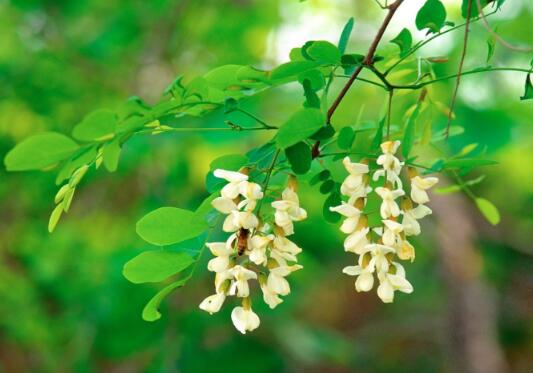
To know how to grow potted pagoda tree flowers, we first need to understand their growth habits. Pagoda tree flowers are a temperate plant and rather light-loving, so during cultivation they need to be kept in sufficient light for them to grow better. In addition, watering and fertilizing also require particular attention; the specific care details are described below, so let us take a look.
2. Cultivation methods and key points to note for pagoda tree flowers
1. Soil: good drainage is essential
To grow pagoda tree flowers well, you must choose suitable soil; this is like laying the foundation when building a house, the step that builds a solid base. Pagoda tree flowers prefer fairly fertile humus soil, which has good drainage and is very suitable for potted pagoda tree flowers to grow in.
2. Fertilizing: apply light fertilizer frequently
Fertilizer is one of the main nutrients in the growth process of pagoda tree flowers. During cultivation we should fertilize frequently, because only with sufficient nutrients can they grow more robustly. However, when fertilizing there is one thing to note: before fertilizing, the fertilizer needs to be diluted with water first so it can be absorbed; if the fertilizer is too concentrated it can easily burn the plant.
3. Watering: avoid waterlogging
During the growth process of pagoda tree flowers, the demand for water is very high, so we need to water frequently, especially after summer arrives, because with higher temperatures water evaporates too quickly, so we basically need to water every day. However, when watering we must control the amount of water and not water too much, otherwise it can easily cause waterlogging, and if waterlogged it may cause root rot.
4. Light: avoid strong light
Pagoda tree flowers are very light-loving plants, so during cultivation we should keep them in sufficient light. In spring and autumn the light is fairly suitable, and we can let them receive light all day. When summer arrives, we can let them receive light in the morning, and at noon when the light is too strong, move them to a semi-shaded spot indoors to avoid sunburning the plant.
5. Temperature: temperature must not be lower than 15°C
Potted pagoda tree flowers are very sensitive to temperature during growth. Moderate temperatures are most suitable for growing potted pagoda tree flowers. If the temperature is lower than 15°C or lower, the plant can easily suffer frost damage, so when cultivating them the most important thing is to pay attention to insulation measures in winter; growing them indoors is more suitable.
6. Pests and diseases: prevent and control promptly
During the cultivation of pagoda tree flowers, if we are not careful enough, pests and diseases can easily take advantage of the situation. Such problems are extremely harmful to the plant, and if not dealt with promptly they can easily cause the plant to wither and die. As for specific treatment methods, you can refer to the article on pest and disease control for pagoda tree flowers, which has detailed information.
Potted pagoda tree flower pictures: potted pagoda tree flower cultivation tips
Everyone must be familiar with pagoda tree flowers; they are one of the common plants in offices. There are many ways to plant pagoda tree flowers, and one method is growing them in pots. Potted pagoda tree flower pictures show us the beauty of potted pagoda tree flowers, which have higher ornamental value. Potted pagoda tree flowers can purify the air and are very easy to grow. Let us look at potted pagoda tree flower cultivation tips below.
Potted pagoda tree flower pictures potted pagoda tree flower cultivation tips1. Potted pagoda tree flower cultivation tips——temperature
Potted pagoda tree flowers are very sensitive to temperature during growth. Moderate temperatures are most suitable for growing potted pagoda tree flowers. If the temperature is lower than 15 degrees or lower, frost damage will begin to appear. Therefore, the most important thing when growing potted pagoda tree flowers is to pay attention to insulation measures in winter; growing them indoors is more suitable.
2. Potted pagoda tree flower cultivation tips——light
Potted pagoda tree flowers are more suited to growing in cool conditions, but a semi-shaded environment is also very necessary, because pagoda tree flowers are not suited to direct light. Secondly, when cultivating potted pagoda tree flowers, the sunlight is best as scattered light; do not place pagoda tree flowers in direct sunlight for long periods.
3. Potted pagoda tree flower cultivation tips——water
Potted pagoda tree flowers need a lot of water to grow. Potted pagoda tree flowers are very cold-tolerant but at the same time cannot lack water. Too much water will cause root rot in potted pagoda tree flowers, so after watering make sure the soil can promptly drain excess water. For potted pagoda tree flowers, in summer high temperatures cause water to evaporate too quickly, so water frequently.
Phalaenopsis cultivation methods and benefits
Phalaenopsis is a plant suitable for indoor cultivation. Its flower shape resembles a butterfly, elegant and refined, and it enjoys the reputation of "queen of orchids." Most Phalaenopsis originate from humid Asia, which determines their growth characteristics: a ventilated, breathable environment with moderate temperature and high humidity can be called the perfect environment for growing Phalaenopsis. Let us now learn more about its specific cultivation methods and benefits.
Water
Phalaenopsis belongs to the epiphytic orchids. Its roots are exposed to the air and can absorb moisture from the humid air. When cultivated artificially, the roots are buried in the growing medium; if watered too much, the medium's aeration will worsen and the fleshy roots will rot, so water according to humidity.
Temperature
When growing Phalaenopsis at home, the first thing to ensure is temperature. Phalaenopsis is native to tropical regions and likes a high-temperature, high-humidity environment. During the growing period, the minimum temperature should be kept above 15°C. When the daytime temperature is 27°C and the nighttime temperature is kept around 18°C, Phalaenopsis grows well. At the turn of autumn and winter and winter and spring, and when winter temperatures are low, attention should be paid to increasing warmth; generally, rooms with heating equipment in winter are fine. When summer temperatures are on the high side, cooling is needed, and attention should be paid to ventilation.
Light
Although Phalaenopsis prefers shade, the orchid plant still needs to receive some light, especially before and after the flowering period. Appropriate light can prompt Phalaenopsis to bloom earlier, and the flowers produced are brilliant and long-lasting. Generally, it should be placed in a spot indoors with scattered light, and never exposed to direct sunlight.
Nutrition
The principle for fertilizing cultivated Phalaenopsis is to apply less fertilizer and apply dilute fertilizer. During normal growth, apply orchid-specific fertilizer at 2000 times dilution for root fertilizing, depending on growth conditions, once every 2-3 weeks. Before flowering, you can use 15-30-15 water-soluble high-phosphorus fertilizer at 1000-2000 times dilution, spraying about once every 10 days or so. During the flowering period and in seasons with lower temperatures, stop fertilizing.
Benefits
The Phalaenopsis plant is very peculiar; it has neither creeping stems nor pseudobulbs. Each plant grows only a few broad leaves that are as thick and plump as spoons, arranged in alternating layers above the base. White, thick aerial roots are exposed around the leaves, and some cling to the outer wall of the flower pot, full of natural wild charm. Moreover, Phalaenopsis is a flower that blooms during the Spring Festival; in this already cold and withered season, how could it not add a touch of vitality to people's homes? Its role in beautifying the environment is self-evident.
Conclusion:People often say that the more beautiful and gorgeous something is, the more toxic and harmful it is, but Phalaenopsis is just an exception: it is gorgeous in appearance, but actually a non-toxic plant. For friends who want to choose a potted plant, this is a good choice. The above is the cultivation method for Phalaenopsis and its benefits that I have brought to you, hoping to bring a little help to all friends who love and cherish flowers.
[Learn more]
|Plants suitable for indoor growing|Cultivation methods for Christmas cactus|Cultivation methods for money tree|Effects and benefits of costus|Formaldehyde-removing plants|
|Effects and benefits of pagoda tree flowers|When do peonies bloom|How to grow lucky bamboo in winter|What plants absorb formaldehyde|Dieffenbachia|
|Cultivation methods for narcissus|Cultivation methods for poinsettia|Cultivation methods for cyclamen|Cultivation methods for hydrangea|Benefits of bayberry|
|Cultivation methods for happiness tree|Effects and benefits of reishi mushroom|Effects and benefits of mint|Cultivation methods for gardenia|How to grow orchids|
|Effects and benefits of mango|Effects and benefits of balloon flower|Cultivation methods for money tree|Symbolic meaning of lily|Fruit preservatives|