How to grow nasturtium in summer? Shade and cooling are needed for it to grow thick and sturdy
In the cultivation methods for nasturtium, because it fears high temperatures, you must pay attention to changes in temperature and humidity in summer, otherwise yellowing leaves, plant wilting, or even death can easily occur. So how do you grow nasturtium in summer? How do you make nasturtium grow thick and sturdy? Let's look at summer care tips.
How to grow nasturtium in summer
1. Cool it down appropriately
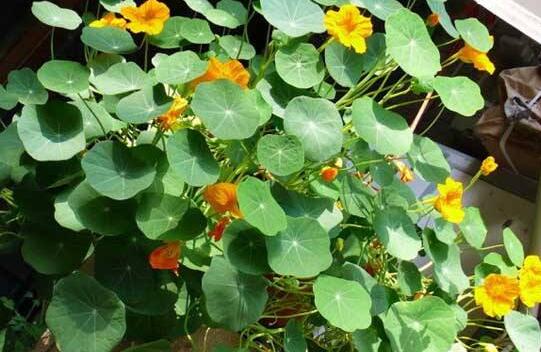
Nasturtium has a growth habit: when the temperature is above 35°C, both growth and flowering are hindered, affecting the entire development process. Therefore, in summer you must pay attention to temperature changes. When the temperature is above 30°C, cooling measures should be taken, such as moving it to a shady place or spraying water on the leaves.
2. Provide shade and avoid direct light
Although nasturtium likes sufficient light very much, in summer the sunlight is relatively intense, and nasturtium is not suitable to be placed in the sun; otherwise its leaves will be scorched, leading to the yellowing we commonly see. So in summer it generally needs shading, and it is best to place it in a semi-shaded environment.
3. Stop fertilizing
During the growing season, a dilute fertilizer solution needs to be applied once every half month, but when it comes to fertilizing, how do you grow nasturtium in summer? The answer is to stop fertilizing, because at this time nasturtium grows relatively slowly, and since its fertilizer requirements are not high to begin with, fertilizing may instead have the opposite effect.
4. Water reasonably
Because water demand is higher in summer, nasturtium usually needs to be watered once a day. If it is still relatively dry, you can spray some water on the leaves in the evening. This not only lowers the temperature but also increases air humidity, which helps nasturtium leaves stay emerald green.
5. Keep the environment ventilated
When moving nasturtium to a semi-shaded environment, be sure the environment is well ventilated; otherwise it can easily become too hot and stuffy and enclosed. This can cause branches to wither prematurely and may also lead to pests and diseases such as red spider mites.
How to make nasturtium grow thick and sturdy
1. Shaping and pruning
Nasturtium grows relatively quickly, and it has the characteristics of a semi-climbing flower, so it easily becomes lush with branches and leaves, and branches may also tilt or trail along the ground, which affects its appearance. Pruning can both maintain its appearance and concentrate nutrients, making the plant grow more robust.
2. Solution spraying
When the stems and vines of nasturtium grow to 30-40 cm, you can spray the leaves with a paclobutrazol solution. Doing so can dwarf the plant, thereby thickening the main vine and achieving a sturdier plant, which is more convenient for gardening enthusiasts to grow indoors.
Tissue culture and rapid propagation of nasturtium
Nasturtium is a plant in the family Tropaeolaceae and the genus Tropaeolum, a perennial semi-trailing or prostrate plant. The plant height is 30 cm-70 cm. The basal leaves have long petioles, and the leaf blades are pentagonal, three-parted, with the secondary lobes having a few small lobes and sharp teeth. Flowers are solitary or 2-3 in cymes, with five petals and 8-19 sepals, yellow, elliptic-obovate or obovate; the petals are equal in length to the sepals, narrowly linear.
In the north it is often cultivated as an annual or biennial flower. Under suitable environmental conditions, it can bloom throughout the year. A single flower can last 8-9 days, and the whole plant can open dozens of flowers at the same time, with a fragrant scent and brilliant colors, winning people's affection.
Characteristics and habitsBotanical characteristics: Nasturtium (Tropaeolum majus), also known as golden lotus and nasturtium, is an annual or perennial herbaceous trailing flower of the family Tropaeolaceae and the genus Tropaeolum, and people are accustomed to cultivating it as an annual. The leaves are round and peltate, with wavy blunt angles at the edges, alternate, with long petioles; the leaves resemble lotus leaves, the leaf blades are relatively small, about 10 cm in diameter, and the leaf color is dark green or light green, with gray in the green, and the veins are obvious. The leaf surface has a leathery waxy bloom. After rain or when the morning dew has not yet dried, sparkling bright dewdrops condense and roll on the leaf surface just like pearls. The flowers are axillary, numerous, with a very long flowering period, blooming almost all year round. The five petals are deeply parted, and the flowers are trumpet-shaped. Flower colors include purplish red, orange-red, creamy yellow, and so on. The flower surface has a velvety sheen. The stems of young seedlings are upright, and mature plants are generally 25-30 cm tall; in the middle and later stages the stems trail and become vine-like.
Biological habits: Nasturtium is native to the humid zones of Peru and Chile in South America. It likes to grow in warm, humid environments with sufficient light, is not cold-tolerant, fears long-term waterlogging, and fears high temperatures and severe heat. It is suitable for growing in a 10°C-25°C environment, and the best temperature for growth and flowering is 18°C-24°C. Being below 10°C for a long time or above 30°C for a long time makes flowering difficult or prevents flowering. When above 35°C for a long time, the leaves are prone to disease; when below 3°C for a long time, it withers; it can generally tolerate low temperatures below 0°C. It is not strict about soil quality; both the acidic soils of the south and the alkaline soils of the north can support its growth, but fertile, loose sandy soil is best.
The conventional cultivation methods for nasturtium are mainly seed propagation and cutting propagation. Seed propagation is generally sown in late August or early September, and it blooms from November to April-May of the following year, but the seed germination rate is low, making large-scale development difficult. Cutting propagation is generally done in high-temperature seasons, with a low survival rate, and the seedlings that survive after cutting have weaker growth vigor. The tissue culture method can be used for rapid propagation of individual plants with good growth, beautiful flower color, and beautiful flower shape, and it is not limited by time or season, producing large numbers of high-quality seedlings in a short time.
Tissue culture rapid propagation; the material is young tender lateral buds with 3-4 leaves.
Culture conditions. Induction media: (1) MS+BA0.5mg/L (the same unit below)+IAA0.1; (2) MS+BA0.5+IAA0.2; (3) MS+BA1.0+IAA0.1; (4) MS+BA1.0+IAA0.2; (5) MS+BA2.0+IAA0.2; (6) 3/2MS+BA0.5. Proliferation media: (7) MS+BA0.5+IAA0.1; (8) MS+BA1.0+IAA0.1; (9) MS+BA0.5+IAA0.2; (10) MS+BA0.5+GA0.2; (11) MS+BA0.5+NAA0.1+GA0.5; (12) MS+BA1.0+NAA0.1+GA0.2; (13) MS+BA1.0+GA0.5; rooting medium: (14) 1/2MS+NAA0.2.
The agar content of all the above media is 5.5 g/L, sucrose 30 g/L, and the pH value is 5.8. The culture temperature is 20°C-24°C, with light at 3000 lux, 13 hours/day.
Growth and differentiation
(1) Obtaining sterile material: In the peak growing season, that is, from November to April of the following year, select well-growing potted nasturtium mother plants indoors, cut off lateral buds that have sprouted for 7-10 days, remove the leaves and petioles, and directly in a laminar flow hood place them in a sterile bottle and rinse with sterile water for 10 minutes. After taking them out, disinfect the surface with 70% alcohol for 10 seconds, then disinfect with 0.1% mercuric chloride for 5 minutes, or disinfect with 2% sodium hypochlorite for 7 minutes, rinse with sterile water 4-5 times, cut off the discolored parts of the wound damaged by the fungicide, remove the larger young leaves visible to the naked eye from the terminal buds, cut them into 2-5 mm pieces, cut the rest into single-bud stem segments, and inoculate them separately on media (1) to (6). The terminal buds germinate in 5-7 days, and after 2 weeks the lateral buds begin to sprout. Among them, media (1) and (2) are suitable for the germination and elongation of terminal buds and lateral buds. After 2 weeks of culture, the terminal buds elongate to 4 cm and unfold 4-5 leaves (see Figure 1). For the explant materials inoculated on media (5) and (6), the germinated terminal buds and lateral buds show yellowing and short, thick growth, and are not suitable for the induction culture of nasturtium terminal buds and lateral buds.
(2) Subculture: Cut off the small buds differentiated above and inoculate them on media (7) to (13). After about 3 weeks, the small buds inoculated on medium (8) form 3-4 lateral branches, the plant height can reach more than 6-7 cm, and the proliferation multiple can reach 8-10 times. Continue cutting them into single-bud stem segments and inoculate them on medium (8) for subculture; each 3 weeks is one subculture cycle, and a large number of test-tube plantlets can be obtained in a short time.
(3) Rooting culture: Inoculate small buds 3-4 cm tall on medium (14). Rooting begins after one week, and after 10 days of culture the rooting rate reaches 100%. The roots are white and thick, with more than 10 roots per plant. The root system is very developed, mainly attached to the surface of the medium, and densely covered with large numbers of white root hairs.
(4) Acclimatization and transplanting: Move the rooted plantlets into a greenhouse to harden for 3 days, open the bottle mouth, pour in clean water and shake, carefully take out the test-tube plantlets, wash off the agar attached to the roots, soak them in a 600-fold dilution of carbendazim, and transplant them into a mixed substrate of peat : perlite : vermiculite = 3:1:2, spray with a 600-fold dilution of carbendazim, cover with film to retain moisture and shade, and gradually uncover the film for ventilation after 5 days. The survival rate can reach more than 96%.
Cultivation and management
After transplanting and surviving, the test-tube plantlets should be transplanted a second time as soon as possible into flower pots with a diameter of 18-20 cm, one plant per pot. When cultivating in flower beds or in the field, the row spacing is 80 cm and the plant spacing is 50 cm; after planting the seedlings, water thoroughly. During the seedling stage, appropriately increase fertilizer and water, generally spraying a dilute complete-element compound fertilizer solution once every 15 days. During the mature seedling stage, appropriately reduce fertilizer and water to prevent excessive growth. After the test-tube plantlets are transplanted into flower pots or flower beds and cared for for about 1.5-2 months, they can bloom (see Figures 5 and 6).
For the winter and spring care of nasturtium, increase the temperature and increase light; in the high-temperature seasons of summer and autumn, use a 70% shade net to shade and cool, and the shade net must also have a rain-shielding function to strictly prevent rainstorms from battering the leaves and flowers. During drought and high temperatures, spray or water to cool down, and ensure thorough watering when dry and quick drainage; note that water must not accumulate at the roots. When watering and fertilizing, strictly prohibit mud and fertilizer from splashing onto the leaves and flower buds. According to its biological characteristics, always keep it above 10°C-15°C; generally it can bloom normally only in an environment below 30°C, and it avoids cold, high temperatures, and scorching sun exposure. To promote more flowering, when the seedlings grow 3-4 true leaves, pinch them to encourage more lateral branches. Before putting them on a frame, besides retaining the main branch and thick lateral branches, also pinch, insert stakes, and evenly tie the stems and vines to the frame, tying them into various decorative forms. In the later growth stage, the stems and vines can also be cut off at the roots to make them produce new buds, and after careful care for about 1 month they can regrow new stems and bloom again. Fertilization can use nitrogen, phosphorus, potassium, and other multi-element fertilizers, 1/2MS nutrient solution, or decomposed poultry and livestock manure, buried in holes dug away from the seedling roots. Apply topdressing in small amounts and multiple times.
Potted nasturtium should be moved indoors after Frost's Descent, placed on a windowsill or in a sunny place, with the temperature kept at 10°C-15°C, and the minimum must not be lower than 8°C. Nasturtium has trailing stems and vines, and generally must be provided with support; if allowed to grow naturally, the stems and vines will inevitably be too long, affecting its ornamental value.
In order to control the unlimited growth of its stems and vines, when nasturtium enters the initial flowering stage and its stems and vines have grown to 30-40 cm, spray the leaves with a 100 ppm paclobutrazol solution to promote dwarfing. The effect can be seen three days after spraying: the main vine thickens, the extension of the top vine slows, and the flowers on the lateral vines open one after another, which is quite beautiful.
Pest and disease control
Nasturtium is generally not easily harmed by pests and diseases, but in the high-temperature and rainy seasons of summer and autumn, the leaves are prone to powdery mildew, leaf spot, wilt disease, and viral diseases. The occurrence of diseases can be eliminated or reduced by strengthening ventilation and draining moisture. When the condition is severe, spray the leaves with a 500-1000-fold dilution of thiophanate-methyl or a 500-fold dilution of triadimefon, once every 7 days for 2-3 consecutive sprays. In late autumn and early winter it may also be harmed by whiteflies; spraying the leaves with a 1000-fold dilution of fenpropathrin is sufficient.
Tissue culture rapid propagation techniques for nasturtium
Characteristics and habitsBotanical characteristics: Nasturtium (Tropaeolum majus), also known as golden lotus and nasturtium, is an annual or perennial herbaceous trailing flower of the family Tropaeolaceae and the genus Tropaeolum, and people are accustomed to cultivating it as an annual. The leaves are round and peltate, with wavy blunt angles at the edges, alternate, with long petioles; the leaves resemble lotus leaves, the leaf blades are relatively small, about 10 cm in diameter, and the leaf color is dark green or light green, with gray in the green, and the veins are obvious. The leaf surface has a leathery waxy bloom. After rain or when the morning dew has not yet dried, sparkling bright dewdrops condense and roll on the leaf surface just like pearls. The flowers are axillary, numerous, with a very long flowering period, blooming almost all year round. The five petals are deeply parted, and the flowers are trumpet-shaped. Flower colors include purplish red, orange-red, creamy yellow, and so on. The flower surface has a velvety sheen. The stems of young seedlings are upright, and mature plants are generally 25-30 cm tall; in the middle and later stages the stems trail and become vine-like. Biological habits: Nasturtium is native to the humid zones of Peru and Chile in South America. It likes to grow in warm, humid environments with sufficient light, is not cold-tolerant, fears long-term waterlogging, and fears high temperatures and severe heat. It is suitable for growing in a 10°C-25°C environment, and the best temperature for growth and flowering is 18°C-24°C. Being below 10°C for a long time or above 30°C for a long time makes flowering difficult or prevents flowering. When above 35°C for a long time, the leaves are prone to disease; when below 3°C for a long time, it withers; it can generally tolerate low temperatures below 0°C. It is not strict about soil quality; both the acidic soils of the south and the alkaline soils of the north can support its growth, but fertile, loose sandy soil is best.
The conventional cultivation methods for nasturtium are mainly seed propagation and cutting propagation. Seed propagation is generally sown in late August or early September, and it blooms from November to April-May of the following year, but the seed germination rate is low, making large-scale development difficult. Cutting propagation is generally done in high-temperature seasons, with a low survival rate, and the seedlings that survive after cutting have weaker growth vigor. The tissue culture method can be used for rapid propagation of individual plants with good growth, beautiful flower color, and beautiful flower shape, and it is not limited by time or season, producing large numbers of high-quality seedlings in a short time.
Tissue culture rapid propagation
The material is young tender lateral buds with 3-4 leaves.
Culture conditions. Induction media: (1) MS+BA0.5mg/L (the same unit below)+IAA0.1; (2) MS+BA0.5+IAA0.2; (3) MS+BA
1.0+IAA0.1; (4) MS+BA1.0+IAA0.2; (5) MS+BA2.0+IAA0.2; (6) 3/2MS+BA0.5. Proliferation media: (7) MS+BA0.5+IAA0.1; (8) MS+BA1.0+IAA0.1; (9) MS+BA0.5+IAA0.2; (10) MS+BA0.5+GA0.2; (11) MS+BA0.5+NAA0.1+GA0.5; (12) MS+BA1.0+NAA0.1+GA0.2; (13) MS+BA1.0+GA0.5; rooting medium: (14) 1/2MS+NAA0.2.
The agar content of all the above media is 5.5 g/L, sucrose 30 g/L, and the pH value is 5.8. The culture temperature is 20°C-24°C, with light at 3000 lux, 13 hours/day.
Growth and differentiation
(1) Obtaining sterile material: In the peak growing season, that is, from November to April of the following year, select well-growing potted nasturtium mother plants indoors, cut off lateral buds that have sprouted for 7-10 days, remove the leaves and petioles, and directly in a laminar flow hood place them in a sterile bottle and rinse with sterile water for 10 minutes. After taking them out, disinfect the surface with 70% alcohol for 10 seconds, then disinfect with 0.1% mercuric chloride for 5 minutes, or disinfect with 2% sodium hypochlorite for 7 minutes, rinse with sterile water 4-5 times, cut off the discolored parts of the wound damaged by the fungicide, remove the larger young leaves visible to the naked eye from the terminal buds, cut them into 2-5 mm pieces, cut the rest into single-bud stem segments, and inoculate them separately on media (1) to (6). The terminal buds germinate in 5-7 days, and after 2 weeks the lateral buds begin to sprout. Among them, media (1) and (2) are suitable for the germination and elongation of terminal buds and lateral buds. After 2 weeks of culture, the terminal buds elongate to 4 cm and unfold 4-5 leaves (see Figure 1). For the explant materials inoculated on media (5) and (6), the germinated terminal buds and lateral buds show yellowing and short, thick growth, and are not suitable for the induction culture of nasturtium terminal buds and lateral buds.
(2) Subculture: Cut off the small buds differentiated above and inoculate them on media (7) to (13). After about 3 weeks, the small buds inoculated on medium (8) form 3-4 lateral branches, the plant height can reach more than 6-7 cm, and the proliferation multiple can reach 8-10 times (see Figure 2). Continue cutting them into single-bud stem segments and inoculate them on medium (8) for subculture; each 3 weeks is one subculture cycle, and a large number of test-tube plantlets can be obtained in a short time.
(3) Rooting culture: Inoculate small buds 3-4 cm tall on medium (14). Rooting begins after one week, and after 10 days of culture the rooting rate reaches 100%. The roots are white and thick, with more than 10 roots per plant. The root system is very developed, mainly attached to the surface of the medium, and densely covered with large numbers of white root hairs (see Figure 3).
(4) Acclimatization and transplanting: Move the rooted plantlets into a greenhouse to harden for 3 days, open the bottle mouth, pour in clean water and shake, carefully take out the test-tube plantlets, wash off the agar attached to the roots, soak them in a 600-fold dilution of carbendazim, and transplant them into a mixed substrate of peat : perlite : vermiculite = 3:1:2, spray with a 600-fold dilution of carbendazim, cover with film to retain moisture and shade, and gradually uncover the film for ventilation after 5 days. The survival rate can reach more than 96% (see Figure 4).
Cultivation and management
After transplanting and surviving, the test-tube plantlets should be transplanted a second time as soon as possible into flower pots with a diameter of 18-20 cm, one plant per pot. When cultivating in flower beds or in the field, the row spacing is 80 cm and the plant spacing is 50 cm; after planting the seedlings, water thoroughly. During the seedling stage, appropriately increase fertilizer and water, generally spraying a dilute complete-element compound fertilizer solution once every 15 days. During the mature seedling stage, appropriately reduce fertilizer and water to prevent excessive growth. After the test-tube plantlets are transplanted into flower pots or flower beds and cared for for about 1.5-2 months, they can bloom (see Figures 5 and 6).
For the winter and spring care of nasturtium, increase the temperature and increase light; in the high-temperature seasons of summer and autumn, use a 70% shade net to shade and cool, and the shade net must also have a rain-shielding function to strictly prevent rainstorms from battering the leaves and flowers. During drought and high temperatures, spray or water to cool down, and ensure thorough watering when dry and quick drainage; note that water must not accumulate at the roots. When watering and fertilizing, strictly prohibit mud and fertilizer from splashing onto the leaves and flower buds. According to its biological characteristics, always keep it above 10°C-15°C; generally it can bloom normally only in an environment below 30°C, and it avoids cold, high temperatures, and scorching sun exposure. To promote more flowering, when the seedlings grow 3-4 true leaves, pinch them to encourage more lateral branches. Before putting them on a frame, besides retaining the main branch and thick lateral branches, also pinch, insert stakes, and evenly tie the stems and vines to the frame, tying them into various decorative forms. In the later growth stage, the stems and vines can also be cut off at the roots to make them produce new buds, and after careful care for about 1 month they can regrow new stems and bloom again. Fertilization can use nitrogen, phosphorus, potassium, and other multi-element fertilizers, 1/2MS nutrient solution, or decomposed poultry and livestock manure, buried in holes dug away from the seedling roots. Apply topdressing in small amounts and multiple times.
Potted nasturtium should be moved indoors after Frost's Descent, placed on a windowsill or in a sunny place, with the temperature kept at 10°C-15°C, and the minimum must not be lower than 8°C. Nasturtium has trailing stems and vines, and generally must be provided with support (see Figures 7 and 8); if allowed to grow naturally, the stems and vines will inevitably be too long, affecting its ornamental value.
In order to control the unlimited growth of its stems and vines, when nasturtium enters the initial flowering stage and its stems and vines have grown to 30-40 cm, spray the leaves with a 100 ppm paclobutrazol solution to promote dwarfing. The effect can be seen three days after spraying: the main vine thickens, the extension of the top vine slows, and the flowers on the lateral vines open one after another, which is quite beautiful.