How to water a Calathea peacock plant? Master the spring-three, summer-five, winter-ten watering frequency
Calathea peacock plant (Calathea makoyana), a common foliage plant, especially its leaves, which bear a pattern like a peacock spreading its tail, look absolutely gorgeous! But if you want your Calathea peacock plant to grow beautifully, watering is extremely important. So how do you water a Calathea peacock plant? How often should you water a Calathea peacock plant? To answer this, based on the growth habits of the Calathea peacock plant, the editor has summarized the four-season watering method for Calathea peacock plants.
1. How to water a Calathea peacock plant: water frequently
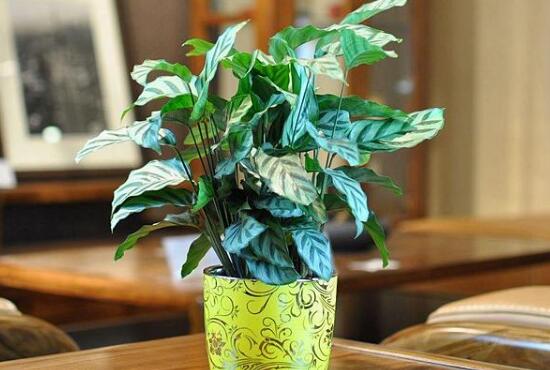
The Calathea peacock plant likes a humid environment and has high water requirements, so of course you need to water frequently, with the goal of keeping the potting soil moist. But it is easier said than done, because it is very easy to overwater, causing water to accumulate in the pot, which then leads to symptoms such as yellowing and curling leaves on the Calathea peacock plant. Therefore, when it comes to how to water a Calathea peacock plant, the method matters a great deal.
2. How often to water a Calathea peacock plant: four-season watering method
How to tell whether it needs water: for beginners, the hard part of watering a Calathea peacock plant is not knowing when to water. For this, you can look at how moist the potting soil is. If the surface is slightly dry, you can water once within three days. If the soil has poor looseness, use a smaller amount of water.
1. Spring watering, once every 5 days
The Calathea peacock plant is a water-loving plant, and during its growth, growers need to give it plenty of water. How often should you water a Calathea peacock plant? In spring, watering about once every 5 days is generally enough; pay attention to observing how dry or wet the potting soil is.
2. Summer watering, once every 2-3 days
In summer, temperatures are high and water evaporates quickly, so the interval between waterings for the Calathea peacock plant should be shorter, generally watering it once every 3 days; of course, this interval is not fixed and is mainly determined by how dry or wet the potting soil is. If the potting soil dries out quickly after watering, you can change to watering once every 2 days.
3. Autumn watering, once every 5-7 days
In early autumn, the temperature is not yet that low, so you can water at the same frequency as in spring, once every 5 days; but by late autumn, the temperature will be very low, so you need to lengthen the watering interval, generally watering once every 7 days.
4. Winter watering, once every 10 days
When winter comes, the temperature drops sharply and water in the potting soil evaporates very slowly, so how often should you water a Calathea peacock plant? Although the Calathea peacock plant grows slowly at this time, it still needs water; just keep watering once every 10 days.
Overall, the cultivation method for the Calathea peacock plant is very simple, but you must pay attention to watering: water once every 3-7 days and just keep the potting soil moist. Watering is a skilled task, and growers should not rush either; after keeping plants for a while, you will gradually learn it. That is all the editor has to share about the watering method for the Calathea peacock plant, and I hope it helps everyone.
How to water a Calathea peacock plant, how often to water it
Plant growth is inseparable from water, and whether the watering method is right or wrong will have a big effect on how well a plant grows. The Calathea peacock plant is an indoor ornamental plant, and many growers like to keep it at home. This article introduces how to water a Calathea peacock plant and how often to water it.
How to water a Calathea peacock plant
1. The Calathea peacock plant likes semi-shade and a hot, humid environment. It requires loose soil rich in humus with good drainage.
2. During the growing period, the Calathea peacock plant should be given plenty of water. Especially in summer and autumn, in addition to keeping the potting soil moist at all times, you must also frequently spray water on the leaves to cool and moisturize; it requires relatively high air humidity, ideally 70% to 80%; it dislikes dry air and dry potting soil, but it must not have water accumulation. After late autumn, water should be controlled to help it resist cold and survive the winter. In winter, keep the environment dry; if it is too wet, the basal leaves turn yellow and scorched, affecting its ornamental value.
3. Put simply: first look at the soil you are using. If it is loose nutrient soil, or sandy loam, because water drains relatively quickly, you should water about once every 3 days. If you are using rather sticky or compacted soil, wait until the potting soil is basically completely dry before watering. Judging whether it is completely dry is somewhat difficult, so it is recommended that you switch to looser soil.
From the introduction above, I believe everyone now knows how to water a Calathea peacock plant. The editor reminds you that when growing a Calathea peacock plant, the potting soil should not be completely dehydrated, nor should it have long-term water accumulation. On sunny days, especially in dry weather, spray water on the leaves every day to keep the surrounding air humid.
How to water a Calathea leopardina, how often to water a Calathea leopardina
Calathea leopardina is a plant native to warm, humid regions, so Calathea leopardina has relatively high water requirements. Watering is a very important factor when growing any plant, and for a moisture-loving plant like Calathea leopardina, watering is an especially important matter.
How to water a Calathea leopardina
During the growth period of Calathea leopardina, water it thoroughly and keep the potting soil moist, while also being careful to avoid causing water accumulation in the soil, to prevent root rot and even plant death. Because the leaves of Calathea leopardina are relatively large and water evaporates relatively quickly, you should maintain relatively high air humidity around it. You can often mist the leaves to keep the air around the leaves humid, which helps the leaves grow and spread. Once you find the leaves curling or shrinking, it means the plant is showing signs of water shortage.
How often to water a Calathea leopardina
Water once every ten days and repot once every other year; it is best to choose fertile, loose, slightly acidic soil with good air permeability and drainage that is rich in humus.
The benefits of Calathea leopardina
1. Ornamental value
Calathea leopardina is shade-tolerant and easy to keep alive. It also has a beautiful growth form: the plant is generally clumping, with broad leaves that grow densely and appear spread out and upright. Because on both sides of the leaf midrib there are white bands and dark green bands interwoven in a feather-like arrangement, the colors are bright and richly varied. In addition, its leaf surface is also marked with black spots, just like a panda's eyes, round and interesting, which is also the origin of its name. In summary, Calathea leopardina is suitable for home decoration and beautification, used to accent balconies, studies, bedrooms, and so on, adding a sense of elegance. It can also be used to decorate commercial places, such as shops and hotels. In South China, it can often be seen planted in courtyards, parks, roadsides, and other places for landscaping use.
2. Purifying effect
Purifying the air is also one of the major benefits of Calathea leopardina. Although it cannot be compared with spider plant, the air-purifying effect of Calathea leopardina should not be underestimated. Calathea leopardina's ability to absorb harmful gases such as formaldehyde and ammonia is still far superior to that of many plants. Therefore, for a newly renovated house, Calathea leopardina is also a good choice.
The differences between Calathea leopardina and the Calathea peacock plant
1. The plant forms of the Calathea peacock plant and Calathea leopardina are different
Calathea leopardina can reach 100 cm in height, and because it resembles arrow feathers, it is also known as arrow-feather Calathea. The underside of Calathea leopardina leaves is brown or purple, the leaves tend to be slender, the leaf spots are round, and the leaf margins have wavy undulations. Calathea leopardina has a head-like inflorescence, membranous small bracts, capsules that split into 3 valves, triangular seeds, and pale yellow flowers. The Calathea peacock plant, by contrast, can reach 60 cm in height, its leaves are broader and shorter, and its spots are slender. The leaves are thinly leathery, the petioles are purplish red, and the shape is ovate-elliptic. The leaf surface has feather-like markings alternating dark green with white or pale yellow, just like the pattern on a peacock's tail feathers, hence the name. Moreover, Calathea peacock plant leaves spread out during the day and fold up at night, which is its unique feature.
2. The suitable temperatures for the Calathea peacock plant and Calathea leopardina are different
The daytime growing temperature for Calathea leopardina is 18-21°C, with 16-18°C at night being suitable. The suitable growing temperature is 20-30°C, and the safe overwintering temperature is 10°C. When cultivating the Calathea peacock plant, by contrast, the temperature should be kept at around 12-29°C, and in winter it is enough to maintain the temperature at 16-18°C.
3. The flower meanings of the Calathea peacock plant and Calathea leopardina are different
Calathea leopardina represents temptation. The flower meaning of the Calathea peacock plant, by contrast, is the radiance of beauty, beautiful and proud.
4. The main values of the Calathea peacock plant and Calathea leopardina are different
Both Calathea leopardina and the Calathea peacock plant can be used for indoor arrangement, landscaping, and potted cut leaves, among other uses. In addition, the rhizome of the Calathea peacock plant contains starch and is also edible, with effects such as promoting urination and clearing lung heat.
Water Calathea leopardina about once every ten days and just keep the soil moist. At the same time, when planting Calathea leopardina, choose soil that is loose and has relatively good air permeability, which can effectively prevent water accumulation in the soil from causing root rot. Overall, Calathea leopardina is still a relatively easy plant to keep.