What to Do When Rain Lily Leaves Turn Yellow? Control Water, Fertilize Moderately, Change Potting Soil for Quick Recovery
Rain lily (Zephyranthes), a very beautiful flower, has trumpet-shaped blooms in diverse colors, looking especially lovely set off by green leaves. But during care, many flower enthusiasts end up with yellowing leaves. So what should you do when rain lily leaves turn yellow? At this point, you must stay calm, find the cause, and take appropriate measures. Today, the editor is here to help everyone solve this problem.
1. Rain Lily Leaves Turn Yellow Due to Improper Watering and Fertilizing
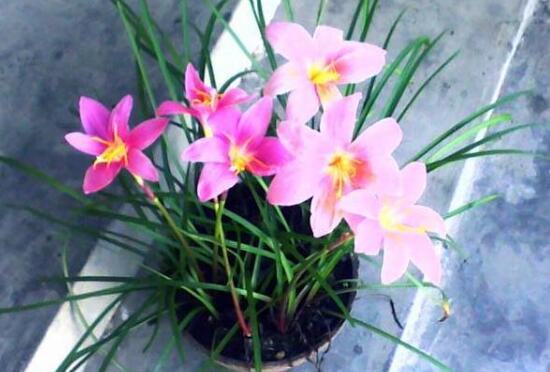
As a common indoor flower, the rain lily is not difficult to grow, but there are too many beginners who have little growing experience, so they don't know how to water -- and when they do, they overwater; they don't know how to fertilize -- and when they do, mistakes are easy to make. All of this can cause rain lily leaves to turn yellow, affecting the plant's ornamental value. To solve this problem, the editor has summarized three causes of yellowing leaves. Let's continue reading.
2. Causes and Solutions for Rain Lily Leaves Turning Yellow
1. Sudden Environmental Change
There are many reasons why rain lily leaves turn yellow. You can first consider whether the growing environment has a problem. Nowadays, with the internet so developed, many flower enthusiasts buy their rain lily potted plants online. This can cause a large environmental change, and the plant cannot adapt right away, resulting in yellowing leaves.
Solution: Very simple. Ask the seller about the rain lily's previous growing environment, then recreate a similar environment at home. Once the rain lily adapts, slowly change it until it adapts to the current environment, then care for it normally. After a period of time, the leaves will recover.
2. Root Rot
When it comes to rain lily leaves turning yellow, the most likely cause is root rot. Once the roots rot, the leaves naturally cannot absorb nutrients, and over time, yellowing appears. Rain lily root rot can be divided into two situations:
① Overwatering
Rain lilies like moist environments, but no matter how much they like water, there is a limit. Once you water too much and cause waterlogging in the pot, a short time is fine, but over a long time, the plant's roots will rot.
Solution: Remove the plant from the pot, let it dry in the sun, and replant once the potting soil has dried.
② Overfertilizing
Moderate fertilizing can make rain lilies grow faster and bloom more beautifully. But once you fertilize too much, the rain lily's roots cannot absorb it all at once, and the roots get burned. Once the roots are damaged, the leaves cannot absorb nutrients and naturally turn yellow.
Solution: If overfertilizing caused the rain lily leaves to turn yellow, you should immediately water some to dilute it. In severe cases, you need to change the potting soil, and in the future, pay attention to controlling the amount of fertilizer.
3. Too Little Watering
From the rain lily's name, you can tell how much it loves rain. It is said that on rainy days, you can put it outside to enjoy the rain freely. So during cultivation, rain lilies cannot lack water. Once flower enthusiasts water too little, it will cause rain lily leaves to turn yellow and soften, seriously affecting the ornamental value.
Solution: After discovering this situation, it's very simple -- water thoroughly in time and remove the yellowed leaves.
4. Normal Phenomenon
Besides the above points, rain lily leaves turning yellow may be a normal physiological phenomenon. It is said that newly planted rain lilies go through a seedling recovery process, during which the leaves turn yellow. This is a very normal phenomenon.
Solution: If the yellowing is caused by seedling recovery, you don't need to worry about it. After this period, the rain lily's leaves will quickly return to green. Of course, if you are really worried, you can pull off the yellow leaves, and new leaves will emerge in a few days.
Overall, rain lilies are very easy to grow, but because many flower enthusiasts are beginners, yellowing leaves are unavoidable. However, after reading this whole article, I believe everyone has a better understanding now. If yellowing leaves occur, just handle it according to the methods above. That's all the editor has to introduce about rain lily leaves turning yellow. Hope it helps everyone.
What Causes Peace Lily Tree Leaves to Turn Yellow? Precautions and Pest and Disease Control
The peace lily tree (Cinnamomum kotoense) symbolizes peace. Its bark can be used as medicine, with effects of dispelling wind and cold, relieving pain and resolving blood stasis, and invigorating blood and strengthening the stomach. Also, because its plant body is rich in cinnamon oil, it can emit a fragrance that corrects odors and purifies the air, so it has gained favor from people of all walks of life.
Do You Know Its Growth Habits?
Natural Growing Environment Grows in forests. Cinnamomum kotoense likes warm, humid, sunny environments. It likes light but tolerates shade, prefers warm and hot places without frost or snow and with much fog and high temperatures, and does not tolerate drought, waterlogging, severe cold, or dry air.
Artificial Cultivation Environment For cultivation, use loose, fertile, well-drained acidic sandy loam rich in organic matter. In its native environment, Phalaenopsis orchids are abundant, so under artificial cultivation conditions, it is best to create a warm, hot, and humid environment for it. The fruiting period is from August to September. Its optimal growing temperature is 20°C~30°C.
Control of Several Common Pests and Diseases:
Anthracnose
Mainly harms leaves at the seedling stage and of mature plants. When leaves are infected, it mostly occurs on the leaf surface, leaf tip, and leaf margin, appearing brown and irregular in shape, later often expanding or merging into large gray-brown spots with brown wavy edges. On the spots, many small black dots form, which are its acervuli. Conidia spread through wind and rain. When humidity is high, spores germinate and invade leaves or seedlings to cause damage. The disease is prone to occur during continuous rainy days, insufficient sunlight, heavy clay soil, or when moisture stagnates in greenhouses. It is most prevalent from February to April.
Control method: If a small number of diseased leaves are found, remove and destroy them in time; during the growing season, apply more phosphorus and potassium fertilizer to improve plant resistance; in the early stage of the disease, alternately spray with 25% carbendazim WP 500x solution, or 60% carbendazim WP 700x solution, or 75% thiophanate-methyl WP 600x solution, once every 10 to 15 days, for 3 to 4 consecutive times.
Brown Spot Disease
Occurs on new leaves from April to May. Initially, oval yellow-brown spots appear on the leaf surface, then continuously expand, and more small black dots appear within the spots on the front of the leaf. The back of the spots is purple, causing the entire leaf to yellow and wilt, making the plant drop a large number of leaves.
Control method: Use 1% Bordeaux mixture for prevention; if a small number of diseased leaves appear, remove and burn them in time; in the early stage of the disease, spray alternately with 50% carbendazim WP 500x solution, or 50% benomyl WP 1000x solution, or 50% Shajunwang aqueous solution 1000x solution, once every 10 days, for 3 to 4 consecutive times.
Brown Root Rot
The leaves of diseased trees gradually turn yellow and droop, and in severe cases turn brown and dry up. The stem loses water and shrinks, the root system turns brown and rots, and the diseased plant dies within a short time. Diseased roots, diseased soil, and remaining diseased plant debris are the primary infection sources of this disease. It is transmitted by wind and rain or contact, and generally occurs in individual plants.
Control method: For severely diseased plants and plants that died from the disease, pull them out by the roots and burn them, and disinfect with 50% carbendazim WP 600x solution; in the early stage of the disease, spray with 50% thiophanate-methyl? sulfur suspension 800x solution, or 50% Genfuling WP 800x solution, for control.
Pests
① Leaf roller
Mostly occurs in summer and autumn. It rolls several new leaves into a nest, and the larvae hide inside to feed on the leaves. You can spray with 90% trichlorfon crystal 800x solution, or 40% dimethoate EC 1000x solution, to kill them.
② Aphids
Aphids are prone to occur on the young leaves and new buds of Cinnamomum kotoense, piercing and sucking to cause damage, making the leaves covered with a greasy film and subsequently inducing sooty mold, affecting the plant's growth and display ornamental value. Control method: After scattering plant ash on the plant, rinse it clean with water; spray with chinaberry leaf juice, which can effectively kill insects; use 10% imidacloprid WP 2000x solution.
Precautions for Peace Lily Tree Leaves Turning Yellow
Temporary Potted Plant. Peace lily trees generally grow in the ground and are then transplanted into pots. Some sellers only transplant the tree into a pot just before selling. If later care is improper, leaves will turn yellow.
Scarce Soil. After buying a peace lily tree, check the soil in the pot. Some sellers, to save soil, place some soil residue and garbage at the very bottom of the pot and only cover a layer of soil on top. Over time, this restricts the development of the peace lily tree's root system, leading to yellowing and withering leaves.
Unsuitable Growing Environment. The peace lily tree has certain requirements for its growing environment. It grows better in a bright, indirectly lit, and ventilated environment. If the light is dim and there is no ventilation, leaves are also prone to turning yellow.
Overwatering. If too much water is added to the pot and the soil has already absorbed to saturation, the excess water cannot evaporate quickly. Over time, too much water causes the leaves to turn yellow. Therefore, watering should be moderate.
Water Quality Issues. Water in the north has high alkalinity. Using alkaline water to water a peace lily tree for a long time will also cause the leaves to slowly turn yellow and eventually fall off.
Plant Diseases. After buying a peace lily tree, if disease occurs, it can easily damage the roots and may then cause leaves to turn yellow.
Unreasonable Fertilizing. If you fertilize a peace lily tree too much, the fertilizer concentration becomes high, causing nutrient excess, which then leads to root shrinkage and yellowing leaves.
Strong Direct Sunlight. In summer, if a peace lily tree is exposed to strong sunlight outdoors for a long time, the leaves will lose water and become withered and dry.
Low Temperature Cold Damage. In winter, due to lower temperatures, especially when placed outdoors below 5°C, the peace lily tree will suffer cold damage and show yellowing leaves.
After understanding these points, I hope all flower enthusiasts' peace lily trees can grow vigorously!
Lush Green Autumn Zephyr Lily Flowers, Ordinary Yet Pure and Lovely
Autumn zephyr lily (Zephyranthes candida) gets its name because its leaves look like scallions. In China, autumn zephyr lily cultivation is very widespread, and more and more garden owners are attracted by this pure and beautiful flower. So how do you grow autumn zephyr lily? Below, the editor will combine autumn zephyr lily pictures to explain its cultivation methods and when it blooms.
Lush Green Autumn Zephyr Lily Flowers, Ordinary Yet Pure and Lovely!!
——————————————————————————————————————————————
[Plant Profile]
——————————————————————————————————————————————
Chinese Name:Autumn Zephyr Lily
Scientific Name:Zephyranthes candida
Aliases:Zephyranthes candida, jade curtain, white-flowered iris lily, chive lily, liver wind grass, rain lily
Family:Amaryllidaceae
Genus:Zephyranthes
Origin and Distribution:Native to Mexico and various South American countries, widely cultivated in China. Main breeding and propagation bases include: Shuyang, Jiangsu; Zhejiang; Guangdong, and other places.
Growing Environment:Best used as a groundcover plant in semi-shaded areas under forests, or planted beside garden paths.
Morphological Characteristics:Perennial evergreen herbaceous plant. Tunicate bulb oval-shaped, somewhat resembling the bulb of tuberose or single-clove garlic, relatively small in diameter, with a distinct long neck. Leaves basal, fleshy and linear, dark green. Plant height 30 cm to 40 cm. Flower scape relatively short, height 0.3-0.4M, hollow. Flowers solitary, with 6 tepals, white, red, or yellow, oblong to lanceolate; corolla diameter 4 cm to 5 cm.
How to Grow Autumn Zephyr Lily?
——————————————————————————————————————————————
◆ Growth habits: Autumn zephyr lily likes sufficient sunlight but can also tolerate partial shade. It requires a warm and humid environment and is suitable for sandy loam rich in humus and well-drained.
◆ Environmental requirements: Choose a wind-sheltered, sunny, fertile, and moist spot. During the growing period, keep the soil moist, and apply diluted cake fertilizer water 2~3 times each year to grow well and bloom abundantly. During the peak blooming period, if yellow leaves and spent flowers are found, promptly cut them off to maintain appearance and avoid consuming more nutrients.
◆ Watering: During the growing period, autumn zephyr lily needs sufficient watering. Keep the potting soil moist often, but not waterlogged. In dry weather, also frequently spray water on the leaf surface to increase air humidity, otherwise the leaf tips easily turn yellow and dry.
◆ Potting soil: The soil used for planting is crucial. Heavy clay, powdery soil, and alkaline soil are all unsuitable for growing it, because these soils are not conducive to root development, do not drain easily, and have poor aeration. Using such soil will produce stunted plants with small leaves and short roots.
◆ Fertilizing: Like other herbaceous flowers, it has relatively high fertilizer and water requirements, but it is most afraid of random fertilizing, concentrated fertilizer, and one-sided application of nitrogen, phosphorus, or potassium. Follow the two fertilizer (water) principles of "light fertilizer applied frequently, small amounts but more times, complete nutrition" and "alternate dry and wet, dry means thoroughly dry, do not water if not dry, water thoroughly when watering," and after fertilizing, keep the leaves and flowers dry at night.
◆ Temperature: Autumn zephyr lily likes a warm climate, but high temperature and stuffy heat in summer (above 35°C, relative air humidity above 80%) are not conducive to its growth; it has strict requirements for winter temperature. When the ambient temperature is below 10°C, it stops growing, and it cannot safely overwinter when frost occurs.
Cultivation Methods for Autumn Zephyr Lily
——————————————————————————————————————————————
The cultivation method for autumn zephyr lily is very easy, usually mainly by division. Plant bulbils in spring, generally planting 3~4 bulbs per clump. Autumn zephyr lily grows vigorously and is simple and extensive to manage. After planting, it can be divided and replanted once every 3~4 years without much extra care.
Of course, besides division propagation, there is also seed propagation. For the tiny seeds that are difficult to pick up by hand or with other tools, you can moisten one end of a toothpick with water, stick the seeds one by one onto the surface of the substrate, cover with substrate 1 cm thick, then place the seeded pot into water, with the water depth at 1/2~2/3 of the pot height, letting the water slowly soak up (this method is called the "pot soaking method").
When Does Autumn Zephyr Lily Bloom?
——————————————————————————————————————————————
"Autumn zephyr lily blooms in September... autumn zephyr lily silently adorns the September flower season... the beauty of September's autumn zephyr lily...." Usually these lines let you understand that the autumn zephyr lily's blooming period should be in September. Yes, around summer (especially before and after rain), it is exactly the season when autumn zephyr lilies bloom.
The Flower Language of Autumn Zephyr Lily
——————————————————————————————————————————————
The flower language and symbolic meaning of autumn zephyr lily: first love, pure love.
There are only two kinds of pure love in this world: one is first love, and the other is the love spent with a partner who, even in old age, can still share hardships together, respect each other as equals, and accompany each other day and night. Because of its pure white color, the autumn zephyr lily has been given the flower language of pure love.
"Conclusion:Autumn zephyr lily is mostly used as a groundcover plant, or in flower beds, flower borders, and under forests. It is also grown as a potted plant with extensive management. Potted plants decorating a desk are also very elegant. Of course, autumn zephyr lily can also be planted in water tanks, growing bright leaves, and is a good home decoration plant.
【More Plant Encyclopedia】
How to Grow Bromeliad How to Grow Spider Plant Plectranthus amboinicus Do Cacti Have Leaves When Does Wintersweet Bloom Potted Plants Cactus Rock
How to Grow and Care for Pothos Radiation-absorbing Plants How to Grow Anthurium Potted Fruit Trees How to Grow Lilies How to Grow Radermachera sinica
Rose Azalea Pictures Home Plant Feng Shui Cherry Blossom Flower Language Blue Enchantress Rose What Plants Absorb Formaldehyde Poppy Flower Language
Potted Grape Iris Pictures Gardenia Leaves Turning Yellow Desert Rose Flower Language Lavender Uses Rosemary Benefits and Uses